
BuddhistCatholicContemplativeEvangelicalGeneral ChristianHinduJewishLatter-day SaintMuslimNew VisionsProgressive Christian
Beliefs
- Buddhist
- Catholic
- Contemplative
- Evangelical
- General Christian
- Hindu
- Jewish
- Latter-day Saint
- More Voices
- Muslim
- New Visions
- Pagan
- Progressive Christian
Topics
- Religion News
- Food and Religion
- Sports and Religion
- Religious Art
- Religious Music and Entertainment
- Religious Events
- History and Religion
- Style and Religion
- Politics and Religion
- Women in Religion
- Recreation Outdoors and Religion
- Business Finance and Religion
- Careers Workplace and Religion
- Education and Religion
- Family Parenting and Religion
- Health Fitness and Religion
- Home and Religion
- Relationships and Religion
- Technology and Religion
- Travel and Religion
Columnists
- Buddhist Columnists
- Business Finance and Religion Columnists
- Careers Workplace and Religion Columnists
- Catholic Columnists
- Contemplative Columnists
- Education and Religion Columnists
- Evangelists Columnists
- Family Parenting and Religion Columnists
- General Christian Columnists
- Health Fitness and Religion Columnists
- Hindu Columnists
- History and Religion Columnists
- Home and Religion Columnists
- Jewish Columnists
- More Voices Columnists
- Latter Day Columnists
- Muslim Columnists
- New Visions Columnists
- Nonreligious Columnists
- Pagan Columnists
- Politics and Religion Columnists
- Progressive Columnists
- Recreation Outdoors and Religion Columnists
- Relationships and Religion Columnists
- Religion News Columnists
- Religious Art Columnists
- Religious Events Columnists
- Religious Music and Entertainment Columnists
- Sports and Religion Columnists
- Style and Religion Columnists
- Technology and Religion Columnists
- Travel and Religion Columnists
- Women in Religion Columnists
Resource Library
- 2026 Calendar
- Library of World Religions
- The 100 Most Holy Places on Earth
- Patheos Answers
- Podcasts
- Videos
- Faith Leaders Database
- Anglican Episcopalian
- Bahai
- Baptist
- Buddhism
- Christianity
- Confucianism
- Eastern Orthodoxy
- Hinduism
- Holiness and Pentecostal
- ISKCON
- Islam
- Judaism
- Lutheran
- Methodist
- The Church of Jesus Christ of Latter-day Saints
- New Age
- Paganism
- Presbytarian and Reformed
- Protestantism
- Religion Behind the Scenes
- Roman Catholic
- Scientology
- Shia Islam
- Sikhism
- Sufism
- Sunni Islam
- Taoism
- Zen
- See all religions
Research Tools
 Ad-Free & Subscriber Log-In Subscription Support
Ad-Free & Subscriber Log-In Subscription Support
Follow Patheos 

- Trending:
- Forgiveness
- |
- Marriage
- |
- Consciousness
- |
- Death Penalty
- |
- Election
- |
- Halloween
 suspended in her jar
- Home
- Catholic
- are you a conservative? are you sure?
are you a conservative? are you sure?
Last updated on: February 4, 2017 at 7:43 pm by Rebecca Bratten Weiss
are you a conservative? are you sure? 2017-02-04T19:43:56-04:00 Rebecca Bratten Weiss
Patheos Explore the world's faith through different perspectives on religion and spirituality! Patheos has the views of the prevalent religions and spiritualities of the world.
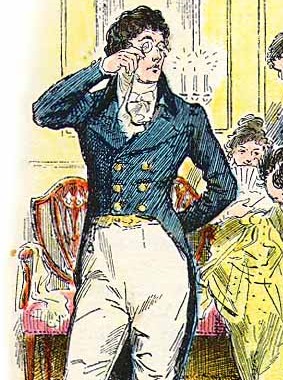
Well, you might say you are. But are you sure?
In order to answer this question, you need first to be able to distinguish “conservative” from what is actually a form of liberalism.”
The below is an extremely abridged and woefully sloppy summary, but no matter how sloppy I am here, this is still preferable to the misnomers that are being flung about in public discourse.
Let me state, first: American society is essentially a liberal society, and always has been. The founding of America could, in fact, be seen as a reaction against a conservative regime: it was certainly NOT a reaction against imperialism, since the colonists were themselves colonizers, and since imperialist expansion has always been intimately connected with what is romantically called the “American Dream.”
Our government is founded on liberal enlightenment principles of individual liberty, and equal rights protected by a nation-state.
Classical liberalism is that development of the liberal tradition that emphasizes free-market capitalism, with the emphasis on minimal government regulation and faith in the “invisible hand.” Arguments in favor of limited government regulation of markets are not conservative: they are classically liberal.
The greatest gift of the liberal tradition has perhaps been in its alliance with movements for liberation, such as women’s suffrage, or the abolition of serfdom and slavery. Left-wing liberalism, the outgrowth of “new liberalism” of, continues to emphasize equality, and is also associated with social programs for alleviating the poverty of those whom the invisible hand had mysteriously failed to help.
In America, those on the Right remain dedicated to classical liberal ideas about individual autonomy, limited government, and free markets, while embracing some (but only some) socially conservative ideas.
Right-wing liberals often mistake themselves for conservatives, and mistake those on the Left for socialists.
What is conservatism, then?
The conservative ethos is sharply differentiated from liberalism, first, in that it is suspicious of any philosophical attempts to present a universal code for human happiness, especially if these attempts involve divorcing themselves from tradition and authority. Utopia is anathema to a conservative code.
Conservatism tends to view hierarchical structures of governance not as inventions arising from a social contract, but corresponding to some divine order. These hierarchical structures carry with them not so much rights as responsibilities: each person has a specific responsibility to community, dependent on his status (or her status, but conservatives are patriarchal).
Conservatism embraces a class structure as a mode of preserving variety. Conservative societies may have racist tendencies, because racist tendencies exist in the western tradition – but the fundamental distinctions are less of race, ethnicity, or nationality, and more of class. A example of this would be in King Solomon’s Mines, when the African warrior Umbopa says to the English Sir Henry, “we are men, thou and I.” The recognition of the warrior caste (and yes, the patriarchal one) transcends any racial barrier between them.
Class structure has to do with social class, NOT with money. Within a conservative society, “new money” men may be regarded with suspicion, especially if those who have earned money have done so by any unethical manipulations of the market: such behavior is not gentlemanly. Being a gentleman is itself more than just behavior: it pertains to an actual place in a set social code. But gentlemanly identity is safeguarded by a certain propriety that is considered the responsibility of the gentleman, and which is dominated by the virtue of magnanimity.
He (yes, he) also has a responsibility to care for anyone under him in the hierarchical structure. The idea of separation of “citizen” from “government” – or of not depending on the government for assistance – simply is not an issue in a conservative society.
The idea of an unregulated market does not exist in the conservative creed, because conservative regimes emphasize the need to check human behavior, including market behavior, by means of rules of order, based in moral law, and codes of correct behavior. The medieval guilds, for instance, were strenuously regulated.
Conservatism values nature, though not in the same way contemporary environmentalists do. The man who wastes resources or despoils a fine field or forest would considered a wastrel, because nature has its place in the tradition. The conservative landowner has a responsibility to, well, conserve.
Conservatism is reluctant to embrace any sudden changes.
Russell Kirk’s “Ten Conservative Principles” are a good resource for understanding conservatism, at least through an American lens. Myself, I prefer to point to the behavior of Mr. Darcy in Pride and Prejudice: a man who upholds tradition, maintains his estates, and cares for those who are beneath him in the class structure. Mr. Darcy is both a private citizen and a part of a network of social governance: there is no strict divide between “the government” and “the individual” in his life. He is a gentleman, and therefore will look only to other gentlemen (regardless of ethnicity or nationality) for equality. His is a patriarchal code, which makes him infuriating to feminists, but also anathema to sexual abusers, aggressors, and pussy-grabbers of any ilk.
The idea of boot-strapping one’s way to wealth and power – the idea of “any man can be president” – these are not “true conservative” ideas. A true conservative would really prefer a king, and to have a place at court.
Of course, you might also be a neo-conservative, which means your roots are actually with Leon Trotsky (I know, weird, right?). Or you might be a lite fascist. I do hope not: that’s not a nice thing to be.
So, are you a conservative? If so, I tip my hat to you (imagine me a sort of George Sand, riding by on horseback, as gentlemanly a lady as one might imagine). You are a rare bird, indeed, and probably not at home in the current political milieu. I hope you have some old port laid down, so that you can take refuge in your paneled library and drink to the point of hilarity, because as a true conservative, you are going to need all the hilarity you can get, to deal with the outrages of this vulgar, upstart regime that shares none of your principles. “O tempora, o mores,” you may say, and sip, and sip again. “What DO they teach them, in these schools?”
Links for further reading:
https://philosophynow.org/issues/82/What_is_Liberalism
https://plato.stanford.edu/entries/liberalism/
image credit: https://commons.wikimedia.org/wiki/File:Darcy_%C3%A0_Netherfield.jpg
Previous Post

January 31, 2017
sexist reactions legitimize the women's march
Next Post

February 6, 2017 "Trump and the conservatives" - a mistake and a misnomer
Browse Our Archives
Select a Category abortion anti-semitism art Atwood Betrothed church clergy abuse coronavirus culture economics education environmentalism ethics faith family feminism gardening gun violence immigration Judaism literature MaddAddam New Pro Life Movement news pandemic personalism poem politics politics blue Pope Francis racism religion salvation sexuality social justice spirituality Station eleven Stephen King The Stand Trump Uncategorized war World Health Organization
Select a Month March 2021 February 2021 January 2021 December 2020 November 2020 October 2020 September 2020 August 2020 July 2020 June 2020 May 2020 April 2020 March 2020 February 2020 January 2020 December 2019 November 2019 October 2019 September 2019 August 2019 July 2019 June 2019 May 2019 April 2019 March 2019 February 2019 January 2019 December 2018 November 2018 October 2018 September 2018 August 2018 July 2018 June 2018 May 2018 April 2018 March 2018 February 2018 January 2018 December 2017 November 2017 October 2017 September 2017 August 2017 July 2017 June 2017 May 2017 April 2017 March 2017 February 2017 January 2017 December 2016 November 2016 October 2016 September 2016 August 2016 July 2016 June 2016 May 2016 April 2016 March 2016 February 2016
Follow Us!
TAKE THE
Religious Wisdom Quiz
Who saw a plumb line in a vision, symbolizing judgment?
Select your answer to see how you score.
Obadiah Amos Micah Joel
Support this
Column


Related posts from suspended in her jar

Immigrants: They Need Us, and We Need Them

Four Takeaways from Oprah’s Interview with the Duke...

How Has the Pandemic Changed Us? Has It...

Rush Limbaugh Would Never Have Succeeded In an...
TRENDING AT PATHEOS Catholic

Rejecting Doom: Christian Hope And Human Action
Christianity is a religion of hope. We are to have hope and...

It’s What Comes From Within Which Matters
One of the most difficult things for us to understand is why...

Why I Choose the Eucharist Over the Sermon
Choose the Eucharist, Not the Sermon What are we supposed to get...

5 Design Elements Found in Spiritually Rooted Homes
Putting Spirituality Into Home Decor Our homes are more than our living...

Credo: A Story of God Told with the...
About 10 years ago, I began to imagine a personal "Credo" that...

The Anatomy of Divine Revelation in Catholic Thought
The claim that God has made Himself known to human beings is...
view all Catholic blogs
Ad-Free & Subscriber Log-In Subscription Support
- About Us
- 2026 Calendar
- Videos
- Podcasts
- Library of World Religions
- Faith In Media Tracker
- Advertise With Us
- Write for Us
- Privacy Policy
- Terms of Service
- Do Not Sell My Data
- Contact Us
- Radiant Digital
- Manage Newsletter Subscriptions
- Unsubscribe From Notifications
- Sitemap
Copyright 2008-2026, Patheos. All rights reserved.
Subscription Support Ad-Free & Subscriber Log-In
Follow Patheos