
BuddhistCatholicContemplativeEvangelicalGeneral ChristianHinduJewishLatter-day SaintMuslimNew VisionsProgressive Christian
Beliefs
- Buddhist
- Catholic
- Contemplative
- Evangelical
- General Christian
- Hindu
- Jewish
- Latter-day Saint
- More Voices
- Muslim
- New Visions
- Pagan
- Progressive Christian
Topics
- Religion News
- Food and Religion
- Sports and Religion
- Religious Art
- Religious Music and Entertainment
- Religious Events
- History and Religion
- Style and Religion
- Politics and Religion
- Women in Religion
- Recreation Outdoors and Religion
- Business Finance and Religion
- Careers Workplace and Religion
- Education and Religion
- Family Parenting and Religion
- Health Fitness and Religion
- Home and Religion
- Relationships and Religion
- Technology and Religion
- Travel and Religion
Columnists
- Buddhist Columnists
- Business Finance and Religion Columnists
- Careers Workplace and Religion Columnists
- Catholic Columnists
- Contemplative Columnists
- Education and Religion Columnists
- Evangelists Columnists
- Family Parenting and Religion Columnists
- General Christian Columnists
- Health Fitness and Religion Columnists
- Hindu Columnists
- History and Religion Columnists
- Home and Religion Columnists
- Jewish Columnists
- More Voices Columnists
- Latter Day Columnists
- Muslim Columnists
- New Visions Columnists
- Nonreligious Columnists
- Pagan Columnists
- Politics and Religion Columnists
- Progressive Columnists
- Recreation Outdoors and Religion Columnists
- Relationships and Religion Columnists
- Religion News Columnists
- Religious Art Columnists
- Religious Events Columnists
- Religious Music and Entertainment Columnists
- Sports and Religion Columnists
- Style and Religion Columnists
- Technology and Religion Columnists
- Travel and Religion Columnists
- Women in Religion Columnists
Resource Library
- 2026 Calendar
- Library of World Religions
- The 100 Most Holy Places on Earth
- Patheos Answers
- Podcasts
- Videos
- Faith Leaders Database
- Anglican Episcopalian
- Bahai
- Baptist
- Buddhism
- Christianity
- Confucianism
- Eastern Orthodoxy
- Hinduism
- Holiness and Pentecostal
- ISKCON
- Islam
- Judaism
- Lutheran
- Methodist
- The Church of Jesus Christ of Latter-day Saints
- New Age
- Paganism
- Presbytarian and Reformed
- Protestantism
- Religion Behind the Scenes
- Roman Catholic
- Scientology
- Shia Islam
- Sikhism
- Sufism
- Sunni Islam
- Taoism
- Zen
- See all religions
Research Tools
 Ad-Free & Subscriber Log-In Subscription Support
Ad-Free & Subscriber Log-In Subscription Support
Follow Patheos 

- Trending:
- Forgiveness
- |
- Marriage
- |
- Consciousness
- |
- Death Penalty
- |
- Election
- |
- Halloween
 suspended in her jar
- Home
- Catholic
- the “ugly feminist” and the christian ethos
the “ugly feminist” and the christian ethos
Last updated on: August 12, 2016 at 10:46 pm by Rebecca Bratten Weiss
the “ugly feminist” and the christian ethos 2016-08-12T22:46:29-04:00 Rebecca Bratten Weiss
Patheos Explore the world's faith through different perspectives on religion and spirituality! Patheos has the views of the prevalent religions and spiritualities of the world.
When I was very young, before I was Catholic, I read about St. Rose of Lima and how she deliberately disfigured herself in order to avoid marriage. This did not sit well with me: why would a girl not want to be beautiful, I thought? Being beautiful was built into the narratives of female identity I’d encountered, from fairy tales and mythology to teen romances and fantasy, noir, sci-fi, and the classics. Even stories like Anne of Green Gables, in which the heroine is not physically beautiful from the start, can’t resist making her turn out beautiful, often with a fairy-like or artistic beauty that is better than everyday boring types of beauty.
Of course, I also wanted to be a fierce warrior, but I didn’t think there was a problem there, since all the warrior maids I’d encountered in stories were not only fair, but perilous. Kudos to George R. R. Martin for deconstructing the myth of the hot warrior princess, in the character of Brienne of Tarth, whose battle prowess is connected with her “freakish” size and strength, about which she is embarrassed. Unlike the hot warrior princesses who serve as objects of desire, Brienne is a subject, a person, an individual with interiority and conflict. Her strength is her own – her own burden to bear – and not part of some sexy package for male delectation.
We need to read about characters like Brienne, because she reminds us that a woman can have a complex and morally profound story, even without being beautiful. But most of the stories that have been handed down to us, through countless traditions, deny this.
The first story I read in which the heroine was not beautiful was Jane Eyre. Of course, Rochester isn’t handsome, either, but that’s not especially novel: good looks aren’t necessary to the masculine archetypes, though they are a bonus. Hephaistos married Aphrodite; poor tailors win beautiful princesses; the dorky guy in the rom-com ends up with the gorgeous female who appreciates his wit or gentleness. Beauty in all these cases is required for women – and beautiful women are prizes for men. Plus, women know that a man need not be handsome in order to be attractive, and Rochester – like any good Byronic hero – is classically ugly-sexy. So, Rochester is not so surprising, but Jane? It took a while for me to grasp the reality that no, Jane is not pretty, she does not become pretty, she does not turn out to have a special sophisticated or artistic prettiness – and yet Rochester truly loves and desires her, with all the passion of a proper romance.
Jane Eyre defies convention by being plain, but still a romantic heroine. And her defiance of convention is still relevant today. It is telling that in most film versions of the novel, a pretty actress is cast to play Jane. We still do not get that a woman can be the center of her own story without physical beauty. We are uncomfortable even admitting that women might not have physical beauty. “All women are beautiful” the mantra goes. But this is just a line. If all women are beautiful, why don’t we see more successful female actors who are big-nosed, double-chinned, pot-bellied, squinty? Why aren’t they playing romantic leads?
In spite of the revolutionary inspiration of saints such as Rose of Lima, and many others who defied the demands of the beauty myth and pursued virtue over glamour, Christians don’t seem to get it, either. Look at our holy cards: every single representation of a woman is pink, rosy, bright-eyed, small nosed, and usually Caucasian. These are women who suffered illness and deprivation and age, women who were beaten and tortured, pock-marked women, wrinkly women – so why are they always shown as sixteen and blemish-free? These are women who deliberately defaced their own beauty in order to avoid being forced into marriage, and yet we have reconstructed them as exactly the thing they didn’t want to be: as though it’s impossible to conceive of female holiness without female prettiness.
Mary Pezzulo writes about how this obligation to be pretty is peculiarly dominant even in Catholic circles.:
And, tragically, this very same issue exists in Christian circles you’d hope were above it. When I was in undergrad, I read the book Captivating by John and Sasi Eldridge, a Christian tome on womanhood which constantly stressed that women are supposed to look beautiful and “mysterious,” because women show the world ‘the beauty of God” and lead people to be “romanced” by God through their beauty. The book was short on details of how this is done, but it seemed to involve dangly earrings and twirling skirts and admitting you’ve always wanted to be in a romance novel. Captivating is a non-denominational protestant book, but this school of thought is not absent from Catholic circles, either. Everyone who’s been to a Catholic college knows the type of lines that get bandied around: feminine beauty is part of our dignity, don’t be afraid of your femininity, embrace your womanly side, modest but beautiful clothing enhances a woman’s dignity, the loveliness of women leads men naturally to virtue, a chapel veil makes a modest girl more fetching. Some of these sayings could be profound if they weren’t always interpreted as an advertisement for long curling hair and flowered dresses (knee-length or longer for chastity’s sake). Quite a few of them are downright creepy. A man who stares longingly at the chapel veil three pews ahead of him at the Tridentine liturgy is no different than a man who stares longingly at a barmaid’s exposed bosom. Yet we go on with this nonsense. I’ve had youth group leaders who thought women shouldn’t play certain sports because it made them look too manly.
The idea is that a) physical beauty is necessary for true femininity – b) true femininity is obligatory for all women. This is odd, since we’re assured often in the same breath that femininity is an essence that inheres in and forms the meaning of our female-ness or womanhood. Is femininity something we’re supposed to work on building? Or is it an essential part of who we are, that we’re supposed to embrace? What is femininity, anyway? No one comes right out and says it’s associated with a particular kind of female beauty, but that’s the underlying message. It’s no longer acceptable to say that femininity is passivity or submissiveness, so we get “receptivity” instead. Those who mandate femininity presuppose that femininity is distinct from female-ness; otherwise we couldn’t, as women, be commanded to pursue it – clearly, they do not mean that feminine = female.
So what does it even mean to be unfeminine? To be bossy? A leader? Not pretty? Physically messy? But these all have to do with societal norms about how women should comport themselves – nothing to do with virtue or holiness.
Is it unfeminine to be proud? Gluttonous? Lustful? But these are vices – they have nothing to do with gender identity. They are forbidden to all of us.
Being unfeminine is sometimes implied to mean “denying one’s own womanhood.” But what would it take to deny one’s womanhood? I can cut my hair short, wear trousers, do hard manual labor, and study symbolic logic, without ever denying my womanhood, which is built into every aspect of my being, woven into every confrontation I have with this earth. Breasts, womb, ovaries – the capacity for childbirth, the possibility of being penetrated, the distribution of sexual identity over an array of organs and functions – these do not go away if I cut off my hair or put on trousers. Cutting off my hair or putting on trousers would have nothing to do with an intention to deny my own breasts or womb, anyway. It would have to do with convenience, comfort, or just how I prefer to look. This is why it is deeply unfair for some Catholics to attack nuns who no longer wear a traditional habit, as though by becoming less “picturesque” they are less holy – as though putting on trousers were some form of female self-annihilation.
Women who do not conform to societal standards for prettiness or femininity are reviled by those who think women should be objects for male pleasure – even supposedly chaste pleasures, such as enjoying a nice cup of tea with a nice girl who’s pretty in a way that lets you objectify her without sexual guilt. This is, of course, the way women who take possession of their own identity are punished by society: as Naomi Wolf pointed out in The Beauty Myth, the requirement that women be beautiful has intensified, not lessened, even after decades of feminism. It’s a backlash against women who dare to be persons, not objects.
The stereotype of the “Ugly Feminist” is very familiar. The idea is that feminists are women who are too ugly to ketch a man, so they vent their frustrations in anger. The Ugly Feminist stupidly refuses to cater to the desires of men, even though – if she did – her path would be easier. If only she’d dress up better, go on a diet, smile more, then maybe men would be nicer to her, and she could stop being so bitter. The fact that bitterness might be the result of suffering, that the Ugly Feminist might be depressed or binge-drinking because she was raped or abused, doesn’t seem to occur to people, because only men are allowed to be bitter; women have to be charming no matter what. It also does not seem to occur to people that plenty of feminists are pretty, happy, married, have children, and even wear skirts. The Ugly Feminist Stereotype has caught on, and any woman who doesn’t fit it is waved off as No True Feminist. The Ugly Feminist is supposed to be burning bras and killing babies, right? If only she’d stop, then we might take her seriously.
As long as we hold up the Ugly Feminist stereotype, we can pretend she hasn’t stopped burning bras and killing babies, so we don’t need to take her seriously. Thanks to the Ugly Feminist stereotype, religious persons who oppose feminism can ignore and discount the experience and education of Catholic or Christian feminists, or whole-life feminists, or any feminist who doesn’t fit their very narrow and largely inaccurate caricature.
Aside from this hyperbole: the idea that we should market feminism by being pretty militates against the basic tenet of feminism, the idea that a woman should be respected as a person, not as a doll, or a sex toy, or a domestic ornament, or a male prize, or a soothing companion. We do not want to win respect as feminists by playing into a pre-existing narrative about which women deserve to be treated decently. All women deserve to be treated decently. All persons do.
It also militates against Christian charity, and the belief that every single human being has infinite worth, and is loved by God. Catholic women in particular should not feel obligated to be pretty. The saints often weren’t, after all. If a woman chooses to pursue justice, or to give her youth and vitality and fortune to serving the poor – if she chooses to wear the clothes she needs to wear in order to plant gardens in urban deserts, or nurse the dying, or travel into dangerous war-torn areas – if she is focused on prayer and meditation, not on her mirror – how dare any man accuse her of not being charming enough to suit his tastes, or of denying her own femininity because she rejects the trappings of fashion?
I confess, I still want to be beautiful, possibly because beauty is a pleasant thing to have, or possibly because I’m just far more shallow than St. Rose and others. As I get older, I want at least to look elegantly interesting. And how we present ourselves physically in the world is not without significance, because bodies are important. But bodies do not cease to be lovable or valuable if they happen not to be beautiful. And in the quest for holiness, often, much that the world sees as beautiful ends up being stripped away, not because of bodily loathing or fear of sexuality, but because there’s so much more to flourishing as a woman, than being a prize for a man.
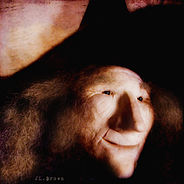
image credit: https://commons.wikimedia.org/wiki/File:The_Old_Witch.jpgThis file is licensed under the Creative Commons Attribution 2.0 Generic license. Author: Jimmy Brown
Previous Post

August 10, 2016
sex robots, inequality, and consequentialism
Next Post

August 15, 2016 sexism in the olympics? you shouldn't be surprised
Browse Our Archives
Select a Category abortion anti-semitism art Atwood Betrothed church clergy abuse coronavirus culture economics education environmentalism ethics faith family feminism gardening gun violence immigration Judaism literature MaddAddam New Pro Life Movement news pandemic personalism poem politics politics blue Pope Francis racism religion salvation sexuality social justice spirituality Station eleven Stephen King The Stand Trump Uncategorized war World Health Organization
Select a Month March 2021 February 2021 January 2021 December 2020 November 2020 October 2020 September 2020 August 2020 July 2020 June 2020 May 2020 April 2020 March 2020 February 2020 January 2020 December 2019 November 2019 October 2019 September 2019 August 2019 July 2019 June 2019 May 2019 April 2019 March 2019 February 2019 January 2019 December 2018 November 2018 October 2018 September 2018 August 2018 July 2018 June 2018 May 2018 April 2018 March 2018 February 2018 January 2018 December 2017 November 2017 October 2017 September 2017 August 2017 July 2017 June 2017 May 2017 April 2017 March 2017 February 2017 January 2017 December 2016 November 2016 October 2016 September 2016 August 2016 July 2016 June 2016 May 2016 April 2016 March 2016 February 2016
Follow Us!
TAKE THE
Religious Wisdom Quiz
What ailment did Jesus heal with mud made from saliva?
Select your answer to see how you score.
Leprosy Blindness Paralysis Deafness
Support this
Column


Related posts from suspended in her jar

Immigrants: They Need Us, and We Need Them

Four Takeaways from Oprah’s Interview with the Duke...

Catholics Are De-Toxing From their Experiences With Traumatic...

How Has the Pandemic Changed Us? Has It...
TRENDING AT PATHEOS Catholic

Creation, Preservation, and Teleology in Catholic Theology
As I write this, it is very early Monday morning. Like millions...

The Parable Of The Sower And The Word...
One of Christ’s most famous parables is that of the sower who...

Rejecting Doom: Christian Hope And Human Action
Christianity is a religion of hope. We are to have hope and...

Why I Choose the Eucharist Over the Sermon
Choose the Eucharist, Not the Sermon What are we supposed to get...

5 Design Elements Found in Spiritually Rooted Homes
Putting Spirituality Into Home Decor Our homes are more than our living...

Credo: A Story of God Told with the...
About 10 years ago, I began to imagine a personal "Credo" that...
view all Catholic blogs
Ad-Free & Subscriber Log-In Subscription Support
- About Us
- 2026 Calendar
- Videos
- Podcasts
- Library of World Religions
- Faith In Media Tracker
- Advertise With Us
- Write for Us
- Privacy Policy
- Terms of Service
- Do Not Sell My Data
- Contact Us
- Radiant Digital
- Manage Newsletter Subscriptions
- Unsubscribe From Notifications
- Sitemap
Copyright 2008-2026, Patheos. All rights reserved.
Subscription Support Ad-Free & Subscriber Log-In
Follow Patheos