
BuddhistCatholicContemplativeEvangelicalGeneral ChristianHinduJewishLatter-day SaintMuslimNew VisionsProgressive Christian
Beliefs
- Buddhist
- Catholic
- Contemplative
- Evangelical
- General Christian
- Hindu
- Jewish
- Latter-day Saint
- More Voices
- Muslim
- New Visions
- Pagan
- Progressive Christian
Topics
- Religion News
- Food and Religion
- Sports and Religion
- Religious Art
- Religious Music and Entertainment
- Religious Events
- History and Religion
- Style and Religion
- Politics and Religion
- Women in Religion
- Recreation Outdoors and Religion
- Business Finance and Religion
- Careers Workplace and Religion
- Education and Religion
- Family Parenting and Religion
- Health Fitness and Religion
- Home and Religion
- Relationships and Religion
- Technology and Religion
- Travel and Religion
Columnists
- Buddhist Columnists
- Business Finance and Religion Columnists
- Careers Workplace and Religion Columnists
- Catholic Columnists
- Contemplative Columnists
- Education and Religion Columnists
- Evangelists Columnists
- Family Parenting and Religion Columnists
- General Christian Columnists
- Health Fitness and Religion Columnists
- Hindu Columnists
- History and Religion Columnists
- Home and Religion Columnists
- Jewish Columnists
- More Voices Columnists
- Latter Day Columnists
- Muslim Columnists
- New Visions Columnists
- Nonreligious Columnists
- Pagan Columnists
- Politics and Religion Columnists
- Progressive Columnists
- Recreation Outdoors and Religion Columnists
- Relationships and Religion Columnists
- Religion News Columnists
- Religious Art Columnists
- Religious Events Columnists
- Religious Music and Entertainment Columnists
- Sports and Religion Columnists
- Style and Religion Columnists
- Technology and Religion Columnists
- Travel and Religion Columnists
- Women in Religion Columnists
Resource Library
- 2026 Calendar
- Library of World Religions
- The 100 Most Holy Places on Earth
- Patheos Answers
- Podcasts
- Videos
- Faith Leaders Database
- Anglican Episcopalian
- Bahai
- Baptist
- Buddhism
- Christianity
- Confucianism
- Eastern Orthodoxy
- Hinduism
- Holiness and Pentecostal
- ISKCON
- Islam
- Judaism
- Lutheran
- Methodist
- The Church of Jesus Christ of Latter-day Saints
- New Age
- Paganism
- Presbytarian and Reformed
- Protestantism
- Religion Behind the Scenes
- Roman Catholic
- Scientology
- Shia Islam
- Sikhism
- Sufism
- Sunni Islam
- Taoism
- Zen
- See all religions
Research Tools
 Ad-Free & Subscriber Log-In Subscription Support
Ad-Free & Subscriber Log-In Subscription Support
Follow Patheos 

- Trending:
- Forgiveness
- |
- Marriage
- |
- Consciousness
- |
- Death Penalty
- |
- Election
- |
- Halloween
 suspended in her jar
- Home
- Catholic
- I wrote a piece about baby-hating, and this is what I learned
I wrote a piece about baby-hating, and this is what I learned
Last updated on: August 3, 2016 at 10:25 am by Rebecca Bratten Weiss
I wrote a piece about baby-hating, and this is what I learned 2016-08-03T10:25:11-04:00 Rebecca Bratten Weiss
Patheos Explore the world's faith through different perspectives on religion and spirituality! Patheos has the views of the prevalent religions and spiritualities of the world.
How awful are people, really?
Sometimes I think Atticus Finch was right, and that most people really are nice when you finally see them. But, of course, Atticus himself is not only a loving father and heroic defender of the downtrodden: he’s also a racist.
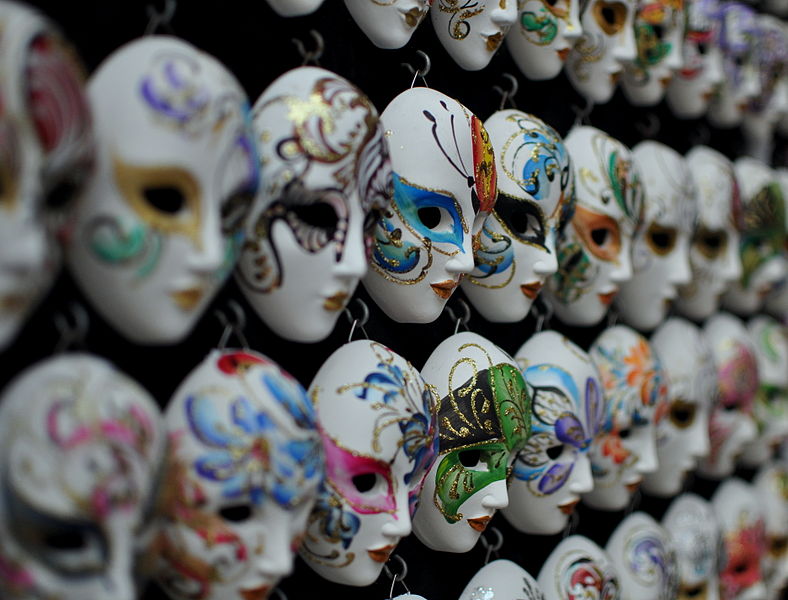
So, other times, I wonder how much decency and nobility are simply the masks we wear.
The chapters of history are dictated, largely, by the species of human awfulness driving social change from one generation to the next. We understand civilizations by understanding not only what they revered, whom they hero-worshiped, and how they understood the divine – but also by whom they punished, marginalized, scapegoated, depersonalized. Civilizations must be understood in light of the excuses they made for their depersonalizations, how they justified religious persecution or slavery or infanticide.
A curious phenomenon is that civilizations have their moral ideals, and also their moral trends. What’s the difference? The difference is that moral ideals are images, values, archetypes, and religious rituals which shape and form the whole of a person’s stance towards the world. They are lived out not only communally, but personally, with sincere and even religious devotion.”Dulce et decorum est pro patria mori” was a moral ideal for the Romans, not just a hip trend. It was also a moral falsehood, as it happens, but it still was held with what Kierkegaard referred to as “subjective truth” – meaning, a passionate inwardness, personal commitment. Distinguish this from the popular trend of copycat suicide-for-love that arose among the Romantics, in mimesis of Goethe’s Young Werther. Here, there is not a passionate inwardness or devotion to a lived ideal, but instead a personal obliteration through identification with a narrative that offered the promise of escape from the emptiness of self.
Moral ideals and moral trends can be almost identical, focused on genuine moral goods. For instance: environmentalism can be a moral ideal, something to which a person or community is seriously committed, even if it inconveniences one – something that shapes the whole way one regards living things, including living things one doesn’t find cute or useful. This is distinct from trendy environmentalism, which allows for a level of virtue-signalling and commodity fetishization, and has nothing to do with sincere care for the earth, but only with showing off a hip persona. It’s probably better for environmentalism to be trendy than not, but at the same time, the mask of virtue hides the fact that a person who mouths ecological platitudes is making no real choices to improve the health of the earth. What good does it do to drive a hybrid, if one lives in an unnecessarily large home and takes a lot of vacations, and buys a lot of packaged crap? You can post all the pro-earth memes you like, but if your carbon footprint is huge, it doesn’t really matter.
This is true when it comes to opposing certain prejudices, too. Opposition to racism or sexism can also be either genuine or trendy. Obviously, no one wants to identify as racist. It’s not cool or hip. Accusing others of racism is a great way to take a moral high ground. And, in a way, moral trends of this sort can serve communities because even people who are existing on a completely superficial level may at least participate in movements towards equality or equity. I am not saying moral trends are bad – they can, in many cases, be genuinely fruitful. But I am saying they are not sufficient.
So, I addressed, recently, the trend of proud baby-hating as exhibited in such pieces as “Why it’s completely OK if You Don’t Like Babies” and “I hate your kids. And I’m not sorry”. I pointed out that this kind of hatred is no better than racism. Any perceptive reader ought to have seen that I was not saying that baby-hating was identical to racism; it ought to be readily apparent to anyone versed in intersectionality that different prejudices take different forms. Islamophobia is not the same as sexism is not the same as racism is not the same a homophobia. But in each case, there is an operative at work justifying hatred and depersonalization.
Many readers of my piece did not seem to get this. Curiously, they also seemed to think that it was presumptuous of me to dictate morality to “free adults” – which is odd, because it is trendy to be dictatorial about other types of hatred. They also seemed to think that I was writing, not out of a consistent personalist ethic, but because I was upset about people being mean to be theoretically “bratty children.” One reader, who called me a “dumb moo” assumed I have five kids, which shows that those who hate often do not read well. I was called “breeder scum” and accused of being racist myself. Genuine opposition to racism means asking “am I racist?” – because it means recognizing the different ways racist prejudice has been woven into our inherited civilization. Am I racist, when I oppose hatred of any demographic? I may still suffer from lingering racist poisons with which I’ve been doused, but I do not think that rejecting hatred is one of them.
The problem is, many people are not really committed to ending racism, or other systems of prejudice, depersonalization, marginalization, or violence. Similarly, many people who claim to be pro-life are not really committed to ending abortion. It’s easy to say the right words, but hard to make the necessary changes in our society. This is why so many who claim to oppose sexism will immediately fall back on sexist tropes when attacking women with whom they disagree, resorting to gendered insults and looksism. And many who claim to oppose racism do so because it’s not cool to be racist, but they have no interest in eradicating structures of privilege from which they themselves benefit. And certainly, no interest in eliminating hatred.
If one can not reject hatred of persons, if one can not embrace a willingness to love all life, one cannot reject, truly, any of the systems in which such hatred has been enshrined. And, reading responses to my article on the trend of baby-hating, I understood again why, even in a culture that supposedly promotes tolerance, wars are waging and income inequality is at its height, our resources are being exploited. Rape and domestic abuse carry on. Workers’ rights are trampled. Abortion remains partially because women are rarely offered truly viable alternatives. Euthanasia becomes convenient. Where hatred is not at work, indifference often reigns.
I am guilty myself. As soon as I train myself to be more tolerant, more sensitive, I find my sensitivity decreasing towards those who have not yet learned tolerance. And yet I was once like them, too. I held horrible views, at one time, so I need to be more patient with those who still hold such views. And, anyway, holding the right views is meaningless if I can’t act accordingly.
My question to my readers is: how do we promote cultures of acceptance and solidarity, in a pluralistic society, without falling into the mere trendiness of virtue that allows us to put on masks of decency to hide our hatred or indifference?
Image credit: Alex Morley, Masks for sale in Venice. https://commons.wikimedia.org/wiki/File:Venice_Masks.jpg. Creative Commons.

Next Post

August 6, 2016 the politics of not unfriending
Browse Our Archives
Select a Category abortion anti-semitism art Atwood Betrothed church clergy abuse coronavirus culture economics education environmentalism ethics faith family feminism gardening gun violence immigration Judaism literature MaddAddam New Pro Life Movement news pandemic personalism poem politics politics blue Pope Francis racism religion salvation sexuality social justice spirituality Station eleven Stephen King The Stand Trump Uncategorized war World Health Organization
Select a Month March 2021 February 2021 January 2021 December 2020 November 2020 October 2020 September 2020 August 2020 July 2020 June 2020 May 2020 April 2020 March 2020 February 2020 January 2020 December 2019 November 2019 October 2019 September 2019 August 2019 July 2019 June 2019 May 2019 April 2019 March 2019 February 2019 January 2019 December 2018 November 2018 October 2018 September 2018 August 2018 July 2018 June 2018 May 2018 April 2018 March 2018 February 2018 January 2018 December 2017 November 2017 October 2017 September 2017 August 2017 July 2017 June 2017 May 2017 April 2017 March 2017 February 2017 January 2017 December 2016 November 2016 October 2016 September 2016 August 2016 July 2016 June 2016 May 2016 April 2016 March 2016 February 2016
Follow Us!
TAKE THE
Religious Wisdom Quiz
Who was known as the "son of encouragement"?
Select your answer to see how you score.
Stephen Philip Barnabas Silas
Support this
Column


Related posts from suspended in her jar

Immigrants: They Need Us, and We Need Them

Four Takeaways from Oprah’s Interview with the Duke...

Catholics Are De-Toxing From their Experiences With Traumatic...

How Has the Pandemic Changed Us? Has It...
TRENDING AT PATHEOS Catholic

Creation, Preservation, and Teleology in Catholic Theology
As I write this, it is very early Monday morning. Like millions...

The Parable Of The Sower And The Word...
One of Christ’s most famous parables is that of the sower who...

Rejecting Doom: Christian Hope And Human Action
Christianity is a religion of hope. We are to have hope and...

Why I Choose the Eucharist Over the Sermon
Choose the Eucharist, Not the Sermon What are we supposed to get...

5 Design Elements Found in Spiritually Rooted Homes
Putting Spirituality Into Home Decor Our homes are more than our living...

Credo: A Story of God Told with the...
About 10 years ago, I began to imagine a personal "Credo" that...
view all Catholic blogs
Ad-Free & Subscriber Log-In Subscription Support
- About Us
- 2026 Calendar
- Videos
- Podcasts
- Library of World Religions
- Faith In Media Tracker
- Advertise With Us
- Write for Us
- Privacy Policy
- Terms of Service
- Do Not Sell My Data
- Contact Us
- Radiant Digital
- Manage Newsletter Subscriptions
- Unsubscribe From Notifications
- Sitemap
Copyright 2008-2026, Patheos. All rights reserved.
Subscription Support Ad-Free & Subscriber Log-In
Follow Patheos