
BuddhistCatholicContemplativeEvangelicalGeneral ChristianHinduJewishLatter-day SaintMuslimNew VisionsProgressive Christian
Beliefs
- Buddhist
- Catholic
- Contemplative
- Evangelical
- General Christian
- Hindu
- Jewish
- Latter-day Saint
- More Voices
- Muslim
- New Visions
- Pagan
- Progressive Christian
Topics
- Religion News
- Food and Religion
- Sports and Religion
- Religious Art
- Religious Music and Entertainment
- Religious Events
- History and Religion
- Style and Religion
- Politics and Religion
- Women in Religion
- Recreation Outdoors and Religion
- Business Finance and Religion
- Careers Workplace and Religion
- Education and Religion
- Family Parenting and Religion
- Health Fitness and Religion
- Home and Religion
- Relationships and Religion
- Technology and Religion
- Travel and Religion
Columnists
- Buddhist Columnists
- Business Finance and Religion Columnists
- Careers Workplace and Religion Columnists
- Catholic Columnists
- Contemplative Columnists
- Education and Religion Columnists
- Evangelists Columnists
- Family Parenting and Religion Columnists
- General Christian Columnists
- Health Fitness and Religion Columnists
- Hindu Columnists
- History and Religion Columnists
- Home and Religion Columnists
- Jewish Columnists
- More Voices Columnists
- Latter Day Columnists
- Muslim Columnists
- New Visions Columnists
- Nonreligious Columnists
- Pagan Columnists
- Politics and Religion Columnists
- Progressive Columnists
- Recreation Outdoors and Religion Columnists
- Relationships and Religion Columnists
- Religion News Columnists
- Religious Art Columnists
- Religious Events Columnists
- Religious Music and Entertainment Columnists
- Sports and Religion Columnists
- Style and Religion Columnists
- Technology and Religion Columnists
- Travel and Religion Columnists
- Women in Religion Columnists
Resource Library
- 2026 Calendar
- Library of World Religions
- The 100 Most Holy Places on Earth
- Patheos Answers
- Podcasts
- Videos
- Faith Leaders Database
- Anglican Episcopalian
- Bahai
- Baptist
- Buddhism
- Christianity
- Confucianism
- Eastern Orthodoxy
- Hinduism
- Holiness and Pentecostal
- ISKCON
- Islam
- Judaism
- Lutheran
- Methodist
- The Church of Jesus Christ of Latter-day Saints
- New Age
- Paganism
- Presbytarian and Reformed
- Protestantism
- Religion Behind the Scenes
- Roman Catholic
- Scientology
- Shia Islam
- Sikhism
- Sufism
- Sunni Islam
- Taoism
- Zen
- See all religions
Research Tools
 Ad-Free & Subscriber Log-In Subscription Support
Ad-Free & Subscriber Log-In Subscription Support
Follow Patheos 

- Trending:
- Forgiveness
- |
- Marriage
- |
- Consciousness
- |
- Death Penalty
- |
- Election
- |
- Halloween
 suspended in her jar
- Home
- Catholic
- turning to religion in times of violence: why we pray
turning to religion in times of violence: why we pray
Last updated on: July 15, 2016 at 11:24 am by Rebecca Bratten Weiss
turning to religion in times of violence: why we pray 2016-07-15T11:24:20-04:00 Rebecca Bratten Weiss
Patheos Explore the world's faith through different perspectives on religion and spirituality! Patheos has the views of the prevalent religions and spiritualities of the world.
When we turn on the news and find, again, stories of horrifying acts of violence, it is hard to know, sometimes, whether it is better to read on and absorb the heart-breaking details, or to turn away for the sake of peace of mind. Some stories, stories of children in particular, I can barely think about without feeling that the pedestals of reality are slipping, and we’re all tipping into darkness. Sometimes I can’t read on, can’t think about it, have to hug my children and give them popsicles, and go out to garden in the innocent sun.
But this is the same sun that shines upon all the acts of senseless slaughter and war, across the globe. My escape into a place of tranquility is a matter of geographical luck. It could happen to us, too: the shootings, the bombings, and now the bizarre attack in Nice, in which a deranged “loner” drove his truck into a crowd and killed, as of this morning, at least 84 people at the Bastille Day celebration.
I live fairly off the beaten track, in a region that could be considered extremely boring and culturally bereft, where most gun violence is domestic, and the only explosions are when meth labs blow up. But still, terrible things could happen: disease, natural disaster, car accidents. All across the globe there is no power to keep us safe, no matter how cautious we are, how innocent, how virtuous, how brave.
So perhaps it is not surprising that people who do not understand our faith respond with scorn, as some did to my friend and fellow-blogger Mary Pezzulo’s piece, “God Have Mercy on France” –
“What does God have to do with it?”
“Your God doesn’t protect these people.”
“Religion is the cause of violence, not the solution.”
Now, it would be naive to pretend that religion and violence have not often marched hand in hand, sometimes for political reasons, but sometimes for reasons far more deeply rooted in anthropology and myth, as Rene Girard has elucidated. Religion is connected with sacrifice, and sacrifice can be thought of as a gift – but also as a killing, a wounding, a cutting off. And all of us of faith have an obligation to renounce this violence, even when religious leaders who seized power and spit in the face of God may punish us for it.
It would also be naive to pretend that God will protect or save us from the terrors of the world. Anyone of Jewish heritage should know this – we think back still on Auschwitz as the place where God was not. Does Auschwitz cancel out belief in God? If so, this belief should have been canceled long before, because human history is the history of atrocity, and often our most glorious moments are the glittering surface of a mask, beneath which lies atrocity.
“At the time of the liberation of the camps, I remember, we were convinced that after Auschwitz there would be no more wars, no more racism, no more hatred, no more anti-Semitism. We were wrong. This produced a feeling close to despair. For if Auschwitz could not cure mankind of racism, was there any chance of success ever? The fact is, the world has learned nothing. Otherwise, how is one to comprehend the atrocities committed in Cambodia, Rwanda, Bosnia…” (Elie Wiesel)
We all need to take seriously the challenge posed to our beliefs, by history. I mean the challenge posed to our belief in a good God guiding us lovingly through the valley of the shadow of death – and also the belief in human progress, human nature. Because secular movements have not succeeded in eradicating violence. Mao Zedong is the dictator responsible for the most deaths, and these were deaths in the name of secular communism. Stalin killed more people than Hitler. But we must not forget that Hitler and the Nazis, and the unique evil of the concentration camps, the progressive dehumanization for the sake of some glorious national ideal, were affiliated with the name of Christianity, their acts of violence done for some bright blond god. Religious ideology will not save us. Non-religious ideology will not save us.
Ideology will not save us.
If we live in a world in which human beings repeatedly discover new ways to be Satan to one another, and in which God does not appear to stop them, the only rational response is to despair. This is what the European existentialists understood, after the spectacle of two world wars that were really just one war. Oh sure, I can go garden, and come up with metaphors about death and rebirth. Yes, you can go do humanitarian deeds. You can post uplifting memes about believing in ourselves, but what a horrible idea, considering what our “selves” are capable of. Oh, maybe you, personally, have done nothing horrible. You personally may love your children, and go on pleasant vacations, and send checks to charitable organizations. But you, personally, aren’t fixing much of anything. Your little blip of happiness in the sun, my little blip of happiness in my tomato garden, are blips weighted against all the suffering of all the children who have ever been tortured, raped, killed in war, abused, starved, beaten.
We can sip coffee and read poems and comfort ourselves, but the reality is that nothing, neither or prayers nor our humanistic virtue, will save us if someone near us decides to go on a killing spree. Whichever ideology or politician you think will fix things is likely, actually, to make things worse.
And this is why we pray. Not because we think super-God is going to swoop in to rescue us or heal us, but because without an appeal to a transcendent realm, the world is fundamentally either absurd (nothing matters, and all our little values are mere idols, and all is permitted) or unjust (no matter how we try to fix things, the innocent still perish, over and over and over again, and killing the evildoers will not bring justice to those whose lives were cut off, in the midst of horrible suffering).
I wrote earlier about why we pray: because we need God to enter the desert spaces, where we can not go. We pray also in the dark night, where it seems God is not, because it is a gesture of existential faith in something beyond the darkness. I know that many of my fellow-Catholics work hard to demonstrate how rational our religion is – and in many respects it is; it’s no accident that so many significant scientists in the past were persons of faith. But I want to stress now how irrational it is, as well, because on the basis of strict reason it is very hard to believe in anything other than pain and despair. Anyone who tells you differently is either selling something, or extremely privileged – or, most likely, both.
To pray for victims of injustice worldwide is to stand in solidarity with them, to say “I believe you are loved, and you are not alone, and you deserve justice and joy and peace. I believe in a God who has entered into the cataclysm of material existence and suffered with you. I believe in the liminal spaces where our world overlaps with the divine and transcendent, the places where healing can occur.”
Yes, I am saying I believe in a thing quaintly called heaven. I pray even if it is a little irrational, because the alternative, to believe that this is all that there is, is far worse.
May God give peace and healing to all those who suffer injustice, and receive them into perpetual light.
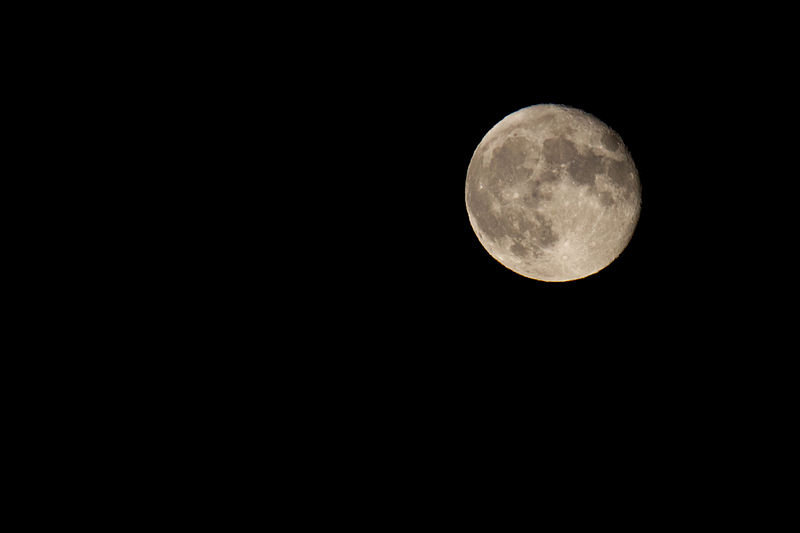
image credit: Michael Palmer, Moon on a Dark Night, https://commons.wikimedia.org/wiki/File:Moon_on_a_dark_night.jpg
Previous Post

July 8, 2016
rejecting the glamour of evil: a pledge of non-violence
Next Post

July 18, 2016 reactionary catholicism: o'connor's church of christ without christ
Browse Our Archives
Select a Category abortion anti-semitism art Atwood Betrothed church clergy abuse coronavirus culture economics education environmentalism ethics faith family feminism gardening gun violence immigration Judaism literature MaddAddam New Pro Life Movement news pandemic personalism poem politics politics blue Pope Francis racism religion salvation sexuality social justice spirituality Station eleven Stephen King The Stand Trump Uncategorized war World Health Organization
Select a Month March 2021 February 2021 January 2021 December 2020 November 2020 October 2020 September 2020 August 2020 July 2020 June 2020 May 2020 April 2020 March 2020 February 2020 January 2020 December 2019 November 2019 October 2019 September 2019 August 2019 July 2019 June 2019 May 2019 April 2019 March 2019 February 2019 January 2019 December 2018 November 2018 October 2018 September 2018 August 2018 July 2018 June 2018 May 2018 April 2018 March 2018 February 2018 January 2018 December 2017 November 2017 October 2017 September 2017 August 2017 July 2017 June 2017 May 2017 April 2017 March 2017 February 2017 January 2017 December 2016 November 2016 October 2016 September 2016 August 2016 July 2016 June 2016 May 2016 April 2016 March 2016 February 2016
Follow Us!
TAKE THE
Religious Wisdom Quiz
What is the correct order of 'these three' that remain, as mentioned in 1 Corinthians 13?
Select your answer to see how you score.
Faith, love, hope Faith, hope, love Love, faith, hope Hope, faith, love
Support this
Column


Related posts from suspended in her jar

Immigrants: They Need Us, and We Need Them

Catholics Are De-Toxing From their Experiences With Traumatic...

How Has the Pandemic Changed Us? Has It...

Rush Limbaugh Would Never Have Succeeded In an...
TRENDING AT PATHEOS Catholic

Creation, Preservation, and Teleology in Catholic Theology
As I write this, it is very early Monday morning. Like millions...

The Parable Of The Sower And The Word...
One of Christ’s most famous parables is that of the sower who...

Rejecting Doom: Christian Hope And Human Action
Christianity is a religion of hope. We are to have hope and...

Why I Choose the Eucharist Over the Sermon
Choose the Eucharist, Not the Sermon What are we supposed to get...

5 Design Elements Found in Spiritually Rooted Homes
Putting Spirituality Into Home Decor Our homes are more than our living...

Credo: A Story of God Told with the...
About 10 years ago, I began to imagine a personal "Credo" that...
view all Catholic blogs
Ad-Free & Subscriber Log-In Subscription Support
- About Us
- 2026 Calendar
- Videos
- Podcasts
- Library of World Religions
- Faith In Media Tracker
- Advertise With Us
- Write for Us
- Privacy Policy
- Terms of Service
- Do Not Sell My Data
- Contact Us
- Radiant Digital
- Manage Newsletter Subscriptions
- Unsubscribe From Notifications
- Sitemap
Copyright 2008-2026, Patheos. All rights reserved.
Subscription Support Ad-Free & Subscriber Log-In
Follow Patheos