
BuddhistCatholicContemplativeEvangelicalGeneral ChristianHinduJewishLatter-day SaintMuslimNew VisionsProgressive Christian
Beliefs
- Buddhist
- Catholic
- Contemplative
- Evangelical
- General Christian
- Hindu
- Jewish
- Latter-day Saint
- More Voices
- Muslim
- New Visions
- Pagan
- Progressive Christian
Topics
- Religion News
- Food and Religion
- Sports and Religion
- Religious Art
- Religious Music and Entertainment
- Religious Events
- History and Religion
- Style and Religion
- Politics and Religion
- Women in Religion
- Recreation Outdoors and Religion
- Business Finance and Religion
- Careers Workplace and Religion
- Education and Religion
- Family Parenting and Religion
- Health Fitness and Religion
- Home and Religion
- Relationships and Religion
- Technology and Religion
- Travel and Religion
Columnists
- Buddhist Columnists
- Business Finance and Religion Columnists
- Careers Workplace and Religion Columnists
- Catholic Columnists
- Contemplative Columnists
- Education and Religion Columnists
- Evangelists Columnists
- Family Parenting and Religion Columnists
- General Christian Columnists
- Health Fitness and Religion Columnists
- Hindu Columnists
- History and Religion Columnists
- Home and Religion Columnists
- Jewish Columnists
- More Voices Columnists
- Latter Day Columnists
- Muslim Columnists
- New Visions Columnists
- Nonreligious Columnists
- Pagan Columnists
- Politics and Religion Columnists
- Progressive Columnists
- Recreation Outdoors and Religion Columnists
- Relationships and Religion Columnists
- Religion News Columnists
- Religious Art Columnists
- Religious Events Columnists
- Religious Music and Entertainment Columnists
- Sports and Religion Columnists
- Style and Religion Columnists
- Technology and Religion Columnists
- Travel and Religion Columnists
- Women in Religion Columnists
Resource Library
- 2026 Calendar
- Library of World Religions
- The 100 Most Holy Places on Earth
- Patheos Answers
- Podcasts
- Videos
- Faith Leaders Database
- Anglican Episcopalian
- Bahai
- Baptist
- Buddhism
- Christianity
- Confucianism
- Eastern Orthodoxy
- Hinduism
- Holiness and Pentecostal
- ISKCON
- Islam
- Judaism
- Lutheran
- Methodist
- The Church of Jesus Christ of Latter-day Saints
- New Age
- Paganism
- Presbytarian and Reformed
- Protestantism
- Religion Behind the Scenes
- Roman Catholic
- Scientology
- Shia Islam
- Sikhism
- Sufism
- Sunni Islam
- Taoism
- Zen
- See all religions
Research Tools
 Ad-Free & Subscriber Log-In Subscription Support
Ad-Free & Subscriber Log-In Subscription Support
Follow Patheos 

- Trending:
- Forgiveness
- |
- Marriage
- |
- Consciousness
- |
- Death Penalty
- |
- Election
- |
- Halloween
 suspended in her jar
- Home
- Catholic
- jesus loves your fat: why fat-shaming is not christian
jesus loves your fat: why fat-shaming is not christian
Last updated on: May 16, 2016 at 11:41 am by Rebecca Bratten Weiss
jesus loves your fat: why fat-shaming is not christian 2016-05-16T11:41:15-04:00 Rebecca Bratten Weiss
Patheos Explore the world's faith through different perspectives on religion and spirituality! Patheos has the views of the prevalent religions and spiritualities of the world.
I am not fat.
However, I have sometimes called myself fat. And that’s what I want to talk about, today.
For the past two months, I have been sick. Before I figured out that it was LPR causing the sore throats, laryngitis, ear pain, sinusitis, and fatigue, I went into full-on hypochondriac mode, convinced a number of my symptoms matched those of throat cancer. One symptom, however, that was missing, was “unexplained weight loss.” Every day I anxiously weigh myself, but for the first time I was inwardly applauding the stubborn refusal of the numbers to drop. As one who has been at times borderline anorexic, and taken drastic and unwholesome measures to maintain the desired skinny, it was very strange for me to be looking at the folds of my own flesh with approval – as at a sign of life. The food I ate went diligently to my body, sustaining me, protecting my bones.
For two months I was too exhausted to run or lift weights, and could only drag myself into work, croaking my lectures. During this time I gained a new respect for those suffering from chronic ailments, who have to live every day in exhaustion or discomfort. As I worried about dying, I gained respect for dying people. As I couldn’t exercise to tone my flesh, I gained respect for fat people. I realized how pathetic I was, that I couldn’t be happy without being healthy, slim, and energetic – how tenuous my grip on well-being.
So when I encountered Meg Elison’s piece in The Establishment, “My Friends Would Rather Have Their Guts Cut Open Than Be Like Me,” an account of a woman honest about living with fatness in a society that idolizes the thin and fit, I read it with interest:
In outraged weariness of being seen as a cautionary whale, I seek out ways to weaponize my own image. I haunt thin people at the gym as the Ghost of Fatness Yet to Come. It started off as a demoralizing phenomenon; I began by refusing to shrink away from the pained glances and open hostility I receive for having the audacity to live in a fat body without making a constant apology for myself. My gym in San Francisco is a caricature of bodily obsession. Its ad campaigns are notorious, and lithe trainers cruise the floor like sharks sniffing for blood. There are no other fat people there. An orca among eels, I cast my shadow over their swimming and striving, and they look upon me in naked terror. I am the reason they get up at 5 a.m. and wear a monitor that counts their steps. I am the worst thing that can happen.
Often enough in the past I had grabbed folds of my own flesh and wished I could cut it off, then loathed myself doubly for my own self-loathing. Did Flannery O’Connor or Dorothy Day sit around worrying about being fat? No, they had more important things to do. I knew that hating myself for imaginary fatness was petty and stupid. I ought to leap forth every day and do fabulous things, things so fabulous they’d make me thin – and maybe four inches taller – through the sheer force of my intellectual and spiritual energy.
But Elison’s piece made me think about another dimension: my hatred of my own fat was a hatred of the idea of being fat, as though being fat were something utterly unbearable, something inhuman. And for me, a size eight, to call myself “fat” because I’m no longer a size two, was to appropriate the word “fat” for the drama of my own fascinating self-hatred – something to which, as a non-fat woman, I am socially entitled. There is a place prepared, on the stage of life, for a moderately sized woman to strut and fret her hour of “poor me, I’m fat” rhetoric. If an actual overweight woman calls herself fat, though? We don’t let her. That’s not allowed. We quickly assure them that they’re beautiful. “All women are beautiful” the mantra goes – which means, if you look in the mirror and see nothing that seems beautiful, your erased as a woman. “Women should appear feminine” I heard a man say, recently. So if you look in the mirror and see flesh, hair, folds, wrinkles, jutting angles, nothing that would appear on a fashion spread, you have failed. This is connected with Naomi Wolf’s idea of the “Beauty Myth” – and, unfortunately, it is pervasive in religious circles. Mary Pezzulo touches on this problematic imperative to female prettiness in “You Do Not Have to be Pretty”:
“Everyone who’s been to a Catholic college knows the type of lines that get bandied around: feminine beauty is part of our dignity, don’t be afraid of your femininity, embrace your womanly side, modest but beautiful clothing enhances a woman’s dignity, the loveliness of women leads men naturally to virtue, a chapel veil makes a modest girl more fetching. Some of these sayings could be profound if they weren’t always interpreted as an advertisement for long curling hair and flowered dresses (knee-length or longer for chastity’s sake). Quite a few of them are downright creepy.”
If we can’t assure a woman that she’s not fat, that she’s beautiful, next best thing is to hush her up, pretend she isn’t there, because she’s exploding our theories and making us uncomfortable.
Now, here’s the thing: I loved Elison’s piece, but for others, it evoked mixed responses. Many who read it got a general idea that she was unstable, not at peace with herself – that she was being narcissistic and self-centered – that she was being predatory in her behavior towards thin people.
Maybe that’s why I liked it: because I too am narcissistic and self-centered, in my constant obsession over an ideal of physical perfection that interrupts all my pursuits of other excellences – my writing career, my familial obligations, my holiness. And I’m not even good at it. I am not at peace with any damn thing.
But the difference is, there is an established audience for my obsession. As long as I am struggling with my weight, I occupy an acceptable place in the contemporary narrative of female existence. There are two approved ways of wrapping up this narrative, with a “happy ending”: one is to be fighter, to run and lift daily, to defeat the fat, to feel pain as weakness leaving my body, to achieve hero-status as a woman of 42 who got her body back after three pregnancies and two post-miscarriage surgeries. If I win this fight, I get to humble-brag about it. I can be as narcissistic and self-centered as I like. Fat people who feel as though I am triumphing over “being like them” will just have to suck it up and deal, because it’s not about them. It’s about MEEEEEEEEEE.
Or I can learn to love myself. I can flaunt my non-bikini body, or not. I can imagine that all the curves are in the “right places” because a confident woman is attractive, right? Anorexia, depression, anxiety, addiction, self-destructive habits: those are not “pretty.” No one will love you until you learn to love yourself, they say. MEEEEEEEE.
Elison’s “haunting” of people at gyms may come off as malicious or predatory, but I saw it as a refusal to be invisible. How often do some say of fat people “ugh, I would DIE if I looked like that?” (yes, this is said. I’ve heard it said specifically of a woman with c-section scars). Or: “yuck, no one needs to see that!” The implication is that fat people need just to vanish, because their existence offends us, until they can achieve personhood again by gaining thinness. Yes, obesity is an enormous problem, because of the proliferation of the fake food industry, the fetishization of healthy food as a privilege for the well-off, long work hours that make exercise difficult, an approach to geography and public space that is not conducive to free movement, as opposed to the right-of-way trails and walker-friendly cities of the UK. And we need to create a society that provides healthier options for everyone, not just the rich – this is driving principle of my eco-gardening business.
But sometimes, people just are overweight, because of serious health issues. Or because being thin comes more easily with wealth and leisure. Fat-shaming is associated with poverty-shaming. And, sometimes the struggle to be thin becomes so exhausting that people decide it is no longer worth it. At which point, they do not want to hear about some new amazing diet or exercise plan. The want to talk about history, or music, or a book they read. They may not have learned to love their bodies, but they are living in them. Because, as Elison says, there are worse things than being fat. And as Christians we should take this especially to heart, because if the relentless pursuit of thinness or fitness actually interferes with one’s vocation or call to holiness, giving up is not failure. Sometimes, it is fine to give up, on so many of the worldly goals we are instructed to pursue – wealth, success, beauty, fitness. Even health, while an absolutely worthwhile objective good to pursue, is not a moral mandate. You can be unhealthy, and still be holy. It is an error to regard fat people as needing to fight the fight and earn the skinny prize before they are worthy of being seen as persons.
And if it is narcissistic for them to see the obsessive pursuit of health with the subtext that “these people will do anything to avoid being like me” – what about other modes of depersonalization? Parents of non-neurotypical children already see, in fetal testing for anormalities, the implication that others think it would be better to be dead than to be like their children. Is this self-centered, or is it an uncomfortably accurate reading of the prejudices in place in our society?
If fat people can’t stop being fat, they are admonished to learn to love themselves, to be bright and positive and well-adjusted. We all should be, little daisies waving in the sun – or big daisies, as the case may be. Preferably with the right clothes for our bodies, clothes that make us feel pretty, (because of course, otherwise no one will love you).
But this is incorrect. God is present with us, even in darkness and ugly places, even when we are miserable. The self-hatred of the woman who loathes her own flesh does not cancel her out of existence, or deny her the right to dignity and respect. And while fat-shaming is most overtly connected with sexism, there is also a misandrist form, associated with the denigration of the “vile” male body. The man who is told “no one needs to see that” is still a unique human person, infinitely valuable, and loved by God. Fat-shaming means depersonalizing persons, and is not a Christian option – and this includes making assumptions of moral inferiority on the part of fat people; it includes demanding that they keep fighting for thinness even if they’ve found this interferes with their vocation; it means creating a healthier society for everyone, but not condemning those who don’t look the way we think they should; it means not appropriating the word “fat” as a tool for the self-obsession of relatively thin people; it means recognizing that a day in the life of a fat body may be far more heroic than the “journey” of one who has gained fitness. It means remembering that it’s not worth gaining washboard abs, if one loses one’s soul in the process.
Fat is part of the body, and the body is who one is, not a mere container – we are our fat, and so our fat is not just fat, but flesh, bodily being, personal being. We may wish to alter the size and shape of our bodies, improve the health of our bodies, and we should certainly be given every encouragement when we opt to do so, but still we occupy every cell of our own flesh, are our own flesh
But even if a person can’t see this, hating her body, feels it not herself but a prison, unable to change her body, she is under no moral obligation magically to transform her own misery in order to be the world’s darling. True, it is not pleasant to hate one’s own body, but perhaps, even if we cannot make it healthy – until we learn to love it, fat and wrinkles and blotches and excretions and all, Jesus is there to love it for us. I am reminded of St. Francis kissing the leper – or, of the scene in The End of the Affair, when Sarah Miles, who loves beauty and hates deformity, kisses the hideous birthmark on the face of the poor atheist preacher, entering into the suffering of Christ.
Whether we strive for health, fitness, strength, and beauty, whether we resign ourselves to ourselves, there is still this mystery: that Jesus loves us, fat and all. Self-loathing and all.
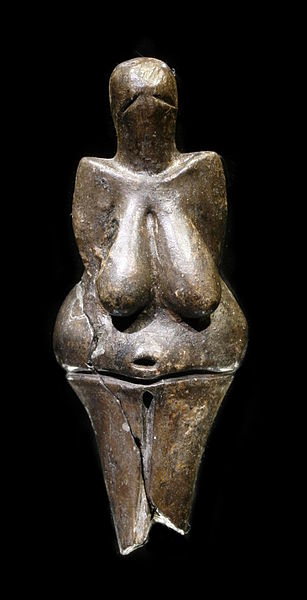
Image credit: “Petr Novák, Wikipedia. “As they reached the Summit, he said: “Thou shall take this Snapshot and use it according to the Code of License, and let your people flourish all around the world.” They brought the Snapshot to their homes and there was much rejoicing.”
https://commons.wikimedia.org/w/index.php?curid=2682270
Previous Post

May 14, 2016
what's so comforting about a tongue of fire or descending dove?
Next Post

May 17, 2016 pray for peace o jerusalem
Browse Our Archives
Select a Category abortion anti-semitism art Atwood Betrothed church clergy abuse coronavirus culture economics education environmentalism ethics faith family feminism gardening gun violence immigration Judaism literature MaddAddam New Pro Life Movement news pandemic personalism poem politics politics blue Pope Francis racism religion salvation sexuality social justice spirituality Station eleven Stephen King The Stand Trump Uncategorized war World Health Organization
Select a Month March 2021 February 2021 January 2021 December 2020 November 2020 October 2020 September 2020 August 2020 July 2020 June 2020 May 2020 April 2020 March 2020 February 2020 January 2020 December 2019 November 2019 October 2019 September 2019 August 2019 July 2019 June 2019 May 2019 April 2019 March 2019 February 2019 January 2019 December 2018 November 2018 October 2018 September 2018 August 2018 July 2018 June 2018 May 2018 April 2018 March 2018 February 2018 January 2018 December 2017 November 2017 October 2017 September 2017 August 2017 July 2017 June 2017 May 2017 April 2017 March 2017 February 2017 January 2017 December 2016 November 2016 October 2016 September 2016 August 2016 July 2016 June 2016 May 2016 April 2016 March 2016 February 2016
Follow Us!
TAKE THE
Religious Wisdom Quiz
What occupation did Peter, Andrew, James, and John have before following Jesus?
Select your answer to see how you score.
Tax collectors Scribes Politicians Fishermen
Support this
Column


Related posts from suspended in her jar

Immigrants: They Need Us, and We Need Them

Four Takeaways from Oprah’s Interview with the Duke...

Catholics Are De-Toxing From their Experiences With Traumatic...

Rush Limbaugh Would Never Have Succeeded In an...
TRENDING AT PATHEOS Catholic

Creation, Preservation, and Teleology in Catholic Theology
As I write this, it is very early Monday morning. Like millions...

The Parable Of The Sower And The Word...
One of Christ’s most famous parables is that of the sower who...

Rejecting Doom: Christian Hope And Human Action
Christianity is a religion of hope. We are to have hope and...

Why I Choose the Eucharist Over the Sermon
Choose the Eucharist, Not the Sermon What are we supposed to get...

5 Design Elements Found in Spiritually Rooted Homes
Putting Spirituality Into Home Decor Our homes are more than our living...

Credo: A Story of God Told with the...
About 10 years ago, I began to imagine a personal "Credo" that...
view all Catholic blogs
Ad-Free & Subscriber Log-In Subscription Support
- About Us
- 2026 Calendar
- Videos
- Podcasts
- Library of World Religions
- Faith In Media Tracker
- Advertise With Us
- Write for Us
- Privacy Policy
- Terms of Service
- Do Not Sell My Data
- Contact Us
- Radiant Digital
- Manage Newsletter Subscriptions
- Unsubscribe From Notifications
- Sitemap
Copyright 2008-2026, Patheos. All rights reserved.
Subscription Support Ad-Free & Subscriber Log-In
Follow Patheos