
BuddhistCatholicContemplativeEvangelicalGeneral ChristianHinduJewishLatter-day SaintMuslimNew VisionsProgressive Christian
Beliefs
- Buddhist
- Catholic
- Contemplative
- Evangelical
- General Christian
- Hindu
- Jewish
- Latter-day Saint
- More Voices
- Muslim
- New Visions
- Pagan
- Progressive Christian
Topics
- Religion News
- Food and Religion
- Sports and Religion
- Religious Art
- Religious Music and Entertainment
- Religious Events
- History and Religion
- Style and Religion
- Politics and Religion
- Women in Religion
- Recreation Outdoors and Religion
- Business Finance and Religion
- Careers Workplace and Religion
- Education and Religion
- Family Parenting and Religion
- Health Fitness and Religion
- Home and Religion
- Relationships and Religion
- Technology and Religion
- Travel and Religion
Columnists
- Buddhist Columnists
- Business Finance and Religion Columnists
- Careers Workplace and Religion Columnists
- Catholic Columnists
- Contemplative Columnists
- Education and Religion Columnists
- Evangelists Columnists
- Family Parenting and Religion Columnists
- General Christian Columnists
- Health Fitness and Religion Columnists
- Hindu Columnists
- History and Religion Columnists
- Home and Religion Columnists
- Jewish Columnists
- More Voices Columnists
- Latter Day Columnists
- Muslim Columnists
- New Visions Columnists
- Nonreligious Columnists
- Pagan Columnists
- Politics and Religion Columnists
- Progressive Columnists
- Recreation Outdoors and Religion Columnists
- Relationships and Religion Columnists
- Religion News Columnists
- Religious Art Columnists
- Religious Events Columnists
- Religious Music and Entertainment Columnists
- Sports and Religion Columnists
- Style and Religion Columnists
- Technology and Religion Columnists
- Travel and Religion Columnists
- Women in Religion Columnists
Resource Library
- 2026 Calendar
- Library of World Religions
- The 100 Most Holy Places on Earth
- Patheos Answers
- Podcasts
- Videos
- Faith Leaders Database
- Anglican Episcopalian
- Bahai
- Baptist
- Buddhism
- Christianity
- Confucianism
- Eastern Orthodoxy
- Hinduism
- Holiness and Pentecostal
- ISKCON
- Islam
- Judaism
- Lutheran
- Methodist
- The Church of Jesus Christ of Latter-day Saints
- New Age
- Paganism
- Presbytarian and Reformed
- Protestantism
- Religion Behind the Scenes
- Roman Catholic
- Scientology
- Shia Islam
- Sikhism
- Sufism
- Sunni Islam
- Taoism
- Zen
- See all religions
Research Tools
 Ad-Free & Subscriber Log-In Subscription Support
Ad-Free & Subscriber Log-In Subscription Support
Follow Patheos 

- Trending:
- Forgiveness
- |
- Marriage
- |
- Consciousness
- |
- Death Penalty
- |
- Election
- |
- Halloween
 suspended in her jar
- Home
- Catholic
- what’s so comforting about a tongue of fire or descending dove?
what’s so comforting about a tongue of fire or descending dove?
Last updated on: May 17, 2016 at 10:34 pm by Rebecca Bratten Weiss
what’s so comforting about a tongue of fire or descending dove? 2016-05-17T22:34:42-04:00 Rebecca Bratten Weiss
Patheos Explore the world's faith through different perspectives on religion and spirituality! Patheos has the views of the prevalent religions and spiritualities of the world.
When I was very young, my family briefly attended a non-denominational church with thick layers of Pentecostal practice. While it was entertaining to listen to adults babbling like infants, it was less entertaining when, at Sunday School, I discovered that I was expected to learn to speak in tongues, too. At the Episcopalian church I attended with my grandmother, Sunday school meant eating cookies and coloring Bible scenes, not being suddenly coerced into learning a language that didn’t even sound like language. So I refused, and was made to sit on a stool in a corner, with my face to the wall, until I mended my ways.
My ways remained unmended.
Later brief encounters with charismatic circles did little to improve my view of what people meant when they spoke of the gifts of the Spirit. Again, the adults could be funny with their jabbering and leaping and keeling over, but some of the exploits attempted in these circles were not so amusing – the stuff of nightmares, rather. Good in retrospect if one happens to be writing a neo-gothic novel about religious communes (as I am), but not so good for cultivating warm feelings about the Holy Spirit.
Becoming Catholic meant confirmation, and confirmation meant the Holy Spirit – but this time, the Holy Spirit neatly contained within correct definitions, definitions which, as a student of philosophy, I could memorize and unpack. I did this so well, in my confirmation letter to the bishop, that he ended up quoting me extensively (with anonymous attribution) in the confirmation liturgy.
The big secret was that I had no idea what the hell I was talking about, but put on a great show of being right about everything. That was pretty much the ongoing motif of my BA and MA studies, which meant I talked a good line about a lot of things, but had no genuine religious life, no sense of the divine, no affirmation of encounter with the divine, or even a proper sorrow over the lack thereof. I was like one of T.S. Eliot’s Hollow Men, but with my headpiece full, not of straw, but of certainties.
So when the existential shit hit the metaphysical fan, I had no roots in faith to help me. God didn’t come through, and so dutifully I went off the deep end. The rebellious child who got into trouble in Sunday School returned to have her revenge.
I’ve written elsewhere about how returning to a life of faith has meant an ongoing searching for understanding of those things I once thought I knew, things about which I was, it turns out, often dead wrong (confession: I used even to buy into a form of casual racism coupled with smug assumptions about the superiority of western culture. I also sometimes drew on the rhetoric of faux modesty to shame women of whom I was envied. I did a great many scandalous things later on, but I was never more horrible a person than when I was a Smug Christian in my early twenties).
So what about this Holy Spirit business? I can’t imagine that God really wants us keeling over and babbling. Communication and unity are not served thus; and besides, Pentecostal and charismatic circles often end up falling back on religious abuse to manipulate others, as well as narcissistic emphasis on personal display and spectacle – nothing like the interiority of the genuine mystics.
But if the early disciples really did rush out into the street preaching the Gospel in diverse languages, why don’t we do this anymore?
Trying to figure out what to make of the Third Person of the Trinity is to enter into a realm of confusion. We don’t seem to know at all what is going on here. In a way this is good, because here it is less likely that we will fall into anthropomorphizing the divine, as there’s no human face we can pin on the Spirit; we end up with tongues of fire and rushing winds and a descending dove.
I wonder whether reluctance to anthropomorphize the Spirit is because many are afraid of that marginal tradition that dares to speak of the Spirit as feminine. The term for “Spirit” (“Ruah”) is in the feminine gender, after all, and some have associated the Spirit with Hagia Sophia, Holy Wisdom, portrayed typically in female and feminine images. We think of the Spirit less as a face or figure than as an action: the Spirit inspires, indwells, consoles, comforts. “Consolation” is also linked to traits we tend to consider feminine. We women are told often enough that we are “nurturers” – but this is used sometimes to remind us not to step outside of the narrow parameters of the domestic space where we belong. What if nurturing is more like a rushing wind or a flame of fire? What if to nurture is also to inspire?
This in itself is consoling, even if we are told we’re not allowed to be consoled this way. It gives us a new way to think about what it might mean if women are intended to be especially nurturing.
Of course, gender (feminine) does not mean sex (female). The only Person of the Trinity to have a biological sex is the Son, because he became a human, and walked among us, remains with us physically, becomes one with us physically as we consume the Eucharist. We need this physical presence. We need the one we are told loves us to be flesh among us, seen and touched, as Thomas needed to put his hand in Jesus’ side.
But when the body feels a prison and flesh and vision fail, perhaps this confusion I experience about the Spirit is also a kind of comfort. To know that I do not know (when all that I know feels insufficient to explain the way this world rolls) – is a weird relief, better than knowing the exactly right thing to say to the bishop. In the dark night or the empty spaces, the experiences when fleshly being feels appalling, perhaps there is a need to step outside of our customary categories, to find a flame of fire or rushing wind or descending dove.
It’s awful for me to have to admit that the adults who babbled and keeled, misguided as they were, corrupted by power as they were, has some point: that any human language is insufficient for speech about the divine.
There wouldn’t even be a purpose, anyway, to getting sudden infusion of linguistic ability, where I live, since everyone speaks English. I can trot around quoting German poetry but that’s not how to preach the Gospel. I could be sure to pass that pesky Latin exam that awaits me, but academic expertise is another hollow thing.
Whoever it was who said “preach the Gospel at all times; use words if necessary” also had a point. And what is the Gospel? It is of incarnation, forgiveness, reconciliation, mercy. It is of divine Charity. I guess this is what I will ask the Spirit for, this Pentecost Sunday.
Previous Post

May 12, 2016
now is the time to be whole life
Next Post
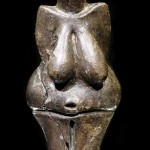
May 16, 2016 jesus loves your fat: why fat-shaming is not christian
Browse Our Archives
Select a Category abortion anti-semitism art Atwood Betrothed church clergy abuse coronavirus culture economics education environmentalism ethics faith family feminism gardening gun violence immigration Judaism literature MaddAddam New Pro Life Movement news pandemic personalism poem politics politics blue Pope Francis racism religion salvation sexuality social justice spirituality Station eleven Stephen King The Stand Trump Uncategorized war World Health Organization
Select a Month March 2021 February 2021 January 2021 December 2020 November 2020 October 2020 September 2020 August 2020 July 2020 June 2020 May 2020 April 2020 March 2020 February 2020 January 2020 December 2019 November 2019 October 2019 September 2019 August 2019 July 2019 June 2019 May 2019 April 2019 March 2019 February 2019 January 2019 December 2018 November 2018 October 2018 September 2018 August 2018 July 2018 June 2018 May 2018 April 2018 March 2018 February 2018 January 2018 December 2017 November 2017 October 2017 September 2017 August 2017 July 2017 June 2017 May 2017 April 2017 March 2017 February 2017 January 2017 December 2016 November 2016 October 2016 September 2016 August 2016 July 2016 June 2016 May 2016 April 2016 March 2016 February 2016
Follow Us!
TAKE THE
Religious Wisdom Quiz
What is the meaning of Emmanuel?
Select your answer to see how you score.
Messiah Jehovah Saves God with Us Praise the Lord
Support this
Column


Related posts from suspended in her jar

Catholics Are De-Toxing From their Experiences With Traumatic...

How Has the Pandemic Changed Us? Has It...

Rush Limbaugh Would Never Have Succeeded In an...
People are in Therapy to Recover from Religion...
TRENDING AT PATHEOS Catholic

The Parable Of The Sower And The Word...
One of Christ’s most famous parables is that of the sower who...

Rejecting Doom: Christian Hope And Human Action
Christianity is a religion of hope. We are to have hope and...

Why I Choose the Eucharist Over the Sermon
Choose the Eucharist, Not the Sermon What are we supposed to get...

5 Design Elements Found in Spiritually Rooted Homes
Putting Spirituality Into Home Decor Our homes are more than our living...

Credo: A Story of God Told with the...
About 10 years ago, I began to imagine a personal "Credo" that...

The Anatomy of Divine Revelation in Catholic Thought
The claim that God has made Himself known to human beings is...
view all Catholic blogs
Ad-Free & Subscriber Log-In Subscription Support
- About Us
- 2026 Calendar
- Videos
- Podcasts
- Library of World Religions
- Faith In Media Tracker
- Advertise With Us
- Write for Us
- Privacy Policy
- Terms of Service
- Do Not Sell My Data
- Contact Us
- Radiant Digital
- Manage Newsletter Subscriptions
- Unsubscribe From Notifications
- Sitemap
Copyright 2008-2026, Patheos. All rights reserved.
Subscription Support Ad-Free & Subscriber Log-In
Follow Patheos