
BuddhistCatholicContemplativeEvangelicalGeneral ChristianHinduJewishLatter-day SaintMuslimNew VisionsProgressive Christian
Beliefs
- Buddhist
- Catholic
- Contemplative
- Evangelical
- General Christian
- Hindu
- Jewish
- Latter-day Saint
- More Voices
- Muslim
- New Visions
- Pagan
- Progressive Christian
Topics
- Religion News
- Food and Religion
- Sports and Religion
- Religious Art
- Religious Music and Entertainment
- Religious Events
- History and Religion
- Style and Religion
- Politics and Religion
- Women in Religion
- Recreation Outdoors and Religion
- Business Finance and Religion
- Careers Workplace and Religion
- Education and Religion
- Family Parenting and Religion
- Health Fitness and Religion
- Home and Religion
- Relationships and Religion
- Technology and Religion
- Travel and Religion
Columnists
- Buddhist Columnists
- Business Finance and Religion Columnists
- Careers Workplace and Religion Columnists
- Catholic Columnists
- Contemplative Columnists
- Education and Religion Columnists
- Evangelists Columnists
- Family Parenting and Religion Columnists
- General Christian Columnists
- Health Fitness and Religion Columnists
- Hindu Columnists
- History and Religion Columnists
- Home and Religion Columnists
- Jewish Columnists
- More Voices Columnists
- Latter Day Columnists
- Muslim Columnists
- New Visions Columnists
- Nonreligious Columnists
- Pagan Columnists
- Politics and Religion Columnists
- Progressive Columnists
- Recreation Outdoors and Religion Columnists
- Relationships and Religion Columnists
- Religion News Columnists
- Religious Art Columnists
- Religious Events Columnists
- Religious Music and Entertainment Columnists
- Sports and Religion Columnists
- Style and Religion Columnists
- Technology and Religion Columnists
- Travel and Religion Columnists
- Women in Religion Columnists
Resource Library
- 2026 Calendar
- Library of World Religions
- The 100 Most Holy Places on Earth
- Patheos Answers
- Podcasts
- Videos
- Faith Leaders Database
- Anglican Episcopalian
- Bahai
- Baptist
- Buddhism
- Christianity
- Confucianism
- Eastern Orthodoxy
- Hinduism
- Holiness and Pentecostal
- ISKCON
- Islam
- Judaism
- Lutheran
- Methodist
- The Church of Jesus Christ of Latter-day Saints
- New Age
- Paganism
- Presbytarian and Reformed
- Protestantism
- Religion Behind the Scenes
- Roman Catholic
- Scientology
- Shia Islam
- Sikhism
- Sufism
- Sunni Islam
- Taoism
- Zen
- See all religions
Research Tools
 Ad-Free & Subscriber Log-In Subscription Support
Ad-Free & Subscriber Log-In Subscription Support
Follow Patheos 

- Trending:
- Forgiveness
- |
- Marriage
- |
- Consciousness
- |
- Death Penalty
- |
- Election
- |
- Halloween
 suspended in her jar
- Home
- Catholic
- breastfeeding: a social justice issue
breastfeeding: a social justice issue
Last updated on: March 30, 2016 at 10:59 am by Rebecca Bratten Weiss
breastfeeding: a social justice issue 2016-03-30T10:59:29-04:00 Rebecca Bratten Weiss
Patheos Explore the world's faith through different perspectives on religion and spirituality! Patheos has the views of the prevalent religions and spiritualities of the world.
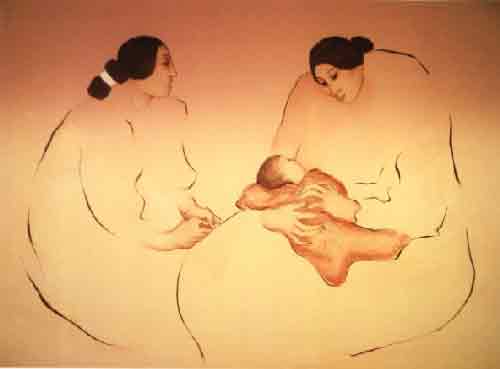
Much debate has transpired recently over the extent to which we can legitimately preference breastfeeding without shaming mothers who for one reason or another are unable to nurse their babies. Repeatedly, convincing studies have demonstrated that breastfeeding is both physically and psychologically beneficial for both mother and child, but the fact remains that not every woman is able to nurse her baby. Therefore, while nursing should be encouraged, recommended, and supported, as soon as we make it into a moral or categorical imperative we put impossible burdens on women and families who are already burdened – because, if a woman is unable to nurse her baby, this implies some pre-existing circumstance which already is likely to be causing stress.
This article from ABC News states that women in the United States don’t breastfeed for as long as the WHO recommends (six months). There are cases in which, due to health concerns, women can’t breastfeed (post-caesarian exhaustion, illness, masectomies, breast hypoplasia) and, as this article in Parenting explains, are made to feel guilty about it. This is certainly an issue for adoptive mothers, some of whom can lactate, but not all. Women who have been raised to think of their breasts in a healthy and de-eroticized way may tend especially to emphasize the purpose of the breast in providing not only sustenance, but bonding between mother and child; an inability to nurse can then lead to a sense of failure as a woman, inadequacy as a mother – and this in the difficult post-partum period when dread depression lurks around the corner always. Breastfeeding is one of the ways of minimizing the risk of severe PPD, and so a woman who has looked forward to nursing and finds that she can’t may be especially at risk. What she doesn’t need is anyone making her feel more guilty.
But it is also the case that women who probably would be able to breastfeed effectively often do not. Why is this? This Wall Street Journal piece lists five reasons why women won’t breastfeed: historical precedent, unable to nurse because of their jobs, socio-economic inequality, formula is pushed in hospitals, and formula is heavily advertised.
Here once again, capitalism rears its head: capitalism is responsible for a species of liberal feminism that emphasizes only market productivity; capitalism has created an economy in which women have no choice but to work during pregnancy and immediately after childbirth; capitalism says of the socio-economically disadvantaged that it is all the fault of their own bad choices. Capitalism drives the market for baby formula, manufacturing artificial needs where often none pre-exist.
The irony of this is that, while a liberal capitalist market assumes the primacy of the isolated individual and the unerring accuracy of the invisible hand, this contradicts the way the community actually responds to pregnancy. Being pregnant and having a baby makes one suddenly become a sort of public property. I hated this, actually – hated the fact that when I was pregnant strangers not only offered unsolicited commentary and advice, but came up poking, stroking, prodding me. And I couldn’t even kick them, because I was too ungainly. A pregnant woman becomes everyone’s business, except for when the business entailed is that of making sure she has the support needed.
Yes, we have social welfare programs, for which I am very grateful, since without them I would still be paying off hospital debts. And there are various independent charities that provide breast pumps, and encouragement. But here’s the deal: as long as so many women are unable to take time off work and stay home with their babies, breastfeeding is going to remain very, very difficult for them.
I was able to stay home and nurse my first child, thanks to the kindness of friends. But for my second and third, I was immediately back to work. Part time work, theoretically, and much could be done from home, but it meant that I had to feed my baby as well as pump milk as well as prep lecture notes as well as grade exams, and somehow squeeze myself into ill-fitting cheap post-partum clothing, and go to teach with the illusion of being really on top of things. Pumping at work was not an option because I shared an office with several dozen people, some of them men, soe of them priests. Plus, my office has glassed walls, so pumping would have made an interesting spectacle for the passers-by. Even pumping in the women’s restroom was a difficulty, because any time a door opened anyone in the hall (and the hall was always busy) could see me sitting there with a contraption hanging off my boob, like a cow in an industrial dairy.
And my babies hated when I was gone. Several times in the middle of class my husband called me in despair because the baby had been screaming for hours and refused to be comforted. I hated the feeling of helplessness and lack of professionalism. I resented the fact that no male academic in my position would ever be subjected to that, but that some might judge me for ditching class to rush home to my baby, and others might judge me for working at all. Yet, financially, not working was not an option.
Having experienced that, I marvel at the endurance shown by mothers in low-income jobs, working forty hour weeks in retail or fast food. These women have no choice but to go back to work, often still physically exhausted, and psychologically overwrought at being separated from their children. If we take seriously the benefits of nursing, we must have paid parental leave, child care facilities on the premises, safe nursing spaces, absolute acceptance of nursing mothers (covered or uncovered). We also need to respect the privacy of the bond between mother and child, and realize that a woman who is purchasing formula possibly has no other option.
Breastfeeding is a moral issue, yes, but the moral responsibility lies with the society that tells women they must breastfeed, and then makes it impossible for them to do so.
image credit: http://www.breastfeedingmums.com/breastfeeding-art-breastfeeding-7.htm, Wikimedia commons, public domain
Previous Post

March 28, 2016
Yes, We Can Dare Hope That All Will Be Saved
Next Post
March 31, 2016 thank you, donald trump!
Browse Our Archives
Select a Category abortion anti-semitism art Atwood Betrothed church clergy abuse coronavirus culture economics education environmentalism ethics faith family feminism gardening gun violence immigration Judaism literature MaddAddam New Pro Life Movement news pandemic personalism poem politics politics blue Pope Francis racism religion salvation sexuality social justice spirituality Station eleven Stephen King The Stand Trump Uncategorized war World Health Organization
Select a Month March 2021 February 2021 January 2021 December 2020 November 2020 October 2020 September 2020 August 2020 July 2020 June 2020 May 2020 April 2020 March 2020 February 2020 January 2020 December 2019 November 2019 October 2019 September 2019 August 2019 July 2019 June 2019 May 2019 April 2019 March 2019 February 2019 January 2019 December 2018 November 2018 October 2018 September 2018 August 2018 July 2018 June 2018 May 2018 April 2018 March 2018 February 2018 January 2018 December 2017 November 2017 October 2017 September 2017 August 2017 July 2017 June 2017 May 2017 April 2017 March 2017 February 2017 January 2017 December 2016 November 2016 October 2016 September 2016 August 2016 July 2016 June 2016 May 2016 April 2016 March 2016 February 2016
Follow Us!
TAKE THE
Religious Wisdom Quiz
Who said, "Vanity of vanities, all is vanity"?
Select your answer to see how you score.
Job Isaiah David Solomon
Support this
Column


Related posts from suspended in her jar

Immigrants: They Need Us, and We Need Them

Four Takeaways from Oprah’s Interview with the Duke...

Catholics Are De-Toxing From their Experiences With Traumatic...

How Has the Pandemic Changed Us? Has It...
TRENDING AT PATHEOS Catholic

Rejecting Doom: Christian Hope And Human Action
Christianity is a religion of hope. We are to have hope and...

It’s What Comes From Within Which Matters
One of the most difficult things for us to understand is why...

Why I Choose the Eucharist Over the Sermon
Choose the Eucharist, Not the Sermon What are we supposed to get...

5 Design Elements Found in Spiritually Rooted Homes
Putting Spirituality Into Home Decor Our homes are more than our living...

Credo: A Story of God Told with the...
About 10 years ago, I began to imagine a personal "Credo" that...

The Anatomy of Divine Revelation in Catholic Thought
The claim that God has made Himself known to human beings is...
view all Catholic blogs
Ad-Free & Subscriber Log-In Subscription Support
- About Us
- 2026 Calendar
- Videos
- Podcasts
- Library of World Religions
- Faith In Media Tracker
- Advertise With Us
- Write for Us
- Privacy Policy
- Terms of Service
- Do Not Sell My Data
- Contact Us
- Radiant Digital
- Manage Newsletter Subscriptions
- Unsubscribe From Notifications
- Sitemap
Copyright 2008-2026, Patheos. All rights reserved.
Subscription Support Ad-Free & Subscriber Log-In
Follow Patheos