
BuddhistCatholicContemplativeEvangelicalGeneral ChristianHinduJewishLatter-day SaintMuslimNew VisionsProgressive Christian
Beliefs
- Buddhist
- Catholic
- Contemplative
- Evangelical
- General Christian
- Hindu
- Jewish
- Latter-day Saint
- More Voices
- Muslim
- New Visions
- Pagan
- Progressive Christian
Topics
- Religion News
- Food and Religion
- Sports and Religion
- Religious Art
- Religious Music and Entertainment
- Religious Events
- History and Religion
- Style and Religion
- Politics and Religion
- Women in Religion
- Recreation Outdoors and Religion
- Business Finance and Religion
- Careers Workplace and Religion
- Education and Religion
- Family Parenting and Religion
- Health Fitness and Religion
- Home and Religion
- Relationships and Religion
- Technology and Religion
- Travel and Religion
Columnists
- Buddhist Columnists
- Business Finance and Religion Columnists
- Careers Workplace and Religion Columnists
- Catholic Columnists
- Contemplative Columnists
- Education and Religion Columnists
- Evangelists Columnists
- Family Parenting and Religion Columnists
- General Christian Columnists
- Health Fitness and Religion Columnists
- Hindu Columnists
- History and Religion Columnists
- Home and Religion Columnists
- Jewish Columnists
- More Voices Columnists
- Latter Day Columnists
- Muslim Columnists
- New Visions Columnists
- Nonreligious Columnists
- Pagan Columnists
- Politics and Religion Columnists
- Progressive Columnists
- Recreation Outdoors and Religion Columnists
- Relationships and Religion Columnists
- Religion News Columnists
- Religious Art Columnists
- Religious Events Columnists
- Religious Music and Entertainment Columnists
- Sports and Religion Columnists
- Style and Religion Columnists
- Technology and Religion Columnists
- Travel and Religion Columnists
- Women in Religion Columnists
Resource Library
- 2026 Calendar
- Library of World Religions
- The 100 Most Holy Places on Earth
- Patheos Answers
- Podcasts
- Videos
- Faith Leaders Database
- Anglican Episcopalian
- Bahai
- Baptist
- Buddhism
- Christianity
- Confucianism
- Eastern Orthodoxy
- Hinduism
- Holiness and Pentecostal
- ISKCON
- Islam
- Judaism
- Lutheran
- Methodist
- The Church of Jesus Christ of Latter-day Saints
- New Age
- Paganism
- Presbytarian and Reformed
- Protestantism
- Religion Behind the Scenes
- Roman Catholic
- Scientology
- Shia Islam
- Sikhism
- Sufism
- Sunni Islam
- Taoism
- Zen
- See all religions
Research Tools
 Ad-Free & Subscriber Log-In Subscription Support
Ad-Free & Subscriber Log-In Subscription Support
Follow Patheos 

- Trending:
- Forgiveness
- |
- Marriage
- |
- Consciousness
- |
- Death Penalty
- |
- Election
- |
- Halloween
 suspended in her jar
- Home
- Catholic
- Umberto Eco, gnosis, and nihilism
Umberto Eco, gnosis, and nihilism
Last updated on: March 27, 2016 at 8:37 pm by Rebecca Bratten Weiss
Umberto Eco, gnosis, and nihilism 2016-03-27T20:37:06-04:00 Rebecca Bratten Weiss
Patheos Explore the world's faith through different perspectives on religion and spirituality! Patheos has the views of the prevalent religions and spiritualities of the world.
Umberto Eco, philosopher and story-teller, died yesterday at the age of 84, leaving me to chastise myself for doing exactly what I derided in yesterday’s post : mourning the death of a person because of the loss of production, in this case the production of works that rock my epistemological world. I guess my best tribute to him, then, will be to find how the world rocks on my own.
Or, perhaps, to find how it doesn’t.
When I was eighteen, I happened upon The Name of the Rose in a used bookstore, and immediately became obsessed. As a philosophy and Great Books student, I was thrilled to find a story which treated the pursuit of ancient wisdom not as an arcane curiosity for a few geeky weirdos, but as a matter of life and death. It appealed to my sense of having special knowledge, and I amused myself by imagining other readers who just didn’t get it the way I did, readers unaware of the politics of the early Franciscan order, or of the history of Aristotelian texts.
The irony of this is, I hope, not lost on you. First, because on any scale of “special knowledge” Eco himself is going to tower far beyond any sophomore philosophy student, and had I been wiser I would have been humbler, recognized my “special knowledge” as mere ordinary education. But, more importantly, because Eco was masterful at deconstructing the desire for gnosis, and I fell into the same trap that snared so many of his characters.
My favorite Eco novel is probably Baudolino, though I can never find anyone with whom to discuss it (gnosis again?) but right now let’s talk about Foucault’s Pendulum, a work so weighty with pedagogy that it should make even the cleverest undergrad feel her inadequacy. This is a novel that, just in passing, anticipates and derides the basic idiotic premise of The Da Vinci Code. Awesome, right?
The basic plot of Foucault’s Pendulum: three erudite friends amuse themselves by using computer programming and story-writing outlines to syncretize the world’s great conspiracy theories into a single super-conspiracy-theory. In so doing they inadvertently create an alternate history of the world, and become the prey of the leaders of secret societies desperate to possess their arcane knowledge (which, of course, is not knowledge at all, but fantasy).
At the end of Foucault’s Pendulum you will probably know a lot more than you knew before, about the Knights Templar, the Rosicrucians, the Protocols of the Elders of Zion, Candomble, and communism. You will also, if you are reading well, find yourself blessedly immunized against the fever for gnosis.
At one point in the novel, a character explains how she protects herself against sexual predators:
“When I asked if she wasn’t afraid of sexual maniacs, she told me her method. When a sexual maniac approached, threatening, she would take his arm and say, “Come on, let’s do it.” And he would go away, bewildered. If you’re a sexual maniac, you don’t want sex; you want the excitement of its theft, you want the victim’s resistance and despair. If sex is handed to you on a platter, here it is, go to it, naturally you’re not interested, otherwise what sort of sexual maniac would you be?”
I haven’t ever had the guts to use this technique (a kick in the crotch seems simpler) – but I see the parallel with desire for knowledge. It’s connected with mimetic desire. We want precisely what we can’t have. Electricity would probably seem like an arcane magic if it weren’t installed in every home. If everyone had a copy of the second book of Aristotle’s Poetics, no one would think it such a big deal. And in these cases we long for knowledge not with the purity of intellectual appetite, but with the desire for power. Thus even that most perfect of pleasures, the pleasure of learning, ends up corrupted.
The appetite for secret knowledge leads us away from appreciating the simple realities that confront us. We no longer see the body as the body, but as a layer of palimpsests, something to be deconstructed by metonymy or human sacrifice, something to be distilled in strange Rosicrucian rituals or counted out via cabalistic number-codes. And oh, it is all so sexy. Uncovering things that don’t want to be uncovered…or do they?
It’s not enough to understand the history of the land one lives on, who farmed it, what was planted there, which corporations destroyed it. It’s not enough to understand how plants grow or birds fly. One becomes deeply discontented with any knowledge that isn’t special and exclusive. It’s not enough to observe the minute details of human interaction and disappointment and attempts and failures: we have to have conspiracy theories about treason and murder. An ideological enemy has to be made into a monster, because making a man into a monster requires secret knowledge.
And yes, the secret knowledge is all very stupid, but as long as you keep it secret no one will notice.
“They still want the Map. And when I tell Them that there is no Map, They will want it all the more.”
The longing for gnosis is a kind of nihilism, after all. It’s probably connected with the longing for a demagogue. The bored post-modern can’t appreciate the taste of a peach or understand that it’s worth it to study how fungus grows or jellyfish move. He’s sick of a world that he never even bothered to understand, and it amuses him to elect a lunatic who offers nothing but the promise of conflagration. This is stupid, too, and the bored post-modern embraces stupidity because it is ironic.
Read Foucault’s Pendulum. Then go take a walk and find a green hill to look at, so you can see what the narrator of the novel discovers too late.
*****************************************************************************************************************
“As a philosopher I am interested in truth. Since it is very difficult to decide what’s true or not I discovered that it’s easier to arrive at truth through the analysis of fakes” (Umberto Eco, Guardian interview)
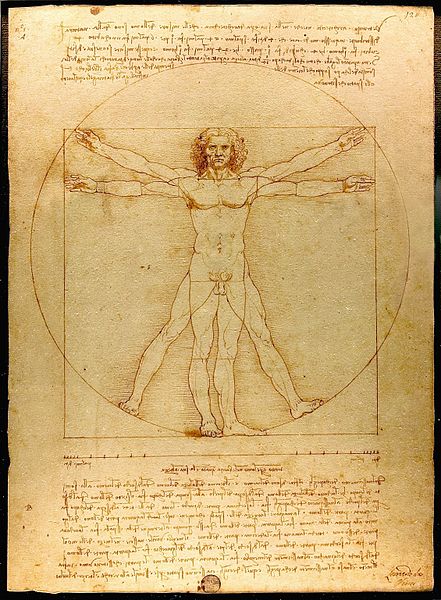
Image credit: Leonardo da Vinci [Public domain], via Wikimedia Commons
Previous Post

February 19, 2016
to begin with, let's talk about death

Browse Our Archives
Select a Category abortion anti-semitism art Atwood Betrothed church clergy abuse coronavirus culture economics education environmentalism ethics faith family feminism gardening gun violence immigration Judaism literature MaddAddam New Pro Life Movement news pandemic personalism poem politics politics blue Pope Francis racism religion salvation sexuality social justice spirituality Station eleven Stephen King The Stand Trump Uncategorized war World Health Organization
Select a Month March 2021 February 2021 January 2021 December 2020 November 2020 October 2020 September 2020 August 2020 July 2020 June 2020 May 2020 April 2020 March 2020 February 2020 January 2020 December 2019 November 2019 October 2019 September 2019 August 2019 July 2019 June 2019 May 2019 April 2019 March 2019 February 2019 January 2019 December 2018 November 2018 October 2018 September 2018 August 2018 July 2018 June 2018 May 2018 April 2018 March 2018 February 2018 January 2018 December 2017 November 2017 October 2017 September 2017 August 2017 July 2017 June 2017 May 2017 April 2017 March 2017 February 2017 January 2017 December 2016 November 2016 October 2016 September 2016 August 2016 July 2016 June 2016 May 2016 April 2016 March 2016 February 2016
Follow Us!
TAKE THE
Religious Wisdom Quiz
According to Jesus, "Blessed are those who hunger and thirst for." what?
Select your answer to see how you score.
Money Righteousness Popularity Power
Support this
Column


Related posts from suspended in her jar

Immigrants: They Need Us, and We Need Them

Four Takeaways from Oprah’s Interview with the Duke...

Catholics Are De-Toxing From their Experiences With Traumatic...

How Has the Pandemic Changed Us? Has It...
TRENDING AT PATHEOS Catholic

Rejecting Doom: Christian Hope And Human Action
Christianity is a religion of hope. We are to have hope and...

It’s What Comes From Within Which Matters
One of the most difficult things for us to understand is why...

Why I Choose the Eucharist Over the Sermon
Choose the Eucharist, Not the Sermon What are we supposed to get...

5 Design Elements Found in Spiritually Rooted Homes
Putting Spirituality Into Home Decor Our homes are more than our living...

Credo: A Story of God Told with the...
About 10 years ago, I began to imagine a personal "Credo" that...

The Anatomy of Divine Revelation in Catholic Thought
The claim that God has made Himself known to human beings is...
view all Catholic blogs
Ad-Free & Subscriber Log-In Subscription Support
- About Us
- 2026 Calendar
- Videos
- Podcasts
- Library of World Religions
- Faith In Media Tracker
- Advertise With Us
- Write for Us
- Privacy Policy
- Terms of Service
- Do Not Sell My Data
- Contact Us
- Radiant Digital
- Manage Newsletter Subscriptions
- Unsubscribe From Notifications
- Sitemap
Copyright 2008-2026, Patheos. All rights reserved.
Subscription Support Ad-Free & Subscriber Log-In
Follow Patheos