
BuddhistCatholicContemplativeEvangelicalGeneral ChristianHinduJewishLatter-day SaintMuslimNew VisionsProgressive Christian
Beliefs
- Buddhist
- Catholic
- Contemplative
- Evangelical
- General Christian
- Hindu
- Jewish
- Latter-day Saint
- More Voices
- Muslim
- New Visions
- Pagan
- Progressive Christian
Topics
- Religion News
- Food and Religion
- Sports and Religion
- Religious Art
- Religious Music and Entertainment
- Religious Events
- History and Religion
- Style and Religion
- Politics and Religion
- Women in Religion
- Recreation Outdoors and Religion
- Business Finance and Religion
- Careers Workplace and Religion
- Education and Religion
- Family Parenting and Religion
- Health Fitness and Religion
- Home and Religion
- Relationships and Religion
- Technology and Religion
- Travel and Religion
Columnists
- Buddhist Columnists
- Business Finance and Religion Columnists
- Careers Workplace and Religion Columnists
- Catholic Columnists
- Contemplative Columnists
- Education and Religion Columnists
- Evangelists Columnists
- Family Parenting and Religion Columnists
- General Christian Columnists
- Health Fitness and Religion Columnists
- Hindu Columnists
- History and Religion Columnists
- Home and Religion Columnists
- Jewish Columnists
- More Voices Columnists
- Latter Day Columnists
- Muslim Columnists
- New Visions Columnists
- Nonreligious Columnists
- Pagan Columnists
- Politics and Religion Columnists
- Progressive Columnists
- Recreation Outdoors and Religion Columnists
- Relationships and Religion Columnists
- Religion News Columnists
- Religious Art Columnists
- Religious Events Columnists
- Religious Music and Entertainment Columnists
- Sports and Religion Columnists
- Style and Religion Columnists
- Technology and Religion Columnists
- Travel and Religion Columnists
- Women in Religion Columnists
Resource Library
- 2026 Calendar
- Library of World Religions
- The 100 Most Holy Places on Earth
- Patheos Answers
- Podcasts
- Videos
- Faith Leaders Database
- Anglican Episcopalian
- Bahai
- Baptist
- Buddhism
- Christianity
- Confucianism
- Eastern Orthodoxy
- Hinduism
- Holiness and Pentecostal
- ISKCON
- Islam
- Judaism
- Lutheran
- Methodist
- The Church of Jesus Christ of Latter-day Saints
- New Age
- Paganism
- Presbytarian and Reformed
- Protestantism
- Religion Behind the Scenes
- Roman Catholic
- Scientology
- Shia Islam
- Sikhism
- Sufism
- Sunni Islam
- Taoism
- Zen
- See all religions
Research Tools
 Ad-Free & Subscriber Log-In Subscription Support
Ad-Free & Subscriber Log-In Subscription Support
Follow Patheos 

- Trending:
- Forgiveness
- |
- Marriage
- |
- Consciousness
- |
- Death Penalty
- |
- Election
- |
- Halloween
 Surprising Faith
- Home
- Progressive Christian
- Talking Adoption: An Interview with Benjamin Corey (Part 3)
Talking Adoption: An Interview with Benjamin Corey (Part 3)
Last updated on: August 11, 2015 at 6:00 am by Alicia de los Reyes
Talking Adoption: An Interview with Benjamin Corey (Part 3) 2015-07-15T09:16:41-08:00 Alicia de los Reyes
Patheos Explore the world's faith through different perspectives on religion and spirituality! Patheos has the views of the prevalent religions and spiritualities of the world.
I launched an investigation into the trend of Christian adoptions, which seems strange to call a trend, since it involves children and parents. Over the next several weeks, I’ll be periodically sharing perspectives from parents and children from adopted families. You can find the entire series here.
And in case you missed it, here are Part 1 and Part 2 of my interview with Ben Corey of Formerly Fundie.
Alicia: What would you like to change about the adoption movement?
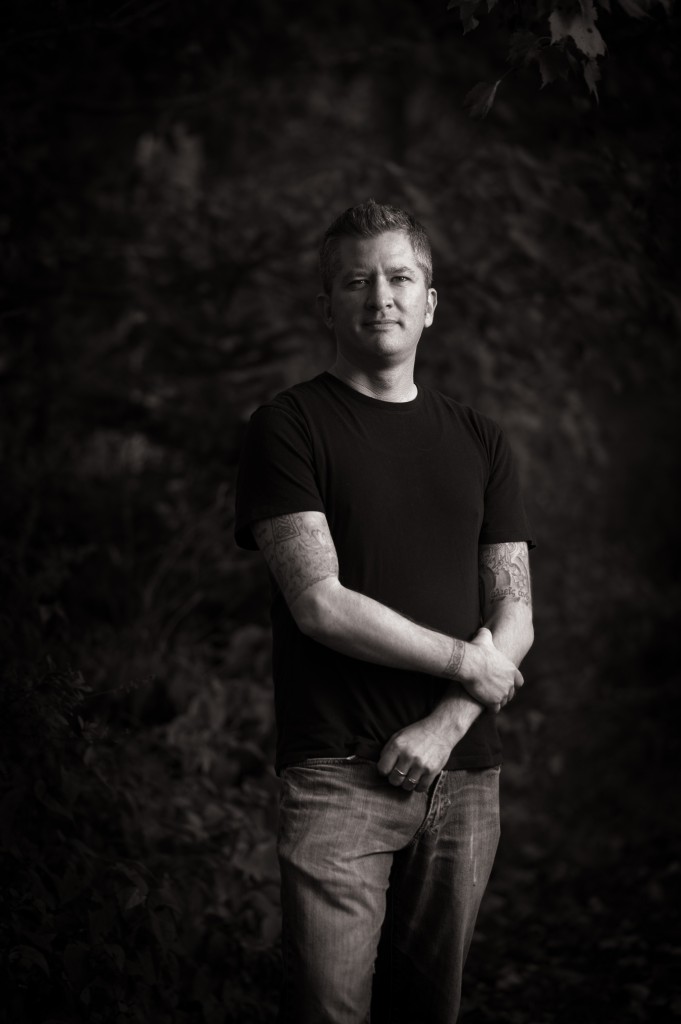
Image © Rogier van Bakel, 2014
Ben: I would like to see in Christian culture a different discussion begin occurring. I think that we make the case well for why Christians should adopt; we make the case well for children without families. But we are not training and equipping families who adopt on how to do it. And a lot of families who end up adopting children with special needs, especially if they don’t realize that the kids have special emotional needs at the time, feel extremely alone. They have lack of access to many resources–and often the Christian community does not know how to respond to children this way.
I have seen childrenwho had emotional needs adopted by Christian families and I’ve heard the parents say “We’re just working on obedience now.”
It’s like “Hey, listen, we’re not talking an obedience issue here. There is some grieving that is occurring here.”
In Christianity in general, I don’t think we’re taught how to grieve well. I don’t think our narrative on adoption includes the huge element that it is born out of a broken story. I think what we need to change is that we need to understand how to walk alongside children through what may be a lifelong grieving process. We need to be able to hold that intention with the things that are good and wonderful about adoption.
On any given day, my daughter may talk about how thankful she is to have a family, and talk about some elements she grieves from her first life.
What I’d like to see is more families like mine, who have experienced difficult, complex adoptions, feel more comfortable coming forward in the church and talking about their struggles, and for there to be people who can really rally around us and support us. But right now the church isn’t equipped becuase the church isn’t talking about this.
Alicia: They’re taking about the mission…
Ben: Right, they’re talking about the mission to go get the child and bring them home but theyr’e not talking about what to do afterwards.
And if they do talk about afterwards, they are talking about it in the terms that you would a biological child. What adopted families need to realize is that you cannot raise an adopted child the way you would raise a biological child. They are night and day different.
For us, we are an interracial family. I can’t raise my kids as if the cops will care that their parents are white if we’re not with them. I cannot raise my children the way I would raise them if they were my biological kids.
White parents of children of color take for granted that their white privilege extends to their children of color, and it is not true.
Again, we have to have very different discussions about the issue of cops with my kids: We have to have a very different discussion on police–how do you interact, who do you hang around, what kind of clothes is it safe to wear, things like that. I think that white parents of children of color do their kids a harmful disservice when they obliviously raise them as if their children were the same as them, because that’s just not reality.
Alicia: When you think forward to the future, let’s say ten years from now, what do you hope the adoption movement looks like?
Ben: The big thing that I would like to see the adoption movement accomplish in the next ten years is to shift the discussion a bit from simply adoption to the issue of orphan prevention. I think there are a lot of cases where adoption may not actually be the best solution for a child who may be living in an institution. In many cases, these kids do have families who would like to raise them and care for them, but they do not have the tools, whether it is financial, whether it
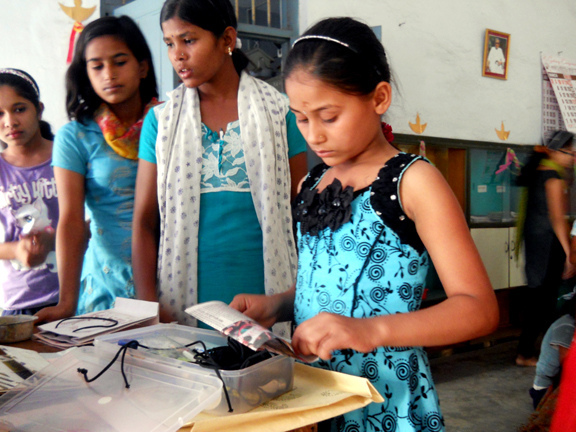
Vocational training at Paranjpe Orphanage, Nagpur, India, c/o Rotary Club of Nagpur
is parenting, whatever the case may be.
In fact I was just in Armenia and met with a family where three of their children had gone to an institution because they were not able to care for them. World Vision came along, and they helped the family out; they were able to give the father the gift of carpentry tools so he started his own business, and they gave the mother a kit to make clothing so she started a seamstress business out of her home. So they were able to be reunified with their children. I went to their home and sat with them and talked with them. I was excited to see organizations like World Vision doing orphan prevention.
The statistics on orphans are a little bit deceiving in that the number [153 million] actually includes all children who have lost at least one parent. So even if they’re at home and only one parent has died, they’re being included in this orphan statistic. [The real number is about 18 million children who have lost both parents.]
So for those millions of kids, anti-poverty initiative is what we need to focus on.
Adopting, as beautiful as it is, adopting isn’t fixing the problem. Fixing the problem is addressing the things like poverty and inequality and access to clean water and all the things that can lead to the disintegration of a family.
Alicia: Is there anything else that you want to make sure that you said?
Ben: I’m really passionate on the idea that families need to be properly equipped and it’s not for everyone. They need to be equipped by sources outside their church. I would highly recommend for anyone before they adopt to meet with an attachment therapist who specializes in bonding and attachment, because that is a huge issue with adoption.
And I would highly recommend they read the book When Children Grieve. It’s a book on all the ways that we learn to grieve growing up and how so many of them are wrong. Because raising a child from adoption will involve a lot of grief and we don’ t want to pass along to them some of the bad lessons we learn about grieving, like grieving alone, or that time heals.
Time doesn’t heal shit.
And you can quote me on shit.
Many thanks to Ben for talking with me (and you) about his experience adopting! If you’re interested in reading more about the adoption movement, check out the other posts in this series, and stay tuned for another interview with aspiring adoptive parents dealing with the American foster care system.
Previous Post

August 4, 2015
Talking Adoption: An Interview with Benjamin Corey (Part 2)

Browse Our Archives
Select a Category Activism Catholicism Evangelical Christianity Faith & Daily Life Fundamentalism History Mainstream Christianity Nondenominational Christianity Orthodox Christianity Progressive Christianity
Select a Month February 2016 January 2016 December 2015 November 2015 October 2015 September 2015 August 2015 July 2015 June 2015 May 2015 April 2015 March 2015 February 2015
Follow Us!
TAKE THE
Religious Wisdom Quiz
What city's name means "house of God" and was the place of Jacob's dream?
Select your answer to see how you score.
Shiloh Bethlehem Nazareth Bethel
Related posts from Surprising Faith

An atheist and a deist walk into a...

Something like a socialist dream

Beyond the Pulpit and the Prayers
What does Ethiopian Orthodox Christianity look like?
TRENDING AT PATHEOS Progressive Christian

Why Christians Have a Sacred Duty to Vote:...
The Bible offers strong support for the sacred duty to vote. Here...

What Being a Modern-Day Apostle Means to Me
In my last column, I discussed the ins and outs of modern-day...

Did Ancient China Once Worship the God of...
Across human history, a common thread weaves through the origins of the...

Love Your Neighbor – Including Earth-Kin: Lev. 19,...
God’s command to love your neighbor means acting in an ethical and...

Lead a Church Study of “Jesus and Lao...
Guest writer Jack Thomas (The Irreverent Reverend) reflects on leading his church...

Principles for Understanding the Apostolic Ministry Today
Whenever people discover that my formal ministry title is "apostle," as in...
view all Progressive Christian blogs
Ad-Free & Subscriber Log-In Subscription Support
- About Us
- 2026 Calendar
- Videos
- Podcasts
- Library of World Religions
- Faith In Media Tracker
- Advertise With Us
- Write for Us
- Privacy Policy
- Terms of Service
- Do Not Sell My Data
- Contact Us
- Radiant Digital
- Manage Newsletter Subscriptions
- Unsubscribe From Notifications
- Sitemap
Copyright 2008-2026, Patheos. All rights reserved.
Subscription Support Ad-Free & Subscriber Log-In
Follow Patheos