
BuddhistCatholicContemplativeEvangelicalGeneral ChristianHinduJewishLatter-day SaintMuslimNew VisionsProgressive Christian
Beliefs
- Buddhist
- Catholic
- Contemplative
- Evangelical
- General Christian
- Hindu
- Jewish
- Latter-day Saint
- More Voices
- Muslim
- New Visions
- Pagan
- Progressive Christian
Topics
- Religion News
- Food and Religion
- Sports and Religion
- Religious Art
- Religious Music and Entertainment
- Religious Events
- History and Religion
- Style and Religion
- Politics and Religion
- Women in Religion
- Recreation Outdoors and Religion
- Business Finance and Religion
- Careers Workplace and Religion
- Education and Religion
- Family Parenting and Religion
- Health Fitness and Religion
- Home and Religion
- Relationships and Religion
- Technology and Religion
- Travel and Religion
Columnists
- Buddhist Columnists
- Business Finance and Religion Columnists
- Careers Workplace and Religion Columnists
- Catholic Columnists
- Contemplative Columnists
- Education and Religion Columnists
- Evangelists Columnists
- Family Parenting and Religion Columnists
- General Christian Columnists
- Health Fitness and Religion Columnists
- Hindu Columnists
- History and Religion Columnists
- Home and Religion Columnists
- Jewish Columnists
- More Voices Columnists
- Latter Day Columnists
- Muslim Columnists
- New Visions Columnists
- Nonreligious Columnists
- Pagan Columnists
- Politics and Religion Columnists
- Progressive Columnists
- Recreation Outdoors and Religion Columnists
- Relationships and Religion Columnists
- Religion News Columnists
- Religious Art Columnists
- Religious Events Columnists
- Religious Music and Entertainment Columnists
- Sports and Religion Columnists
- Style and Religion Columnists
- Technology and Religion Columnists
- Travel and Religion Columnists
- Women in Religion Columnists
Resource Library
- 2026 Calendar
- Library of World Religions
- The 100 Most Holy Places on Earth
- Patheos Answers
- Podcasts
- Videos
- Faith Leaders Database
- Anglican Episcopalian
- Bahai
- Baptist
- Buddhism
- Christianity
- Confucianism
- Eastern Orthodoxy
- Hinduism
- Holiness and Pentecostal
- ISKCON
- Islam
- Judaism
- Lutheran
- Methodist
- The Church of Jesus Christ of Latter-day Saints
- New Age
- Paganism
- Presbytarian and Reformed
- Protestantism
- Religion Behind the Scenes
- Roman Catholic
- Scientology
- Shia Islam
- Sikhism
- Sufism
- Sunni Islam
- Taoism
- Zen
- See all religions
Research Tools
 Ad-Free & Subscriber Log-In Subscription Support
Ad-Free & Subscriber Log-In Subscription Support
Follow Patheos 

- Trending:
- Forgiveness
- |
- Marriage
- |
- Consciousness
- |
- Death Penalty
- |
- Election
- |
- Halloween
 Surprising Faith
- Home
- Progressive Christian
- We can’t help ourselves: Why a former Catholic and a current Catholic *don’t* like Catholicism
We can’t help ourselves: Why a former Catholic and a current Catholic *don’t* like Catholicism
Last updated on: April 28, 2015 at 7:37 am by Alicia de los Reyes
We can’t help ourselves: Why a former Catholic and a current Catholic *don’t* like Catholicism 2015-04-28T07:37:55-08:00 Alicia de los Reyes
Patheos Explore the world's faith through different perspectives on religion and spirituality! Patheos has the views of the prevalent religions and spiritualities of the world.
This is the second post in a conversation between me and Eve Tushnet. You can read the first post about what we like about Catholicism here.
Many of you may know Eve Tushnet from her blog here on Patheos, where she writes about being gay, celibate, and Catholic (along with World Figure Skating Championship costumes and other events of note). Eve grew up “somewhere between agnostic and Jewish” and
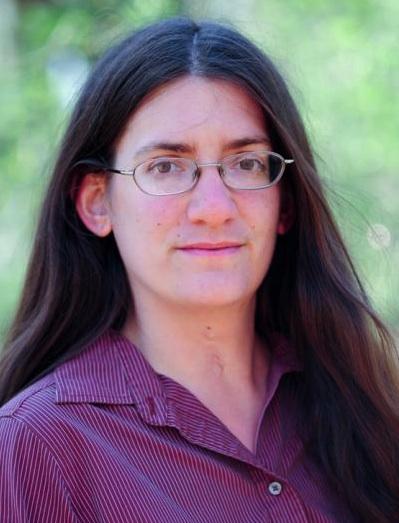
Eve Tushnet, current Catholic (photo c/o May Goren)
converted to Catholicism when she was a sophomore in college.
I did the inverse: I was raised firmly Catholic and started drifting away from “the Church” in college, when I just couldn’t stomach my church’s position on women priests and gay marriage, among other things, and eventually ended up at a social-justice-oriented spiritual community.
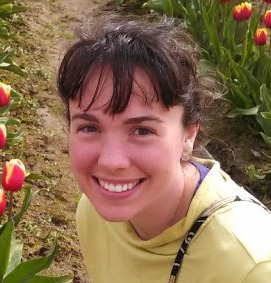
Alicia de los Reyes, former Catholic
I thought it would be fun to talk about why, despite our seemingly large hurdles (background, political beliefs, sexuality), we still really like the Catholic Church. (Even though my new church is Methodist, I still say that I was “raised Catholic.”)
Today, we share a bit about why, even though we like Catholicism, it occasionally drives/drove us crazy.
Alicia: You said you love the Church, but you don’t necessarily like Catholicism. When I was Catholic, I liked being Catholic, but I didn’t love every aspect of the Church or of going to Mass. What are some aspects you don’t *like about the Church, but stick with anyway?*
Eve: Hmm, this is a good question. It’s hard for me to sort out stuff I don’t understand from stuff I dislike (which maybe says not-great things about my intellectual vanity!) but the top two things which come to mind are jargon and, especially, hierarchs.
The jargon is more a cultural issue than anything else–and it comes from some of the beautiful elements of Catholicism: the acceptance of philosophy as a path to wisdom (St. Anselm’s “faith seeking understanding”) & the belief that one can have eros for Truth. Ideally the proliferation of jargon and theological vocabularies should remind us that *no* words or ideas can capture God. Philosophy should be a
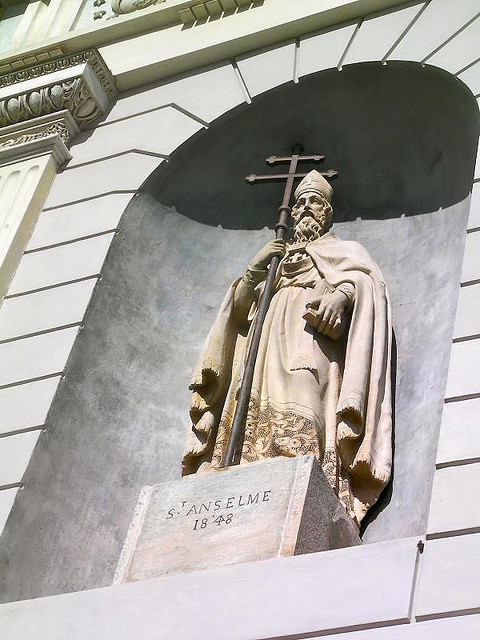
St. Anselm, c/o Tony Bowden
communal practice and an adventure which always calls us back to contemplation; all theology should be apophatic theology at its extreme. (St. Thomas Aquinas is a great example of someone who practiced theology this way.) But instead we often get people insisting on one specific set of jargon, and if you don’t know or understand the jargon, they assume you are misguided or not “really” Catholic.
Bishops and popes and stuff… some of this is a cultural problem. We should all care less about what the Pope says and does. Right now there’s a sort of papal celebrity which is distinct from papal authority.
Some of this is probably a personality issue on my part. We do need an authority structure–she said, gritting her teeth–and I could stand to be more cautious in how I approach disagreements with e.g. bishops.
But a certain healthy cynicism about churchmen would perhaps have served Catholics much, much better than the coverup culture which made the sex abuse scandals so shocking and pervasive. Put not your trust in princes of the Church.
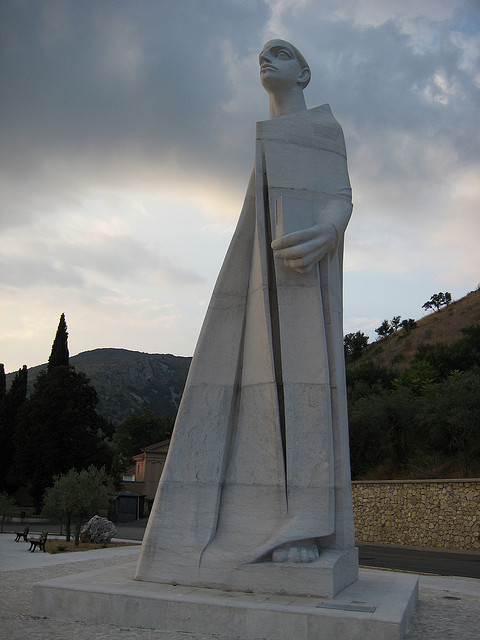
St. Thomas Aquinas, San Tommaso d’Aquino, Roccasecca, Italy, c/o gerry.scappaticci
I’ve been, I think, very lucky in that all of the people who introduced me to the Church made a firm separation between the Church as the spotless Bride of Christ and the individual laypeople and priests etc we see around us. My swoony obedience and devotion go to the Bride, not to Cardinal Wuerl. That said, I know there’s a danger in creating a sort of imaginary “perfect” Catholic Church in one’s head and designating *that* as the Bride of Christ: the Church which never enrages or annoys you, and never asks more than you can bear.
Alicia: What you say about jargon is also something that, coming from inside the church, I didn’t really notice. Although I was confirmed, I didn’t delve too deeply into theology, so I actually had to look up “apophatic theology.” This idea–that we should define God through what he/she/it is not–is something I definitely understand, but not something I’ve ever associated specifically with the Catholic church.
Your reflections make me wonder what it means to be truly “Catholic.” Had I stayed Catholic, I seriously doubt I would have learned about many–or even any–of the things that are a part of your constellation of beliefs. I think I would have continued to treat my Catholicism as a burden that I was somewhat proud to carry.
Even now, a large part of my new progressive church’s appeal is that it is not focused on theology–at the beginning of each service, the minister says “Whatever your theology or philosophy about God is, you are welcome here.” For me, the theology isn’t the main thing; what your theology leads to is. So, if someone believes in Satanism but that makes them volunteer, great.
Related to that, one thing that irked me about being Catholic was how little my church did for our community. The priest was not active in our own congregation, much less the community at large. Our volunteer programs were pretty inwardly-focused (youth group, Vacation Bible School, etc.).
I also don’t remember my priest speaking up about political issues that I found relevant; there were a few pro-life and anti-contraception references here and there in homilies, but I saw these as totally out of touch. What about the big problems America has: racism, poverty, inequality of education, inequality in general?
Another thing that drove me nuts was exactly what you talked about: hierarchs. The Church versus church leaders are definitely two different things. The cover-up was a huge nail in the coffin of my Catholic faith, as I imagine it was for many other folks in our generation.
Stay tuned! Up next: What does it mean to be Catholic? Who gets to wear the label?
Previous Post
April 24, 2015
Modern-day Moneychangers?: How Seattle Church Leaders Turned Tables
Next Post
May 1, 2015 White Christians a Minority in 19 States
Browse Our Archives
Select a Category Activism Catholicism Evangelical Christianity Faith & Daily Life Fundamentalism History Mainstream Christianity Nondenominational Christianity Orthodox Christianity Progressive Christianity
Select a Month February 2016 January 2016 December 2015 November 2015 October 2015 September 2015 August 2015 July 2015 June 2015 May 2015 April 2015 March 2015 February 2015
Follow Us!
TAKE THE
Religious Wisdom Quiz
What was the name of the river where Ezekiel saw his vision?
Select your answer to see how you score.
Nile River Jordan River Euphrates River River Chebar
Related posts from Surprising Faith

Talking Adoption: How Adoption Became a Christian "Trend"
"God sent you here to make our family...

A Millennial Weighs in on the Pew Religious...
One woman's modern-day Anorexia Mirabilis
TRENDING AT PATHEOS Progressive Christian

Why Christians Have a Sacred Duty to Vote:...
The Bible offers strong support for the sacred duty to vote. Here...

What Being a Modern-Day Apostle Means to Me
In my last column, I discussed the ins and outs of modern-day...

Did Ancient China Once Worship the God of...
Across human history, a common thread weaves through the origins of the...

Love Your Neighbor – Including Earth-Kin: Lev. 19,...
God’s command to love your neighbor means acting in an ethical and...

Lead a Church Study of “Jesus and Lao...
Guest writer Jack Thomas (The Irreverent Reverend) reflects on leading his church...

Principles for Understanding the Apostolic Ministry Today
Whenever people discover that my formal ministry title is "apostle," as in...
view all Progressive Christian blogs
Ad-Free & Subscriber Log-In Subscription Support
- About Us
- 2026 Calendar
- Videos
- Podcasts
- Library of World Religions
- Faith In Media Tracker
- Advertise With Us
- Write for Us
- Privacy Policy
- Terms of Service
- Do Not Sell My Data
- Contact Us
- Radiant Digital
- Manage Newsletter Subscriptions
- Unsubscribe From Notifications
- Sitemap
Copyright 2008-2026, Patheos. All rights reserved.
Subscription Support Ad-Free & Subscriber Log-In
Follow Patheos