
BuddhistCatholicContemplativeEvangelicalGeneral ChristianHinduJewishLatter-day SaintMuslimNew VisionsProgressive Christian
Beliefs
- Buddhist
- Catholic
- Contemplative
- Evangelical
- General Christian
- Hindu
- Jewish
- Latter-day Saint
- More Voices
- Muslim
- New Visions
- Pagan
- Progressive Christian
Topics
- Religion News
- Food and Religion
- Sports and Religion
- Religious Art
- Religious Music and Entertainment
- Religious Events
- History and Religion
- Style and Religion
- Politics and Religion
- Women in Religion
- Recreation Outdoors and Religion
- Business Finance and Religion
- Careers Workplace and Religion
- Education and Religion
- Family Parenting and Religion
- Health Fitness and Religion
- Home and Religion
- Relationships and Religion
- Technology and Religion
- Travel and Religion
Columnists
- Buddhist Columnists
- Business Finance and Religion Columnists
- Careers Workplace and Religion Columnists
- Catholic Columnists
- Contemplative Columnists
- Education and Religion Columnists
- Evangelists Columnists
- Family Parenting and Religion Columnists
- General Christian Columnists
- Health Fitness and Religion Columnists
- Hindu Columnists
- History and Religion Columnists
- Home and Religion Columnists
- Jewish Columnists
- More Voices Columnists
- Latter Day Columnists
- Muslim Columnists
- New Visions Columnists
- Nonreligious Columnists
- Pagan Columnists
- Politics and Religion Columnists
- Progressive Columnists
- Recreation Outdoors and Religion Columnists
- Relationships and Religion Columnists
- Religion News Columnists
- Religious Art Columnists
- Religious Events Columnists
- Religious Music and Entertainment Columnists
- Sports and Religion Columnists
- Style and Religion Columnists
- Technology and Religion Columnists
- Travel and Religion Columnists
- Women in Religion Columnists
Resource Library
- 2026 Calendar
- Library of World Religions
- The 100 Most Holy Places on Earth
- Patheos Answers
- Podcasts
- Videos
- Faith Leaders Database
- Anglican Episcopalian
- Bahai
- Baptist
- Buddhism
- Christianity
- Confucianism
- Eastern Orthodoxy
- Hinduism
- Holiness and Pentecostal
- ISKCON
- Islam
- Judaism
- Lutheran
- Methodist
- The Church of Jesus Christ of Latter-day Saints
- New Age
- Paganism
- Presbytarian and Reformed
- Protestantism
- Religion Behind the Scenes
- Roman Catholic
- Scientology
- Shia Islam
- Sikhism
- Sufism
- Sunni Islam
- Taoism
- Zen
- See all religions
Research Tools
 Ad-Free & Subscriber Log-In Subscription Support
Ad-Free & Subscriber Log-In Subscription Support
Follow Patheos 

- Trending:
- Forgiveness
- |
- Marriage
- |
- Consciousness
- |
- Death Penalty
- |
- Election
- |
- Halloween
 Surprising Faith
- Home
- Progressive Christian
- The New Jim Crow Book Group: Week 4
The New Jim Crow Book Group: Week 4
Last updated on: December 11, 2015 at 2:33 pm by Alicia de los Reyes
The New Jim Crow Book Group: Week 4 2015-12-11T14:33:29-08:00 Alicia de los Reyes
Patheos Explore the world's faith through different perspectives on religion and spirituality! Patheos has the views of the prevalent religions and spiritualities of the world.
As I wrote three weeks ago, I’m running a book group through my church, Valley and Mountain, to read The New Jim Crow: Mass Incarceration in the Age of Colorblindness by Michelle Alexander. (Find all the posts for this book group here. Feel free to use this guide in your church/community!) 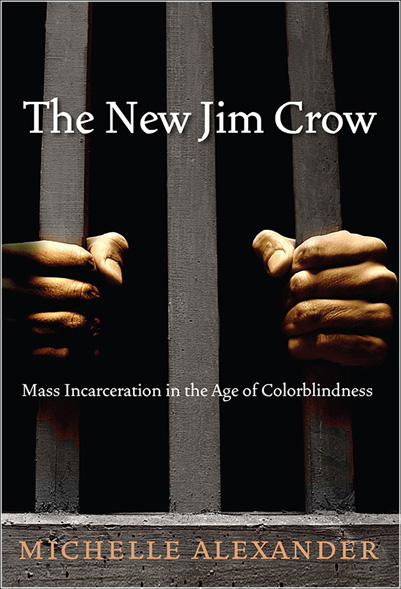 Chapter four (“The Cruel Hand,” from a speech by Frederick Douglass) talks about the pervasiveness of the stigma attached to felons and criminals. In addition to preventing former prisoners from obtaining jobs, housing, and other public assistance, the prison label also divides families and communities–one reason that mass incarceration continues to happen under our noses.
How the meetings run:
A quick recap:
Each meeting, we’ll start with a welcome. Then, we’ll have a brief moment of silence. Next, we’ll take turns reading a short text (a Bible verse, poem, quote, or short reading) that somehow reflects our spirituality. Then I’ll read a relevant Bible passage or spiritual reading (for example, by a thinker like Cornel West) and share a short reflection on the text. We’ll discuss the discussion questions for the week, which I’ve pulled from various sources online. To close, we’ll have a prayer circle.
Week 4:
Intro
Our usual moment of silence, followed by sharing our spiritual texts.
Reflection
Next, we’ll read a short spiritual text. Again, c/o John Helmiere, pastor at Valley and Mountain, here are a few quotes from Howard Thurman, an African-American theologian and author. These come from his book Jesus and the Disinherited.
The doom of the children is the greatest tragedy of the disinherited. They are robbed of much of the careless rapture and spontaneous joy of being merely alive… If…the elders understand in their own experiences and lives the tremendous insight of Jesus, it is possible for them to share their enthusiasm with their children. This is the qualitative overtone springing from the depths of religious insight, and it is contagious. It will put into the hands of the child the key for unlocking his hopes.
Another passage that could be read and discussed would be the story of Cain, Genesis 4: 1-16. Alexander compares to the stigma of racism to the mark of Cain.
Adam made love to his wife Eve, and she became pregnant and gave birth to Cain. She said, “With the help of the Lord I have brought forth a man.” Later she gave birth to his brother Abel. Now Abel kept flocks, and Cain worked the soil. In the course of time Cain brought some of the fruits of the soil as an offering to the Lord. And Abel also brought an offering—fat portions from some of the firstborn of his flock. The Lord looked with favor on Abel and his offering, but on Cain and his offering he did not look with favor. So Cain was very angry, and his face was downcast. Then the Lord said to Cain, “Why are you angry? Why is your face downcast? If you do what is right, will you not be accepted? But if you do not do what is right, sin is crouching at your door; it desires to have you, but you must rule over it.” Now Cain said to his brother Abel, “Let’s go out to the field.” While they were in the field, Cain attacked his brother Abel and killed him. Then the Lord said to Cain, “Where is your brother Abel?” “I don’t know,” he replied. “Am I my brother’s keeper?” The Lord said, “What have you done? Listen! Your brother’s blood cries out to me from the ground. Now you are under a curse and driven from the ground, which opened its mouth to receive your brother’s blood from your hand. When you work the ground, it will no longer yield its crops for you. You will be a restless wanderer on the earth.” Cain said to the Lord, “My punishment is more than I can bear. Today you are driving me from the land, and I will be hidden from your presence; I will be a restless wanderer on the earth, and whoever finds me will kill me.” But the Lord said to him, “Not so; anyone who kills Cain will suffer vengeance seven times over.” Then the Lord put a mark on Cain so that no one who found him would kill him. So Cain went out from the Lord’s presence and lived in the land of Nod, east of Eden.
Discussion Questions
I am using the questions from The New Jim Crow Study Guide, which you can download for free here. In addition, I asked: 1. What are your reactions to this week’s text? 2. What actions could we start to take, now that we know what is going on?
Your turn
Have you read this book? Would you like to? Join in by sharing your progress in the comments–I’ll keep updating how the group goes on here, and you can learn from my mistakes : )
Previous Post
December 2, 2015
The New Jim Crow Book Group: Week 3
Next Post
December 15, 2015 The New Jim Crow book group: Week 5
Browse Our Archives
Select a Category Activism Catholicism Evangelical Christianity Faith & Daily Life Fundamentalism History Mainstream Christianity Nondenominational Christianity Orthodox Christianity Progressive Christianity
Select a Month February 2016 January 2016 December 2015 November 2015 October 2015 September 2015 August 2015 July 2015 June 2015 May 2015 April 2015 March 2015 February 2015
Follow Us!
TAKE THE
Religious Wisdom Quiz
What does the Bible say about pride?
Select your answer to see how you score.
It goes before a fall Pride is the best It's ignored It's always good
Related posts from Surprising Faith

Something like a socialist dream

Beyond the Pulpit and the Prayers

Mind Blown: Why Alexander Foster gives away all...
My New Year's Resolution: Don't be a white...
TRENDING AT PATHEOS Progressive Christian

What Being a Modern-Day Apostle Means to Me
In my last column, I discussed the ins and outs of modern-day...

Did Ancient China Once Worship the God of...
Across human history, a common thread weaves through the origins of the...

Love Your Neighbor – Including Earth-Kin: Lev. 19,...
God’s command to love your neighbor means acting in an ethical and...

Lead a Church Study of “Jesus and Lao...
Guest writer Jack Thomas (The Irreverent Reverend) reflects on leading his church...

Pastoral Wisdom for Responding to Sermon Pushback
Getting sermon pushback on your social justice sermon? Learn practical, Proverbs-based strategies...

Principles for Understanding the Apostolic Ministry Today
Whenever people discover that my formal ministry title is "apostle," as in...
view all Progressive Christian blogs
Ad-Free & Subscriber Log-In Subscription Support
- About Us
- 2026 Calendar
- Videos
- Podcasts
- Library of World Religions
- Faith In Media Tracker
- Advertise With Us
- Write for Us
- Privacy Policy
- Terms of Service
- Do Not Sell My Data
- Contact Us
- Radiant Digital
- Manage Newsletter Subscriptions
- Unsubscribe From Notifications
- Sitemap
Copyright 2008-2026, Patheos. All rights reserved.
Subscription Support Ad-Free & Subscriber Log-In
Follow Patheos