
BuddhistCatholicContemplativeEvangelicalGeneral ChristianHinduJewishLatter-day SaintMuslimNew VisionsProgressive Christian
Beliefs
- Buddhist
- Catholic
- Contemplative
- Evangelical
- General Christian
- Hindu
- Jewish
- Latter-day Saint
- More Voices
- Muslim
- New Visions
- Pagan
- Progressive Christian
Topics
- Religion News
- Food and Religion
- Sports and Religion
- Religious Art
- Religious Music and Entertainment
- Religious Events
- History and Religion
- Style and Religion
- Politics and Religion
- Women in Religion
- Recreation Outdoors and Religion
- Business Finance and Religion
- Careers Workplace and Religion
- Education and Religion
- Family Parenting and Religion
- Health Fitness and Religion
- Home and Religion
- Relationships and Religion
- Technology and Religion
- Travel and Religion
Columnists
- Buddhist Columnists
- Business Finance and Religion Columnists
- Careers Workplace and Religion Columnists
- Catholic Columnists
- Contemplative Columnists
- Education and Religion Columnists
- Evangelists Columnists
- Family Parenting and Religion Columnists
- General Christian Columnists
- Health Fitness and Religion Columnists
- Hindu Columnists
- History and Religion Columnists
- Home and Religion Columnists
- Jewish Columnists
- More Voices Columnists
- Latter Day Columnists
- Muslim Columnists
- New Visions Columnists
- Nonreligious Columnists
- Pagan Columnists
- Politics and Religion Columnists
- Progressive Columnists
- Recreation Outdoors and Religion Columnists
- Relationships and Religion Columnists
- Religion News Columnists
- Religious Art Columnists
- Religious Events Columnists
- Religious Music and Entertainment Columnists
- Sports and Religion Columnists
- Style and Religion Columnists
- Technology and Religion Columnists
- Travel and Religion Columnists
- Women in Religion Columnists
Resource Library
- 2026 Calendar
- Library of World Religions
- The 100 Most Holy Places on Earth
- Patheos Answers
- Podcasts
- Videos
- Faith Leaders Database
- Anglican Episcopalian
- Bahai
- Baptist
- Buddhism
- Christianity
- Confucianism
- Eastern Orthodoxy
- Hinduism
- Holiness and Pentecostal
- ISKCON
- Islam
- Judaism
- Lutheran
- Methodist
- The Church of Jesus Christ of Latter-day Saints
- New Age
- Paganism
- Presbytarian and Reformed
- Protestantism
- Religion Behind the Scenes
- Roman Catholic
- Scientology
- Shia Islam
- Sikhism
- Sufism
- Sunni Islam
- Taoism
- Zen
- See all religions
Research Tools
 Ad-Free & Subscriber Log-In Subscription Support
Ad-Free & Subscriber Log-In Subscription Support
Follow Patheos 

- Trending:
- Forgiveness
- |
- Marriage
- |
- Consciousness
- |
- Death Penalty
- |
- Election
- |
- Halloween
 Summa This, Summa That
- Home
- About
- Through a Lens, Darkly
- Streaming Video Suggestions (SVS)
- Summa Short Films (SSF)
- The Man Behind The Booth
- Home
- Catholic
- “A Condition of Complete Simplicity” from T.S. Eliot’s “Four Quartets”
“A Condition of Complete Simplicity” from T.S. Eliot’s “Four Quartets”
Last updated on: April 1, 2015 at 6:19 pm by Joseph Susanka
“A Condition of Complete Simplicity” from T.S. Eliot’s “Four Quartets” 2015-04-01T18:19:03-06:00 Joseph Susanka
Patheos Explore the world's faith through different perspectives on religion and spirituality! Patheos has the views of the prevalent religions and spiritualities of the world.
 I can’t remember how this came to pass, but over the past few days, I’ve found myself listening a great deal to T.S. Eliot’s “Four Quartets.” And especially listening to the performance of “Little Gidding” by Paul Scofield (that can be found on YouTube).
Now, as I’ve listened to Eliot off and on through the years, I’ve come to realize three things. First, I love his work — the “mere” sound and rhythm of it; the wonderful (almost impossible) mastery of language; the searing simplicity and directness of its insights, often springing up in the midst of nearly-impenetrable complexity. Which leads me to the second thing: I understand pretty much none of it, because it is so riddled with literary references and cultural, philosophical, and theological allusions that I can’t currently (and will probably never) recignuze. And third, I tend to interpret it in whatever fashion makes the most sense in my current context.
In this case, that means Lent. And Holy Week. And it is the fifth and final section of “Little Gidding,” in particular, that I simply cannot escape at present. (The fourth section is one of the most beautiful things I’ve ever heard or seen, but it’s a bit post-Easter-ish for the moment, right? What with its clear references to Pentecost and all.)
The idea of returning back to where we started — a theme present throughout the entire work, as well as in this final section — feels very Lenten to me. There’s something fundamentally Déjà vu-like in the liturgical cycle of the Church that always strikes me right about now. Déjà vu in the strict/clinical sense; something that I feel like I’ve seen and done before, but which I haven’t. Not really. I’m returning back to where I started, but I’m seeing it with new (and newly-opened) eyes.
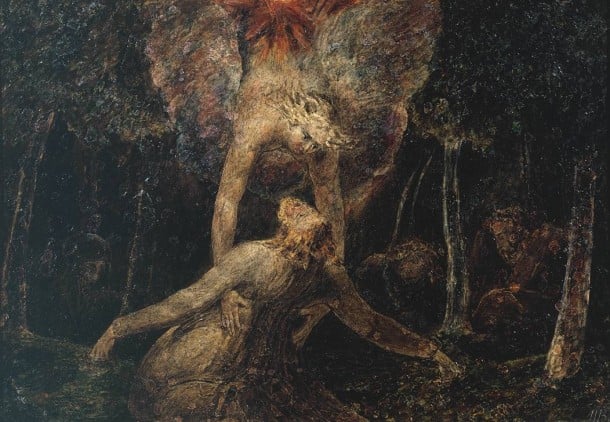 But the line that struck me hardest over the past few days is the bit about the price of simplicity. “…complete simplicity, costing no less than everything.” Lent, in a nutshell.
Each and every Lenten season, we set out on a quest for clarity and detachment; for total, childlike simplicity. But the only way to find it is to give up everything; to give up and hand over all of ourselves to Him. And that’s difficult. That’s terrifying.
Yet the promise if we manage to sacrifice ourselves on and to this quest — and the reason for undertaking it in the first place — remains. And it’s worth all the fear and all the heartache and all the struggle.
“…all shall be well and all manner of things shall be well…”
And the end of all our exploring
Will be to arrive where we started
And know the place for the first time.
Through the unknown, remembered gate
When the last of earth left to discover
Is that which was the beginning;
At the source of the longest river
The voice of the hidden waterfall
And the children in the apple-tree
Not known, because not looked for
But heard, half-heard, in the stillness
Between two waves of the sea.
Quick now, here, now, always–
A condition of complete simplicity
(Costing not less than everything)
And all shall be well and
All manner of thing shall be well
When the tongues of flames are in-folded
Into the crowned knot of fire
And the fire and the rose are one.
Attribution(s): “Thomas Stearns Eliot” by Lady Ottoline Morrell is a dderivative work licensed under Public Domain via Wikimedia Commons; “The Agony in the Garden” by William Blake (Source) is licensed under Public Domain via Wikimedia Commons.


Previous Post
March 31, 2015
A Lenten Musical Journey, Day 42
Next Post
April 1, 2015 A Lenten Musical Journey, Day 43
Browse Our Archives
Select a Category Art Baseball Faith Family Lenten Music Movies Music No Commentary Necessary Parked By the Jukebox Photography Politics Quodlibets Streaming Video Suggestions Summa Short Films Television The Man Behind the Booth Through a Lens, Darkly
Select a Month December 2015 November 2015 October 2015 September 2015 August 2015 July 2015 June 2015 May 2015 April 2015 March 2015 February 2015 January 2015 December 2014 November 2014 October 2014 September 2014 August 2014 July 2014 June 2014 May 2014 April 2014 March 2014 February 2014 January 2014 December 2013 November 2013 October 2013 September 2013 August 2013 July 2013 June 2013 May 2013 April 2013 March 2013 February 2013 January 2013 December 2012 November 2012 July 2012 April 2012 March 2012 February 2012 November 2011 August 2011 July 2011 June 2011 May 2011 April 2011 March 2011 February 2011 January 2011 December 2010 November 2010 October 2010
Follow Us!
TAKE THE
Religious Wisdom Quiz
Who wrote the majority of the Psalms?
Select your answer to see how you score.
David Solomon Moses Asaph
Related posts from Summa This, Summa That
"The time has come," the Walrus said, "to...
No Commentary Necessary — Théo Sanson, Walking On...
Going To Space With xkcd (And Ten Hundred...

TRENDING AT PATHEOS Catholic

Rejecting Doom: Christian Hope And Human Action
Christianity is a religion of hope. We are to have hope and...

It’s What Comes From Within Which Matters
One of the most difficult things for us to understand is why...

Why I Choose the Eucharist Over the Sermon
Choose the Eucharist, Not the Sermon What are we supposed to get...

5 Design Elements Found in Spiritually Rooted Homes
Putting Spirituality Into Home Decor Our homes are more than our living...

Credo: A Story of God Told with the...
About 10 years ago, I began to imagine a personal "Credo" that...

The Anatomy of Divine Revelation in Catholic Thought
The claim that God has made Himself known to human beings is...
view all Catholic blogs
Ad-Free & Subscriber Log-In Subscription Support
- About Us
- 2026 Calendar
- Videos
- Podcasts
- Library of World Religions
- Faith In Media Tracker
- Advertise With Us
- Write for Us
- Privacy Policy
- Terms of Service
- Do Not Sell My Data
- Contact Us
- Radiant Digital
- Manage Newsletter Subscriptions
- Unsubscribe From Notifications
- Sitemap
Copyright 2008-2026, Patheos. All rights reserved.
Subscription Support Ad-Free & Subscriber Log-In
Follow Patheos