
BuddhistCatholicContemplativeEvangelicalGeneral ChristianHinduJewishLatter-day SaintMuslimNew VisionsProgressive Christian
Beliefs
- Buddhist
- Catholic
- Contemplative
- Evangelical
- General Christian
- Hindu
- Jewish
- Latter-day Saint
- More Voices
- Muslim
- New Visions
- Pagan
- Progressive Christian
Topics
- Religion News
- Food and Religion
- Sports and Religion
- Religious Art
- Religious Music and Entertainment
- Religious Events
- History and Religion
- Style and Religion
- Politics and Religion
- Women in Religion
- Recreation Outdoors and Religion
- Business Finance and Religion
- Careers Workplace and Religion
- Education and Religion
- Family Parenting and Religion
- Health Fitness and Religion
- Home and Religion
- Relationships and Religion
- Technology and Religion
- Travel and Religion
Columnists
- Buddhist Columnists
- Business Finance and Religion Columnists
- Careers Workplace and Religion Columnists
- Catholic Columnists
- Contemplative Columnists
- Education and Religion Columnists
- Evangelists Columnists
- Family Parenting and Religion Columnists
- General Christian Columnists
- Health Fitness and Religion Columnists
- Hindu Columnists
- History and Religion Columnists
- Home and Religion Columnists
- Jewish Columnists
- More Voices Columnists
- Latter Day Columnists
- Muslim Columnists
- New Visions Columnists
- Nonreligious Columnists
- Pagan Columnists
- Politics and Religion Columnists
- Progressive Columnists
- Recreation Outdoors and Religion Columnists
- Relationships and Religion Columnists
- Religion News Columnists
- Religious Art Columnists
- Religious Events Columnists
- Religious Music and Entertainment Columnists
- Sports and Religion Columnists
- Style and Religion Columnists
- Technology and Religion Columnists
- Travel and Religion Columnists
- Women in Religion Columnists
Resource Library
- 2026 Calendar
- Library of World Religions
- The 100 Most Holy Places on Earth
- Patheos Answers
- Podcasts
- Videos
- Faith Leaders Database
- Anglican Episcopalian
- Bahai
- Baptist
- Buddhism
- Christianity
- Confucianism
- Eastern Orthodoxy
- Hinduism
- Holiness and Pentecostal
- ISKCON
- Islam
- Judaism
- Lutheran
- Methodist
- The Church of Jesus Christ of Latter-day Saints
- New Age
- Paganism
- Presbytarian and Reformed
- Protestantism
- Religion Behind the Scenes
- Roman Catholic
- Scientology
- Shia Islam
- Sikhism
- Sufism
- Sunni Islam
- Taoism
- Zen
- See all religions
Research Tools
 Ad-Free & Subscriber Log-In Subscription Support
Ad-Free & Subscriber Log-In Subscription Support
Follow Patheos 

- Trending:
- Forgiveness
- |
- Marriage
- |
- Consciousness
- |
- Death Penalty
- |
- Election
- |
- Halloween
 Summa This, Summa That
- Home
- About
- Through a Lens, Darkly
- Streaming Video Suggestions (SVS)
- Summa Short Films (SSF)
- The Man Behind The Booth
- Home
- Catholic
- “To God, there is no zero.”
“To God, there is no zero.”
Last updated on: March 17, 2017 at 2:57 pm by Joseph Susanka
“To God, there is no zero.” 2017-03-17T14:57:34-06:00 Joseph Susanka
Patheos Explore the world's faith through different perspectives on religion and spirituality! Patheos has the views of the prevalent religions and spiritualities of the world.
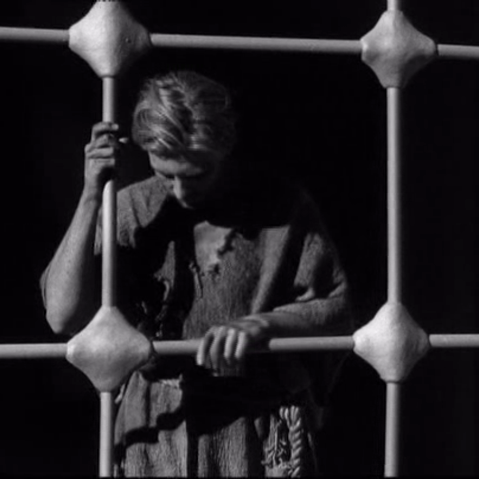 When I look back at the most memorable cinematic experiences of my childhood — a self-indulgence I undertake with almost terrifying frequency — there is one film in particular that strikes me as a real outlier. Titles such as Flight of the Navigator and Blackbeard’s Ghost and The Absentminded Professor and “Zorro” all make sense to me, and while the intensity of my love can be a bit difficult to justify (though it is doubtless heavily tinged by the rosy fingers of nostalgia), the fact that my youthful self enjoyed those films comes as no surprise. They’re warm, straight-forward, and (perhaps most importantly to my younger self), they’re funny.
Jack Arnold’s The Incredible Shrinking Man, however, is an entirely different animal. It is a far more serious, thematically complicated film than the ones I tend to remember from my youth — a tough film for a ten-year-old, come to think of hit, and a heck of a lot lot less “fun” than the Dean Jones/Haley Mills/Burl Ives-style entertainments of my Disney-fied past.
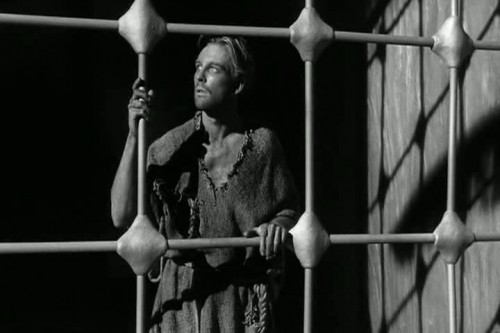
In fact, it’s been years since I’ve seen it, and I have no idea how well it holds up today. …though perhaps I should say that I have no idea how well most of it holds up today, because the part that stuck in my mind the moment I saw it — the part that I can still recall to this day with wonderful clarity — is still incredibly powerful. The final monologue of Scott Carey, the businessman whose “unintentional exposure to a combination of radiation and insecticide” causes him to shrink despite the best efforts of science and medicine to halt his diminution, is just wonderful. A fact that made a lot more sense to me once I realized that the original story (and the film’s script) came from the ever-interesting Richard Matheson.
Here (with SPOILERS, of course):
“I was continuing to shrink, to become… what? The infinitesimal? What was I? Still a human being? Or was I the man of the future? If there were other bursts of radiation, other clouds drifting across seas and continents, would other beings follow me into this vast new world? So close – the infinitesimal and the infinite. But suddenly, I knew they were really the two ends of the same concept. The unbelievably small and the unbelievably vast eventually meet – like the closing of a gigantic circle. I looked up, as if somehow I would grasp the heavens. The universe, worlds beyond number, God’s silver tapestry spread across the night.
And in that moment, I knew the answer to the riddle of the infinite. I had thought in terms of man’s own limited dimension. I had presumed upon nature. That existence begins and ends in man’s conception, not nature’s. And I felt my body dwindling, melting, becoming nothing. My fears melted away. And in their place came acceptance. All this vast majesty of creation, it had to mean something. And then I meant something, too. Yes, smaller than the smallest, I meant something, too.
To God, there is no zero. I still exist! “
With the recent synod (and its aftermath/fallout) still fresh in my mind , I was struck particularly hard when I stumbled across this monologue a couple of days ago. I so love (and so firmly believe) the notion that mankind’s seemingly infinitesimal place in the universe does not render him insignificant. Each of us is physically small — almost impossibly small when compared to the scope and glory of Creation — but that smallness is only a physical smallness, not a smallness in worth.
There are no zeros; not to God.
As humans, we rely on universals. We group and we categorize; we combine and conflate, compare and induce; we draw conclusions based on our ability to gather things together under larger headings and into bigger piles of like-minded/like-made beings. That’s a huge part of how we know and of how we learn.
But that brings with it certain dangers; certain drawbacks. It can be difficult to recognize the individuals in the midst of all that collecting and compiling. Universals (and dogmatic pronunciations based on overly-abstracted principles) can be isolating and damaging and profoundly lonely, both for those being abstracted for those doing the abstracting. Yet it is precisely in the joining of the abstract (yet no less true) principles of our reality (and our Faith) with the particular humans and situations that confront us that we face our greatest challenges and trials.
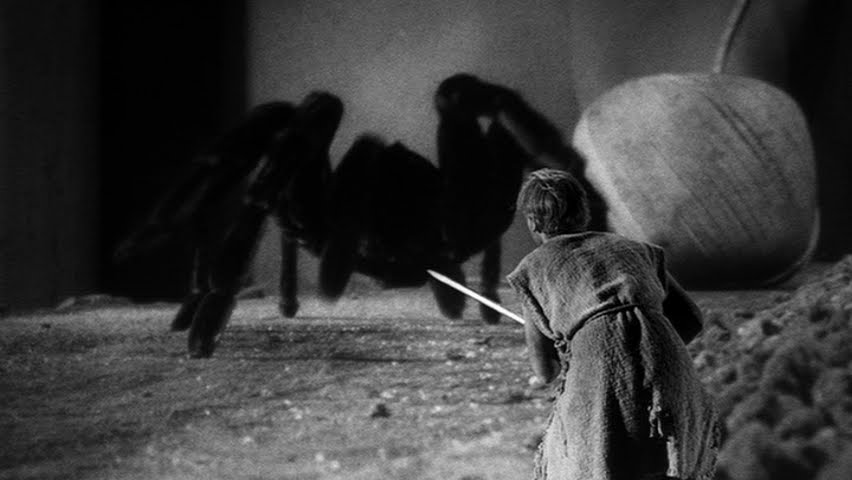
But for God, that’s never a problem. We’re all singular to Him; we’re all unique. I am comforted each and every day — perhaps every minute of each and every day — by the fact that He sees me not as “a man” or “a father” or as a “worker in the vineyard” or even as a member of the category “Overwhelmed Guy with a Hard Job and a Ton of Crazy-and-Wonderful Kids and a Weak Will and a Desperate Desire to Desire God” but as me, particularly. Me, myself.
Joseph.
I exist, as Carey rejoices, and there’s great comfort there. But there is more comfort to be had than in simply being. Because in addition to existing, I’m also unrepeatable. I’m more than part of a group or a category or a collection; much, much more. I’m a particular to Him. Think about that for a moment: To God, I’m not a zero. Nor am I one of many. I’m me; nothing more (or wonderfully, less) than myself. Every day. Every second. With all my failings and all my imperfections.
I’m everything to Him.
And so are you.
Previous Post
October 20, 2014
SSF: "Katedra"
Browse Our Archives
Select a Category Art Baseball Faith Family Lenten Music Movies Music No Commentary Necessary Parked By the Jukebox Photography Politics Quodlibets Streaming Video Suggestions Summa Short Films Television The Man Behind the Booth Through a Lens, Darkly
Select a Month December 2015 November 2015 October 2015 September 2015 August 2015 July 2015 June 2015 May 2015 April 2015 March 2015 February 2015 January 2015 December 2014 November 2014 October 2014 September 2014 August 2014 July 2014 June 2014 May 2014 April 2014 March 2014 February 2014 January 2014 December 2013 November 2013 October 2013 September 2013 August 2013 July 2013 June 2013 May 2013 April 2013 March 2013 February 2013 January 2013 December 2012 November 2012 July 2012 April 2012 March 2012 February 2012 November 2011 August 2011 July 2011 June 2011 May 2011 April 2011 March 2011 February 2011 January 2011 December 2010 November 2010 October 2010
Follow Us!
TAKE THE
Religious Wisdom Quiz
What does "Zion" (as in Mount Zion) mean?
Select your answer to see how you score.
River Spirit Fortress Light
Related posts from Summa This, Summa That

"The time has come," the Walrus said, "to...

No Commentary Necessary — Théo Sanson, Walking On...

Going To Space With xkcd (And Ten Hundred...
TRENDING AT PATHEOS Catholic

Rejecting Doom: Christian Hope And Human Action
Christianity is a religion of hope. We are to have hope and...

It’s What Comes From Within Which Matters
One of the most difficult things for us to understand is why...

Why I Choose the Eucharist Over the Sermon
Choose the Eucharist, Not the Sermon What are we supposed to get...

5 Design Elements Found in Spiritually Rooted Homes
Putting Spirituality Into Home Decor Our homes are more than our living...

Credo: A Story of God Told with the...
About 10 years ago, I began to imagine a personal "Credo" that...

The Anatomy of Divine Revelation in Catholic Thought
The claim that God has made Himself known to human beings is...
view all Catholic blogs
Ad-Free & Subscriber Log-In Subscription Support
- About Us
- 2026 Calendar
- Videos
- Podcasts
- Library of World Religions
- Faith In Media Tracker
- Advertise With Us
- Write for Us
- Privacy Policy
- Terms of Service
- Do Not Sell My Data
- Contact Us
- Radiant Digital
- Manage Newsletter Subscriptions
- Unsubscribe From Notifications
- Sitemap
Copyright 2008-2026, Patheos. All rights reserved.
Subscription Support Ad-Free & Subscriber Log-In
Follow Patheos