
BuddhistCatholicContemplativeEvangelicalGeneral ChristianHinduJewishLatter-day SaintMuslimNew VisionsProgressive Christian
Beliefs
- Buddhist
- Catholic
- Contemplative
- Evangelical
- General Christian
- Hindu
- Jewish
- Latter-day Saint
- More Voices
- Muslim
- New Visions
- Pagan
- Progressive Christian
Topics
- Religion News
- Food and Religion
- Sports and Religion
- Religious Art
- Religious Music and Entertainment
- Religious Events
- History and Religion
- Style and Religion
- Politics and Religion
- Women in Religion
- Recreation Outdoors and Religion
- Business Finance and Religion
- Careers Workplace and Religion
- Education and Religion
- Family Parenting and Religion
- Health Fitness and Religion
- Home and Religion
- Relationships and Religion
- Technology and Religion
- Travel and Religion
Columnists
- Buddhist Columnists
- Business Finance and Religion Columnists
- Careers Workplace and Religion Columnists
- Catholic Columnists
- Contemplative Columnists
- Education and Religion Columnists
- Evangelists Columnists
- Family Parenting and Religion Columnists
- General Christian Columnists
- Health Fitness and Religion Columnists
- Hindu Columnists
- History and Religion Columnists
- Home and Religion Columnists
- Jewish Columnists
- More Voices Columnists
- Latter Day Columnists
- Muslim Columnists
- New Visions Columnists
- Nonreligious Columnists
- Pagan Columnists
- Politics and Religion Columnists
- Progressive Columnists
- Recreation Outdoors and Religion Columnists
- Relationships and Religion Columnists
- Religion News Columnists
- Religious Art Columnists
- Religious Events Columnists
- Religious Music and Entertainment Columnists
- Sports and Religion Columnists
- Style and Religion Columnists
- Technology and Religion Columnists
- Travel and Religion Columnists
- Women in Religion Columnists
Resource Library
- 2026 Calendar
- Library of World Religions
- The 100 Most Holy Places on Earth
- Patheos Answers
- Podcasts
- Videos
- Faith Leaders Database
- Anglican Episcopalian
- Bahai
- Baptist
- Buddhism
- Christianity
- Confucianism
- Eastern Orthodoxy
- Hinduism
- Holiness and Pentecostal
- ISKCON
- Islam
- Judaism
- Lutheran
- Methodist
- The Church of Jesus Christ of Latter-day Saints
- New Age
- Paganism
- Presbytarian and Reformed
- Protestantism
- Religion Behind the Scenes
- Roman Catholic
- Scientology
- Shia Islam
- Sikhism
- Sufism
- Sunni Islam
- Taoism
- Zen
- See all religions
Research Tools
 Ad-Free & Subscriber Log-In Subscription Support
Ad-Free & Subscriber Log-In Subscription Support
Follow Patheos 

- Trending:
- Forgiveness
- |
- Marriage
- |
- Consciousness
- |
- Death Penalty
- |
- Election
- |
- Halloween
 Summa This, Summa That
- Home
- About
- Through a Lens, Darkly
- Streaming Video Suggestions (SVS)
- Summa Short Films (SSF)
- The Man Behind The Booth
- Home
- Catholic
- J. S. Bach, Douglas Adams, and the Happy Genius
J. S. Bach, Douglas Adams, and the Happy Genius
Last updated on: March 17, 2017 at 3:06 pm by Joseph Susanka
J. S. Bach, Douglas Adams, and the Happy Genius 2017-03-17T15:06:20-06:00 Joseph Susanka
Patheos Explore the world's faith through different perspectives on religion and spirituality! Patheos has the views of the prevalent religions and spiritualities of the world.
 Douglas Adams is an acquired taste.
I say that with some sadness, but also with a great deal of personal certainty. Because despite my sincere and repeated efforts, I’ve never been able to acquire it.
I know many, many tasteful folks who love him and his famous “Hitchiker’s Guide”, so I know it can be done. And I include my wife in this exclusive group, which is partially why I admit my lack of appreciation with some sadness. But as long as I can remember, I’ve been on the Outside-Looking-In when it comes to Adams.
I’ve just never been able to get around the unpredictability and uncentered-ness of it all. I need a frame of reference — a fixed point — in order to appreciate a work, and he gives me none. (My wife can tell you that this trait-flaw applies to many, many things in my life. It’s why I exited “Lost” long before it actually ended. And why I hate most French Impressionistic music. “Most,” I said; not “All.” Put those pitchforks down.)
So, Adams writes things like this:
…it has great practical value – you can wrap it around you for warmth as you bound across the cold moons of Jaglan Beta; you can lie on it on the brilliant marble-sanded beaches of Santraginus V, inhaling the heady sea vapours; you can sleep under it beneath the stars which shine so redly on the desert world of Kakrafoon; use it to sail a mini raft down the slow heavy river Moth; wet it for use in hand-to-hand-combat; wrap it round your head to ward off noxious fumes or to avoid the gaze of the Ravenous Bugblatter Beast of Traal (a mindboggingly stupid animal, it assumes that if you can’t see it, it can’t see you – daft as a bush, but very, very ravenous); you can wave your towel in emergencies as a distress signal, and of course dry yourself off with it if it still seems to be clean enough.
And this:
Eskimos had over two hundred different words for snow, without which their conversation would probably have got very monotonous. So they would distinguish between thin snow and thick snow, light snow and heavy snow, sludgy snow, brittle snow, snow that came in flurries, snow that came in drifts, snow that came in on the bottom of your neighbor’s boots all over your nice clean igloo floor, the snows of winter, the snows of spring, the snows you remember from your childhood that were so much better than any of your modern snow, fine snow, feathery snow, hill snow, valley snow, snow that falls in the morning, snow that falls at night, snow that falls all of a sudden just when you were going out fishing, and snow that despite all your efforts to train them, the huskies have pissed on.
And this:
“You may not instantly see why I bring the subject up, but that is because my mind works so phenomenally fast, and I am at a rough estimate thirty billion times more intelligent than you. Let me give you an example. Think of a number, any number.”
“Er, five,” said the mattress.
“Wrong,” said Marvin. “You see?”
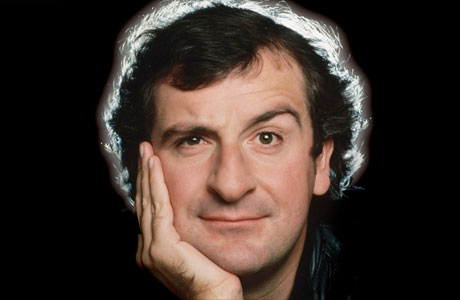
I’m sure there’s something hilarious in those quotes. Absolutely convinced of it. It’s right on the tip of my brain’s tongue; I can almost taste it. …But I just can’t. Not really. There’s just too much oddness for me to wade through. And nothing for me to hold on to while I’m wading. (I’ve been told that listening to it read aloud helps. I’ve tried. It helped not.)
Of course, he also writes things like this (which I love):
He gazed keenly into the distance and looked as if he would quite like the wind to blow his hair back dramatically at that point, but the wind was busy fooling around with some leaves a little way off.
So, I’m not a complete Philistine. Just a partial one. Still, sadly, he’s hit-or-miss with me. Or at least he was. Until today. Because now I’ve found something with which I am totally on-board. No qualifications necessary. No need to search for a center, or to figure out how I’m missing his point, or to simply stand by while others appreciate what I’m sure is there (but which I just cannot see myself).
This:
The familiarity of the Brandenburgs should not blind us to their magnitude. I’m convinced that Bach is the greatest genius who ever walked among us, and the Brandenburgs are what he wrote when he was happy.
The above quote is from his posthumous “The Salmon of Doubt,” and the clip below is what he’s talking about. Give it a listen, and let a) the technical genius and b) the undeniable happiness wash over you:
Point made, Douglas. Point made with a clarity and accuracy with which even I, a life-long Adams-dissenter, can happily agree.
The entire thing is fantastic, actually. It’s called “Brandenburg 5,” and you can read it below (if I’ve figured out how the little Google embed works.) And it’s absolutely convinced me to keep trying. Because the man who says that about Bach is worth figuring out, no matter how much work it is.
HT to The Thirsty Gargoyle. Also, just in case I buried it too deeply in the sea of links, HERE is a YouTube video of Douglas Adams reading his most famous work. And even I can see that that’s pretty cool!
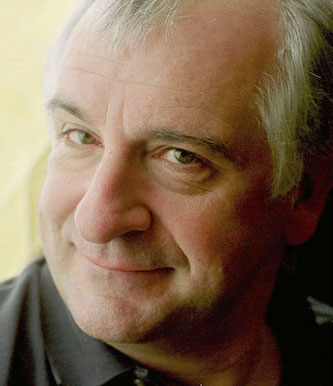
“So Long, and Thanks for All the Fish!”
Previous Post

March 31, 2014
SSF: "The Monk & The Monkey"
Next Post

April 2, 2014 This Year's Nominated Documentaries Are ALL on Netflix
Browse Our Archives
Select a Category Art Baseball Faith Family Lenten Music Movies Music No Commentary Necessary Parked By the Jukebox Photography Politics Quodlibets Streaming Video Suggestions Summa Short Films Television The Man Behind the Booth Through a Lens, Darkly
Select a Month December 2015 November 2015 October 2015 September 2015 August 2015 July 2015 June 2015 May 2015 April 2015 March 2015 February 2015 January 2015 December 2014 November 2014 October 2014 September 2014 August 2014 July 2014 June 2014 May 2014 April 2014 March 2014 February 2014 January 2014 December 2013 November 2013 October 2013 September 2013 August 2013 July 2013 June 2013 May 2013 April 2013 March 2013 February 2013 January 2013 December 2012 November 2012 July 2012 April 2012 March 2012 February 2012 November 2011 August 2011 July 2011 June 2011 May 2011 April 2011 March 2011 February 2011 January 2011 December 2010 November 2010 October 2010
Follow Us!
TAKE THE
Religious Wisdom Quiz
How many books are in the New Testament?
Select your answer to see how you score.
21 39 27 24
Related posts from Summa This, Summa That

"The time has come," the Walrus said, "to...


No Commentary Necessary — Théo Sanson, Walking On...

Now THIS Is What Coldness Sounds Like!
TRENDING AT PATHEOS Catholic

Rejecting Doom: Christian Hope And Human Action
Christianity is a religion of hope. We are to have hope and...

It’s What Comes From Within Which Matters
One of the most difficult things for us to understand is why...

Why I Choose the Eucharist Over the Sermon
Choose the Eucharist, Not the Sermon What are we supposed to get...

5 Design Elements Found in Spiritually Rooted Homes
Putting Spirituality Into Home Decor Our homes are more than our living...

Credo: A Story of God Told with the...
About 10 years ago, I began to imagine a personal "Credo" that...

The Anatomy of Divine Revelation in Catholic Thought
The claim that God has made Himself known to human beings is...
view all Catholic blogs
Ad-Free & Subscriber Log-In Subscription Support
- About Us
- 2026 Calendar
- Videos
- Podcasts
- Library of World Religions
- Faith In Media Tracker
- Advertise With Us
- Write for Us
- Privacy Policy
- Terms of Service
- Do Not Sell My Data
- Contact Us
- Radiant Digital
- Manage Newsletter Subscriptions
- Unsubscribe From Notifications
- Sitemap
Copyright 2008-2026, Patheos. All rights reserved.
Subscription Support Ad-Free & Subscriber Log-In
Follow Patheos