
BuddhistCatholicContemplativeEvangelicalGeneral ChristianHinduJewishLatter-day SaintMuslimNew VisionsProgressive Christian
Beliefs
- Buddhist
- Catholic
- Contemplative
- Evangelical
- General Christian
- Hindu
- Jewish
- Latter-day Saint
- More Voices
- Muslim
- New Visions
- Pagan
- Progressive Christian
Topics
- Religion News
- Food and Religion
- Sports and Religion
- Religious Art
- Religious Music and Entertainment
- Religious Events
- History and Religion
- Style and Religion
- Politics and Religion
- Women in Religion
- Recreation Outdoors and Religion
- Business Finance and Religion
- Careers Workplace and Religion
- Education and Religion
- Family Parenting and Religion
- Health Fitness and Religion
- Home and Religion
- Relationships and Religion
- Technology and Religion
- Travel and Religion
Columnists
- Buddhist Columnists
- Business Finance and Religion Columnists
- Careers Workplace and Religion Columnists
- Catholic Columnists
- Contemplative Columnists
- Education and Religion Columnists
- Evangelists Columnists
- Family Parenting and Religion Columnists
- General Christian Columnists
- Health Fitness and Religion Columnists
- Hindu Columnists
- History and Religion Columnists
- Home and Religion Columnists
- Jewish Columnists
- More Voices Columnists
- Latter Day Columnists
- Muslim Columnists
- New Visions Columnists
- Nonreligious Columnists
- Pagan Columnists
- Politics and Religion Columnists
- Progressive Columnists
- Recreation Outdoors and Religion Columnists
- Relationships and Religion Columnists
- Religion News Columnists
- Religious Art Columnists
- Religious Events Columnists
- Religious Music and Entertainment Columnists
- Sports and Religion Columnists
- Style and Religion Columnists
- Technology and Religion Columnists
- Travel and Religion Columnists
- Women in Religion Columnists
Resource Library
- 2026 Calendar
- Library of World Religions
- The 100 Most Holy Places on Earth
- Patheos Answers
- Podcasts
- Videos
- Faith Leaders Database
- Anglican Episcopalian
- Bahai
- Baptist
- Buddhism
- Christianity
- Confucianism
- Eastern Orthodoxy
- Hinduism
- Holiness and Pentecostal
- ISKCON
- Islam
- Judaism
- Lutheran
- Methodist
- The Church of Jesus Christ of Latter-day Saints
- New Age
- Paganism
- Presbytarian and Reformed
- Protestantism
- Religion Behind the Scenes
- Roman Catholic
- Scientology
- Shia Islam
- Sikhism
- Sufism
- Sunni Islam
- Taoism
- Zen
- See all religions
Research Tools
 Ad-Free & Subscriber Log-In Subscription Support
Ad-Free & Subscriber Log-In Subscription Support
Follow Patheos 

- Trending:
- Forgiveness
- |
- Marriage
- |
- Consciousness
- |
- Death Penalty
- |
- Election
- |
- Halloween
 Summa This, Summa That
- Home
- About
- Through a Lens, Darkly
- Streaming Video Suggestions (SVS)
- Summa Short Films (SSF)
- The Man Behind The Booth
- Home
- Catholic
- Sam Rocha’s “Late to Love”
Sam Rocha’s “Late to Love”
Last updated on: February 4, 2015 at 9:36 am by Joseph Susanka
Sam Rocha’s “Late to Love” 2015-02-04T09:36:48-07:00 Joseph Susanka
Patheos Explore the world's faith through different perspectives on religion and spirituality! Patheos has the views of the prevalent religions and spiritualities of the world.
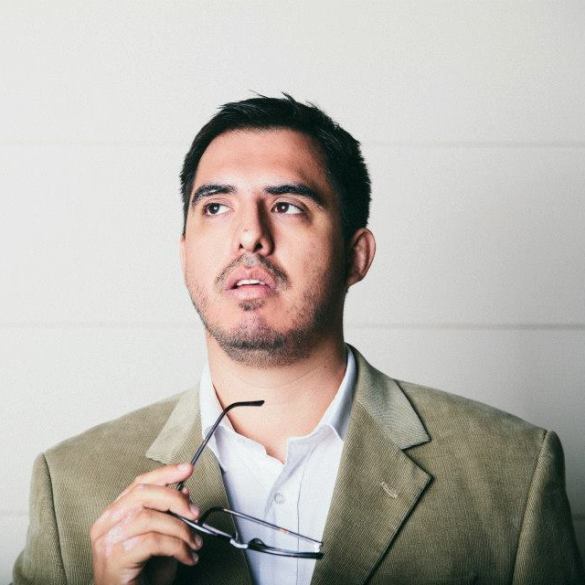
That’s Sam Rocha. One-time Patheotte. Academic. Soul-Singer. And most of all, a soul-searcher.
He’s got a Ph.D. And a Kickstarter project for a SoulBluesJazzFunkFolk/Gospel album called “Late to Love.” An album that takes its name from St. Augustine’s “Confessions.” A project with the stated intention of making “the craft of the music its main priority.” The soundtrack of a man “seeking redemption through a profession of belated love, told in multiple layers of regret, gratitude, and hope.”
So, yeah. A bundle of contradictions.
Here’s an interview he recklessly agreed to do with me, his usually reliable judgement no doubt clouded by the distracting throes of raising money for his debut album. (He’s got Wiseblood Records on board, though. So he must be doing something right.)
 Joseph Susanka: You’re an academic. In fact, you’re an academic with a degree in education. So, Academician Squared. Where’d the Musician come from?
Sam Rocha: I started playing guitar when I was five years old. This was fueled partly because I was raised in the charismatic renewal movement of the Catholic Church, so the ability to play music was, in a certain sense, very practical. I’ve never taken a “break” from playing guitar and, over the years, I’ve had a chance to learn a lot and play in different venues and styles. I sing now, too. I’m self-taught and play entirely by ear. A musical analphabet, that’s me! In many ways, this life-long relationship to music is, perhaps, the best way to understand my academic interests or, at least, the context to them. But, for me, music is my first love in terms a craft. Especially the guitar. Truth be told, I am very much still getting used to the idea that I am an academic. Being a musician is a more comfortable and worn-in outfit.
JS: I have a great-uncle who plays astonishingly well by ear. I’m in awe of you instinctive types. Do you think being self-taught has had a significant impact on the kind of music you love/you write/your own distinctive style?
SR: I used to be very insecure about my musical illiteracy and I am still quite aware of the technical weaknesses that exist in my playing from a lack of formal training. In truth, I do not consider myself to be a fantastic or even very good guitar player, even by untrained standards. Wes Montgomery I am not. Virtuoso is not my thing. But I also know that I can play and express myself; I have developed a vocabulary and style that belongs to me. A voice. That is, really, what I think my lack of training has given me, a mode of expression that I’ve built, by imitation and practice, on my own. It works best in folk forms of music: blues, jazz, soul, and pop. But I love all kinds of music. I never grew up listening to classical music, but the first time I heard a live symphony I wept. It was just so beautiful. And I think there is a symphonic aspect to all composition, even when improvising a jazz solo or phrasing a vocal line.
 JS: You say you’ve developed a vocabulary; a style that belongs to you; a voice. Why does that matter? Why is the background … and the sincerity of the artist important? Why isn’t it just about the artifact? The product? The results?
SR: First of all, I am very allergic to broad claims about the arts in general. I think we can make certain provisional observations and claims that sometimes have relevance across different mediums, but, in the end, this sort of generic aesthetic talk strikes me as being antithetical to the very particular work of doing the art itself. In certain mediums, I am not so sure that the artist matters in the same ways, but I do think it would be an odd occasion when an algorithm replaces the artist. Art without agency seems problematic. Even in the algorithm case, the programmer would be the artist. In my music, and in the sort of musical expression I work in most often, there is a constant balancing act between technique and rigor, on the one hand, and expression and originality, on the other. Too many “good” players and singers I hear don’t have a sound that they own. They are good, but not original. Excellent karaoke singers and players. That limits, at least for me, the degree to which one can communicate something that goes deeper and further than the notes. Soul music is not always about singing in key and playing smoothly. It is also about being vulnerable and willing to deliver an honest phrase. I love live albums for this reason. One of my favorites is a Marvin Gaye live album where he is playing the material from “What’s Going On?” He is sick for that show and cannot sing his usual perfect, glossy vocal. But he really works with it and manages to say and show more than I hear in the studio album. That’s one example. As a folk musician, though, I always, almost by definition, will tend toward the sincere over the technical. But that is not an absolute; it just speaks to what I do best. There are rewards and liabilities. So I keep on working.
Joseph Susanka: How does your desire for “sincerity over technicality” tie into your decision to make this album “about Augustine?”
Sam Rocha: I don’t really desire sincerity over technicality so much as that is the balance of my toolset, so I work within that as best I can. What makes that interesting, perhaps, is that it seems to be the opposite of another “outfit” that I wear, as an academic. Having a Ph.D. and being musically illiterate is, to some people, a contradiction or an oddity. But this gets me to why I love Augustine’s Confessions. First of all, Augustine was a professor of rhetoric and he detested the Academy and, more interestingly, struggled to submit his head to his heart, to put his great intellect under the authority of love. For me, this is the real distinction that transcends my work as an artist. But, really, I don’t want this album to just be “about Augustine,” at least not in a literal or clumsy way. It needs to be more than a musical book report or a sappy tribute. I will use some themes that people can recognize and some images (the cover is going to be a pear) that Augustine lovers will recognize, but I want to use Augustine to say something new, rooted in the ancient. This, of course, is very Augustinian, but, most of all, it prevents me from falling into this very disturbing trend I see in Catholic art. Literalism. There is something prosaic and deeply uninspiring about some of the artwork out there from Catholics these days. I would like for there to a be poetic approach to this album, which means that I will take some chances and, also, use lots of jazz methods in the way I approach and execute the soul music. But the answer to “Why Augustine?” is, really, very simple: it is because he is something of an everyman. He is a modern man in many ways, I can relate to him, and he has convicted me in many ways about my own need to confess, too. This album is trying to emulate that, in my own way.

JS: Say more about why you find him “relatable.” I love him, and I consider him the most brilliant mind I’ve ever encountered. …but that brilliance often makes him a bit less relatable to me. So…why relatable? Why call him an Everyman? (And then, and perhaps most interestingly, why “modern?”)
SR: I can see how Augustine can be seen as not the least bit relatable. Part of that is the fact that a prolific super genius is pretty intimidating. But that, I would like to claim, isn’t the whole picture. From an intellectual standpoint, this guy wrote the Confessions, an unprecedented personal account, filled with story and testimony. Self-disclosure. Also, Augustine seems to, for the first time in history, consider something like “the self” as an object of study, verging on a proto-psychoanalysis. For this reason, and many others, he is sometimes referred to as “the first modern man.” His conclusions are wildly different (and better, I think) from Descartes, but his interior focus is very similar. Also, the appeal of Augustine’s stories in his Confessions is, I think, because they are relatable. And then there is Monica, the sine qua non of the Confessions, in my view. I want to argue that, in Monica, we find the nontechnical cor (heart, in Latin) of Augustine’s Confessions. Monica, the African soul singer!
JS: So, what sort of “musical self-disclosure” should we expect from this album?
SR: Oh, dear. It’s all self-disclosure. Some of it is so intensely and intimately personal that only the poetics of music can communicate it without being scandalous or downright ugly. This is something Augustine does too, I think. He does not disclose too much, he leaves room for the imagination. But it’s all the usual, human stuff: shortcomings as a father, a husband, a brother, a friend, a Catholic, a teacher, and more. I am a terrible person, really, and this album is about seeking redemption and forgiveness for it. It is an album that comes from a place of intense joy, but a melancholy joy of being given a number of second and third and seventh chances, and hoping for not too, too many more. For grace.
Attribution(s): All artwork, publicity images, and stills are the property of Sam Rocha.
Previous Post

March 1, 2014
Appropriate Title? There Is None.
Next Post

March 6, 2014 One of the Best Baseball Stories EVER Is Finally Over
Browse Our Archives
Select a Category Art Baseball Faith Family Lenten Music Movies Music No Commentary Necessary Parked By the Jukebox Photography Politics Quodlibets Streaming Video Suggestions Summa Short Films Television The Man Behind the Booth Through a Lens, Darkly
Select a Month December 2015 November 2015 October 2015 September 2015 August 2015 July 2015 June 2015 May 2015 April 2015 March 2015 February 2015 January 2015 December 2014 November 2014 October 2014 September 2014 August 2014 July 2014 June 2014 May 2014 April 2014 March 2014 February 2014 January 2014 December 2013 November 2013 October 2013 September 2013 August 2013 July 2013 June 2013 May 2013 April 2013 March 2013 February 2013 January 2013 December 2012 November 2012 July 2012 April 2012 March 2012 February 2012 November 2011 August 2011 July 2011 June 2011 May 2011 April 2011 March 2011 February 2011 January 2011 December 2010 November 2010 October 2010
Follow Us!
TAKE THE
Religious Wisdom Quiz
What did Satan claim was the reason for Job’s faithfulness?
Select your answer to see how you score.
That God had blessed him with wealth and protection That Job was unaware of suffering That Job had personally seen God That Job was a prophet
Related posts from Summa This, Summa That

"The time has come," the Walrus said, "to...


No Commentary Necessary — Théo Sanson, Walking On...

Now THIS Is What Coldness Sounds Like!
TRENDING AT PATHEOS Catholic

Rejecting Doom: Christian Hope And Human Action
Christianity is a religion of hope. We are to have hope and...

It’s What Comes From Within Which Matters
One of the most difficult things for us to understand is why...

Why I Choose the Eucharist Over the Sermon
Choose the Eucharist, Not the Sermon What are we supposed to get...

5 Design Elements Found in Spiritually Rooted Homes
Putting Spirituality Into Home Decor Our homes are more than our living...

Credo: A Story of God Told with the...
About 10 years ago, I began to imagine a personal "Credo" that...

The Anatomy of Divine Revelation in Catholic Thought
The claim that God has made Himself known to human beings is...
view all Catholic blogs
Ad-Free & Subscriber Log-In Subscription Support
- About Us
- 2026 Calendar
- Videos
- Podcasts
- Library of World Religions
- Faith In Media Tracker
- Advertise With Us
- Write for Us
- Privacy Policy
- Terms of Service
- Do Not Sell My Data
- Contact Us
- Radiant Digital
- Manage Newsletter Subscriptions
- Unsubscribe From Notifications
- Sitemap
Copyright 2008-2026, Patheos. All rights reserved.
Subscription Support Ad-Free & Subscriber Log-In
Follow Patheos