
BuddhistCatholicContemplativeEvangelicalGeneral ChristianHinduJewishLatter-day SaintMuslimNew VisionsProgressive Christian
Beliefs
- Buddhist
- Catholic
- Contemplative
- Evangelical
- General Christian
- Hindu
- Jewish
- Latter-day Saint
- More Voices
- Muslim
- New Visions
- Pagan
- Progressive Christian
Topics
- Religion News
- Food and Religion
- Sports and Religion
- Religious Art
- Religious Music and Entertainment
- Religious Events
- History and Religion
- Style and Religion
- Politics and Religion
- Women in Religion
- Recreation Outdoors and Religion
- Business Finance and Religion
- Careers Workplace and Religion
- Education and Religion
- Family Parenting and Religion
- Health Fitness and Religion
- Home and Religion
- Relationships and Religion
- Technology and Religion
- Travel and Religion
Columnists
- Buddhist Columnists
- Business Finance and Religion Columnists
- Careers Workplace and Religion Columnists
- Catholic Columnists
- Contemplative Columnists
- Education and Religion Columnists
- Evangelists Columnists
- Family Parenting and Religion Columnists
- General Christian Columnists
- Health Fitness and Religion Columnists
- Hindu Columnists
- History and Religion Columnists
- Home and Religion Columnists
- Jewish Columnists
- More Voices Columnists
- Latter Day Columnists
- Muslim Columnists
- New Visions Columnists
- Nonreligious Columnists
- Pagan Columnists
- Politics and Religion Columnists
- Progressive Columnists
- Recreation Outdoors and Religion Columnists
- Relationships and Religion Columnists
- Religion News Columnists
- Religious Art Columnists
- Religious Events Columnists
- Religious Music and Entertainment Columnists
- Sports and Religion Columnists
- Style and Religion Columnists
- Technology and Religion Columnists
- Travel and Religion Columnists
- Women in Religion Columnists
Resource Library
- 2026 Calendar
- Library of World Religions
- The 100 Most Holy Places on Earth
- Patheos Answers
- Podcasts
- Videos
- Faith Leaders Database
- Anglican Episcopalian
- Bahai
- Baptist
- Buddhism
- Christianity
- Confucianism
- Eastern Orthodoxy
- Hinduism
- Holiness and Pentecostal
- ISKCON
- Islam
- Judaism
- Lutheran
- Methodist
- The Church of Jesus Christ of Latter-day Saints
- New Age
- Paganism
- Presbytarian and Reformed
- Protestantism
- Religion Behind the Scenes
- Roman Catholic
- Scientology
- Shia Islam
- Sikhism
- Sufism
- Sunni Islam
- Taoism
- Zen
- See all religions
Research Tools
 Ad-Free & Subscriber Log-In Subscription Support
Follow Patheos 

- Trending:
- Advent
- |
- Forgiveness
- |
- Thanksgiving
- |
- Election
- |
- Seasonal Holidays
- |
- Marriage
 Summa This, Summa That
- Home
- About
- Through a Lens, Darkly
- Streaming Video Suggestions (SVS)
- Summa Short Films (SSF)
- The Man Behind The Booth
- Home
- Catholic
- The Man Behind the Booth, Part I
The Man Behind the Booth, Part I
Last updated on: July 23, 2015 at 2:58 pm by Joseph Susanka
The Man Behind the Booth, Part I 2015-07-23T14:58:14-06:00 Joseph Susanka
Patheos Explore the world's faith through different perspectives on religion and spirituality! Patheos has the views of the prevalent religions and spiritualities of the world.
 There are few things more enjoyable than stumbling across a great film or television show for the first time.
Watching something you know you’re going to like is always a pleasure. But there’s a special brand of excitement that accompanies finding (and loving) something you didn’t even know existed.
Recent instances of this phenomenon include the entirely-unintentional discovery of Ostrov, my first viewing of Departures, the unearthing of the beloved family-favorite, Ushpizin, and a wonderfully thought-provoking (and ongoing) interaction with Abbas Kiarostami’s Certified Copy. (May you be richly rewarded for that recommendation, Jeffrey Overstreet!)
 This list has brought me a great deal of pleasure in the past decade, and it’s one which I expect to happily grow in the next — but it’s also one that cannot be complete without mention of the paradigmatic The Booth at the End. Described by star Xander Berkeley as “‘Twin Peaks’ mixed in with some Jerry Springer with a dash of ‘The Price is Right,'” the show was completely off my radar. I can’t even remember why I clicked on that first episode, but the moment I did, I knew that I’d been hooked. It was weird (wonderfully so), provocative (in the best sense of that word), turned significant budgetary limitations to fantastic artistic and creative advantage, and was very, very well written.
On a particularly gratifying personal note, my initial article received a visit from Mr. Christopher “C.K.” Kubasik himself, the creator and writer of Booth. I couldn’t have been more pleased. Except I was, because he eventually agreed (undeterred by my relentless badgering) to participate in a little Q&A for the “Summa This, Summa That” faithful. Here’s the first installment, which I offer in the fervent hope that it will encourage all Booth neophytes to give the show a look.
It’s free. And awesome. You can’t ask for a better bargain than that.
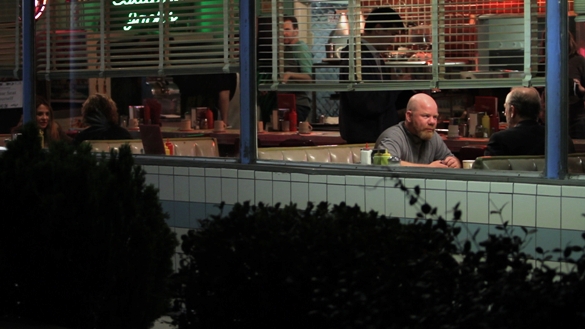
A Conversation with Christopher “C.K.” Kubasik
Creator of The Booth at the End
Joseph Susanka: As someone who has worked in an astonishingly wide range of mediums — books, role-playing and adventure games, the Emmy-nominated Stranger Adventures, and the Serling-esque The Booth at the End — could you tell us a bit about your roots, both as a writer and a “mixed discipline” storyteller? And what works exerted the greatest influence on you from both a stylistic and thematic standpoint?
Christopher “C.K.” Kubasik: I suppose I should start with this…
I was raised a Catholic.
I no longer attend Mass. I consider myself beyond lapsed. But I suspect that the kind of stories I heard—the subject matter, the concerns—tilled the soil for the kinds of stories I like to both read and write.
How much of this is the cause of who I am, how I see the world, what interests me thematically, we’ll never know. But I do think going to Mass every Sunday left aesthetic memories that I think influenced me.
Stories. Singing. Statues. Stained glass windows. For me the act of making things—making art—in service to something larger was just part of how I grew up.
The other half of the Catholic upbringing was the awareness—or, at least the notion—that there is more to life than we can see. The idea that life is stranger than we’d like to admit. Or, at least, to consider it might be. I think this is one of the challenges of Christianity. It challenges a person to consider—with tales of Virgin Births and Resurrections and the contradictions within the Gospels—“Do you really know everything there is to know?” You might not even believe those things as real or true. But, certainly, as stories, they plant the notion of a larger world than the world of mundane matter we see and hear every day.
Today, I am not, nor have been for many years, a member of any congregation or denomination.
*** * ***


As a boy, I read a lot and watched a lot of movies. As a boy, I wrote plays and stories. Why? I don’t know.
I made books, plotting out the pages so I could fold them in half, staple them down the middle, and have a book, like a grown-up book, in my hands. In 4th grade my father sat me down at his IBM Selectric and taught me how to use a three-act structure because I said I wanted to write a play about Joseph and his brothers.
In 8th grade, my English teacher assigned Stephen King’s ‘Salem’s Lot. I fell for the book fast and hard. The first chunk of the book had nothing to do with vampires. It was about how the town fed on itself with gossip and ill-will. The disease of vampirism, when it arrived, was plainly a harsher manifestation of what was already happening in the community. The notion that a tale could tackle—with big, bright genre colors—the concerns and tensions of adult life was new to me. I saw in King’s book the kind of tale that I did not see on television in my youth—an honest reflection of world I saw when I watched the news or flipped through a newspaper or looked out the window.
My reading began to expand out of the Young Adult stories I had been reading into the works of Harlan Ellison, Theodore Sturgeon, Robert E. Howard, Ray Bradbury, and others. They were genre writers—but genre writers with strong voices, moral concerns, and questions about what it means to be human. As far as I could tell, genre fiction was the only fiction big enough to hold the ambitions of their stories. It wasn’t that they wanted to writer genre works, per se. It was that they created strange, fantastical stories because they respected the strange fantastical nature of what it means to be human.
*** * ***
You asked about roleplaying games. They ran parallel to the stranger and more compelling fiction I began reading at this time. The father of a friend of mine came back from a gaming convention with an edition of Dungeons and Dragons. We cracked it open and I thought it was the most intriguing toy I’d ever encountered.
Roleplaying games were very important to me because these games are a social process for making stories with your friends. Unlike novels or movies or plays, which were complete by the time I encountered them, roleplaying games allowed me to play with the “building blocks” of storytelling (characters, setting, situation, plot) and turn them around in my hands and examine them.

Playing the games was all very experimental and playful. It didn’t teach me how to write a novel or screenplay. But it did teach me that stories are made. Sometimes a session with my friends was satisfying, and sometimes it fell flat. I came to understand that novels and movies and plays didn’t just appear magically but are created with craft, technique and commitment.
What I learned from roleplaying games is that every medium is a form—with its own strengths and weaknesses that need to be respected and exploited.
And there were comic books: I collected comic books heavily for years in my youth (starting around 7th grade, mostly Marvel and a lot of the Warner horror comics). I learned something very important from looking at the art in those comic books, stretching back decades before I was born: some things are better made than others. You could look at the drawings of two artists and say, “This guy’s art is better than that guy’s art.” I came to understand that all of this making stuff wasn’t just magic. There were standards. And if I were to do it, I would have to set my standards and meet them.
*** * ***
The list of influences goes on. And in high school I found the bedrock of authors that would influence me for the rest of my life:
I took a class that introduced me to William Shakespeare*,* Edward Albee, Edgar Allen Poe, Nathaniel Hawthorne*,* the Greek Tragedies, and other authors that completely pulled me in. Despite my love for what I’d read off the genre shelves, I now felt like I’d found the stories that I’d been looking for. They put the human soul up on a table, picked up a scalpel, and sliced it open to examine it. They were like the genre authors I’d read.
Strangely, television wasn’t much of an influence on me. Most television, designed to be safe and reassure, held little interest for me. I’d say that The X-Files was an exception. And, of course, Twin Peaks. And I’d seen some amazing British television over the years: The Singing Detective, House of Cards and others. These shows made me think, “Wait! You can do this with television?”
But in this past decade, a wonderful string of shows that are in my sweet spot have arrived: The Shield, Battlestar Galactica, The Wire, Six Feet Under, Breaking Bad, Mad Men, and others. This is television that makes sense to me in the same way those stories and plays I read back in high school make sense to me.
Check out Part II!
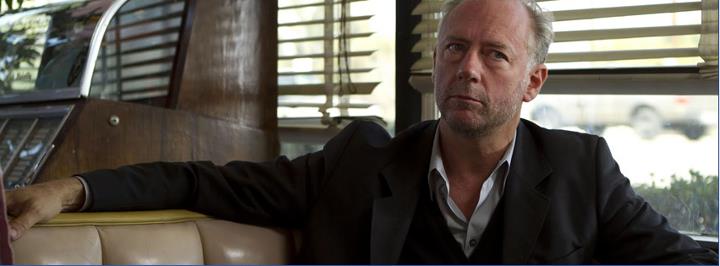
Attribution(s): Publicity images and film stills are the property of Hulu and other respective production studios and distributors, and are intended for editorial use only; images of Mr. Kubasik were provided by C.K. himself; “Salem’s Lot” and “Dungeons and Dragons” are product links, courtesy of Amazon.
Previous Post

April 23, 2013
"Howlin' Ukuleles, Batman!"
Next Post

April 25, 2013 Ella, Enchanting
Browse Our Archives
Select a Category Art Baseball Faith Family Lenten Music Movies Music No Commentary Necessary Parked By the Jukebox Photography Politics Quodlibets Streaming Video Suggestions Summa Short Films Television The Man Behind the Booth Through a Lens, Darkly
Select a Month December 2015 November 2015 October 2015 September 2015 August 2015 July 2015 June 2015 May 2015 April 2015 March 2015 February 2015 January 2015 December 2014 November 2014 October 2014 September 2014 August 2014 July 2014 June 2014 May 2014 April 2014 March 2014 February 2014 January 2014 December 2013 November 2013 October 2013 September 2013 August 2013 July 2013 June 2013 May 2013 April 2013 March 2013 February 2013 January 2013 December 2012 November 2012 July 2012 April 2012 March 2012 February 2012 November 2011 August 2011 July 2011 June 2011 May 2011 April 2011 March 2011 February 2011 January 2011 December 2010 November 2010 October 2010
Follow Us!
TAKE THE
Religious Wisdom Quiz
True or False: Luke records that Jesus was about thirty years old when he began his ministry.
Select your answer to see how you score.
FALSE TRUE
Related posts from Summa This, Summa That



TRENDING AT PATHEOS Catholic

The Kingdom Of God In Ordinary Life And...
The kingdom of God is all around us; it is in us...

How Discretion Guides Us Away From Extremes
Prudence is an important virtue for all of us. While we should...

If Baptism Washes Away Sin, Why Do Catholics...
The seven sacraments stand as the foundation of Catholic ecclesial life. The...

The Power of Setting a Good Example
Remember last August when the Chicago White Sox hosted a "Pope Hat...

A Catholic Critique of Biblical Unitarianism
If the statistics are to be believed, Unitarianism is rising worldwide. Although...

How Grandma Tourism Helps Grandparents Live Their Vocation
Grandma, The New Travel Influencer What started as a nostalgia-inspired social media...
view all Catholic blogs
Ad-Free & Subscriber Log-In Subscription Support
- About Us
- 2026 Calendar
- Videos
- Podcasts
- Library of World Religions
- Faith In Media Tracker
- Advertise With Us
- Write for Us
- Privacy Policy
- Terms of Service
- Do Not Sell My Data
- Contact Us
- Radiant Digital
- Manage Newsletter Subscriptions
- Unsubscribe From Notifications
- Sitemap
Copyright 2008-2026, Patheos, part of the Radiant Digital network of media brands. All rights reserved.
Subscription Support Ad-Free & Subscriber Log-In
Follow Patheos