
BuddhistCatholicContemplativeEvangelicalGeneral ChristianHinduJewishLatter-day SaintMuslimNew VisionsProgressive Christian
Beliefs
- Buddhist
- Catholic
- Contemplative
- Evangelical
- General Christian
- Hindu
- Jewish
- Latter-day Saint
- More Voices
- Muslim
- New Visions
- Pagan
- Progressive Christian
Topics
- Religion News
- Food and Religion
- Sports and Religion
- Religious Art
- Religious Music and Entertainment
- Religious Events
- History and Religion
- Style and Religion
- Politics and Religion
- Women in Religion
- Recreation Outdoors and Religion
- Business Finance and Religion
- Careers Workplace and Religion
- Education and Religion
- Family Parenting and Religion
- Health Fitness and Religion
- Home and Religion
- Relationships and Religion
- Technology and Religion
- Travel and Religion
Columnists
- Buddhist Columnists
- Business Finance and Religion Columnists
- Careers Workplace and Religion Columnists
- Catholic Columnists
- Contemplative Columnists
- Education and Religion Columnists
- Evangelists Columnists
- Family Parenting and Religion Columnists
- General Christian Columnists
- Health Fitness and Religion Columnists
- Hindu Columnists
- History and Religion Columnists
- Home and Religion Columnists
- Jewish Columnists
- More Voices Columnists
- Latter Day Columnists
- Muslim Columnists
- New Visions Columnists
- Nonreligious Columnists
- Pagan Columnists
- Politics and Religion Columnists
- Progressive Columnists
- Recreation Outdoors and Religion Columnists
- Relationships and Religion Columnists
- Religion News Columnists
- Religious Art Columnists
- Religious Events Columnists
- Religious Music and Entertainment Columnists
- Sports and Religion Columnists
- Style and Religion Columnists
- Technology and Religion Columnists
- Travel and Religion Columnists
- Women in Religion Columnists
Resource Library
- 2026 Calendar
- Library of World Religions
- The 100 Most Holy Places on Earth
- Patheos Answers
- Podcasts
- Videos
- Faith Leaders Database
- Anglican Episcopalian
- Bahai
- Baptist
- Buddhism
- Christianity
- Confucianism
- Eastern Orthodoxy
- Hinduism
- Holiness and Pentecostal
- ISKCON
- Islam
- Judaism
- Lutheran
- Methodist
- The Church of Jesus Christ of Latter-day Saints
- New Age
- Paganism
- Presbytarian and Reformed
- Protestantism
- Religion Behind the Scenes
- Roman Catholic
- Scientology
- Shia Islam
- Sikhism
- Sufism
- Sunni Islam
- Taoism
- Zen
- See all religions
Research Tools
 Ad-Free & Subscriber Log-In Subscription Support
Ad-Free & Subscriber Log-In Subscription Support
Follow Patheos 

- Trending:
- Forgiveness
- |
- Marriage
- |
- Consciousness
- |
- Death Penalty
- |
- Election
- |
- Halloween
 Summa This, Summa That
- Home
- About
- Through a Lens, Darkly
- Streaming Video Suggestions (SVS)
- Summa Short Films (SSF)
- The Man Behind The Booth
- Home
- Catholic
- What Bothered Me Most About Rand Paul’s Filibuster
What Bothered Me Most About Rand Paul’s Filibuster
Last updated on: March 17, 2017 at 3:16 pm by Joseph Susanka
What Bothered Me Most About Rand Paul’s Filibuster 2017-03-17T15:16:01-06:00 Joseph Susanka
Patheos Explore the world's faith through different perspectives on religion and spirituality! Patheos has the views of the prevalent religions and spiritualities of the world.
There were a number of things about Wednesday’s Capra-esque spectacle that bothered me. But the one that I couldn’t get out of my mind no matter what? The one that compelled me to break one of my cardinal blogging rules: “Thou Shalt Not Write On Politics, Lest Your Ignorance Be Laid Bare Before the Entire World?”
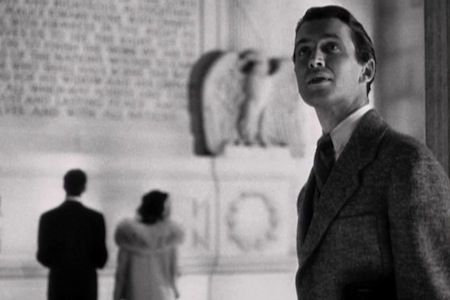
It isn’t that we lack for Stewarts — we’ve always had Quixotes, and always will (thank God) — it’s that we have no Claude Rainses.
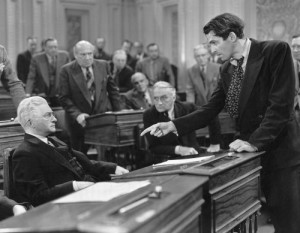 In Mister Smith Goes to Washington, Rains plays Senator Joseph Harrison Paine, senior senator from an unnamed Western state, who owes his powerful political position to a shadowy and corrupt political mastermind, Jim Taylor. The state’s newly-minted junior senator, Jefferson Smith (Stewart), considers Paine an ally in his reform efforts, and Paine allows him to labor under that misconception as long as it serves his purposes. But when his attempts to further Taylor’s agenda are thwarted by Smith’s dewy-eyed patriotism, the gloves come off. Using every political tool at his sizable disposal, Paine strives to break Smith’s spirit. But when Smith gamely filibusters one of Paine’s more nefarious schemes, Paine is moved in spite of himself, gradually succumbing to the angels of his better nature.
Capra offers Paine’s capitulation as a sign that patriotism and Truth can win out in the end. If such self-examination, self-recrimination, and eventual conversion is possible for someone as habitually crooked as Paine, then the idealistic naiveté of Smith’s filibuster makes perfect sense. Speaking Truth to Power is easy if you believe that the Truth has Power. In a “Might Makes Right” system, however — where Power is Truth rather than the other way ’round — a lone man standing up against powerful opponents is far less hopeful. “Keep telling it like it is ’til someone pays attention” is only an effective political tool if the opposition is actually interested in listening, or if it is compelled to do so. And if yesterday is any indication, Senator Rand Paul’s opponents (on both sides of the aisle) were profoundly disinterested.
Some will argue that Senator Paul’s successful(?) efforts to wring some assurances from the President and Eric Holder justifies his tactics, just as some will argue that his filibuster was nothing more than self-centered and meaningless political theater. Either way, the bipartisan lack of interest and attention this week was simply “business as usual.”
And it shouldn’t be.
When contrasting Capra’s fictional world with the one we currently occupy, the thing that struck me most was that Paine listened — listened even though it was his opponent’s harangue, and not his own; and listened even though he didn’t want to. And through that listening, he was reminded of his respect (even reverence) for the customs and principles of his country’s governance, recognizing once again that the position he held was not only an important and powerful one, but one that brought with it certain obligations.
You don’t have to agree with your opponent; you don’t even have to like him. But you should pay him the courtesy of listening when he’s talking. It might do both of you a great deal of good.
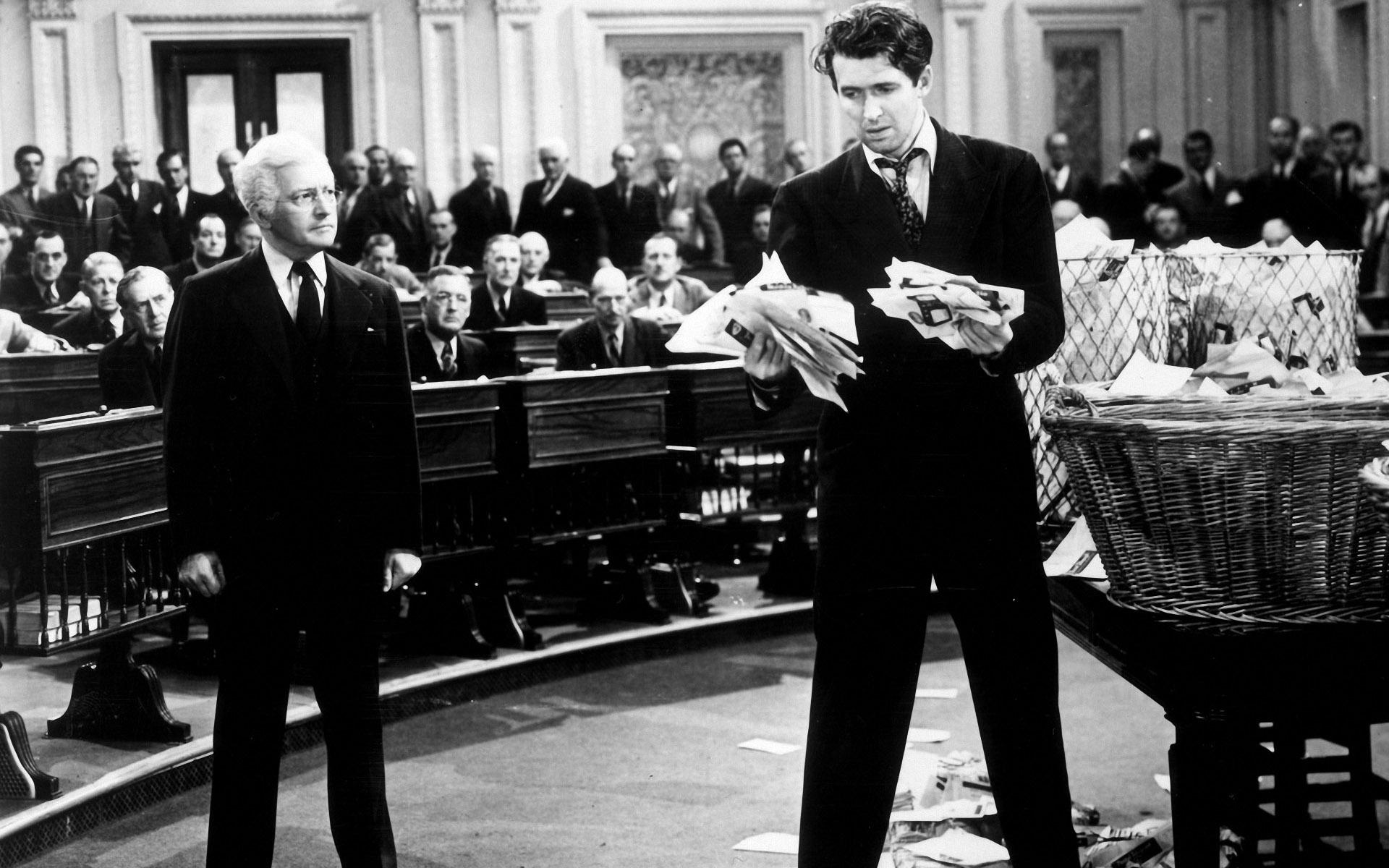
Setting aside the particulars of yesterday’s “debate” for a moment — as well as the suggestion that filibusters have largely become procedural and political tools rather than principled ones — I find myself far more interested in the response to Paul’s speechifying, and the behaviors and attitudes that response manifests to “outsiders/constituents” such as me: we live in a political environment where our Majority Leader can stand up and say (essentially), “Wait. You still talkin’? Yeesh! Let’s grab a bite, guys, and come back tomorrow. ”
Is this a new political climate? I don’t know. And frankly, I don’t care. It’s a poisonous one, regardless of its lifespan or origins.
Yes, I realize that this kind of thing that has been “going on for years,” that it’s “customary,” and that this is “how our government works.” And I’m not really interested in picking on Harry Reid per se. But the empty seats that I see whenever I flip past CSPAN are deeply unsettling to me. It was “empty chair” rhetoric that led to Eastwood’s canonization/crucifixion last year, but take a look at that clip from earlier this week. That’s where the real empty chairs are. No one’s even paying attention.
The fact that our senators are so cavalier and nonchalant when it comes to listening to one another strikes me as both counterproductive and profoundly indicative of the problems we face. Things are so predetermined that the public presentation of one’s ideas and positions is seen as meaningless in the majority of cases, and the chance of seeing real conversation and debate on the Senate floor is about as likely as the chance of seeing a Presidential Debate that answers questions instead of spouting sound bites.
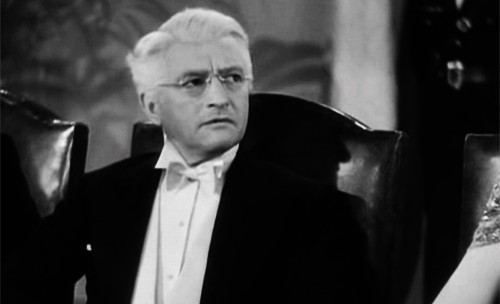 Suggesting that we can (or should) find common ground on all topics is absurd; there will always be legitimate and insurmountable disagreement. But dismissing one’s opponents because you realize that you have the requisite power to achieve your goals — “We’ve got the votes!” — is a corrosive mentality, striking at the heart of any honest debate or genuine compromise. We don’t need a modern-day Jim Taylor to bully and bluster and throw his weight around; we’ve got an entire Senate-full of Jim Taylors already.
The machinations of the American political behemoth are opaque to me, so this response is an admittedly emotional one. But yesterday’s events (and others like it) remind me of Benedict XVI’s suggestion that a relativistic culture will focus on questions of power and expediency rather than those of right and wrong. Our leaders are increasingly disinterested in giving Jefferson Smith and his kind a platform — and even less interested in listening to them use it — because they’re often far less interested in whether or not they should do something than in whether or not they can.
Maybe if they listened more and flexed their political muscles less, they’d discover themselves, Paine-like, remembering who it is that put them in that august chamber in the first place.
And maybe, just maybe, they’ll start to remember why they’re there.
Previous Post

March 6, 2013
Pop Cultural Litmus Test of the Day
Next Post

March 11, 2013 Makoto Shinkai's "Garden of Words"
Browse Our Archives
Select a Category Art Baseball Faith Family Lenten Music Movies Music No Commentary Necessary Parked By the Jukebox Photography Politics Quodlibets Streaming Video Suggestions Summa Short Films Television The Man Behind the Booth Through a Lens, Darkly
Select a Month December 2015 November 2015 October 2015 September 2015 August 2015 July 2015 June 2015 May 2015 April 2015 March 2015 February 2015 January 2015 December 2014 November 2014 October 2014 September 2014 August 2014 July 2014 June 2014 May 2014 April 2014 March 2014 February 2014 January 2014 December 2013 November 2013 October 2013 September 2013 August 2013 July 2013 June 2013 May 2013 April 2013 March 2013 February 2013 January 2013 December 2012 November 2012 July 2012 April 2012 March 2012 February 2012 November 2011 August 2011 July 2011 June 2011 May 2011 April 2011 March 2011 February 2011 January 2011 December 2010 November 2010 October 2010
Follow Us!
TAKE THE
Religious Wisdom Quiz
True or False: The Year of Jubilee occurred every fifty years.
Select your answer to see how you score.
FALSE TRUE
Related posts from Summa This, Summa That


"The time has come," the Walrus said, "to...


Now THIS Is What Coldness Sounds Like!
TRENDING AT PATHEOS Catholic

Rejecting Doom: Christian Hope And Human Action
Christianity is a religion of hope. We are to have hope and...

It’s What Comes From Within Which Matters
One of the most difficult things for us to understand is why...

Why I Choose the Eucharist Over the Sermon
Choose the Eucharist, Not the Sermon What are we supposed to get...

5 Design Elements Found in Spiritually Rooted Homes
Putting Spirituality Into Home Decor Our homes are more than our living...

Credo: A Story of God Told with the...
About 10 years ago, I began to imagine a personal "Credo" that...

The Anatomy of Divine Revelation in Catholic Thought
The claim that God has made Himself known to human beings is...
view all Catholic blogs
Ad-Free & Subscriber Log-In Subscription Support
- About Us
- 2026 Calendar
- Videos
- Podcasts
- Library of World Religions
- Faith In Media Tracker
- Advertise With Us
- Write for Us
- Privacy Policy
- Terms of Service
- Do Not Sell My Data
- Contact Us
- Radiant Digital
- Manage Newsletter Subscriptions
- Unsubscribe From Notifications
- Sitemap
Copyright 2008-2026, Patheos. All rights reserved.
Subscription Support Ad-Free & Subscriber Log-In
Follow Patheos