
BuddhistCatholicContemplativeEvangelicalGeneral ChristianHinduJewishLatter-day SaintMuslimNew VisionsProgressive Christian
Beliefs
- Buddhist
- Catholic
- Contemplative
- Evangelical
- General Christian
- Hindu
- Jewish
- Latter-day Saint
- More Voices
- Muslim
- New Visions
- Pagan
- Progressive Christian
Topics
- Religion News
- Food and Religion
- Sports and Religion
- Religious Art
- Religious Music and Entertainment
- Religious Events
- History and Religion
- Style and Religion
- Politics and Religion
- Women in Religion
- Recreation Outdoors and Religion
- Business Finance and Religion
- Careers Workplace and Religion
- Education and Religion
- Family Parenting and Religion
- Health Fitness and Religion
- Home and Religion
- Relationships and Religion
- Technology and Religion
- Travel and Religion
Columnists
- Buddhist Columnists
- Business Finance and Religion Columnists
- Careers Workplace and Religion Columnists
- Catholic Columnists
- Contemplative Columnists
- Education and Religion Columnists
- Evangelists Columnists
- Family Parenting and Religion Columnists
- General Christian Columnists
- Health Fitness and Religion Columnists
- Hindu Columnists
- History and Religion Columnists
- Home and Religion Columnists
- Jewish Columnists
- More Voices Columnists
- Latter Day Columnists
- Muslim Columnists
- New Visions Columnists
- Nonreligious Columnists
- Pagan Columnists
- Politics and Religion Columnists
- Progressive Columnists
- Recreation Outdoors and Religion Columnists
- Relationships and Religion Columnists
- Religion News Columnists
- Religious Art Columnists
- Religious Events Columnists
- Religious Music and Entertainment Columnists
- Sports and Religion Columnists
- Style and Religion Columnists
- Technology and Religion Columnists
- Travel and Religion Columnists
- Women in Religion Columnists
Resource Library
- 2026 Calendar
- Library of World Religions
- The 100 Most Holy Places on Earth
- Patheos Answers
- Podcasts
- Videos
- Faith Leaders Database
- Anglican Episcopalian
- Bahai
- Baptist
- Buddhism
- Christianity
- Confucianism
- Eastern Orthodoxy
- Hinduism
- Holiness and Pentecostal
- ISKCON
- Islam
- Judaism
- Lutheran
- Methodist
- The Church of Jesus Christ of Latter-day Saints
- New Age
- Paganism
- Presbytarian and Reformed
- Protestantism
- Religion Behind the Scenes
- Roman Catholic
- Scientology
- Shia Islam
- Sikhism
- Sufism
- Sunni Islam
- Taoism
- Zen
- See all religions
Research Tools
 Ad-Free & Subscriber Log-In Subscription Support
Ad-Free & Subscriber Log-In Subscription Support
Follow Patheos 

- Trending:
- Forgiveness
- |
- Marriage
- |
- Consciousness
- |
- Death Penalty
- |
- Election
- |
- Halloween
 Summa This, Summa That
- Home
- About
- Through a Lens, Darkly
- Streaming Video Suggestions (SVS)
- Summa Short Films (SSF)
- The Man Behind The Booth
- Home
- Catholic
- Peter Jackson Misses the Point
Peter Jackson Misses the Point
Last updated on: January 6, 2015 at 5:32 pm by Joseph Susanka
Peter Jackson Misses the Point 2015-01-06T17:32:24-07:00 Joseph Susanka
Patheos Explore the world's faith through different perspectives on religion and spirituality! Patheos has the views of the prevalent religions and spiritualities of the world.
This past weekend, I joined millions of moviegoers around the globe in what will doubtless become a Christmas tradition (whether we like it or not): I Hobbited.
Having now experienced Peter Jackson’s latest extravaganza for myself, I can safely say that I have very little to add to the critical consensus. The film features many of the visual and imaginative flairs that make his Tolkien adaptations so beloved, but it suffers the same storytelling and thematic flaws that make them so frustrating.
The criticism that the film feels thin and stretched, “like butter scraped over too much bread,” is a) wonderfully Hobbity and b) depressingly accurate. But that failure lies on Jackson’s doorstep, not Tolkien’s. Time and again, I found myself thinking not that the source material was too flimsy for such an ambitious, action-oriented film, but that it had disappeared altogether. To poorly paraphrase, it’s not that Tolkien’s story was tried and found lacking; it’s that it was thought too thin and never tried at all.

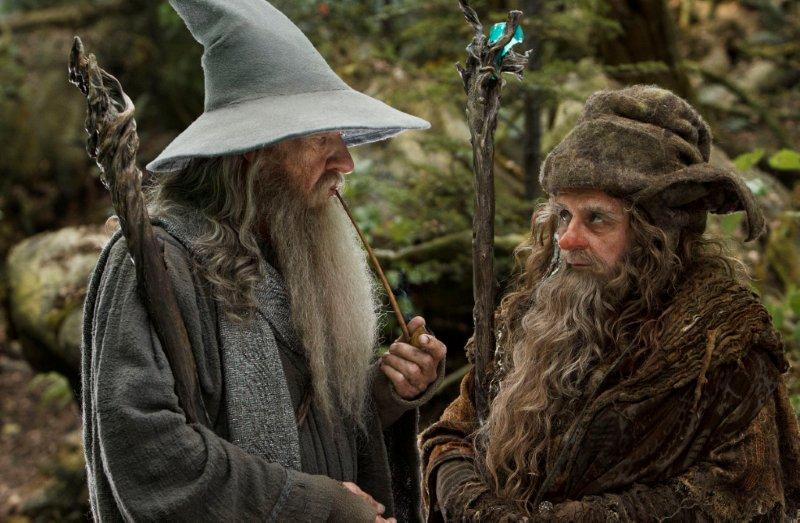 The bones of the original are present — Bilbo’s reticence and inertia pitted again his Tookishness and the grand lure of adventure; Thorin’s relentless drive to reclaim his family’s home, wealth, and stature; Gandalf’s mysterious nudgings that push his companions beyond the limits of their comfort, coupled with his awareness that the smallness of their mission is no impediment to its transformative powers; the brilliant duality of Gollum, where our hatred and pity for him grows with every passing moment — but they are bones upon which Jackson fastens muscles and sinews all out of proportion with their framework.
The film’s tone and style mirror the great successes/excesses of Jackson’s spectacular Lord of the Rings trilogy, leaving one with the feeling that The Hobbit‘s director sees it as little more than deep background material for his previous blockbusters. But to characterize The Hobbit as mere prologue does more than just diminish its value; it runs the risk of destroying its message altogether.
For me, the genius of Tolkien’s Hobbit, particularly in contrast with its more ambitious, more successful sibling, has always been that its protagonist is so ordinary, so life-sized. Bilbo’s adventures are as influential in the future of Middle Earth as his nephew’s, but he is blissfully unaware of that larger context. He doesn’t realize his role in the epic struggle taking place between the Light and the Darkness, and he doesn’t need to. His journey is personal rather than mythic; his virtues as applicable to everyday life (and everyday people) as they are to the Hero’s Quest.
To tell Bilbo’s story the way it deserved to be told, Jackson needed to rein in his propensity for massive and mostly unmotivated action sequences and focus more on the little, sincere moments where our hero’s growth and true worth are most clearly revealed. Instead, he doubled down, succumbing to the notion that, in matters of grave importance, style, not sincerity, is the vital thing.
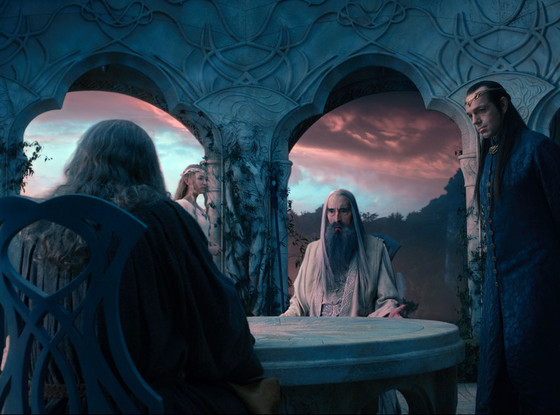 In fairness to Jackson, there were some wonderful moments in the “larger context” framework. Matching Gandalf’s regular absences with his attempts to sift through the rumors and rumblings of Sauron put to rest a confusion that always nagged me in the book. And I’m a sucker for any sequence that manages to simultaneously include the incomparable quartet of Cate Blanchett, Ian McKellan, Hugo Weaving, and Christopher Lee. But at the same time, it is those very establishing moments that pull us further from the wondrous smallness of Bilbo’s story — the ordinariness that makes The Hobbit so unlike its mythic counterpart.
Bilbo is not focused on defeating the Necromancer or waging war against the Advancing Evil from the East. He is committed to winning back the stolen home of his dwarvish friends — a mission that is important to him because of the smallness of his scope, not in spite of it. His virtues are simultaneously profound and unassuming, revealing why his story is so worth telling in the first place, and why it should not — indeed, cannot — be reduced to yet another chapter of The Lord of the Rings.
As Tony Rossi of “The Christophers” notes, The Hobbit: An Unexpected Journey is “a classic tale of good, evil, and moral courage,” and Jackson’s meddling does not abolish that fact — but it does make it significantly harder to recognize. The louder and larger the spectacle, the less obvious (and less important) Bilbo’s modest heroism becomes. The charm of Bilbo’s adventures is that his vital role in them is so unexpected to him, but not at all unexpected to his audience. The frustration of Jackson’s retelling is that I have to endure so many unexpected (and unnecessary) adventures to watch that story of heroism unfold.
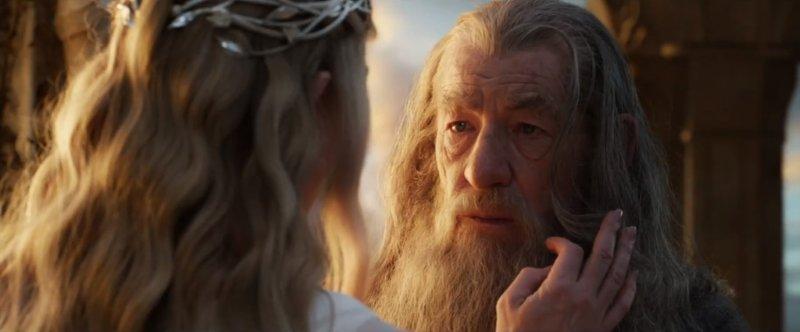
Attribution(s): Publicity images and movie stills are the property of New Line Cinema, MGM Studios, and other respective production studios and distributors, and are intended for editorial use only.
Previous Post
December 20, 2012
The Year in Photos, WSJ Edition
Next Post
December 23, 2012 Music and Meditation for the Fourth Sunday of Advent
Browse Our Archives
Select a Category Art Baseball Faith Family Lenten Music Movies Music No Commentary Necessary Parked By the Jukebox Photography Politics Quodlibets Streaming Video Suggestions Summa Short Films Television The Man Behind the Booth Through a Lens, Darkly
Select a Month December 2015 November 2015 October 2015 September 2015 August 2015 July 2015 June 2015 May 2015 April 2015 March 2015 February 2015 January 2015 December 2014 November 2014 October 2014 September 2014 August 2014 July 2014 June 2014 May 2014 April 2014 March 2014 February 2014 January 2014 December 2013 November 2013 October 2013 September 2013 August 2013 July 2013 June 2013 May 2013 April 2013 March 2013 February 2013 January 2013 December 2012 November 2012 July 2012 April 2012 March 2012 February 2012 November 2011 August 2011 July 2011 June 2011 May 2011 April 2011 March 2011 February 2011 January 2011 December 2010 November 2010 October 2010
Follow Us!
TAKE THE
Religious Wisdom Quiz
How many books in the Bible are classified as poetry?
Select your answer to see how you score.
7 6 5 4
Related posts from Summa This, Summa That




TRENDING AT PATHEOS Catholic

Rejecting Doom: Christian Hope And Human Action
Christianity is a religion of hope. We are to have hope and...

It’s What Comes From Within Which Matters
One of the most difficult things for us to understand is why...

Why I Choose the Eucharist Over the Sermon
Choose the Eucharist, Not the Sermon What are we supposed to get...

5 Design Elements Found in Spiritually Rooted Homes
Putting Spirituality Into Home Decor Our homes are more than our living...

Credo: A Story of God Told with the...
About 10 years ago, I began to imagine a personal "Credo" that...

The Anatomy of Divine Revelation in Catholic Thought
The claim that God has made Himself known to human beings is...
view all Catholic blogs
Ad-Free & Subscriber Log-In Subscription Support
- About Us
- 2026 Calendar
- Videos
- Podcasts
- Library of World Religions
- Faith In Media Tracker
- Advertise With Us
- Write for Us
- Privacy Policy
- Terms of Service
- Do Not Sell My Data
- Contact Us
- Radiant Digital
- Manage Newsletter Subscriptions
- Unsubscribe From Notifications
- Sitemap
Copyright 2008-2026, Patheos. All rights reserved.
Subscription Support Ad-Free & Subscriber Log-In
Follow Patheos