
BuddhistCatholicContemplativeEvangelicalGeneral ChristianHinduJewishLatter-day SaintMuslimNew VisionsProgressive Christian
Beliefs
- Buddhist
- Catholic
- Contemplative
- Evangelical
- General Christian
- Hindu
- Jewish
- Latter-day Saint
- More Voices
- Muslim
- New Visions
- Pagan
- Progressive Christian
Topics
- Religion News
- Food and Religion
- Sports and Religion
- Religious Art
- Religious Music and Entertainment
- Religious Events
- History and Religion
- Style and Religion
- Politics and Religion
- Women in Religion
- Recreation Outdoors and Religion
- Business Finance and Religion
- Careers Workplace and Religion
- Education and Religion
- Family Parenting and Religion
- Health Fitness and Religion
- Home and Religion
- Relationships and Religion
- Technology and Religion
- Travel and Religion
Columnists
- Buddhist Columnists
- Business Finance and Religion Columnists
- Careers Workplace and Religion Columnists
- Catholic Columnists
- Contemplative Columnists
- Education and Religion Columnists
- Evangelists Columnists
- Family Parenting and Religion Columnists
- General Christian Columnists
- Health Fitness and Religion Columnists
- Hindu Columnists
- History and Religion Columnists
- Home and Religion Columnists
- Jewish Columnists
- More Voices Columnists
- Latter Day Columnists
- Muslim Columnists
- New Visions Columnists
- Nonreligious Columnists
- Pagan Columnists
- Politics and Religion Columnists
- Progressive Columnists
- Recreation Outdoors and Religion Columnists
- Relationships and Religion Columnists
- Religion News Columnists
- Religious Art Columnists
- Religious Events Columnists
- Religious Music and Entertainment Columnists
- Sports and Religion Columnists
- Style and Religion Columnists
- Technology and Religion Columnists
- Travel and Religion Columnists
- Women in Religion Columnists
Resource Library
- 2026 Calendar
- Library of World Religions
- The 100 Most Holy Places on Earth
- Patheos Answers
- Podcasts
- Videos
- Faith Leaders Database
- Anglican Episcopalian
- Bahai
- Baptist
- Buddhism
- Christianity
- Confucianism
- Eastern Orthodoxy
- Hinduism
- Holiness and Pentecostal
- ISKCON
- Islam
- Judaism
- Lutheran
- Methodist
- The Church of Jesus Christ of Latter-day Saints
- New Age
- Paganism
- Presbytarian and Reformed
- Protestantism
- Religion Behind the Scenes
- Roman Catholic
- Scientology
- Shia Islam
- Sikhism
- Sufism
- Sunni Islam
- Taoism
- Zen
- See all religions
Research Tools
 Ad-Free & Subscriber Log-In Subscription Support
Ad-Free & Subscriber Log-In Subscription Support
Follow Patheos 

- Trending:
- Forgiveness
- |
- Marriage
- |
- Consciousness
- |
- Death Penalty
- |
- Election
- |
- Halloween
 Summa This, Summa That
- Home
- About
- Through a Lens, Darkly
- Streaming Video Suggestions (SVS)
- Summa Short Films (SSF)
- The Man Behind The Booth
- Home
- Catholic
- Obamacare Questions: Windmills or Giants?
Obamacare Questions: Windmills or Giants?
Last updated on: June 9, 2015 at 12:12 pm by Joseph Susanka
Obamacare Questions: Windmills or Giants? 2015-06-09T12:12:18-06:00 Joseph Susanka
Patheos Explore the world's faith through different perspectives on religion and spirituality! Patheos has the views of the prevalent religions and spiritualities of the world.
“They said that I should lose my ideals and begin to believe in the methods of practical politicians. Now, I have not lost my ideals in the least; my faith in fundamentals is exactly what it always was. What I have lost is my old childlike faith in practical politics.”
G.K. Chesterton, Orthodoxy
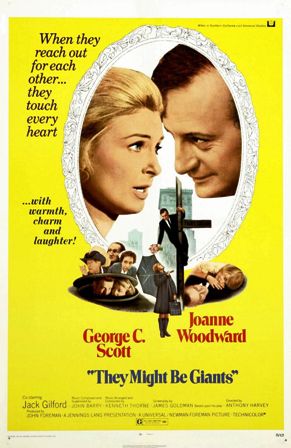
It is no doubt a reflection of my current condition—”Life Amidst a Roiling Sea of Small and Boisterous Children”—that when a friend recommended 1971’s They Might Be Giants, my first thought was of the musical group behind such gems as “Birdhouse in Your Soul,”“Particle Man,” and “Alphabet of Nations.”
There is a connection between the two. The group’s founders were inspired by the very film in question, feeling that its reference to Miguel de Cervantes’ account of Quixote’s foolish windmill jousting was relevant to a start-up group such as theirs, as well as “something very paranoid sounding.”
As retribution for my mistake, however, this week’s Lens is an attempt to prevent others from making the same error as I, for the film is worthy of attention above-and-beyond its band-naming ways.
A lesser-known collaboration between playwright James Goldman and director Anthony Harvey—The Lion in Winter, released only three years before, is a more recognized and decorated work—the film tells the story of retired judge Justin Playfair (George C. Scott) and the peculiar psychotic territory into which he has retreated as a result of his wife’s death. The good judge has convinced himself that he is actually Sherlock Holmes, sequestering himself away in an improvised crime lab constructed in the basement of his mansion. His brother, squeezed by an unpleasant financial predicament, is determined to secure power of attorney over Justin’s sizable fortune, and plans to banish him to a mental institution.
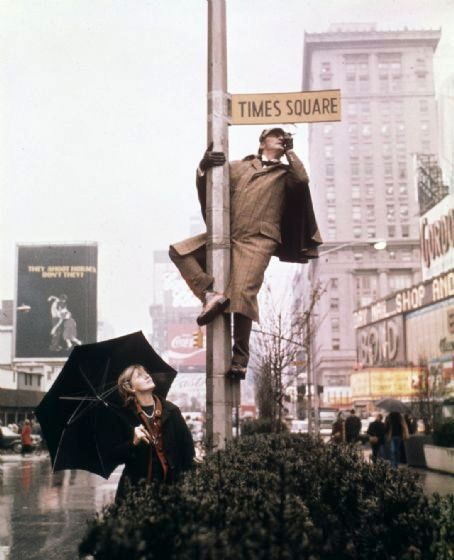 His brother’s avaricious efforts bring Judge Playfair to the attention of a feisty psychologist, Dr. Mildred Watson (Joanne Woodward). Fascinated by the judge’s delusions and by his undeniable abilities of observation and deduction, she begins to study him in earnest. Soon, they are wending their bizarre way through New York in search of the elusive Moriarty, where even the most innocent of events are interpreted as signs of the criminal mastermind’s dark and nefarious plots. Yet the doctor finds herself drawn to her companion in spite of his obvious imbalances.
What began as a straight-forward medical interest becomes a genuine fondness for his sincerity, his good humor, and for the very real good he does for others despite – or because of—his insanity.
Playfair’s vision is a peculiar mixture of absurdity and brilliance. There is no Moriarity, and the clues the one-time magistrate chases through the streets of New York are often the merest of coincidences. Yet he has an extraordinary clarity of vision when it matters most: his unstinting certainty that justice must be defended no matter one’s chances of success; his stubborn insistence that many of his more eccentric friends, dismissed from “polite society” for an oddness they cannot help, are worth far more than they are given credit for; his recognition that Watson herself is desperately in need of affection—all are observations that would be impressive in a much saner man. Despite his preposterous belief that he is the greatest detective mind of all time, he is incredibly insightful.
While the production values and stagey style are a bit dated, Scott’s easy charm, the wittiness of the script, and the light-hearted tone the film maintains throughout more than make up for its limitations. But like “Don Quixote” itself, the film has a serious streak. Much like Cervantes’ addled hero, Playfair is more charming and valuable in his insanity than he ever was in “real life,” causing us to wonder if a world populated exclusively by realists is really a better place than one sprinkled through with idealistic imaginaries.
In today’s poisonous political climate, it is easy for pragmatists such as myself to dismiss the idealistic jousting of others as mere foolishness; we cynically remind them that “politics is a practical profession,” and that the very process of engaging in political dialogue relegates one to the realm of the “possible” rather than the “ideal.” But while some battles are really-and-truly quixotic, it grows easier to over-diagnose the good Don’s addled brain-fever with each passing day, and the results of such misdiagnoses are dangerous indeed.

Take the HHS mandate battle, for example: as ObamaCare moved inexorably through the House and Senate, I remember cries that death panels and government-mandated birth control were not far behind. For some, excited by the opportunities for good presented in the president’s vision of universal health care (and willing to cede some ground for the sake of those goods), such Cassandras were easily dismissed as “blindly tied to their ideals”—people whose obsessive, idealized view of reality prevented them from engaging in the business of compromise so essential to political actions. Now, a few years later, I’m sure some wish they’d been a bit more willing to tilt at the ObamaCare windmill.
There is an undeniable absurdity to creating giants where there are none, yet it is just as common to reduce the very real giants before us to mere windmills for the sake of political expediency (and to assuage the pricking of our consciences for those battles we have already lost). As the current HHS mandate battle reminds us, we can all be grateful for those who stand athwart the sometimes-dangerous advancement of “progress.” It is easy to become so immersed in the day-to-day details of the political process that we lose track of the bigger picture, and it is these ridiculed (often ridiculous) Quixotes who force us to examine our principles more closely, reminding us that we must stand up for some things if we wish to stand for anything at all.
Jousting at windmills is a fool’s errand, but relegating all such confrontations to the realm of fanciful foolishness is an even greater folly. We must be cautious in dismissing the political windmills around us too easily; remember, they just might be giants.
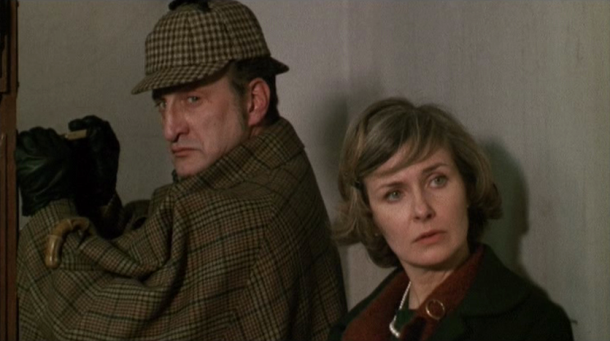
Attribution(s): All posters, publicity images, and stills are the property of Universal Pictures and other respective production studios and distributors, and are intended for editorial use only.
Previous Post

February 14, 2012
A Cinematic Refuge for the Valentine-Averse
Next Post

April 2, 2012 The Absurdity of God's Forgiveness
Browse Our Archives
Select a Category Art Baseball Faith Family Lenten Music Movies Music No Commentary Necessary Parked By the Jukebox Photography Politics Quodlibets Streaming Video Suggestions Summa Short Films Television The Man Behind the Booth Through a Lens, Darkly
Select a Month December 2015 November 2015 October 2015 September 2015 August 2015 July 2015 June 2015 May 2015 April 2015 March 2015 February 2015 January 2015 December 2014 November 2014 October 2014 September 2014 August 2014 July 2014 June 2014 May 2014 April 2014 March 2014 February 2014 January 2014 December 2013 November 2013 October 2013 September 2013 August 2013 July 2013 June 2013 May 2013 April 2013 March 2013 February 2013 January 2013 December 2012 November 2012 July 2012 April 2012 March 2012 February 2012 November 2011 August 2011 July 2011 June 2011 May 2011 April 2011 March 2011 February 2011 January 2011 December 2010 November 2010 October 2010
Follow Us!
TAKE THE
Religious Wisdom Quiz
What was the primary worship language in the Bible?
Select your answer to see how you score.
Hebrew Aramaic Greek Latin
Related posts from Summa This, Summa That




TRENDING AT PATHEOS Catholic

Rejecting Doom: Christian Hope And Human Action
Christianity is a religion of hope. We are to have hope and...

It’s What Comes From Within Which Matters
One of the most difficult things for us to understand is why...

Why I Choose the Eucharist Over the Sermon
Choose the Eucharist, Not the Sermon What are we supposed to get...

5 Design Elements Found in Spiritually Rooted Homes
Putting Spirituality Into Home Decor Our homes are more than our living...

Credo: A Story of God Told with the...
About 10 years ago, I began to imagine a personal "Credo" that...

The Anatomy of Divine Revelation in Catholic Thought
The claim that God has made Himself known to human beings is...
view all Catholic blogs
Ad-Free & Subscriber Log-In Subscription Support
- About Us
- 2026 Calendar
- Videos
- Podcasts
- Library of World Religions
- Faith In Media Tracker
- Advertise With Us
- Write for Us
- Privacy Policy
- Terms of Service
- Do Not Sell My Data
- Contact Us
- Radiant Digital
- Manage Newsletter Subscriptions
- Unsubscribe From Notifications
- Sitemap
Copyright 2008-2026, Patheos. All rights reserved.
Subscription Support Ad-Free & Subscriber Log-In
Follow Patheos