
BuddhistCatholicContemplativeEvangelicalGeneral ChristianHinduJewishLatter-day SaintMuslimNew VisionsProgressive Christian
Beliefs
- Buddhist
- Catholic
- Contemplative
- Evangelical
- General Christian
- Hindu
- Jewish
- Latter-day Saint
- More Voices
- Muslim
- New Visions
- Pagan
- Progressive Christian
Topics
- Religion News
- Food and Religion
- Sports and Religion
- Religious Art
- Religious Music and Entertainment
- Religious Events
- History and Religion
- Style and Religion
- Politics and Religion
- Women in Religion
- Recreation Outdoors and Religion
- Business Finance and Religion
- Careers Workplace and Religion
- Education and Religion
- Family Parenting and Religion
- Health Fitness and Religion
- Home and Religion
- Relationships and Religion
- Technology and Religion
- Travel and Religion
Columnists
- Buddhist Columnists
- Business Finance and Religion Columnists
- Careers Workplace and Religion Columnists
- Catholic Columnists
- Contemplative Columnists
- Education and Religion Columnists
- Evangelists Columnists
- Family Parenting and Religion Columnists
- General Christian Columnists
- Health Fitness and Religion Columnists
- Hindu Columnists
- History and Religion Columnists
- Home and Religion Columnists
- Jewish Columnists
- More Voices Columnists
- Latter Day Columnists
- Muslim Columnists
- New Visions Columnists
- Nonreligious Columnists
- Pagan Columnists
- Politics and Religion Columnists
- Progressive Columnists
- Recreation Outdoors and Religion Columnists
- Relationships and Religion Columnists
- Religion News Columnists
- Religious Art Columnists
- Religious Events Columnists
- Religious Music and Entertainment Columnists
- Sports and Religion Columnists
- Style and Religion Columnists
- Technology and Religion Columnists
- Travel and Religion Columnists
- Women in Religion Columnists
Resource Library
- 2026 Calendar
- Library of World Religions
- The 100 Most Holy Places on Earth
- Patheos Answers
- Podcasts
- Videos
- Faith Leaders Database
- Anglican Episcopalian
- Bahai
- Baptist
- Buddhism
- Christianity
- Confucianism
- Eastern Orthodoxy
- Hinduism
- Holiness and Pentecostal
- ISKCON
- Islam
- Judaism
- Lutheran
- Methodist
- The Church of Jesus Christ of Latter-day Saints
- New Age
- Paganism
- Presbytarian and Reformed
- Protestantism
- Religion Behind the Scenes
- Roman Catholic
- Scientology
- Shia Islam
- Sikhism
- Sufism
- Sunni Islam
- Taoism
- Zen
- See all religions
Research Tools
 Ad-Free & Subscriber Log-In Subscription Support
Ad-Free & Subscriber Log-In Subscription Support
Follow Patheos 

- Trending:
- Forgiveness
- |
- Marriage
- |
- Consciousness
- |
- Death Penalty
- |
- Election
- |
- Halloween
 Summa This, Summa That
- Home
- About
- Through a Lens, Darkly
- Streaming Video Suggestions (SVS)
- Summa Short Films (SSF)
- The Man Behind The Booth
- Home
- Catholic
- Waiting On Happiness In Mateo Gil’s “Blackthorn”
Waiting On Happiness In Mateo Gil’s “Blackthorn”
Last updated on: August 20, 2015 at 5:37 pm by Joseph Susanka
Waiting On Happiness In Mateo Gil’s “Blackthorn” 2015-08-20T17:37:59-06:00 Joseph Susanka
Patheos Explore the world's faith through different perspectives on religion and spirituality! Patheos has the views of the prevalent religions and spiritualities of the world.

“From of old no one has heard
or perceived by the ear,
no eye has seen a God besides thee,
who works for those who wait for him.” Is 64:4
For years, Butch Cassidy and the Sundance Kid has been hailed as one of the most influential Revisionist Westerns of all time. From William Goldman’s Oscar-winning script to Redford’s quiet smolder; from Newman’s shocking good looks to its brilliant cinematography and unforgettable “Raindrops” sequence, George Roy Hill’s homage to some of the West’s most over-mythologized bad men shaped an entire generation of Western filmmakers. Yet the greatest contribution to the genre made by this sporadically spectacular buddy film may only now be coming into focus; after all these years of fame and fortune, it can now be recognized as “the foundation upon which Blackthorn was built.”
From Spanish director Mateo Gil, Blackthorn explores the fascinating question of “what might have been,”—what if Butch Cassidy had not died that day? What if he had miraculously escaped the volleys of the Bolivian Army, living out the last twenty years of his life as a lonely, peaceful mountaintop rancher? Would it be “Ever After,” with the happiness conspicuously absent?
Feeling his end approaching, the once-proud Butch—known to the locals simply as James Blackthorn—resolves to see America one last time before he dies. Upon returning from the bank with the funds necessary for his safe passage to the States, Blackthorn is ambushed; and while the aging outlaw quickly vanquishes his assailant, the damage has been done: startled by the gun-play, Blackthorn’s horse runs off with the last twenty years’ worth of his earnings.
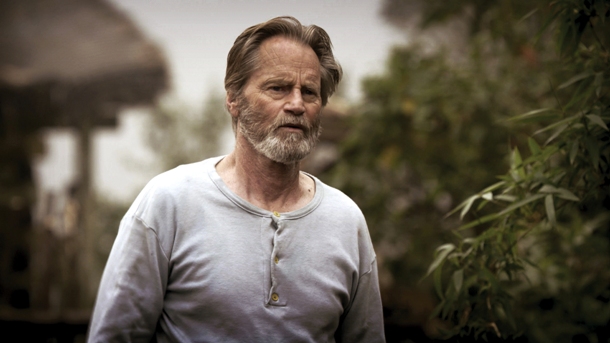
The assailant-turned-victim, a young Spanish mining engineer named Eduardo, explains to Blackthorn that he is being pursued for the $50,000 he stole from a ruthless mine owner. Intrigued by how much of his rash and brash young self he sees in the Spaniard (and more than a bit bedazzled by the cache stowed safely away in a nearby mining shaft), the now-destitute Blackthorn agrees to partner up with his one-time assailant on the condition that he receive a half share of the stolen money. They set off across the stunning, lonely landscape of Bolivia, but their journey to freedom proves more violent and more deeply tragic than he could ever have imagined, trapping him once again in the failed dreams and remorseful memories that have haunted him every day since his escape. Forced to choose between the final comforts and the demands of justice and decency, Blackthorn is confronted once again by the dichotomy from which he has hidden for so many years. Will he lapse back into his old reckless self, or will he finally recognize that his pursuit of fame and fortune has damaged him more deeply than he could have possibly imagined?
Like the hedgerow shrub which gave rise to his pseudonym, Blackthorn’s prickly exterior shields a bitter fruit. He is a man without hope—a man whose past is littered with failed attempts to seize happiness through the pursuit of material possessions and worldly fame; whose present is dominated by regrets over his misguided youth; and whose future is a bleak landscape where hard-won understanding will never translate into true happiness. For Blackthorn, the lessons of his past have come too late; his recognition of the true nature of happiness (and the only way to achieve it) little more than a depressing coda on a life once so full of promise. Yet despite the dreary future before him, the aging bandit is finally at peace, for he has come to recognize that which has so long eluded him: happiness is not something you find; it is something that finds you.
 Modern society tells us that youth is the time for passion and promise; old age for wealth and respect. As youngsters, we should pursue the things that will make us happy; and when we are old, we should appreciate them. But this view—a view which permeates every fiber of this “self-made” world of ours—presupposes that we can reach out and grasp the things that will make us truly happy, and (even more paradoxically) that we can retain these things once we get our hands around them. Yet neither is truly the case.
The things that make us happy are rarely of our own achieving; for many of us, the lives we now live are radically different than the ones we envisioned for ourselves in our late teens. For me, a middle-aged family man surrounded by as boisterous (and rewarding) a pack of boys as one could imagine, the “dreams” of my youth are a distant memory. Yet I find myself happy in deeper and more meaningful ways that I could ever have imagined. Rather than achieving happiness through the dint of my own efforts, I have had it thrust upon me by the only One who knows what I truly need.
Despite the insistent clamoring of Modernity, happiness is not something to be grasped at; paradoxically, the more we pursue it, the less of it we actually have. A failure to recognize our own powerlessness will leave many more sorrowful than they were when they first began this pursuit, for we humans will never succeed in “capturing” the peace and contentment we so ardently desire. We must embrace it as it comes to us, recognizing that its presence is not through any actions of our own, but through a proper ordering of our wills and desires to that which we have received.
True happiness is not won; it is given.
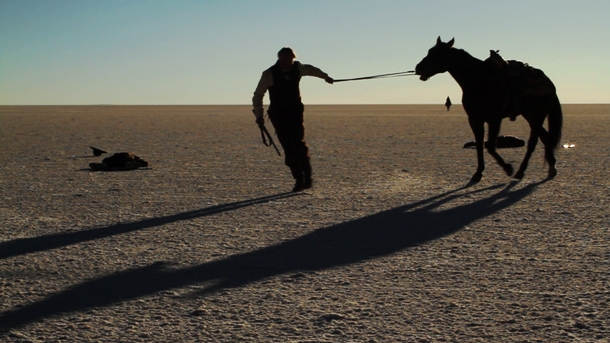
Attribution(s): All posters, images, and stills are the property of Magnolia Pictures and other respective production studios and distributors.
Previous Post
November 11, 2011
Shadow-Warriors No More
Next Post

February 14, 2012 A Cinematic Refuge for the Valentine-Averse
Browse Our Archives
Select a Category Art Baseball Faith Family Lenten Music Movies Music No Commentary Necessary Parked By the Jukebox Photography Politics Quodlibets Streaming Video Suggestions Summa Short Films Television The Man Behind the Booth Through a Lens, Darkly
Select a Month December 2015 November 2015 October 2015 September 2015 August 2015 July 2015 June 2015 May 2015 April 2015 March 2015 February 2015 January 2015 December 2014 November 2014 October 2014 September 2014 August 2014 July 2014 June 2014 May 2014 April 2014 March 2014 February 2014 January 2014 December 2013 November 2013 October 2013 September 2013 August 2013 July 2013 June 2013 May 2013 April 2013 March 2013 February 2013 January 2013 December 2012 November 2012 July 2012 April 2012 March 2012 February 2012 November 2011 August 2011 July 2011 June 2011 May 2011 April 2011 March 2011 February 2011 January 2011 December 2010 November 2010 October 2010
Follow Us!
TAKE THE
Religious Wisdom Quiz
What did David use to calm Saul when Saul was troubled by a harmful spirit?
Select your answer to see how you score.
Drum Trumpet Harp Flute
Related posts from Summa This, Summa That




TRENDING AT PATHEOS Catholic

Rejecting Doom: Christian Hope And Human Action
Christianity is a religion of hope. We are to have hope and...

It’s What Comes From Within Which Matters
One of the most difficult things for us to understand is why...

Why I Choose the Eucharist Over the Sermon
Choose the Eucharist, Not the Sermon What are we supposed to get...

5 Design Elements Found in Spiritually Rooted Homes
Putting Spirituality Into Home Decor Our homes are more than our living...

Credo: A Story of God Told with the...
About 10 years ago, I began to imagine a personal "Credo" that...

The Anatomy of Divine Revelation in Catholic Thought
The claim that God has made Himself known to human beings is...
view all Catholic blogs
Ad-Free & Subscriber Log-In Subscription Support
- About Us
- 2026 Calendar
- Videos
- Podcasts
- Library of World Religions
- Faith In Media Tracker
- Advertise With Us
- Write for Us
- Privacy Policy
- Terms of Service
- Do Not Sell My Data
- Contact Us
- Radiant Digital
- Manage Newsletter Subscriptions
- Unsubscribe From Notifications
- Sitemap
Copyright 2008-2026, Patheos. All rights reserved.
Subscription Support Ad-Free & Subscriber Log-In
Follow Patheos