
BuddhistCatholicContemplativeEvangelicalGeneral ChristianHinduJewishLatter-day SaintMuslimNew VisionsProgressive Christian
Beliefs
- Buddhist
- Catholic
- Contemplative
- Evangelical
- General Christian
- Hindu
- Jewish
- Latter-day Saint
- More Voices
- Muslim
- New Visions
- Pagan
- Progressive Christian
Topics
- Religion News
- Food and Religion
- Sports and Religion
- Religious Art
- Religious Music and Entertainment
- Religious Events
- History and Religion
- Style and Religion
- Politics and Religion
- Women in Religion
- Recreation Outdoors and Religion
- Business Finance and Religion
- Careers Workplace and Religion
- Education and Religion
- Family Parenting and Religion
- Health Fitness and Religion
- Home and Religion
- Relationships and Religion
- Technology and Religion
- Travel and Religion
Columnists
- Buddhist Columnists
- Business Finance and Religion Columnists
- Careers Workplace and Religion Columnists
- Catholic Columnists
- Contemplative Columnists
- Education and Religion Columnists
- Evangelists Columnists
- Family Parenting and Religion Columnists
- General Christian Columnists
- Health Fitness and Religion Columnists
- Hindu Columnists
- History and Religion Columnists
- Home and Religion Columnists
- Jewish Columnists
- More Voices Columnists
- Latter Day Columnists
- Muslim Columnists
- New Visions Columnists
- Nonreligious Columnists
- Pagan Columnists
- Politics and Religion Columnists
- Progressive Columnists
- Recreation Outdoors and Religion Columnists
- Relationships and Religion Columnists
- Religion News Columnists
- Religious Art Columnists
- Religious Events Columnists
- Religious Music and Entertainment Columnists
- Sports and Religion Columnists
- Style and Religion Columnists
- Technology and Religion Columnists
- Travel and Religion Columnists
- Women in Religion Columnists
Resource Library
- 2026 Calendar
- Library of World Religions
- The 100 Most Holy Places on Earth
- Patheos Answers
- Podcasts
- Videos
- Faith Leaders Database
- Anglican Episcopalian
- Bahai
- Baptist
- Buddhism
- Christianity
- Confucianism
- Eastern Orthodoxy
- Hinduism
- Holiness and Pentecostal
- ISKCON
- Islam
- Judaism
- Lutheran
- Methodist
- The Church of Jesus Christ of Latter-day Saints
- New Age
- Paganism
- Presbytarian and Reformed
- Protestantism
- Religion Behind the Scenes
- Roman Catholic
- Scientology
- Shia Islam
- Sikhism
- Sufism
- Sunni Islam
- Taoism
- Zen
- See all religions
Research Tools
 Ad-Free & Subscriber Log-In Subscription Support
Ad-Free & Subscriber Log-In Subscription Support
Follow Patheos 

- Trending:
- Forgiveness
- |
- Marriage
- |
- Consciousness
- |
- Death Penalty
- |
- Election
- |
- Halloween
 Summa This, Summa That
- Home
- About
- Through a Lens, Darkly
- Streaming Video Suggestions (SVS)
- Summa Short Films (SSF)
- The Man Behind The Booth
- Home
- Catholic
- Shadow-Warriors No More
Shadow-Warriors No More
Last updated on: March 21, 2015 at 4:50 pm by Joseph Susanka
Shadow-Warriors No More 2015-03-21T16:50:55-06:00 Joseph Susanka
Patheos Explore the world's faith through different perspectives on religion and spirituality! Patheos has the views of the prevalent religions and spiritualities of the world.
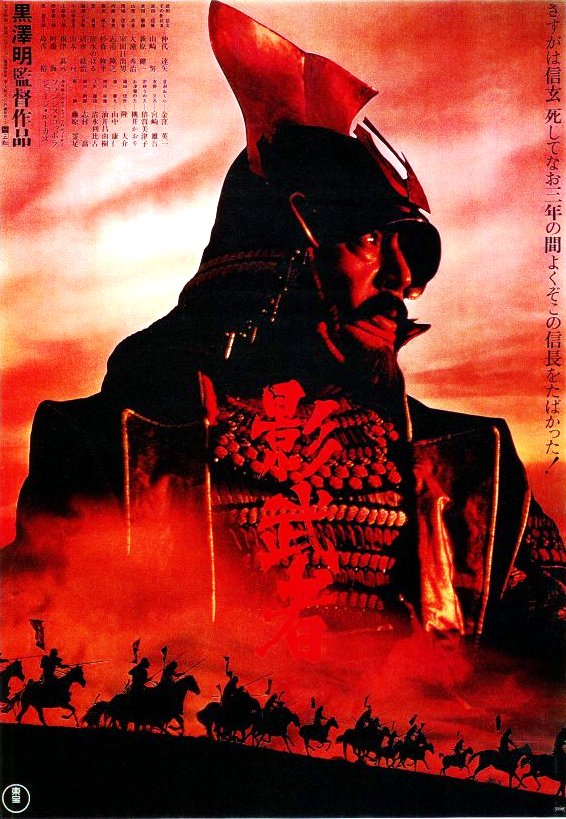 Above all,” the self-help gurus say, “you must be comfortable in your own skin.”
We all know what the confident folk look like; they’re the ones that draw your attention the moment they walk into a room; the self-assured, dynamic ones—the people that make me just a teensy, weensy bit envious; they have achieved a balance between their “inner” and “outer” selves that I have long desired, but which has eluded me all my life.
After a decade of marriage and with six kids under my belt, I feel exactly the same now as I did in my teenage years, and the public persona I have cultivated with some assiduousness—one based on the confidence and self-assurance I so appreciate in others—feels as unrealized today as it did then. The gap between my projected self reality is disconcertingly large, making my life a strangely inverted “Dorian Gray,” where external appearance far outstrips internal maturity.
My skin isn’t comfy; it’s ill-fitting.

I suspect it is this insecurity that lies at the heart of my fascination with the film Kagemusa, the greatest of legendary Akira Kurosawa’s many masterpieces. Taking its title from the term “Shadow-Warriors”—impersonators used on the battlefields of Medieval Japan as a means of guaranteeing their leaders’ safety—the film tells of a thief whose impending crucifixion is averted, thanks to his uncanny resemblance to the powerful warlord Shingen. Elated by his unexpected reprieve, the thief embraces the conditions of his new-found freedom: assuming the guise of his new master in the deadliest of circumstances. But when Shingen unexpectedly falls at the hands of an enemy marksman, the thief finds confronts his greatest challenge: stealing, so to speak, Shingen’s essence—becoming another so completely than even Shingen’s closest friends will not recognize the difference. The deception is necessary if the kingdom and its subjects are to survive.
Guided by a tiny group of advisors, the newly minted ruler weaves his way through a minefield of family, friends, and subjects, absorbing the traits of the powerful, complex man he is impersonating along the way. But his confidence grows too rapidly, and a disastrous attempt to ride Shingen’s war stallion reveals the imposter to the entire court. Banished from the kingdom by the very noblemen whose lives his deception had preserved, the thief lingers nearby in the hope that his services will once again prove valuable.
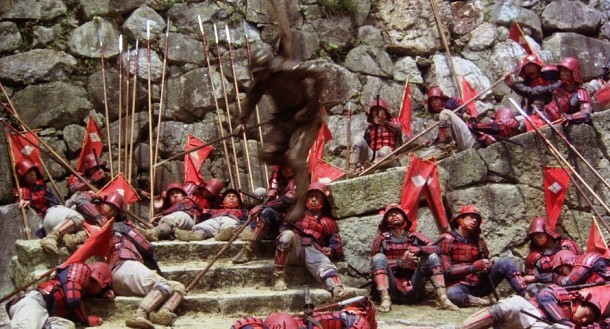
Unfairly dismissed as “a dress rehearsal for Ran (by no less an authority than the director himself) Kagemusha is a cinematic marvel of color and spectacle—its astonishing beauty would be reason enough to recommend it. It features some of the most stunning images and action sequences I have ever seen.
Kurosawa is never satisfied with sheer spectacle, however, and it is the themes of absolute power and its destructiveness—the greed that drives others to reach for that power, and the devastating effect that toiling in the shadows of greatness can have upon lesser men—are the heart of Kurosawa’s vision.
The private battle of the shadow-warrior, as he works to align the external persona of Shingen with his own interior being, resonates hugely within me, and my discomfited skin; we are all shadow-warriors—all engaged in that endless struggle to make our “inside” selves more like our “outsides.”
But why do we struggle thus? Who is it that we are trying to please? Self-improvement is a good thing, and we could all do with a bit more of it. Too often, though, we find ourselves obsessing over how we are perceived, working overtime for the approbation of people who don’t know us well, yet whose approval we paradoxically value above all else.
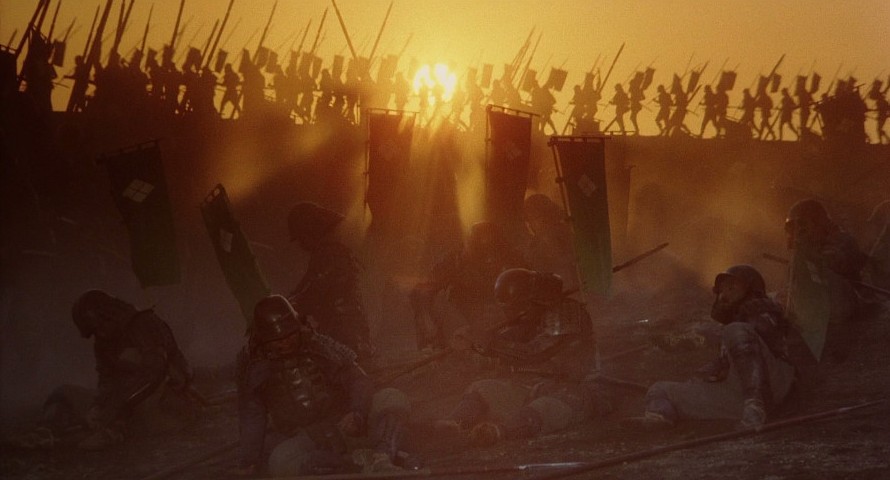
Perhaps an inability to find comfort in one’s own skin is not caused exclusively by inner imperfection and immaturity. Perhaps it is at least partially the result of striving after the wrong exterior altogether.
In “By Love Refined,” Alice von Hildebrand speaks of a “Tabor vision,” when one is given the ability to see one’s spouse as God sees them—viewing the other with a clarity and love that He alone can share rather than with the clouded (and often hurtful) eyes of humanity. This vision is not an opportunity to see our spouses in an idealized or unrealistic light. Instead, it is a chance to see them “as they really are;” as they appear to the only One who really matters.
Perhaps something similar could serve us individually in our struggle to see ourselves not as we wish to be seen by others, but as God sees us. One fleeting moment of such understanding would make us strive to bring ourselves into conformity with that vision, rather than with the ill-fitting hallucinations and expectations of the world.
Only then can we be truly comfortable in our own skin; shadow-warriors. no more.

Attribution(s): All images and stills are the property of The Criterion Collection and other respective production studios and distributors, and are intended for editorial use only.
Previous Post

November 3, 2011
Losing for the Sake of Winning
Next Post

February 7, 2012 Waiting On Happiness In Mateo Gil's "Blackthorn"
Browse Our Archives
Select a Category Art Baseball Faith Family Lenten Music Movies Music No Commentary Necessary Parked By the Jukebox Photography Politics Quodlibets Streaming Video Suggestions Summa Short Films Television The Man Behind the Booth Through a Lens, Darkly
Select a Month December 2015 November 2015 October 2015 September 2015 August 2015 July 2015 June 2015 May 2015 April 2015 March 2015 February 2015 January 2015 December 2014 November 2014 October 2014 September 2014 August 2014 July 2014 June 2014 May 2014 April 2014 March 2014 February 2014 January 2014 December 2013 November 2013 October 2013 September 2013 August 2013 July 2013 June 2013 May 2013 April 2013 March 2013 February 2013 January 2013 December 2012 November 2012 July 2012 April 2012 March 2012 February 2012 November 2011 August 2011 July 2011 June 2011 May 2011 April 2011 March 2011 February 2011 January 2011 December 2010 November 2010 October 2010
Follow Us!
TAKE THE
Religious Wisdom Quiz
Which battle did Jonathan, Saul's son, win using faith instead of army size?
Select your answer to see how you score.
Battle of Gilboa Garrison of the Philistines Battle of Ramah Siege of Jerusalem
Related posts from Summa This, Summa That




TRENDING AT PATHEOS Catholic

Rejecting Doom: Christian Hope And Human Action
Christianity is a religion of hope. We are to have hope and...

It’s What Comes From Within Which Matters
One of the most difficult things for us to understand is why...

Why I Choose the Eucharist Over the Sermon
Choose the Eucharist, Not the Sermon What are we supposed to get...

5 Design Elements Found in Spiritually Rooted Homes
Putting Spirituality Into Home Decor Our homes are more than our living...

Credo: A Story of God Told with the...
About 10 years ago, I began to imagine a personal "Credo" that...

The Anatomy of Divine Revelation in Catholic Thought
The claim that God has made Himself known to human beings is...
view all Catholic blogs
Ad-Free & Subscriber Log-In Subscription Support
- About Us
- 2026 Calendar
- Videos
- Podcasts
- Library of World Religions
- Faith In Media Tracker
- Advertise With Us
- Write for Us
- Privacy Policy
- Terms of Service
- Do Not Sell My Data
- Contact Us
- Radiant Digital
- Manage Newsletter Subscriptions
- Unsubscribe From Notifications
- Sitemap
Copyright 2008-2026, Patheos. All rights reserved.
Subscription Support Ad-Free & Subscriber Log-In
Follow Patheos