
BuddhistCatholicContemplativeEvangelicalGeneral ChristianHinduJewishLatter-day SaintMuslimNew VisionsProgressive Christian
Beliefs
- Buddhist
- Catholic
- Contemplative
- Evangelical
- General Christian
- Hindu
- Jewish
- Latter-day Saint
- More Voices
- Muslim
- New Visions
- Pagan
- Progressive Christian
Topics
- Religion News
- Food and Religion
- Sports and Religion
- Religious Art
- Religious Music and Entertainment
- Religious Events
- History and Religion
- Style and Religion
- Politics and Religion
- Women in Religion
- Recreation Outdoors and Religion
- Business Finance and Religion
- Careers Workplace and Religion
- Education and Religion
- Family Parenting and Religion
- Health Fitness and Religion
- Home and Religion
- Relationships and Religion
- Technology and Religion
- Travel and Religion
Columnists
- Buddhist Columnists
- Business Finance and Religion Columnists
- Careers Workplace and Religion Columnists
- Catholic Columnists
- Contemplative Columnists
- Education and Religion Columnists
- Evangelists Columnists
- Family Parenting and Religion Columnists
- General Christian Columnists
- Health Fitness and Religion Columnists
- Hindu Columnists
- History and Religion Columnists
- Home and Religion Columnists
- Jewish Columnists
- More Voices Columnists
- Latter Day Columnists
- Muslim Columnists
- New Visions Columnists
- Nonreligious Columnists
- Pagan Columnists
- Politics and Religion Columnists
- Progressive Columnists
- Recreation Outdoors and Religion Columnists
- Relationships and Religion Columnists
- Religion News Columnists
- Religious Art Columnists
- Religious Events Columnists
- Religious Music and Entertainment Columnists
- Sports and Religion Columnists
- Style and Religion Columnists
- Technology and Religion Columnists
- Travel and Religion Columnists
- Women in Religion Columnists
Resource Library
- 2026 Calendar
- Library of World Religions
- The 100 Most Holy Places on Earth
- Patheos Answers
- Podcasts
- Videos
- Faith Leaders Database
- Anglican Episcopalian
- Bahai
- Baptist
- Buddhism
- Christianity
- Confucianism
- Eastern Orthodoxy
- Hinduism
- Holiness and Pentecostal
- ISKCON
- Islam
- Judaism
- Lutheran
- Methodist
- The Church of Jesus Christ of Latter-day Saints
- New Age
- Paganism
- Presbytarian and Reformed
- Protestantism
- Religion Behind the Scenes
- Roman Catholic
- Scientology
- Shia Islam
- Sikhism
- Sufism
- Sunni Islam
- Taoism
- Zen
- See all religions
Research Tools
 Ad-Free & Subscriber Log-In Subscription Support
Ad-Free & Subscriber Log-In Subscription Support
Follow Patheos 

- Trending:
- Forgiveness
- |
- Marriage
- |
- Consciousness
- |
- Death Penalty
- |
- Election
- |
- Halloween
 Summa This, Summa That
- Home
- About
- Through a Lens, Darkly
- Streaming Video Suggestions (SVS)
- Summa Short Films (SSF)
- The Man Behind The Booth
- Home
- Catholic
- Love’s Little Ways and “The Road Home”
Love’s Little Ways and “The Road Home”
Last updated on: March 9, 2015 at 5:47 pm by Joseph Susanka
Love’s Little Ways and “The Road Home” 2015-03-09T17:47:17-06:00 Joseph Susanka
Patheos Explore the world's faith through different perspectives on religion and spirituality! Patheos has the views of the prevalent religions and spiritualities of the world.
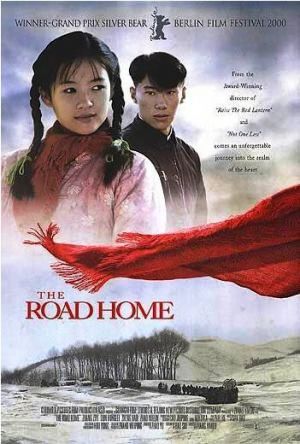 The great Chinese director Zhang Yimou is best known to Western audiences for his superb wuxiatrilogy: Hero, House of Flying Daggers, and Curse of the Golden Flower. This trio of films, with their spectacular colors, brawny action sequences, and breathtaking set pieces, has earned him a reputation as “epic” in the truest sense of the word.
Audiences who marvel at the scope and scale of his more famous works may be surprised to learn that The Road Home, a Yimou film made barely two years earlier, displays none of the spectacle and melodrama for which he has grown so famous. In fact, this 2000 work is powerful precisely because it eschews the massive palette and epic flavor of his later works for the sake of a smaller, more personal story.
The film begins in modern-day China, when Luo Yusheng, a young city-dweller, returns to the village of his youth to help his mother, Zhao Di (Zhang Ziyi), cope with his father’s recent death. At the request of the local townsfolk, he tries to convince her to forgo the tradition of carrying his father’s body back to the village by hand—a custom that will assure the dead man’s spirit of finding its way home. Although profoundly grateful to the deceased man for a lifetime spent laboring as the village’s lone schoolteacher, the locals are unable to comply with the widow’s request.
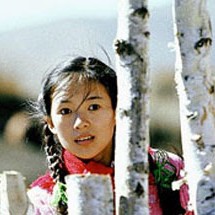 Embarrassed by his predicament, the mayor confides to Luo that generations of young villagers have fled the harsh conditions of the town, drawn by the seeming prosperity of the surrounding cities. Over the years, their departure has robbed the town of the manpower necessary to perform the ceremony, and the mayor begs the young man to search for a way around his mother’s intractable resolve.
As Luo works to convince his mother that her desires for a traditional burial procession are both unnecessary and impractical, he is reminded of his parents’ unusual and inspiring courtship—a tale that is legendary in the village for its innocence, purity, and example of unwavering resolve in the face of seemingly insurmountable obstacles.
In a long, brilliantly colored flashback, the burgeoning love between young Di and her beloved schoolteacher, Luo Changyu, is revealed—and, along with it, the deeper reason why she is so anxious for his remains to be transported along the long, hard country road: That road is part of their love story, an essential component of their courtship. Throughout the years of forced separation, its presence was the dusty, comforting thread that tied the two young lovers together. (In an unusual twist, Yimou shows the past in color and the present in black and white, rather than the other way around—the only obvious cultural commentary he allows himself.)
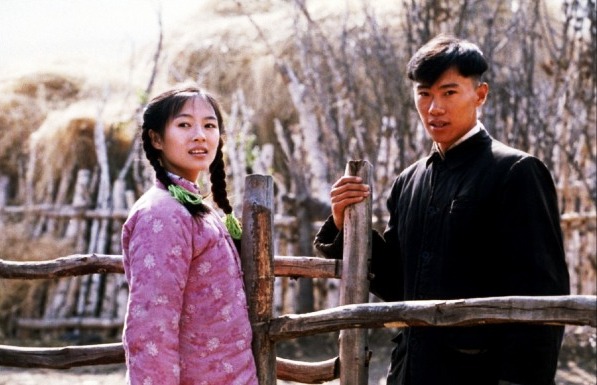 Experiencing the extraordinary power of Di and Luo’s love once again, their son is reminded of the commitment and selflessness that lies at the root of all successful relationships. He decides to support his mother’s wishes; the traditional journey will serve not only as a fitting endorsement of his father’s life, but as the ultimate recognition of the deep and remarkable gift their love was to the village, to their son, and to each other. Challenged by that love, the villagers are driven to look beyond themselves and help Di achieve the closure she so desperately seeks.
The film is wonderfully shot and acted, as one would expect from Yimou, ever the master craftsman. But the subtle, small story is so unlike the wuxia films for which he is famous—its mood such a dramatic change of pace—it may well prove jarring for those familiar with his more obvious films. It would be a shame if The Road Home were disregarded because its story is slight and personal rather than massive or political. Small and personal is, after all, the realm in which most of us live.

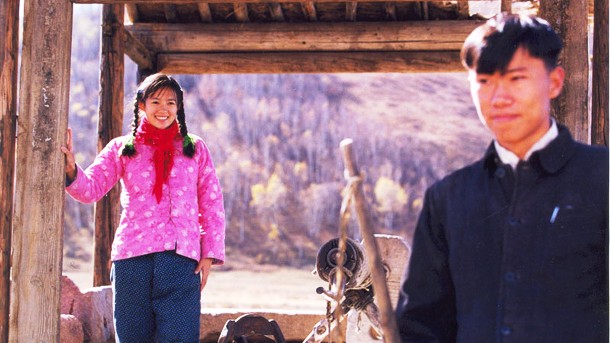
Yimou does a marvelous job of showing that realm in all of its beauty: a realm populated by those small, endearing things we alone notice in our loved ones. The red cloth Di weaves for the schoolhouse beams—a traditional good-luck charm—reminds the young schoolteacher Luo of the red jacket his love wears on special occasions. So attached is he to this memento, he refuses to allow the town’s mayor to rebuild the broken-down schoolhouse. Di, in turn, for every single day of their forty-year marriage, walks past the schoolhouse, for no other reason than to hear the sound of his voice as he teaches the village children. Her absolute trust that Luo will return on the day he promised is matched only by his willingness to risk his freedom in an effort to keep his word. In the film’s most memorable scene, Di dashes madly across the beautiful mountain landscape in a desperate attempt to bring Luo her freshly baked mushroom dumplings, simply because she knows he will enjoy them—a total giving of self manifested in a seemingly mundane task.
Yimou’s reminder that Love’s greatest power is most often found in the details is a profound and important one. We can’t all be Anthony and Cleopatra, Jane Eyre and Edward Rochester, or Romeo and Juliet. Despite the unrealistic depictions of volcanic, all-consuming love that permeate our culture, few of us are called to love on a spectacular, melodramatic scale. In fact, many of us will show the greatness of our love not through the depth and power of our romanticism, but through the toils and joys of ordinary life.
Zhao Di’s love means everything to her. In that way, she is a match for the greatest romantic heroines. But that love manifests itself in gentler, more human ways: a “little way” of Love to which we should all aspire.
 Attribution(s): All posters, publicity images, and movie stills are the property of Sony Pictures Classics and other respective production studios and distributors, and are intended for editorial use only.
Previous Post

April 7, 2011
Standing Still at the Tipping Points
Next Post
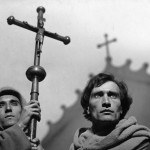
April 21, 2011 Bruised for Our Iniquities: "The Passion of Joan of Arc"
Browse Our Archives
Select a Category Art Baseball Faith Family Lenten Music Movies Music No Commentary Necessary Parked By the Jukebox Photography Politics Quodlibets Streaming Video Suggestions Summa Short Films Television The Man Behind the Booth Through a Lens, Darkly
Select a Month December 2015 November 2015 October 2015 September 2015 August 2015 July 2015 June 2015 May 2015 April 2015 March 2015 February 2015 January 2015 December 2014 November 2014 October 2014 September 2014 August 2014 July 2014 June 2014 May 2014 April 2014 March 2014 February 2014 January 2014 December 2013 November 2013 October 2013 September 2013 August 2013 July 2013 June 2013 May 2013 April 2013 March 2013 February 2013 January 2013 December 2012 November 2012 July 2012 April 2012 March 2012 February 2012 November 2011 August 2011 July 2011 June 2011 May 2011 April 2011 March 2011 February 2011 January 2011 December 2010 November 2010 October 2010
Follow Us!
TAKE THE
Religious Wisdom Quiz
What does Siloam mean?
Select your answer to see how you score.
Sent Gift Received Love
Related posts from Summa This, Summa That




TRENDING AT PATHEOS Catholic

The Parable Of The Sower And The Word...
One of Christ’s most famous parables is that of the sower who...

Rejecting Doom: Christian Hope And Human Action
Christianity is a religion of hope. We are to have hope and...

Why I Choose the Eucharist Over the Sermon
Choose the Eucharist, Not the Sermon What are we supposed to get...

5 Design Elements Found in Spiritually Rooted Homes
Putting Spirituality Into Home Decor Our homes are more than our living...

Credo: A Story of God Told with the...
About 10 years ago, I began to imagine a personal "Credo" that...

The Anatomy of Divine Revelation in Catholic Thought
The claim that God has made Himself known to human beings is...
view all Catholic blogs
Ad-Free & Subscriber Log-In Subscription Support
- About Us
- 2026 Calendar
- Videos
- Podcasts
- Library of World Religions
- Faith In Media Tracker
- Advertise With Us
- Write for Us
- Privacy Policy
- Terms of Service
- Do Not Sell My Data
- Contact Us
- Radiant Digital
- Manage Newsletter Subscriptions
- Unsubscribe From Notifications
- Sitemap
Copyright 2008-2026, Patheos. All rights reserved.
Subscription Support Ad-Free & Subscriber Log-In
Follow Patheos