
BuddhistCatholicContemplativeEvangelicalGeneral ChristianHinduJewishLatter-day SaintMuslimNew VisionsProgressive Christian
Beliefs
- Buddhist
- Catholic
- Contemplative
- Evangelical
- General Christian
- Hindu
- Jewish
- Latter-day Saint
- More Voices
- Muslim
- New Visions
- Pagan
- Progressive Christian
Topics
- Religion News
- Food and Religion
- Sports and Religion
- Religious Art
- Religious Music and Entertainment
- Religious Events
- History and Religion
- Style and Religion
- Politics and Religion
- Women in Religion
- Recreation Outdoors and Religion
- Business Finance and Religion
- Careers Workplace and Religion
- Education and Religion
- Family Parenting and Religion
- Health Fitness and Religion
- Home and Religion
- Relationships and Religion
- Technology and Religion
- Travel and Religion
Columnists
- Buddhist Columnists
- Business Finance and Religion Columnists
- Careers Workplace and Religion Columnists
- Catholic Columnists
- Contemplative Columnists
- Education and Religion Columnists
- Evangelists Columnists
- Family Parenting and Religion Columnists
- General Christian Columnists
- Health Fitness and Religion Columnists
- Hindu Columnists
- History and Religion Columnists
- Home and Religion Columnists
- Jewish Columnists
- More Voices Columnists
- Latter Day Columnists
- Muslim Columnists
- New Visions Columnists
- Nonreligious Columnists
- Pagan Columnists
- Politics and Religion Columnists
- Progressive Columnists
- Recreation Outdoors and Religion Columnists
- Relationships and Religion Columnists
- Religion News Columnists
- Religious Art Columnists
- Religious Events Columnists
- Religious Music and Entertainment Columnists
- Sports and Religion Columnists
- Style and Religion Columnists
- Technology and Religion Columnists
- Travel and Religion Columnists
- Women in Religion Columnists
Resource Library
- 2026 Calendar
- Library of World Religions
- The 100 Most Holy Places on Earth
- Patheos Answers
- Podcasts
- Videos
- Faith Leaders Database
- Anglican Episcopalian
- Bahai
- Baptist
- Buddhism
- Christianity
- Confucianism
- Eastern Orthodoxy
- Hinduism
- Holiness and Pentecostal
- ISKCON
- Islam
- Judaism
- Lutheran
- Methodist
- The Church of Jesus Christ of Latter-day Saints
- New Age
- Paganism
- Presbytarian and Reformed
- Protestantism
- Religion Behind the Scenes
- Roman Catholic
- Scientology
- Shia Islam
- Sikhism
- Sufism
- Sunni Islam
- Taoism
- Zen
- See all religions
Research Tools
 Ad-Free & Subscriber Log-In Subscription Support
Ad-Free & Subscriber Log-In Subscription Support
Follow Patheos 

- Trending:
- Forgiveness
- |
- Marriage
- |
- Consciousness
- |
- Death Penalty
- |
- Election
- |
- Halloween
 Summa This, Summa That
- Home
- About
- Through a Lens, Darkly
- Streaming Video Suggestions (SVS)
- Summa Short Films (SSF)
- The Man Behind The Booth
- Home
- Catholic
- It Takes a Town to “Get Low”
It Takes a Town to “Get Low”
Last updated on: February 2, 2015 at 10:08 am by Joseph Susanka
It Takes a Town to “Get Low” 2015-02-02T10:08:06-07:00 Joseph Susanka
Patheos Explore the world's faith through different perspectives on religion and spirituality! Patheos has the views of the prevalent religions and spiritualities of the world.
 It has been said that there is no such thing as a private sin—that the relationship humans share as members of the Body of Christ makes such a distinction impossible. While the theology may be a bit fuzzy, the notion that transgressions committed in secret send ripples throughout all of humanity is borne out by experience; when one falls, all are brought low.
Get Low, a Southern fable told through the life of an idiosyncratic Tennessee recluse, reminds us that sin and redemption touch us all.
Felix Bush (Robert Duval), an intractable loner, has spent the last forty years of his life sequestered in the hills of Caleb County, Tennessee. He’s made no secret of his dislike for others, and has long been viewed by the locals with a combination of mistrust and downright hatred. After decades of self-imposed exile, Bush’s first foray into town ends in violence. Yet the question of why he came back at all seems of little interest to anyone but Frank Quinn, owner of the town’s struggling mortuary, and his enterprising young assistant, Buddy.
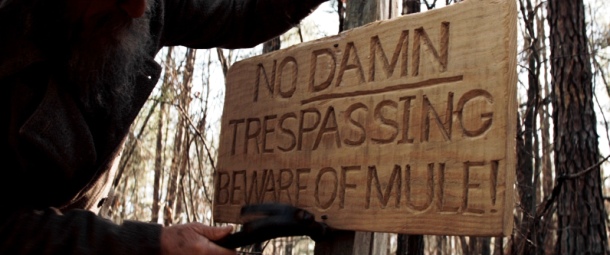 Quinn’s curiosity, however, is well-placed; it turns out Bush wants the finest funeral money can buy, but he wishes to attend as a guest rather than the main attraction.
Happy to have a paying customer, the two morticians set about meeting Bush’s increasingly bizarre demands: He wants to invite everyone in the surrounding environs; he wants them to publicly recount any stories they may have to tell about Bush, whether good or ill. Most unexpectedly, he wants to raffle off his sizable stake at the end of the day, with the understanding that possession will take place only after he passes away.
Buddy astutely recognizes that Bush is manipulating the townsfolk, and that he is burdened with dark and devastating secrets; he redoubles his efforts to find someone who knows Bush and is willing to talk about his past. As the Hermit of Caleb County’s funeral day draws near, the entire town finds itself forced to confront the demons of a single man, with unexpected and unforgettable results.
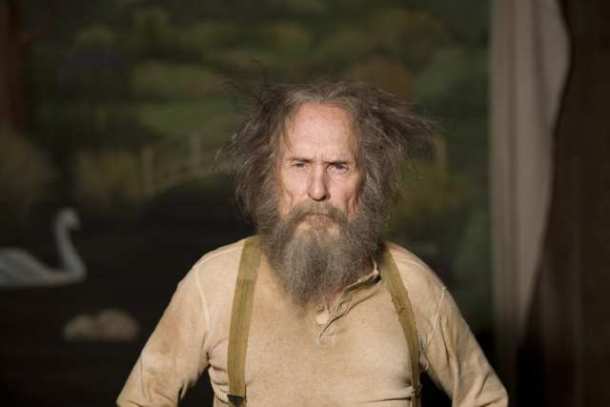 When the film was first released in the fall of 2009, much of the attention it received was for Duval’s performance, and rightfully so; his Felix Bush is mesmerizing and maddening, yet sympathetic. His personal agony is palpable, and his halting steps toward redemption are both convincing and cathartic.
His journey to wholeness, though, while painful and deeply moving, is surprisingly straightforward; indeed, it is almost blunt. There are moments during the film where Bush seems like little more than a hairier, hoarier (and decidedly less complex) “Sonny” Dewey. But unlike Duvall’s breathtaking work in The Apostle, this is no one-man show. Bush’s arc alone, powerful though it may be, is insufficient to sustain the narrative of an entire film. The reclusive wildman’s story cannot be about a private struggle, for it is only in the clash between the terrifying secrets of his past and the public actions of his declining years that the film’s depth and subtlety is revealed, exposing the symbiotic role the town and the hermit have played in one another’s lives.
The sins of Bush’s violent youth, left unexamined for decades because they were simply too painful, had far-reaching consequences—not only in his own life, but in the lives of many: small town citizens, childhood sweethearts, and bewildered morticians alike.
The townspeople, given no reason to doubt their worst imaginings, have imaged them. But their misunderstanding of Bush’s suffering and self-loathing has damaged them as assuredly as it has crippled and isolated him. In recognizing this, the film offers a hard-hitting reminder that connections between human beings penetrate into the personal and the societal fare more deeply than we often recognize, and that repentance, too, is rarely a private thing.
We humans are over-fond of our own self-sufficiency; we wish our redemptions to be as much a matter of our own personal strength as our sin was of our own personal weakness. “It’s between God and me,” we say, “and I’ll find a way to make it right.” But the catalysts for grace-filled repentance and retribution often come from the most unexpected and public of places. Sometimes, an unanticipated glance from a relative stranger is all that is needed to spark a dramatic, life-changing remorse.
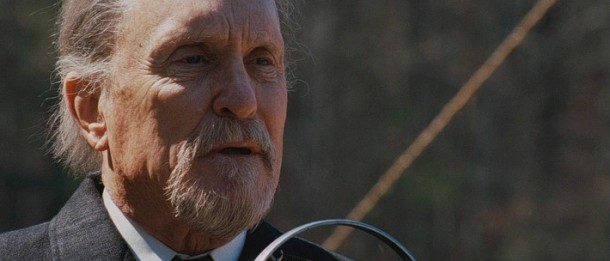
Get Low’s Quinn and Buddy are vital players in Bush’s renewal—not because they schedule musicians and refreshments and shepherd the mundane details of his living wake, but because they lay the emotional and moral groundwork Bush needs to in order to confront his long-hidden sins. Quinn, his own life littered with missteps and regrets, truly understands Bush’s yearnings for repentance. Though weighed down by cynicism and avarice, Quinn still manages to embrace his pivotal role, recognizing in the other’s single-minded tenacity his own deep remorse and hopes for atonement. And Buddy, exemplary in his refusal to condemn the old man for his unknown past, fans the flames of grief and guilt into the purifying fire Bush so desperately needs. His remarkable generosity is a reminder that “judge not, lest ye be judged” is more than just a warning against the dangers of hypocrisy; it is a powerful antidote to the deadly division our unbending judgments create between us and those who most need our assistance.
In the film’s pivotal moment, as Bush begins to sink once again under the burden of his past, Buddy refuses to give up, insisting that he will do everything in his power to help The Hermit reach his goal. Buoyed by the young man’s genuine concern and strength of character, the old man says: “I guess for every one like me, there’s one like you, son. I about forgot that.”
That’s the wonderful thing about the Body of Christ: We are not alone. True, “when one falls, we all fall,” and goodness knows there’s enough falling to go around. But the bearers of Grace are everywhere, as well. We bear it to each other, often without even knowing it.
Getting low is only a temporary state; it is the rising again that we must always keep in mind. Thank God that constant struggle doesn’t have to be private.
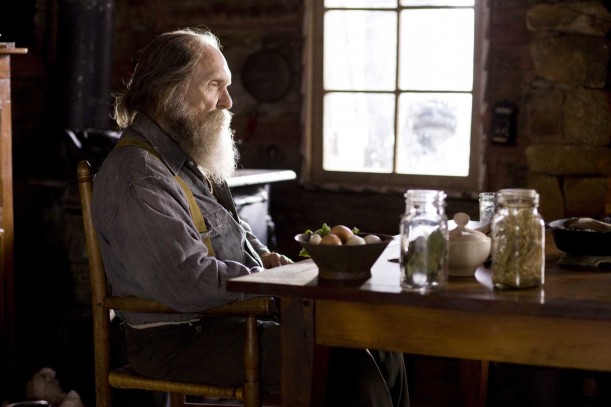 Attribution(s): All posters, publicity images, and movie stills are the property of Sony Pictures Classics and other respective production studios and distributors, and are intended for editorial use only.
Previous Post

March 11, 2011
Renoir's Rules Affirm Our Lenten Need for Sacrificial Love
Next Post

March 25, 2011 Familiarity, Complacency, and "The Man in the White Suit"
Browse Our Archives
Select a Category Art Baseball Faith Family Lenten Music Movies Music No Commentary Necessary Parked By the Jukebox Photography Politics Quodlibets Streaming Video Suggestions Summa Short Films Television The Man Behind the Booth Through a Lens, Darkly
Select a Month December 2015 November 2015 October 2015 September 2015 August 2015 July 2015 June 2015 May 2015 April 2015 March 2015 February 2015 January 2015 December 2014 November 2014 October 2014 September 2014 August 2014 July 2014 June 2014 May 2014 April 2014 March 2014 February 2014 January 2014 December 2013 November 2013 October 2013 September 2013 August 2013 July 2013 June 2013 May 2013 April 2013 March 2013 February 2013 January 2013 December 2012 November 2012 July 2012 April 2012 March 2012 February 2012 November 2011 August 2011 July 2011 June 2011 May 2011 April 2011 March 2011 February 2011 January 2011 December 2010 November 2010 October 2010
Follow Us!
TAKE THE
Religious Wisdom Quiz
After healing a leper, Jesus sternly warned him to tell no one but show himself to the priest. Did the man obey?
Select your answer to see how you score.
Partially, he told his family only Yes, he remained silent Yes, he told only the priest No, he spread the news widely
Related posts from Summa This, Summa That




TRENDING AT PATHEOS Catholic

Rejecting Doom: Christian Hope And Human Action
Christianity is a religion of hope. We are to have hope and...

It’s What Comes From Within Which Matters
One of the most difficult things for us to understand is why...

Why I Choose the Eucharist Over the Sermon
Choose the Eucharist, Not the Sermon What are we supposed to get...

5 Design Elements Found in Spiritually Rooted Homes
Putting Spirituality Into Home Decor Our homes are more than our living...

Credo: A Story of God Told with the...
About 10 years ago, I began to imagine a personal "Credo" that...

The Anatomy of Divine Revelation in Catholic Thought
The claim that God has made Himself known to human beings is...
view all Catholic blogs
Ad-Free & Subscriber Log-In Subscription Support
- About Us
- 2026 Calendar
- Videos
- Podcasts
- Library of World Religions
- Faith In Media Tracker
- Advertise With Us
- Write for Us
- Privacy Policy
- Terms of Service
- Do Not Sell My Data
- Contact Us
- Radiant Digital
- Manage Newsletter Subscriptions
- Unsubscribe From Notifications
- Sitemap
Copyright 2008-2026, Patheos. All rights reserved.
Subscription Support Ad-Free & Subscriber Log-In
Follow Patheos