
BuddhistCatholicContemplativeEvangelicalGeneral ChristianHinduJewishLatter-day SaintMuslimNew VisionsProgressive Christian
Beliefs
- Buddhist
- Catholic
- Contemplative
- Evangelical
- General Christian
- Hindu
- Jewish
- Latter-day Saint
- More Voices
- Muslim
- New Visions
- Pagan
- Progressive Christian
Topics
- Religion News
- Food and Religion
- Sports and Religion
- Religious Art
- Religious Music and Entertainment
- Religious Events
- History and Religion
- Style and Religion
- Politics and Religion
- Women in Religion
- Recreation Outdoors and Religion
- Business Finance and Religion
- Careers Workplace and Religion
- Education and Religion
- Family Parenting and Religion
- Health Fitness and Religion
- Home and Religion
- Relationships and Religion
- Technology and Religion
- Travel and Religion
Columnists
- Buddhist Columnists
- Business Finance and Religion Columnists
- Careers Workplace and Religion Columnists
- Catholic Columnists
- Contemplative Columnists
- Education and Religion Columnists
- Evangelists Columnists
- Family Parenting and Religion Columnists
- General Christian Columnists
- Health Fitness and Religion Columnists
- Hindu Columnists
- History and Religion Columnists
- Home and Religion Columnists
- Jewish Columnists
- More Voices Columnists
- Latter Day Columnists
- Muslim Columnists
- New Visions Columnists
- Nonreligious Columnists
- Pagan Columnists
- Politics and Religion Columnists
- Progressive Columnists
- Recreation Outdoors and Religion Columnists
- Relationships and Religion Columnists
- Religion News Columnists
- Religious Art Columnists
- Religious Events Columnists
- Religious Music and Entertainment Columnists
- Sports and Religion Columnists
- Style and Religion Columnists
- Technology and Religion Columnists
- Travel and Religion Columnists
- Women in Religion Columnists
Resource Library
- 2026 Calendar
- Library of World Religions
- The 100 Most Holy Places on Earth
- Patheos Answers
- Podcasts
- Videos
- Faith Leaders Database
- Anglican Episcopalian
- Bahai
- Baptist
- Buddhism
- Christianity
- Confucianism
- Eastern Orthodoxy
- Hinduism
- Holiness and Pentecostal
- ISKCON
- Islam
- Judaism
- Lutheran
- Methodist
- The Church of Jesus Christ of Latter-day Saints
- New Age
- Paganism
- Presbytarian and Reformed
- Protestantism
- Religion Behind the Scenes
- Roman Catholic
- Scientology
- Shia Islam
- Sikhism
- Sufism
- Sunni Islam
- Taoism
- Zen
- See all religions
Research Tools
 Ad-Free & Subscriber Log-In Subscription Support
Ad-Free & Subscriber Log-In Subscription Support
Follow Patheos 

- Trending:
- Forgiveness
- |
- Marriage
- |
- Consciousness
- |
- Death Penalty
- |
- Election
- |
- Halloween
 Summa This, Summa That
- Home
- About
- Through a Lens, Darkly
- Streaming Video Suggestions (SVS)
- Summa Short Films (SSF)
- The Man Behind The Booth
- Home
- Catholic
- The Road Less Traveled: Reconsidering the Easy Life
The Road Less Traveled: Reconsidering the Easy Life
Last updated on: June 3, 2015 at 12:20 pm by Joseph Susanka
The Road Less Traveled: Reconsidering the Easy Life 2015-06-03T12:20:17-06:00 Joseph Susanka
Patheos Explore the world's faith through different perspectives on religion and spirituality! Patheos has the views of the prevalent religions and spiritualities of the world.
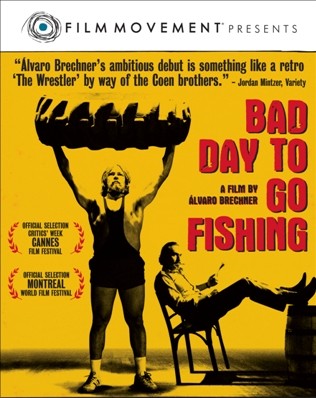 Americans love a good con man.
Perhaps it is our implicit endorsement of P. T. Barnum’s well-known axiom: “There’s a sucker born every minute.” Perhaps it is our begrudging appreciation for cleverness and intellectual ingenuity, no matter its object. Or perhaps it is our deep-seated respect for the chronic overachiever that has led to our love for these Promethean self-made men whose artful schemes are practiced upon an unsuspecting world—dashing rogues, every one.
That love is nowhere more clearly seen than in film, as the flourishing success of the con artist genre (and its slightly more popular cousin, the heist film) attests. From the recruitment and assembly of a rag-tag team of misfits, to the endless planning and preparations for the big day, to the final breathless success or failure of the scheme in the third act (hopefully accompanied by a double-crossing or two), the steps of the storytelling dance have become comfortably clichéd. Why mess with such a successful formula?
Bad Day to Go Fishing, the feature film debut of Uruguayan director Álvaro Brechner, is an entirely different kind of con film, and its departure from cinematic norms proves both refreshing and insightful. Equal parts warm folk fable and chilling cautionary tale, this wonderfully shot, wonderfully acted work recounts the exploits of Jacob van Oppen, the washed-up, alcoholic strongman whose legendary wrestling bouts once won him billing as “The Strongest Man in the World,” and Prince Orsini, his sharp-faced, sharp-witted manager.

Upon arriving in the small South American town of Santa Maria, the two set about their usual shady activities: arranging (and then rigging) a wrestling exhibition where a local athlete is given the opportunity to spend three minutes in the ring with “The Champ.” In the unlikely (and, until now, unfulfilled) event that said local survives his bout with The World’s (Formerly) Strongest Man, he will receive $1,000 for his pains—a tidy sum, and far more than the two travelers have had for quite some time.
Orsini, all too aware of van Oppen’s declining skills, devises a scheme that will both assure them of the meager gate proceeds they need to survive and leave his “strong man” meal ticket intact enough to fight another day. But when the town’s hand-picked opponent is replaced by a mysterious (and highly motivated) adversary, the manager realizes that his convoluted machinations have not only left him in very real danger of losing his proverbial shirt, but have profoundly undermined the fragile confidence of his simple-minded friend.
Jacob, confused by his manager’s unwillingness to go through with the match, gradually comes to realize that he has been an active, if unwitting, participant in Orsini’s frauds. Deeply hurt by his friend’s dishonesty and lack of confidence, “The Champ” sets out to prove to himself (and to Orsini) that he still has the heart of a champion. In the film’s unexpectedly moving (and violent) climax, Jacob shows not only that he is still capable of greatness, but that his manager’s well-intentioned efforts prevented a return to that very glory from which he had so dramatically fallen.

Compared by some reviewers to the similarly themed American film, The Wrestler, Brechner’s work differs from its stateside counterpart in a number of important ways: chief among them, his decision to focus our attention less on the simple, sorrowful decline of “The Champ” and more on the complex character of his manager. Orsini is no Henry Gondorff or Johnny Hooker; he is a “real world” con man. Hiding from himself as much as from his victims, he spends his life hovering on the outskirts of polite society, employing his dubious-but-undeniable charm with barely enough success to survive. As he journeys from one deception to the next, we see Orsini for what he truly is—a moral contortionist who labors to salve his conscience while living off the trust and confidence of others. This is no dashing rogue, no praiseworthy Prometheus; Orsini’s dry, barren cleverness is neither charismatic nor appealing.
Stripped of the typical trappings of the genre, this is a story about people, not action-packed events. Unlike the majority of its cinematic precursors, this film’s focus is on the transformation of its characters, not the realization of their grand schemes. Jacob and Orsini are both flawed, damaged men who depend on one another for their daily existence because that dependence is easy and familiar, not because it is necessary. Yet both come to realize that their relationship, formed in friendship but watered with indolence, has grown into a Frankensteinian monster, driving the two of them apart.
Despite a lifetime spent misleading friends and suckers alike, Orsini is not beyond redemption. When Jacob is revealed to be far more aware and far more competent than his promoter would ever have suspected, their new-found knowledge becomes the catalyst that transforms them both.
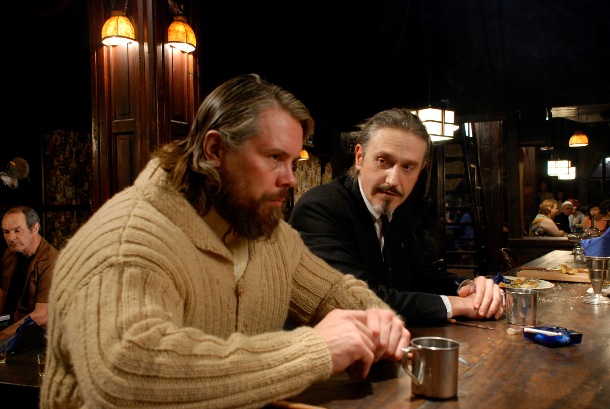
The film’s finale, though ambiguous, is a reminder that we flawed humans must reap what we sow; from the unreasonably idealized con man to the Ordinary Joe, even our seemingly insignificant actions have far-reaching consequences. As Orsini’s life can attest, the Path of Least Resistance always looks good at that first crossroad. But over time, the burdens of sorrow and regret that it slowly adds to our lives prove far more tiring and troublesome than the more difficult choice. The true “long con” is the one we work upon ourselves, seeking ease and success at the expense of the Right and True. That way madness lies.
The Road Less Traveled seems hard, but to look at any path without taking into account its destination is foolish. Despite the steepness and narrowness of that difficult road, we know exactly where it is leading us. And traveling down its dusty pathways will be made infinitely easier by that knowledge.
 Attribution(s): All posters, publicity images, and movie stills are the property of Film Movement and other respective production studios and distributors, and are intended for editorial use only.
Previous Post

February 11, 2011
Divorce, Granted
Next Post
February 25, 2011 Film Noir Loves a Tell-Tale Heart
Browse Our Archives
Select a Category Art Baseball Faith Family Lenten Music Movies Music No Commentary Necessary Parked By the Jukebox Photography Politics Quodlibets Streaming Video Suggestions Summa Short Films Television The Man Behind the Booth Through a Lens, Darkly
Select a Month December 2015 November 2015 October 2015 September 2015 August 2015 July 2015 June 2015 May 2015 April 2015 March 2015 February 2015 January 2015 December 2014 November 2014 October 2014 September 2014 August 2014 July 2014 June 2014 May 2014 April 2014 March 2014 February 2014 January 2014 December 2013 November 2013 October 2013 September 2013 August 2013 July 2013 June 2013 May 2013 April 2013 March 2013 February 2013 January 2013 December 2012 November 2012 July 2012 April 2012 March 2012 February 2012 November 2011 August 2011 July 2011 June 2011 May 2011 April 2011 March 2011 February 2011 January 2011 December 2010 November 2010 October 2010
Follow Us!
TAKE THE
Religious Wisdom Quiz
A righteous man loses everything—ten children, vast wealth, and his health—yet refuses to curse God. Who endured this test?
Select your answer to see how you score.
Solomon Joseph Job Jonah
Related posts from Summa This, Summa That




TRENDING AT PATHEOS Catholic

The Parable Of The Sower And The Word...
One of Christ’s most famous parables is that of the sower who...

Rejecting Doom: Christian Hope And Human Action
Christianity is a religion of hope. We are to have hope and...

Why I Choose the Eucharist Over the Sermon
Choose the Eucharist, Not the Sermon What are we supposed to get...

5 Design Elements Found in Spiritually Rooted Homes
Putting Spirituality Into Home Decor Our homes are more than our living...

Credo: A Story of God Told with the...
About 10 years ago, I began to imagine a personal "Credo" that...

The Anatomy of Divine Revelation in Catholic Thought
The claim that God has made Himself known to human beings is...
view all Catholic blogs
Ad-Free & Subscriber Log-In Subscription Support
- About Us
- 2026 Calendar
- Videos
- Podcasts
- Library of World Religions
- Faith In Media Tracker
- Advertise With Us
- Write for Us
- Privacy Policy
- Terms of Service
- Do Not Sell My Data
- Contact Us
- Radiant Digital
- Manage Newsletter Subscriptions
- Unsubscribe From Notifications
- Sitemap
Copyright 2008-2026, Patheos. All rights reserved.
Subscription Support Ad-Free & Subscriber Log-In
Follow Patheos