
BuddhistCatholicContemplativeEvangelicalGeneral ChristianHinduJewishLatter-day SaintMuslimNew VisionsProgressive Christian
Beliefs
- Buddhist
- Catholic
- Contemplative
- Evangelical
- General Christian
- Hindu
- Jewish
- Latter-day Saint
- More Voices
- Muslim
- New Visions
- Pagan
- Progressive Christian
Topics
- Religion News
- Food and Religion
- Sports and Religion
- Religious Art
- Religious Music and Entertainment
- Religious Events
- History and Religion
- Style and Religion
- Politics and Religion
- Women in Religion
- Recreation Outdoors and Religion
- Business Finance and Religion
- Careers Workplace and Religion
- Education and Religion
- Family Parenting and Religion
- Health Fitness and Religion
- Home and Religion
- Relationships and Religion
- Technology and Religion
- Travel and Religion
Columnists
- Buddhist Columnists
- Business Finance and Religion Columnists
- Careers Workplace and Religion Columnists
- Catholic Columnists
- Contemplative Columnists
- Education and Religion Columnists
- Evangelists Columnists
- Family Parenting and Religion Columnists
- General Christian Columnists
- Health Fitness and Religion Columnists
- Hindu Columnists
- History and Religion Columnists
- Home and Religion Columnists
- Jewish Columnists
- More Voices Columnists
- Latter Day Columnists
- Muslim Columnists
- New Visions Columnists
- Nonreligious Columnists
- Pagan Columnists
- Politics and Religion Columnists
- Progressive Columnists
- Recreation Outdoors and Religion Columnists
- Relationships and Religion Columnists
- Religion News Columnists
- Religious Art Columnists
- Religious Events Columnists
- Religious Music and Entertainment Columnists
- Sports and Religion Columnists
- Style and Religion Columnists
- Technology and Religion Columnists
- Travel and Religion Columnists
- Women in Religion Columnists
Resource Library
- 2026 Calendar
- Library of World Religions
- The 100 Most Holy Places on Earth
- Patheos Answers
- Podcasts
- Videos
- Faith Leaders Database
- Anglican Episcopalian
- Bahai
- Baptist
- Buddhism
- Christianity
- Confucianism
- Eastern Orthodoxy
- Hinduism
- Holiness and Pentecostal
- ISKCON
- Islam
- Judaism
- Lutheran
- Methodist
- The Church of Jesus Christ of Latter-day Saints
- New Age
- Paganism
- Presbytarian and Reformed
- Protestantism
- Religion Behind the Scenes
- Roman Catholic
- Scientology
- Shia Islam
- Sikhism
- Sufism
- Sunni Islam
- Taoism
- Zen
- See all religions
Research Tools
 Ad-Free & Subscriber Log-In Subscription Support
Ad-Free & Subscriber Log-In Subscription Support
Follow Patheos 

- Trending:
- Forgiveness
- |
- Marriage
- |
- Consciousness
- |
- Death Penalty
- |
- Election
- |
- Halloween
 Summa This, Summa That
- Home
- About
- Through a Lens, Darkly
- Streaming Video Suggestions (SVS)
- Summa Short Films (SSF)
- The Man Behind The Booth
- Home
- Catholic
- Divorce, Granted
Divorce, Granted
Last updated on: February 9, 2015 at 6:12 pm by Joseph Susanka
Divorce, Granted 2015-02-09T18:12:39-07:00 Joseph Susanka
Patheos Explore the world's faith through different perspectives on religion and spirituality! Patheos has the views of the prevalent religions and spiritualities of the world.

C. K. Dexter Haven: Sometimes, for your own sake, Red, I think you should’ve stuck to me longer.
Tracy Lord: I thought it was for life, but the nice judge gave me a full pardon.
It is difficult to watch Cary Grant’s effortless cinematic grace without envy mixing with that admiration. The former acrobat, christened Archibald Alexander Leach, exuded sophistication but with a wry, self-deprecating touch of humor and humanity that kept him humble and accessible to the audience. He was one of the most beloved leading men in Hollywood’s history; if women swooned over his looks, their dates didn’t mind too much. They were busy studying Grant’s manner.
Though his credits are crowded with “light” titles that showed Grant’s sunny charm to best advantage, some of those frothy delights toss a darker shadow into our age as they leave us pondering the dramatic shift in our understanding of marriage, divorce, vows and the idea of anything being permanent.
In the classic screwball comedy His Girl Friday, Grant is Walter Burns, the hard-charging, smooth-talking newspaper editor whose obsession with getting the scoop at all costs is legendary among his peers. Unfortunately one cost has been his marriage to the paper’s star reporter, Hildy Johnson, who returns to the newsroom announcing her plans to leave the rat-race and marry a bland, reliable and decidedly un-Cary-esque insurance salesman.
Burns, suddenly aware of how unwelcome he finds the prospect of losing Hildy, resolves to undermine the impending nuptials. Convinced Hildy’s suburban dreams cannot possibly override the reporter’s blood that runs through her veins (and confident that his rival’s stability is no match for the adventure of a life with him), Burns pressures his “ex-wife” to reconsider, reminding her with unsubtle modern irony that “divorce doesn’t mean anything nowadays, Hildy; just a few words mumbled over you by a judge.”

The Philadelphia Story’s C. K. Dexter Haven, quite possibly Grant’s most memorable character, is a lovable, old-monied rogue whose alcoholic excesses have led his feisty-but-stern socialite wife Tracy to divorce him. Somewhat reformed, and coerced by a bit of journalistic blackmail, Dexter returns from a two-year stint in South America to descend on Tracy’s impending second marriage to the staid, nouveau riche (and much less lovable) George Kittredge. At his shocking intrusion, Tracy marvels, “You haven’t switched from liquor to dope by any chance, have you, Dexter?”
Tracy suspects Dexter has returned to deconstruct her wedding, and she is not wrong. Blackmail and tumultuous break-up aside, Haven truly loves his estranged wife and has not fully ceded his identification as her husband. When—just hours before the wedding—a misunderstanding arises between the jealous Kittredge and a man who has entertained Tracy, Dexter throws a chivalrous punch in defense of her honor.
“Hey,” Kittredge objects, “what right have you—”A husband’s,” he replies, “’til tomorrow, Kittredge.”
A modern viewer of the scene can be forgiven for finding shocking the notion that, even with the legal pardon of “the nice judge,” Dexter and Tracy are still husband and wife, or that spoken vows may have intangible meaning beyond words on a piece of paper.

Twenty years later, Grant returned once again to the issues of separation and divorce in Stanley Donen’s The Grass Is Greener, this time playing the part of a British nobleman, Earl Victor Rhyall, whose wife of ten years falls suddenly and madly in love with a visiting American millionaire. Concerned about his Countess’ twitterpated condition but all-too-aware that a heavy-handed interference might cause her to dig in her heels, the Earl at first tries simply waiting out his wife’s infatuation.
When that doesn’t go as planned, the Earl concocts a humorous, somewhat hare-brained scheme in an effort to rekindle her wayward affections. Nothing works out quite as he intends, but events do provide him with the perfect opportunity to remind his wife of their marriage vows, and why they made them in the first place.
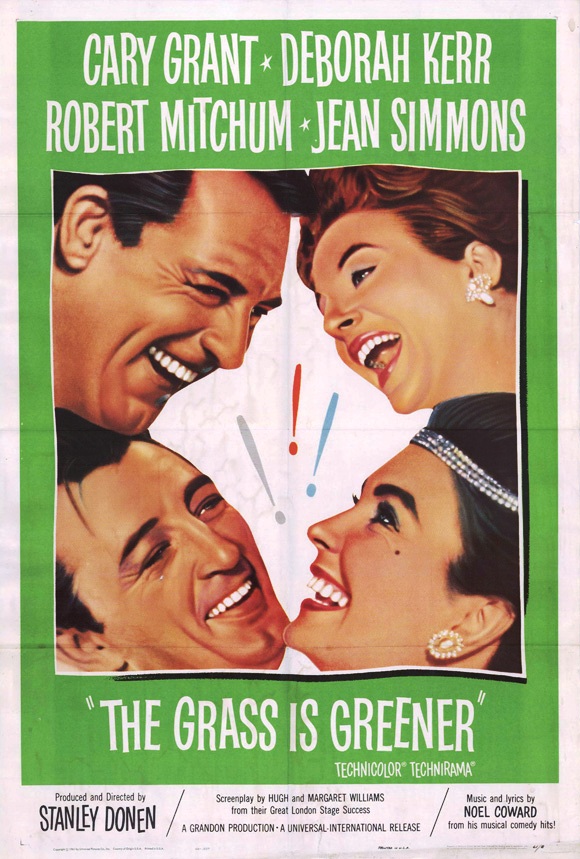 In each film, Grant’s characters come to recognize the profound impact their wives have on their lives—that their spouses really are the “better half” that completes them. These men refuse to give up their marriages without a pitched battle. But perhaps the most intriguing and instructive similarity between these characters is this: It is nearly impossible to imagine their stories being made into films today.
It is not that our current actors are incapable of taking up Grant’s sizable mantle; George Clooney stands at the ready. Nor do we lack directors with a knack for producing madcap plots and fast-paced, whip-smart, screwball dialogue. The Coen Brothers and Wes Anderson have proven themselves more than capable of delivering screwball romance.
No, the real problem is that no contemporary studio would want to finance or market a film that grapples with the issue of divorce as starkly as these classics did, or with an overriding bias in favor of marriage and fidelity.
It is not so much that divorce is seen as uninteresting; rather, it’s no longer even seen. Our collective consciousness has moved so far past the issue that the likelihood of re-examining the value of marriage or the emotional and spiritual cost of divorce seems unlikely. Perhaps it is a too-hot singe to our relativistic and accepting consciences.
We think of love as temporary, virtuous courtship as hayseed, while we consider successful marriages to be exceptions to the rule. Fighting tooth and nail for the promise to stick things out “through thick and thin, richer and poorer, ’till death do us part?” Now we’re just being old-fashioned.
 But is it really good for us to have reached a point where battling to preserve one’s marriage is perceived as pointless? Is that something we, as a culture, wished to embrace, or did it simply sneak up on us while we were distracted by our prosperity and our progress and our playbills? Perhaps it was hard to absorb the morality plays when the players were entertaining us with their multiple real-life marriages—a reminder that Hollywood not only mirrors society, but shapes it as well.
The sad and dangerous truth is that we increasingly equate love with “eros,” habitually confusing the complex, multifaceted reality that lies at the very core of our humanity with a physical, all-consuming passion that burns brightly and gloriously and yet quickly fades. If that’s all love is, then why should we be expected to remain standing, and faithful, in the burned-out husk of our once-glorious romances?
But love is so much more than just the emotional highs of early days. To cut ourselves off from its fuller, deeper meaning—from the “agape” that time and experience gradually brings out of the good (yet incomplete) “eros”—means that we will persist in a state of romantic adolescence: always desiring and never finding.
This Valentine’s Day, let us challenge ourselves to seek out and embrace the more difficult, the less sensational, the gentler, quieter facets of love. It is time to demand more of ourselves than the emulation of the hastily and incompletely drawn picture of passion that Hollywood has been foisting upon us for decades.
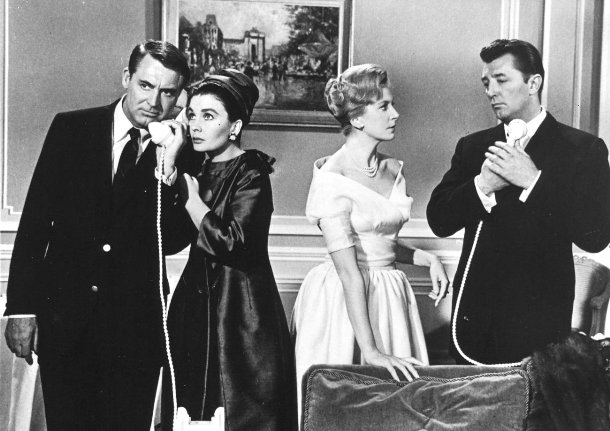 Attribution(s): All posters, publicity images, and movie stills are the property of Columbia/Sony Pictures, United Artists/MGM, Universal Pictures, and other respective production studios and distributors, and are intended for editorial use only; “Grant, Cary (Suspicion)” via RKO publicity photographer is licensed under Public Domain via Wikimedia Commons.

Previous Post

February 4, 2011
Trust and Doubt: Our Endless Dichotomy
Next Post

February 18, 2011 The Road Less Traveled: Reconsidering the Easy Life
Browse Our Archives
Select a Category Art Baseball Faith Family Lenten Music Movies Music No Commentary Necessary Parked By the Jukebox Photography Politics Quodlibets Streaming Video Suggestions Summa Short Films Television The Man Behind the Booth Through a Lens, Darkly
Select a Month December 2015 November 2015 October 2015 September 2015 August 2015 July 2015 June 2015 May 2015 April 2015 March 2015 February 2015 January 2015 December 2014 November 2014 October 2014 September 2014 August 2014 July 2014 June 2014 May 2014 April 2014 March 2014 February 2014 January 2014 December 2013 November 2013 October 2013 September 2013 August 2013 July 2013 June 2013 May 2013 April 2013 March 2013 February 2013 January 2013 December 2012 November 2012 July 2012 April 2012 March 2012 February 2012 November 2011 August 2011 July 2011 June 2011 May 2011 April 2011 March 2011 February 2011 January 2011 December 2010 November 2010 October 2010
Follow Us!
TAKE THE
Religious Wisdom Quiz
Why did God command the Israelites to eat unleavened bread?
Select your answer to see how you score.
It was a symbol of humility Yeast was considered unclean It was the only bread they knew how to make They had to leave Egypt quickly
Related posts from Summa This, Summa That




TRENDING AT PATHEOS Catholic

Rejecting Doom: Christian Hope And Human Action
Christianity is a religion of hope. We are to have hope and...

It’s What Comes From Within Which Matters
One of the most difficult things for us to understand is why...

Why I Choose the Eucharist Over the Sermon
Choose the Eucharist, Not the Sermon What are we supposed to get...

5 Design Elements Found in Spiritually Rooted Homes
Putting Spirituality Into Home Decor Our homes are more than our living...

Credo: A Story of God Told with the...
About 10 years ago, I began to imagine a personal "Credo" that...

The Anatomy of Divine Revelation in Catholic Thought
The claim that God has made Himself known to human beings is...
view all Catholic blogs
Ad-Free & Subscriber Log-In Subscription Support
- About Us
- 2026 Calendar
- Videos
- Podcasts
- Library of World Religions
- Faith In Media Tracker
- Advertise With Us
- Write for Us
- Privacy Policy
- Terms of Service
- Do Not Sell My Data
- Contact Us
- Radiant Digital
- Manage Newsletter Subscriptions
- Unsubscribe From Notifications
- Sitemap
Copyright 2008-2026, Patheos. All rights reserved.
Subscription Support Ad-Free & Subscriber Log-In
Follow Patheos