
BuddhistCatholicContemplativeEvangelicalGeneral ChristianHinduJewishLatter-day SaintMuslimNew VisionsProgressive Christian
Beliefs
- Buddhist
- Catholic
- Contemplative
- Evangelical
- General Christian
- Hindu
- Jewish
- Latter-day Saint
- More Voices
- Muslim
- New Visions
- Pagan
- Progressive Christian
Topics
- Religion News
- Food and Religion
- Sports and Religion
- Religious Art
- Religious Music and Entertainment
- Religious Events
- History and Religion
- Style and Religion
- Politics and Religion
- Women in Religion
- Recreation Outdoors and Religion
- Business Finance and Religion
- Careers Workplace and Religion
- Education and Religion
- Family Parenting and Religion
- Health Fitness and Religion
- Home and Religion
- Relationships and Religion
- Technology and Religion
- Travel and Religion
Columnists
- Buddhist Columnists
- Business Finance and Religion Columnists
- Careers Workplace and Religion Columnists
- Catholic Columnists
- Contemplative Columnists
- Education and Religion Columnists
- Evangelists Columnists
- Family Parenting and Religion Columnists
- General Christian Columnists
- Health Fitness and Religion Columnists
- Hindu Columnists
- History and Religion Columnists
- Home and Religion Columnists
- Jewish Columnists
- More Voices Columnists
- Latter Day Columnists
- Muslim Columnists
- New Visions Columnists
- Nonreligious Columnists
- Pagan Columnists
- Politics and Religion Columnists
- Progressive Columnists
- Recreation Outdoors and Religion Columnists
- Relationships and Religion Columnists
- Religion News Columnists
- Religious Art Columnists
- Religious Events Columnists
- Religious Music and Entertainment Columnists
- Sports and Religion Columnists
- Style and Religion Columnists
- Technology and Religion Columnists
- Travel and Religion Columnists
- Women in Religion Columnists
Resource Library
- 2026 Calendar
- Library of World Religions
- The 100 Most Holy Places on Earth
- Patheos Answers
- Podcasts
- Videos
- Faith Leaders Database
- Anglican Episcopalian
- Bahai
- Baptist
- Buddhism
- Christianity
- Confucianism
- Eastern Orthodoxy
- Hinduism
- Holiness and Pentecostal
- ISKCON
- Islam
- Judaism
- Lutheran
- Methodist
- The Church of Jesus Christ of Latter-day Saints
- New Age
- Paganism
- Presbytarian and Reformed
- Protestantism
- Religion Behind the Scenes
- Roman Catholic
- Scientology
- Shia Islam
- Sikhism
- Sufism
- Sunni Islam
- Taoism
- Zen
- See all religions
Research Tools
 Ad-Free & Subscriber Log-In Subscription Support
Ad-Free & Subscriber Log-In Subscription Support
Follow Patheos 

- Trending:
- Forgiveness
- |
- Marriage
- |
- Consciousness
- |
- Death Penalty
- |
- Election
- |
- Halloween
 Summa This, Summa That
- Home
- About
- Through a Lens, Darkly
- Streaming Video Suggestions (SVS)
- Summa Short Films (SSF)
- The Man Behind The Booth
- Home
- Catholic
- Capes, Masks, and Ordinary Heroes
Capes, Masks, and Ordinary Heroes
Last updated on: July 23, 2015 at 12:08 pm by Joseph Susanka
Capes, Masks, and Ordinary Heroes 2015-07-23T12:08:45-06:00 Joseph Susanka
Patheos Explore the world's faith through different perspectives on religion and spirituality! Patheos has the views of the prevalent religions and spiritualities of the world.
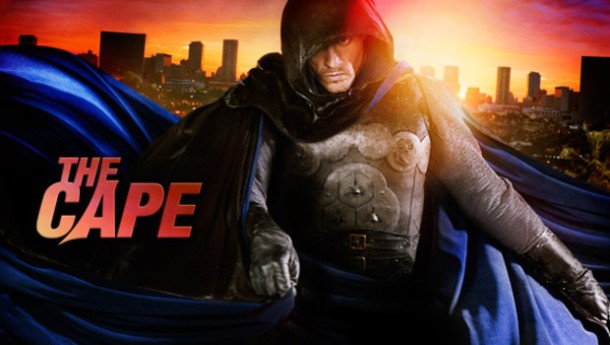
Few popular art forms have so perfectly encapsulated the peculiarly dual nature of the Heroic American Spirit as that of the superhero comic.
On one hand stands Superman, Captain America, Thor, Wonder Woman and the like—idealized, anatomically-unlikely characters motivated by such universal principles as Truth, Justice, and The American Way. These heroes, whose perfection and altruism conjure up images of the sparkling City on the Hill so popularized by our Puritanical forefathers, use their extraordinary, superhuman gifts to rule and protect the world in ways evocative of an almost-Divine Providence.
On the other hand are aligned such superheroes as the Phantom, the Spirit, the Watchmen, and their ilk—individuals stripped of such extraordinary physical prowess, and motivated by far more human loves and hatreds. They are self-made legends: post-modern Horatiuses pulled up by their own shiny, black-leather bootstraps to stand alone against the inexorably rising tide of evil that surges all around them.
While many superhero tales have managed to incorporate the dueling aspects of the Heroic American mythos into a coherent character, in recent years the post-modern hero has moved to the fore. The impressive box-office success of Nolan’s Batman Begins and Favreau’s Iron Man (coupled with the significant economic disappointments of Singer’s Superman Returns and Tim Story’s Fantastic Four) suggests that we have grown far more comfortable with our self-made, cynical (and explainable) side than with the intervention of some miraculous, inexplicable being.
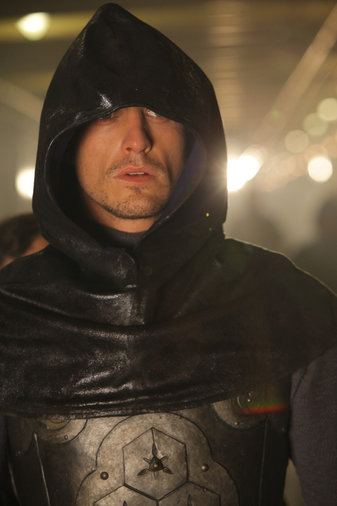 “The Cape,” NBC’s latest foray into the World of Superhero TV, falls firmly into the post-modern category. In the recent, decently-received pilot episode, protagonist Vince Farady is a “good cop” who finds himself framed for the crimes of his arch-nemesis, Chess. Befriended by a bizarre troop of circus misfits (is there any other kind?) who endow him with the extraordinary textile contraption that gives the show its name, he sets out to battle the corruption and evil threatening to overrun his beloved Palm City. Along the way, he must struggle to balance his family obligations with his new-found vigilante role, and also confront the obligatory presence of his own personal demons.
Understandably in today’s over-saturated superhero genre, “The Cape” struggles to distance itself from its more popular (and costlier) cinematic step-brothers. At times, the show feels like little more than a cut-rate Batman Begins—the style, setting, and plot sometimes seem to outright burglarize Nolan’s work, rather than borrow from it. In the final scene of the show’s two-part premiere, the Cape stands guard over Palm City in a shockingly-Bale-like silhouette while Hans Zimmer-esque music swells in the background. Like Nolan’s original Batman film, the show also suffers from over-villainization; it struggles to focus its hero’s energies on three entirely-different-yet-equally-unattractive villains.
The series premiere raises far more questions than can possibly be answered in a few short hours: Why are loyal, honest cops always befriended by miscreants willing and eager to assist in their framing? Why can’t anyone recognize the supervillain’s absurd rhetoric and blatant powergrabs? Which of the show’s writers has the fun of coming up with names like Orwell for the series’ all-seeing-and-government-undermining tech wiz (and Fleming for the gadget-wielding supervillain’s alter ego?) What, troublingly, is the significance of the fact that Farady’s skills are fostered and perfected by a con man and entertainer who has made illusion his life’s work? Come to think of it, why is Vince’s mentor so much more engaging than our hero, anyway?
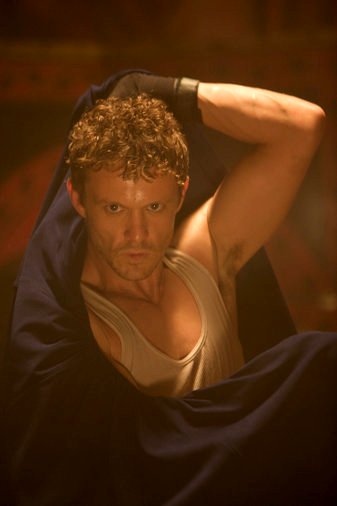 Perhaps the most intriguing question raised by the show, however—and it is an obvious nod to Nolan’s film—is the very thing which makes one pause when considering the recent trend towards Post-Modern Heroism: What is to be made of the essential (and essentiallyunchecked) role of vigilantism? In a world where escalating violence and cynicism are common currency, where justice and morality are primarily human constructs, and where the intervention of someone above-and-beyond is excluded by the very nature of the show’s mythos, what are the eventual consequences of our hero’s decision to take justice into his own hands? Where does he draw the line?
The latest in a line of superheroes who are far more heroic than they are super, Faraday’s anger and outrage are both understandable and easily justifiable. But as a man without the lofty principles and otherworldly motivations of his Puritanical counterparts, one must wonder where his journey will take him. As Jim Gordon points out in Batman Begins, the world populated by heroes such as Batman and the Cape must always confront the problem of escalation: “We start carrying semi-automatics, they buy automatics; we start wearing Kevlar, they buy armor-piercing rounds.” Is Faraday willing to go “all the way” to preserve his family, his city, and his way of life?
And if he is so willing, should he be?
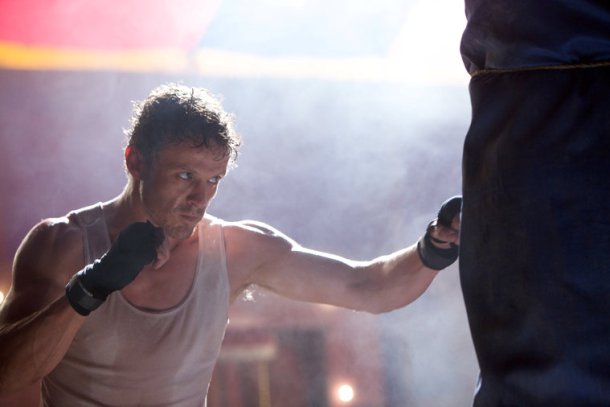 Despite these concerns, there is something both insightful and heartening in the show’s fundamental message, one that has been reinforced before our eyes in recent days: We humans are capable of incredible heroism and self-sacrifice.
Without discounting the notion that heroes can be motivated by beneficent principles or lofty ideals, it is safe to say that examples of this sort of heroism is most often found in the spectacular unreality of Superman’s realm, rather than in the darkness and suffering of our ordinary, everyday reality. We frail human beings are far more likely to be driven to feats of heroic virtue by our desire to protect those nearest and dearest to us. As Farady says in one of the show’s all-too-brief moments of insight: “My family is not my weakness; it’s my strength.”
Amidst the horror of the Tucson shootings, Dorwan Stoddard threw his body over his wife’s to shield her from Jared Loughner’s bullets, selflessly giving his life so that his beloved might live.
In the small farming town of Nokesville, Virginia, Thomas Vander Woude fearlessly jumped into the septic tank whose roof had collapsed under his 20-year-old son, holding him above the muck until rescuers could arrive, and giving his own life in the process.
On the deck of the rapidly-sinking U.S.A.T. Dorchester, Rabbi Alexander Goode, Father John Washington, Reverend George Fox, and Reverend Clark Poling eagerly gave up their life jackets to a quartet of young American servicemen, forfeiting their own chance at survival through their act of extraordinary generosity.
Recognizing the heroic actions of these few—and countless other humans just like them—will serve us far better than the tallest stack of comic books.
Idealized superhero stories are certainly not without value; a surprising amount of depth and insight can be found within the pages of these small, brightly colored newsstand pamphlets. Yet we must not forget that it is the “ordinary” heroes among us—heroes plagued by the same fears, weaknesses, sufferings, and sins that plague us—that will always serve as our truest and greatest inspirations.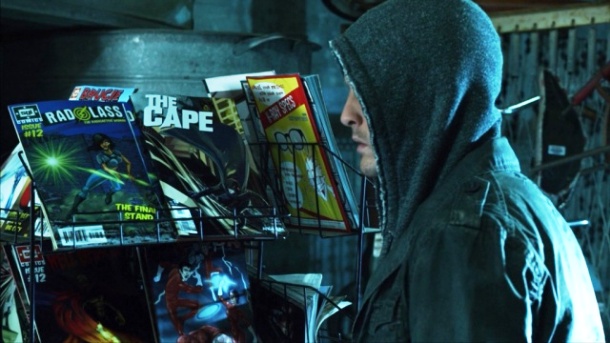
Attribution(s): Publicity images and movie stills are the property of National Broadcasting Company (NBC) and other respective production studios and distributors, and are intended for editorial use only.
Previous Post

January 7, 2011
Death, Where Is Thy Sting?
Next Post
January 21, 2011 Jumpstarting Grown-Up Wonder in Tarsem Singh's "The Fall"
Browse Our Archives
Select a Category Art Baseball Faith Family Lenten Music Movies Music No Commentary Necessary Parked By the Jukebox Photography Politics Quodlibets Streaming Video Suggestions Summa Short Films Television The Man Behind the Booth Through a Lens, Darkly
Select a Month December 2015 November 2015 October 2015 September 2015 August 2015 July 2015 June 2015 May 2015 April 2015 March 2015 February 2015 January 2015 December 2014 November 2014 October 2014 September 2014 August 2014 July 2014 June 2014 May 2014 April 2014 March 2014 February 2014 January 2014 December 2013 November 2013 October 2013 September 2013 August 2013 July 2013 June 2013 May 2013 April 2013 March 2013 February 2013 January 2013 December 2012 November 2012 July 2012 April 2012 March 2012 February 2012 November 2011 August 2011 July 2011 June 2011 May 2011 April 2011 March 2011 February 2011 January 2011 December 2010 November 2010 October 2010
Follow Us!
TAKE THE
Religious Wisdom Quiz
Who betrayed Jesus for 30 pieces of silver?
Select your answer to see how you score.
James Peter Barabbas Judas Iscariot
Related posts from Summa This, Summa That


SVS: "Avatar: The Last Airbender"
The Specter of Broken Fatherhood in the Films...

Pay As Much Attention To The Man Behind...
TRENDING AT PATHEOS Catholic

Rejecting Doom: Christian Hope And Human Action
Christianity is a religion of hope. We are to have hope and...

It’s What Comes From Within Which Matters
One of the most difficult things for us to understand is why...

Why I Choose the Eucharist Over the Sermon
Choose the Eucharist, Not the Sermon What are we supposed to get...

5 Design Elements Found in Spiritually Rooted Homes
Putting Spirituality Into Home Decor Our homes are more than our living...

Credo: A Story of God Told with the...
About 10 years ago, I began to imagine a personal "Credo" that...

The Anatomy of Divine Revelation in Catholic Thought
The claim that God has made Himself known to human beings is...
view all Catholic blogs
Ad-Free & Subscriber Log-In Subscription Support
- About Us
- 2026 Calendar
- Videos
- Podcasts
- Library of World Religions
- Faith In Media Tracker
- Advertise With Us
- Write for Us
- Privacy Policy
- Terms of Service
- Do Not Sell My Data
- Contact Us
- Radiant Digital
- Manage Newsletter Subscriptions
- Unsubscribe From Notifications
- Sitemap
Copyright 2008-2026, Patheos. All rights reserved.
Subscription Support Ad-Free & Subscriber Log-In
Follow Patheos