
BuddhistCatholicContemplativeEvangelicalGeneral ChristianHinduJewishLatter-day SaintMuslimNew VisionsProgressive Christian
Beliefs
- Buddhist
- Catholic
- Contemplative
- Evangelical
- General Christian
- Hindu
- Jewish
- Latter-day Saint
- More Voices
- Muslim
- New Visions
- Pagan
- Progressive Christian
Topics
- Religion News
- Food and Religion
- Sports and Religion
- Religious Art
- Religious Music and Entertainment
- Religious Events
- History and Religion
- Style and Religion
- Politics and Religion
- Women in Religion
- Recreation Outdoors and Religion
- Business Finance and Religion
- Careers Workplace and Religion
- Education and Religion
- Family Parenting and Religion
- Health Fitness and Religion
- Home and Religion
- Relationships and Religion
- Technology and Religion
- Travel and Religion
Columnists
- Buddhist Columnists
- Business Finance and Religion Columnists
- Careers Workplace and Religion Columnists
- Catholic Columnists
- Contemplative Columnists
- Education and Religion Columnists
- Evangelists Columnists
- Family Parenting and Religion Columnists
- General Christian Columnists
- Health Fitness and Religion Columnists
- Hindu Columnists
- History and Religion Columnists
- Home and Religion Columnists
- Jewish Columnists
- More Voices Columnists
- Latter Day Columnists
- Muslim Columnists
- New Visions Columnists
- Nonreligious Columnists
- Pagan Columnists
- Politics and Religion Columnists
- Progressive Columnists
- Recreation Outdoors and Religion Columnists
- Relationships and Religion Columnists
- Religion News Columnists
- Religious Art Columnists
- Religious Events Columnists
- Religious Music and Entertainment Columnists
- Sports and Religion Columnists
- Style and Religion Columnists
- Technology and Religion Columnists
- Travel and Religion Columnists
- Women in Religion Columnists
Resource Library
- 2026 Calendar
- Library of World Religions
- The 100 Most Holy Places on Earth
- Patheos Answers
- Podcasts
- Videos
- Faith Leaders Database
- Anglican Episcopalian
- Bahai
- Baptist
- Buddhism
- Christianity
- Confucianism
- Eastern Orthodoxy
- Hinduism
- Holiness and Pentecostal
- ISKCON
- Islam
- Judaism
- Lutheran
- Methodist
- The Church of Jesus Christ of Latter-day Saints
- New Age
- Paganism
- Presbytarian and Reformed
- Protestantism
- Religion Behind the Scenes
- Roman Catholic
- Scientology
- Shia Islam
- Sikhism
- Sufism
- Sunni Islam
- Taoism
- Zen
- See all religions
Research Tools
 Ad-Free & Subscriber Log-In Subscription Support
Ad-Free & Subscriber Log-In Subscription Support
Follow Patheos 

- Trending:
- Forgiveness
- |
- Marriage
- |
- Consciousness
- |
- Death Penalty
- |
- Election
- |
- Halloween

- Home
- Catholic
- Education and Religion
- Why Faith Demands Both Dogma and Relationship
Why Faith Demands Both Dogma and Relationship
Last updated on: May 31, 2026 at 10:40 am by David Schloss
Why Faith Demands Both Dogma and Relationship 2026-05-31T10:40:47-04:00 David Schloss
Patheos Explore the world's faith through different perspectives on religion and spirituality! Patheos has the views of the prevalent religions and spiritualities of the world.
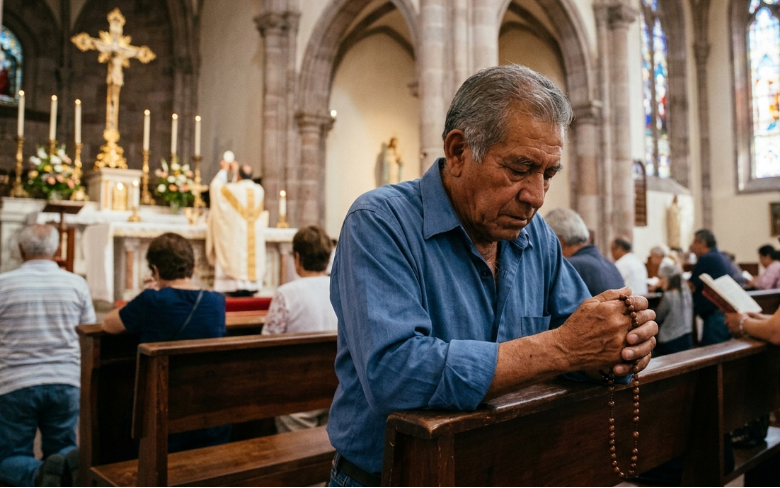
Is the Catholic faith multi-dimensional? It is, and in this paper, I will examine and contrast the objective faith which is believed and the subjective faith by which it is believed.
While the distinction is highly theological, it has significant practical implications for how a Catholic lives out his beliefs. To understand the dual nature of faith, one must first establish how Catholicism defines the overarching concept of faith.
What Is Faith?
A biblical definition of faith cannot be divorced from the concepts of hope and trust. For this reason, the author of the Letter to the Hebrews defines faith as “The realization of what is hoped for and evidence of things not seen.” (Hebrews 11:1).
If we apply Thomistic thought to the above Scripture, we can suggest that the “substance” corresponds to the interior light of faith (fides qua), while the “evidence” anchors it to objective divine truth (fides quae). These terms, fides qua and fides quae, will be explained below.
Such a definition of faith entails the view that faith transforms one’s perception of God and the world through Christ. Faith, therefore, is both a relational dependence and an active loyalty to Christ.
Owing to the relationship between grace and works, the Church Fathers saw faith as “The first movement towards salvation.” (Alexandria, Clement Of. The Stromata. 2019).
By placing the biblical commentary on faith within the wider Catholic tradition, we can suggest that a working definition of faith is having good reasons to believe and trust in God.
As with most things inherent in the human condition, faith encompasses an objective and subjective component.
Faith Which Is Believed
Fides quae creditur is a Latin phrase translated as “the faith which is believed.” It refers to the objective body of truths, doctrines, and Divine revelations that God has revealed to humanity and that the Catholic Church preserves and teaches. Four core concepts form the faith which is believed.
First, Catholic theology speaks of an objective content of the Catholic faith. This objective content is usually referred to as the “deposit of faith” (depositum fidei). It consists of the specific teachings, historical facts, and mysteries of the Christian religion.
The second aspect of fides quae creditur includes the ecumenical creeds, such as the Apostles’ Creed and the Nicene Creed.
The Creeds (creed is Latin for “I believe”) form the foundation for unity and worship. The Creeds further outline the absolute non-negotiables of the Catholic faith. Considered essential are the doctrine of the Holy Trinity, the Incarnation, the death and resurrection of Jesus Christ, and the nature of the Church as the mystical body of Christ.
Third, an objective body of faith protects against heresies. The Creeds of the Catholic Church were forged in response to specific theological controversies. For example, the Nicene Creed (emerging from the councils of 325 AD and 381 AD) was developed to defend the full divinity of Christ and the Holy Spirit against heresies like Arianism. It provides a clear, universally recognized safeguard for orthodoxy.
Finally, an objective body of faith connects or tethers the faith to Sacred Tradition. Since the faith which is believed provides the necessary symbols of faith, they function as the primary reference points for catechesis and baptismal preparation. It binds modern believers to the historical legacy and unchanging truths of the Church across time.
Therefore, when one considers fides quae creditur, one is taking in the whole body of the deposit of faith of the Catholic Church. But, how does the individual take that teaching in?
Faith By Which It Is Believed
In the Catholic theological tradition, fides qua creditur (the faith by which it is believed) is considered an inseparable counterpart to the faith which is believed.
If the faith which is believed refers to the objective deposit of faith, then the faith by which it is believed (fides qua creditur) is the subjective personal aspect of faith.
Specifically, fides qua creditur is the personal act of trust, the movement of the human heart, and the grace to believe. Said differently, the faith by which it is believed is the spiritual faculty or virtue by which an individual accepts Divine revelation.
It is not merely an intellectual agreement, but a relational act of surrendering one’s will and intellect to God.
It is all too easy to discuss fides quae creditur and fides qua creditur as abstract theological concepts. However, to be of value to the practicing Catholic, it is necessary to show the practicality of these concepts.
Why Both Matter In Catholic Life
A comprehensive faith integrates the human person as the active subject who experiences and expresses belief (fides qua creditur), and the Divine revelation or truth as the objective focus of that belief (fides quae creditur).
Together, they create a dynamic relationship where personal lived experience and universal theological truths inform one another.
For this reason, the Catholic Church notes that belief has a twofold reference: to the person, and to the truth: to the truth, by trust in the person who bears witness to it. (Catechism of the Catholic Church, Paragraph 177).
These concepts have practical value when speaking of faith. A belief system predicated solely on the objective fides quae creditur reduces faith to a sterile rationalism or legalism. Catholicism becomes only about the rules and dogmas, but lacks a personal relationship with God or a life of charity.
On the other hand, a belief system that is built only on fides qua creditur reduces faith to a vague emotional sentiment without any real structure, truth, or meaningful definition. This position can lead to a groundless fideism.
Ultimately, fides qua creditur is the spiritual engine by which a Catholic personally grasps and lives out the objective truths contained in the fides quae creditur.
Lastly, it is vital to understand grace as the source of the “two faiths.” The personal act of faith is entirely dependent on the grace of God, which enlightens and moves the human will to embrace the objective truth. Properly construed, grace not only contains the objective truths of which God is the source, but it also makes faith in those truths possible.
Conclusion
From what has been said, it should be clear why Catholicism insists on the inseparability of the “two faiths.” It is impossible to have a subjective trust in God without believing what He has revealed, nor is it possible to be saved by merely knowing church doctrines without personally assenting to and living them.
General Christian
Education and Religion
History and Religion
Previous Post
May 24, 2026
What Are the Transcendentals? A Catholic Guide to Reality
Next Post
June 7, 2026 The Grammar of Faith: Why Catholicism Needs Metaphysics
Recent Comments
"Why would it matter if atheism is wrong? The fact that Catholic and Protestant scholars ..."
Beyond the Absence of Belief: The ..."
"Kaiser Member Service Proponents often compare atheism to not collecting stamps—it is the lack of ..."
Beyond the Absence of Belief: The ..."
""these dual denials (objective truth and objective meaning)"This is not accurate. Post-modern thought does not ..."
Defending the Faith in a Post-Truth ..."
"The theologians still haven't received the memo. Your opposition are no longer atheists, but they ..."
Defending the Faith in a Post-Truth ..."
Browse Our Archives
Select a Category Abortion Atheism Catholicism. Catholicism. God. Theophany. Christmas Eschatology Faith and Works. God. Holy Spirit Intelligent Design Jesus Christ Justice Law Politics Protestantism Religion Sabbath Salvation. Soteriology. The Bible Theology Uncategorized
Select a Month October 2026 September 2026 August 2026 July 2026 June 2026 May 2026 April 2026 March 2026 February 2026 January 2026 December 2025 November 2025 October 2025 September 2025 August 2025 July 2025 June 2025 May 2025 April 2025 March 2025 February 2025 January 2025 December 2024 November 2024 October 2024 September 2024 August 2024 July 2024 June 2024 May 2024 April 2024 March 2024 February 2024 January 2024 December 2023 November 2023 October 2023 September 2023 August 2023 July 2023 June 2023 May 2023 April 2023 March 2023 February 2023 January 2023 December 2022 November 2022 October 2022 September 2022 August 2022 July 2022 June 2022 May 2022 April 2022 March 2022 February 2022 January 2022 December 2021
Follow Us!
TAKE THE
Religious Wisdom Quiz
Which Christian group is known for speaking in tongues?
Select your answer to see how you score.
Pentecostal Methodist Catholic Baptist
Related posts from Summa Catholic

The Anatomy of Divine Revelation in Catholic Thought

Beyond the Absence of Belief: The Implications of...

Can Catholic Apologetics Survive a Postmodern World?

From Samaria to Sanctity: Analyzing The Woman At...
TRENDING AT PATHEOS Catholic

The Parable Of The Sower And The Word...
One of Christ’s most famous parables is that of the sower who...

Rejecting Doom: Christian Hope And Human Action
Christianity is a religion of hope. We are to have hope and...

Why I Choose the Eucharist Over the Sermon
Choose the Eucharist, Not the Sermon What are we supposed to get...

5 Design Elements Found in Spiritually Rooted Homes
Putting Spirituality Into Home Decor Our homes are more than our living...

Credo: A Story of God Told with the...
About 10 years ago, I began to imagine a personal "Credo" that...

The Anatomy of Divine Revelation in Catholic Thought
The claim that God has made Himself known to human beings is...
view all Catholic blogs
What Are Your Thoughts?leave a comment
Ad-Free & Subscriber Log-In Subscription Support
- About Us
- 2026 Calendar
- Videos
- Podcasts
- Library of World Religions
- Faith In Media Tracker
- Advertise With Us
- Write for Us
- Privacy Policy
- Terms of Service
- Do Not Sell My Data
- Contact Us
- Radiant Digital
- Manage Newsletter Subscriptions
- Unsubscribe From Notifications
- Sitemap
Copyright 2008-2026, Patheos. All rights reserved.
Subscription Support Ad-Free & Subscriber Log-In
Follow Patheos