
BuddhistCatholicContemplativeEvangelicalGeneral ChristianHinduJewishLatter-day SaintMuslimNew VisionsProgressive Christian
Beliefs
- Buddhist
- Catholic
- Contemplative
- Evangelical
- General Christian
- Hindu
- Jewish
- Latter-day Saint
- More Voices
- Muslim
- New Visions
- Pagan
- Progressive Christian
Topics
- Religion News
- Food and Religion
- Sports and Religion
- Religious Art
- Religious Music and Entertainment
- Religious Events
- History and Religion
- Style and Religion
- Politics and Religion
- Women in Religion
- Recreation Outdoors and Religion
- Business Finance and Religion
- Careers Workplace and Religion
- Education and Religion
- Family Parenting and Religion
- Health Fitness and Religion
- Home and Religion
- Relationships and Religion
- Technology and Religion
- Travel and Religion
Columnists
- Buddhist Columnists
- Business Finance and Religion Columnists
- Careers Workplace and Religion Columnists
- Catholic Columnists
- Contemplative Columnists
- Education and Religion Columnists
- Evangelists Columnists
- Family Parenting and Religion Columnists
- General Christian Columnists
- Health Fitness and Religion Columnists
- Hindu Columnists
- History and Religion Columnists
- Home and Religion Columnists
- Jewish Columnists
- More Voices Columnists
- Latter Day Columnists
- Muslim Columnists
- New Visions Columnists
- Nonreligious Columnists
- Pagan Columnists
- Politics and Religion Columnists
- Progressive Columnists
- Recreation Outdoors and Religion Columnists
- Relationships and Religion Columnists
- Religion News Columnists
- Religious Art Columnists
- Religious Events Columnists
- Religious Music and Entertainment Columnists
- Sports and Religion Columnists
- Style and Religion Columnists
- Technology and Religion Columnists
- Travel and Religion Columnists
- Women in Religion Columnists
Resource Library
- 2026 Calendar
- Library of World Religions
- The 100 Most Holy Places on Earth
- Patheos Answers
- Podcasts
- Videos
- Faith Leaders Database
- Anglican Episcopalian
- Bahai
- Baptist
- Buddhism
- Christianity
- Confucianism
- Eastern Orthodoxy
- Hinduism
- Holiness and Pentecostal
- ISKCON
- Islam
- Judaism
- Lutheran
- Methodist
- The Church of Jesus Christ of Latter-day Saints
- New Age
- Paganism
- Presbytarian and Reformed
- Protestantism
- Religion Behind the Scenes
- Roman Catholic
- Scientology
- Shia Islam
- Sikhism
- Sufism
- Sunni Islam
- Taoism
- Zen
- See all religions
Research Tools
 Ad-Free & Subscriber Log-In Subscription Support
Ad-Free & Subscriber Log-In Subscription Support
Follow Patheos 

- Trending:
- Forgiveness
- |
- Marriage
- |
- Consciousness
- |
- Death Penalty
- |
- Election
- |
- Halloween

- Home
- Catholic
- Education and Religion
- The Anonymous Christian
The Anonymous Christian
Last updated on: January 4, 2026 at 12:08 pm by David Schloss
The Anonymous Christian 2026-01-04T12:08:02-05:00 David Schloss
Patheos Explore the world's faith through different perspectives on religion and spirituality! Patheos has the views of the prevalent religions and spiritualities of the world.

Karl Rahner.
The history of theology in the Catholic Church is somewhat like a massive mosaic intended to convey the nature of God. In extending this analogy, one may say that every Catholic theologian is like an artist who contributes a small piece that becomes part of a much larger work of art that is the mosaic. The purpose of this essay will be to examine, in part, the work of one such “artist,” the German Jesuit Karl Rahner.
Rahner sought to interpret Catholic doctrine by synthesizing Thomistic philosophy with the thought of modern philosophers such as Immanuel Kant and Martin Heidegger.
This paper will limit itself to three aspects of Rahner’s theology: grace and communication, the transcendental experience, and the phenomenon that Rahner termed the anonymous Christian.
Grace And Communication
Rahner’s theology begins by asserting that grace is the preeminent way in which God reveals Himself. Communication is possible because, Rahner asserts, human beings possess an innate capacity to experience God through a kind of special revelation.
As a biblical concept, grace may be defined as the supernatural gift that God bestows on rational creatures for their eternal salvation. Within this definition, grace entails a Divine condescension or benevolence that God shows to the human race. Moreover, grace is a totally gratuitous gift on which man has absolutely no claim and which is greater than the gifts of nature, such as creation or bodily health.
Rahner’s theology, as it relates to grace, is predicated on four claims. First, grace is not solely an external benevolence but the Divine life being shared with human beings.
Second, the effect of God communicating Himself to humans has ontological significance. That is to say that grace, as Rahner understands it, changes the very being of the person, making them partakers in the divine nature.
Third, Rahner implies that the summit of God’s self-communication (grace) is Jesus Christ, the God-man. Christ is the perfect union of the divine self-gift and human acceptance, bringing humanity to its fulfillment.
Finally, Rahner addresses the economy of salvation. The term “economy of salvation” refers to God’s governance of the world, particularly as it relates to human salvation. Known in theological circles as “Rahner’s Rule,” Rahner connects God’s actions in the world (the economic Trinity) to God’s inner life (the immanent Trinity), showing that God’s historical giving reveals the Holy Trinity.
Of course, if God is communicating to human beings, it must, indeed, be a capacity in humans to receive that communication. That capacity is what Rahner terms “the transcendental experience.”
The Transcendental Experience
The foundation or first principle of Rahner’s theology is that all human beings have a latent experience of God in any perception of meaning or “transcendental experience.” Put differently, Rahner’s theology moves from seeking God “out there” to examining how the human person is disposed to receive God.
It is only because human beings are endowed with a disposition or orientation toward God that humans are able to recognize a more sophisticated form of special revelation, such as the Bible.
Karl Rahner appears to incorporate the language of Martin Heidegger when he writes of a “supernatural existential.” By this term, Rahner means that humans are inherently open to God’s self-communication, a preconscious capacity instilled by God that enables them to experience this divine gift. This innate capacity for revelation leads logically to Rahner’s most famous, and perhaps most controversial, concept: the anonymous Christian.
The Anonymous Christian
Rahner’s theology seems to suggest two distinct, though related, categories of Christians. The first category comprises Catholics who have been grafted into the body of Christ, the Church. We may refer to this group as the explicit Christians, for they have access to the fullness of the faith.
The second category is what Rahner referred to as the anonymous Christian. Because human beings have this innate sense of the transendent, there are individuals who, while not explicitly theistic, are implicitly so. That is to say that their nature disposes them to be receptive to grace and, therefore, Divine revelation. The anonymous Christian may not have a conscious faith in Christ, but they possess what the Church fathers called the semina Verbi (seeds of the Word).
Here too, the assertion is that the human intellect is so construed as to recognize the grace and truth of God, albeit in a limited way. For this reason, the Catholic Church teaches that there exist traces of goodness and truth in all religions, though the Church alone maintains the fullness of that goodness and truth. Saint Thomas Aquinas used the term desiderium naturale videndi Deum (the natural desire to see God), and the Catholic theological tradition speaks of “implicit faith” or “baptism of desire.”
These concepts are not far removed from what Karl Rahner meant by his term “anonymous Christians.” Significantly, Rahner’s theology suggests a framework for developing common ground between believers and non-believers that enables dialogue. By making explicit what is already implicit in the anonymous Christian, the Church could prepare individuals to accept the Gospel message and move from an anonymous Christian to a practicing Catholic.
As indicated above, this aspect of Rahner’s theology has been the subject of controversy. Critics such as Hans Urs von Balthasar and Joseph Ratzinger (future Pope Benedict XVI) thought that the concept of the anonymous Christian might undermine the necessity of explicit missionary work or the uniqueness of the Church.
In light of that, it is beneficial to distill the contributions of Rahner’s theology.
The Broader Horizon of Rahner’s Impact
Rahner’s foundational principles inevitably ripple outward, impacting the broader theological landscape of creation, the Incarnation, the Holy Spirit, and eschatology.
Under Rahner’s theology, creation involves God creating human beings with an innate longing and capacity for the infinite, and what Rahner coined the supernatural existential. As to the Incarnation, God fully enters into human history in the person of Jesus of Nazareth. This event is the ultimate, decisive act of self-communication or revelation. Third, and relatedly, Rahner’s theology portrays the Holy Spirit as extending the divine life made manifest by the Incarnation into individual believers, making them participants in the Trinity or the inner life of God. Lastly, there is eschatology (the last things). It follows from Rahner’s theology that the goal of humanity is the beatific vision (seeing God face-to-face and as He is in His nature), where the believer fully experiences this divine communion in eternal life.
Conclusion
The long and storied history of Catholic theology may be likened to a great mosaic portraying the relationship between God and man. In this paper, I have sought to examine some of Karl Rahner’s contributions to that great work of art. As the great mosaic continues to be drawn, Rahner’s contributions to interreligious dialogue will resonate for quite some time.
General Christian
Education and Religion
History and Religion
Previous Post
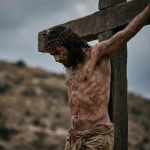
December 28, 2025
The Problem With A God Who Does Not Suffer
Next Post

January 11, 2026 Images Of God
Recent Comments
"Why would it matter if atheism is wrong? The fact that Catholic and Protestant scholars ..."
Beyond the Absence of Belief: The ..."
"Kaiser Member Service Proponents often compare atheism to not collecting stamps—it is the lack of ..."
Beyond the Absence of Belief: The ..."
""these dual denials (objective truth and objective meaning)"This is not accurate. Post-modern thought does not ..."
Defending the Faith in a Post-Truth ..."
"The theologians still haven't received the memo. Your opposition are no longer atheists, but they ..."
Defending the Faith in a Post-Truth ..."
Browse Our Archives
Select a Category Abortion Atheism Catholicism. Catholicism. God. Theophany. Christmas Eschatology Faith and Works. God. Holy Spirit Intelligent Design Jesus Christ Justice Law Politics Protestantism Religion Sabbath Salvation. Soteriology. The Bible Theology Uncategorized
Select a Month October 2026 September 2026 August 2026 July 2026 June 2026 May 2026 April 2026 March 2026 February 2026 January 2026 December 2025 November 2025 October 2025 September 2025 August 2025 July 2025 June 2025 May 2025 April 2025 March 2025 February 2025 January 2025 December 2024 November 2024 October 2024 September 2024 August 2024 July 2024 June 2024 May 2024 April 2024 March 2024 February 2024 January 2024 December 2023 November 2023 October 2023 September 2023 August 2023 July 2023 June 2023 May 2023 April 2023 March 2023 February 2023 January 2023 December 2022 November 2022 October 2022 September 2022 August 2022 July 2022 June 2022 May 2022 April 2022 March 2022 February 2022 January 2022 December 2021
Follow Us!
TAKE THE
Religious Wisdom Quiz
What were the first man and woman’s names in the Bible?
Select your answer to see how you score.
Samson and Delilah Adam and Eve Jacob and Rachel Joseph and Mary
Related posts from Summa Catholic

The Anatomy of Divine Revelation in Catholic Thought

Beyond the Absence of Belief: The Implications of...

Can Catholic Apologetics Survive a Postmodern World?

From Samaria to Sanctity: Analyzing The Woman At...
TRENDING AT PATHEOS Catholic

Rejecting Doom: Christian Hope And Human Action
Christianity is a religion of hope. We are to have hope and...

It’s What Comes From Within Which Matters
One of the most difficult things for us to understand is why...

Why I Choose the Eucharist Over the Sermon
Choose the Eucharist, Not the Sermon What are we supposed to get...

5 Design Elements Found in Spiritually Rooted Homes
Putting Spirituality Into Home Decor Our homes are more than our living...

Credo: A Story of God Told with the...
About 10 years ago, I began to imagine a personal "Credo" that...

The Anatomy of Divine Revelation in Catholic Thought
The claim that God has made Himself known to human beings is...
view all Catholic blogs
What Are Your Thoughts?leave a comment
Ad-Free & Subscriber Log-In Subscription Support
- About Us
- 2026 Calendar
- Videos
- Podcasts
- Library of World Religions
- Faith In Media Tracker
- Advertise With Us
- Write for Us
- Privacy Policy
- Terms of Service
- Do Not Sell My Data
- Contact Us
- Radiant Digital
- Manage Newsletter Subscriptions
- Unsubscribe From Notifications
- Sitemap
Copyright 2008-2026, Patheos. All rights reserved.
Subscription Support Ad-Free & Subscriber Log-In
Follow Patheos