
BuddhistCatholicContemplativeEvangelicalGeneral ChristianHinduJewishLatter-day SaintMuslimNew VisionsProgressive Christian
Beliefs
- Buddhist
- Catholic
- Contemplative
- Evangelical
- General Christian
- Hindu
- Jewish
- Latter-day Saint
- More Voices
- Muslim
- New Visions
- Pagan
- Progressive Christian
Topics
- Religion News
- Food and Religion
- Sports and Religion
- Religious Art
- Religious Music and Entertainment
- Religious Events
- History and Religion
- Style and Religion
- Politics and Religion
- Women in Religion
- Recreation Outdoors and Religion
- Business Finance and Religion
- Careers Workplace and Religion
- Education and Religion
- Family Parenting and Religion
- Health Fitness and Religion
- Home and Religion
- Relationships and Religion
- Technology and Religion
- Travel and Religion
Columnists
- Buddhist Columnists
- Business Finance and Religion Columnists
- Careers Workplace and Religion Columnists
- Catholic Columnists
- Contemplative Columnists
- Education and Religion Columnists
- Evangelists Columnists
- Family Parenting and Religion Columnists
- General Christian Columnists
- Health Fitness and Religion Columnists
- Hindu Columnists
- History and Religion Columnists
- Home and Religion Columnists
- Jewish Columnists
- More Voices Columnists
- Latter Day Columnists
- Muslim Columnists
- New Visions Columnists
- Nonreligious Columnists
- Pagan Columnists
- Politics and Religion Columnists
- Progressive Columnists
- Recreation Outdoors and Religion Columnists
- Relationships and Religion Columnists
- Religion News Columnists
- Religious Art Columnists
- Religious Events Columnists
- Religious Music and Entertainment Columnists
- Sports and Religion Columnists
- Style and Religion Columnists
- Technology and Religion Columnists
- Travel and Religion Columnists
- Women in Religion Columnists
Resource Library
- 2026 Calendar
- Library of World Religions
- The 100 Most Holy Places on Earth
- Patheos Answers
- Podcasts
- Videos
- Faith Leaders Database
- Anglican Episcopalian
- Bahai
- Baptist
- Buddhism
- Christianity
- Confucianism
- Eastern Orthodoxy
- Hinduism
- Holiness and Pentecostal
- ISKCON
- Islam
- Judaism
- Lutheran
- Methodist
- The Church of Jesus Christ of Latter-day Saints
- New Age
- Paganism
- Presbytarian and Reformed
- Protestantism
- Religion Behind the Scenes
- Roman Catholic
- Scientology
- Shia Islam
- Sikhism
- Sufism
- Sunni Islam
- Taoism
- Zen
- See all religions
Research Tools
 Ad-Free & Subscriber Log-In Subscription Support
Ad-Free & Subscriber Log-In Subscription Support
Follow Patheos 

- Trending:
- Forgiveness
- |
- Marriage
- |
- Consciousness
- |
- Death Penalty
- |
- Election
- |
- Halloween

- Home
- Catholic
- Education and Religion
- The Theology of Pope Leo XIV
The Theology of Pope Leo XIV
Last updated on: August 24, 2025 at 11:47 am by David Schloss
The Theology of Pope Leo XIV 2025-08-24T11:47:45-04:00 David Schloss
Patheos Explore the world's faith through different perspectives on religion and spirituality! Patheos has the views of the prevalent religions and spiritualities of the world.
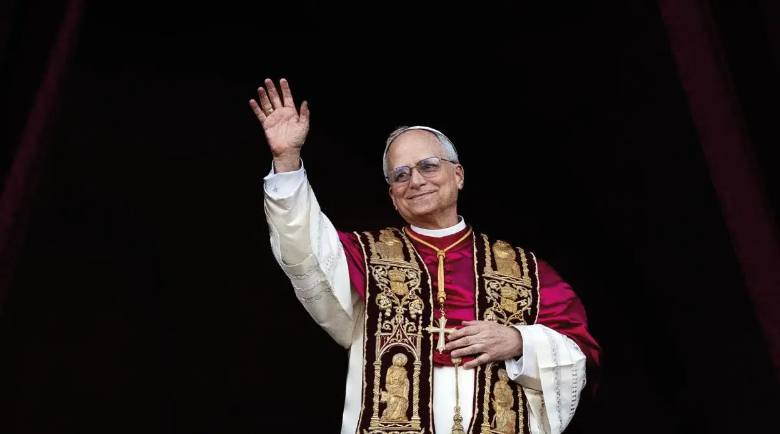
Photo By Mazur/cbcew.org.uk.
Pope Leo XIV is a pope of firsts. He is the first American to be elected pope, as well as the first pope to come from the Order of Saint Augustine.
In this paper, I want to examine the theological beliefs of Pope Leo through an examination of the people and institutions that have influenced him. First, however, it behooves us to review the personal history of Pope Leo XIV.
The Formation Of A Pope
The child of Italian and French immigrants, Robert Prevost was born in Chicago on September 14, 1955. Prevost’s parents were practicing Catholics, and the future pope was exposed to the intricacies of the Catholic Church at a young age.
Interestingly, Prevost became a friar in the Order of Saint Augustine before being ordained a priest. Despite obtaining a degree in canon law, Father Prevost’s early service was almost exclusively as a missionary in Peru. The pastoral nature of his early religious and priestly experience is likely something that has remained a part of his philosophy.
This missionary time of his priesthood would end when he was elected prior general of the Order of Saint Augustine. The promotion required that he be based in Rome from 2001 to 2013. However, Father Prevost would return to Peru as Bishop of Chiclayo from 2015 to 2023.
Upon being appointed as a Cardinal, Prevost’s focus turned to synodality, missionary dialogue, and engagement with social and technological challenges. Significantly, Cardinal Prevost expressed solidarity with the reforms of the Second Vatican Council.
On May 8, 2025, Cardinal Prevost became Pope Leo XIV.
Influences And Inspirations
We are, as the adage goes, the sum of our experiences. When we are young, those experiences shape and mold who we will be in old age. No one, not even popes, is entirely devoid of the influence of others. To examine the theological positions of Pope Leo XIV, I want to briefly examine those who influenced him. First, the significance of the name Leo XIV, in his own words.
“… I chose to take the name Leo XIV. There are different reasons for this, but mainly because Pope Leo XIII, in his historic Encyclical Rerum Novarum, addressed the social question in the context of the first great industrial revolution. In our own day, the Church offers to everyone the treasury of her social teaching in response to another industrial revolution and to developments in the field of artificial intelligence that pose new challenges for the defence of human dignity, justice, and labor.” (Pope Leo’s inaugural address to the College of Cardinals).
In providing the reasoning for choosing Pope Leo XIV as his pontifical name, the pope stresses the significance of creating a dialogue between science and conscience; to balance the tremendous scientific advances of our time with the timeless instruction of the Catholic Church, specifically in matters of social teaching.
The second source that can help illuminate the theological positions of Pope Leo involves examining those individuals who may have influenced his theology. Pope Leo credits his parents’ Catholic faith, along with a Marian devotion, for forming his early faith and religious practices.
As indicated above, Pope Leo XIV was a member of the Order of Augustines. It can be of no surprise, therefore, that the Order has significantly influenced his theological views.
A Theological Brief
The Augustinian influence on Pope Leo is immediately apparent in his choice of a personal motto, In illo Uno unum (In the One, we are one). The motto appears to be taken from Saint Augustine’s exposition on Psalm 127, and is suggestive of the significance that ecumenism has in the pope’s theological philosophy. Of course, the breadth of Saint Augustine’s theology is beyond the scope of this essay. Nevertheless, it may be helpful to touch on the main points since they illuminate the pope’s own theology.
Augustine’s theology emphasized the damage incurred on human nature due to original sin and the importance of divine grace in affecting salvation apart from any human efforts. Saint Augustine’s position on evil has been very influential in Catholic philosophy, emphasizing that evil is not a creation of God but a consequence of human free will.
Of course, Saint Augustine is not the sole theological influence. Pope Leo’s stress on religious unity and care of the poor continues the trend of his predecessor, Pope Francis, and may provide additional data as to the views of the new pope.
Lastly, it appears that Vatican II has been a significant event in shaping Pope Leo’s own theological and ecclesial positions.
Vatican II placed an emphasis on applying Catholic moral principles within the context of scripture and conscience. In turn, scripture was to be understood critically, emphasizing the author’s context and intent. This meant de-emphasizing a literal interpretation of the text. Another aspect of Vatican II that may significantly affect Pope Leo’s papacy is the Council’s vision of the Church as the People of God. At its core, this position means eschewing a strictly hierarchical Church. Rather, the Council envisioned the laity becoming a greater force for evangelization.
These various forces are likely to influence Pope Leo’s doctrinal approach, as well. As evidence of this, the pope has described doctrine as “a synonym of science, discipline, and knowledge.” This approach would mean that doctrine is not simply the judgment of the pope and magisterium, but rather a product of research, hypotheses, discussions, and progress aimed at conveying a reliable, organized, and systematic body of knowledge about a given issue.
Conclusion
Although the fundamental teachings of the Catholic Church are perennial, each pope brings with him a distinct agenda and vision for the Church. That is to say nothing of leadership styles.
Pope Leo’s strong Augustinian influence and his pastoral disposition would seem to bode well for his papacy. As with all things, however, God and time will be the final judge.
Education and Religion
History and Religion
Previous Post
August 17, 2025
Prayer And Perservance
Next Post
August 31, 2025 Do We Inherit Salvation?
Recent Comments
"Why would it matter if atheism is wrong? The fact that Catholic and Protestant scholars ..."
Beyond the Absence of Belief: The ..."
"Kaiser Member Service Proponents often compare atheism to not collecting stamps—it is the lack of ..."
Beyond the Absence of Belief: The ..."
""these dual denials (objective truth and objective meaning)"This is not accurate. Post-modern thought does not ..."
Defending the Faith in a Post-Truth ..."
"The theologians still haven't received the memo. Your opposition are no longer atheists, but they ..."
Defending the Faith in a Post-Truth ..."
Browse Our Archives
Select a Category Abortion Atheism Catholicism. Catholicism. God. Theophany. Christmas Eschatology Faith and Works. God. Holy Spirit Intelligent Design Jesus Christ Justice Law Politics Protestantism Religion Sabbath Salvation. Soteriology. The Bible Theology Uncategorized
Select a Month October 2026 September 2026 August 2026 July 2026 June 2026 May 2026 April 2026 March 2026 February 2026 January 2026 December 2025 November 2025 October 2025 September 2025 August 2025 July 2025 June 2025 May 2025 April 2025 March 2025 February 2025 January 2025 December 2024 November 2024 October 2024 September 2024 August 2024 July 2024 June 2024 May 2024 April 2024 March 2024 February 2024 January 2024 December 2023 November 2023 October 2023 September 2023 August 2023 July 2023 June 2023 May 2023 April 2023 March 2023 February 2023 January 2023 December 2022 November 2022 October 2022 September 2022 August 2022 July 2022 June 2022 May 2022 April 2022 March 2022 February 2022 January 2022 December 2021
Follow Us!
TAKE THE
Religious Wisdom Quiz
What was the primary form of transportation in Biblical times?
Select your answer to see how you score.
Horse Donkey Chariot Camel
Related posts from Summa Catholic
Creation, Preservation, and Teleology in Catholic Theology

The Anatomy of Divine Revelation in Catholic Thought

Beyond the Absence of Belief: The Implications of...

Can Catholic Apologetics Survive a Postmodern World?
TRENDING AT PATHEOS Catholic

Creation, Preservation, and Teleology in Catholic Theology
As I write this, it is very early Monday morning. Like millions...

The Parable Of The Sower And The Word...
One of Christ’s most famous parables is that of the sower who...

Rejecting Doom: Christian Hope And Human Action
Christianity is a religion of hope. We are to have hope and...

Why I Choose the Eucharist Over the Sermon
Choose the Eucharist, Not the Sermon What are we supposed to get...

5 Design Elements Found in Spiritually Rooted Homes
Putting Spirituality Into Home Decor Our homes are more than our living...

Credo: A Story of God Told with the...
About 10 years ago, I began to imagine a personal "Credo" that...
view all Catholic blogs
What Are Your Thoughts?leave a comment
Ad-Free & Subscriber Log-In Subscription Support
- About Us
- 2026 Calendar
- Videos
- Podcasts
- Library of World Religions
- Faith In Media Tracker
- Advertise With Us
- Write for Us
- Privacy Policy
- Terms of Service
- Do Not Sell My Data
- Contact Us
- Radiant Digital
- Manage Newsletter Subscriptions
- Unsubscribe From Notifications
- Sitemap
Copyright 2008-2026, Patheos. All rights reserved.
Subscription Support Ad-Free & Subscriber Log-In
Follow Patheos