
BuddhistCatholicContemplativeEvangelicalGeneral ChristianHinduJewishLatter-day SaintMuslimNew VisionsProgressive Christian
Beliefs
- Buddhist
- Catholic
- Contemplative
- Evangelical
- General Christian
- Hindu
- Jewish
- Latter-day Saint
- More Voices
- Muslim
- New Visions
- Pagan
- Progressive Christian
Topics
- Religion News
- Food and Religion
- Sports and Religion
- Religious Art
- Religious Music and Entertainment
- Religious Events
- History and Religion
- Style and Religion
- Politics and Religion
- Women in Religion
- Recreation Outdoors and Religion
- Business Finance and Religion
- Careers Workplace and Religion
- Education and Religion
- Family Parenting and Religion
- Health Fitness and Religion
- Home and Religion
- Relationships and Religion
- Technology and Religion
- Travel and Religion
Columnists
- Buddhist Columnists
- Business Finance and Religion Columnists
- Careers Workplace and Religion Columnists
- Catholic Columnists
- Contemplative Columnists
- Education and Religion Columnists
- Evangelists Columnists
- Family Parenting and Religion Columnists
- General Christian Columnists
- Health Fitness and Religion Columnists
- Hindu Columnists
- History and Religion Columnists
- Home and Religion Columnists
- Jewish Columnists
- More Voices Columnists
- Latter Day Columnists
- Muslim Columnists
- New Visions Columnists
- Nonreligious Columnists
- Pagan Columnists
- Politics and Religion Columnists
- Progressive Columnists
- Recreation Outdoors and Religion Columnists
- Relationships and Religion Columnists
- Religion News Columnists
- Religious Art Columnists
- Religious Events Columnists
- Religious Music and Entertainment Columnists
- Sports and Religion Columnists
- Style and Religion Columnists
- Technology and Religion Columnists
- Travel and Religion Columnists
- Women in Religion Columnists
Resource Library
- 2026 Calendar
- Library of World Religions
- The 100 Most Holy Places on Earth
- Patheos Answers
- Podcasts
- Videos
- Faith Leaders Database
- Anglican Episcopalian
- Bahai
- Baptist
- Buddhism
- Christianity
- Confucianism
- Eastern Orthodoxy
- Hinduism
- Holiness and Pentecostal
- ISKCON
- Islam
- Judaism
- Lutheran
- Methodist
- The Church of Jesus Christ of Latter-day Saints
- New Age
- Paganism
- Presbytarian and Reformed
- Protestantism
- Religion Behind the Scenes
- Roman Catholic
- Scientology
- Shia Islam
- Sikhism
- Sufism
- Sunni Islam
- Taoism
- Zen
- See all religions
Research Tools
 Ad-Free & Subscriber Log-In Subscription Support
Ad-Free & Subscriber Log-In Subscription Support
Follow Patheos 

- Trending:
- Forgiveness
- |
- Marriage
- |
- Consciousness
- |
- Death Penalty
- |
- Election
- |
- Halloween

- Home
- Catholic
- Education and Religion
- Prayer And Perservance
Prayer And Perservance
Last updated on: August 17, 2025 at 11:16 am by David Schloss
Prayer And Perservance 2025-08-17T11:16:12-04:00 David Schloss
Patheos Explore the world's faith through different perspectives on religion and spirituality! Patheos has the views of the prevalent religions and spiritualities of the world.
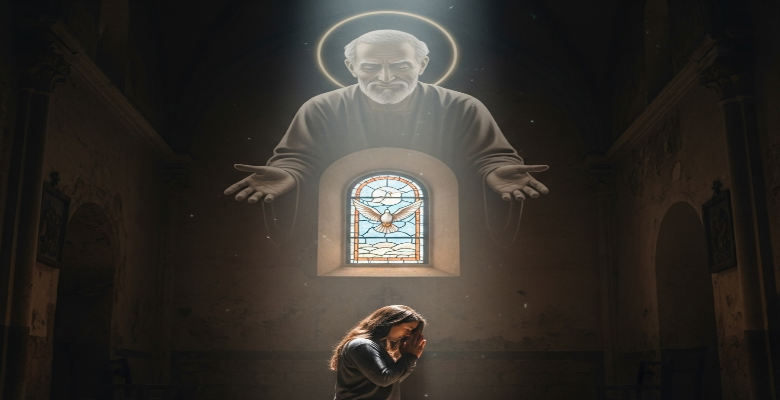
From the whisper of a Rosary to the grand liturgy of the Mass, prayer is the heartbeat of Catholic life. However, beneath this ancient practice lie two profound questions. Both questions must be asked in the light of the nature of God. First, why is prayer necessary, and second, should we persist in prayer?
Why Pray?
Before answering, it may be beneficial to define what Catholicism means by prayer.
The most artful and accurate answer is that prayer is a lifting of the heart (the emotional aspect of a person) and mind (the rational aspect of a person) to God. Prayer, as such, is an act of communication.
As indicated, this communication with God can take different forms. It can be as simple as a mental prayer or as complex as the Catholic Mass. Prayer can also take the form of reading spiritual works or engaging in lectio divina (divine reading) when reading Scripture.
A succinct answer to the question of why we should pray is that God has commanded us to do so. Catholics are told to “pray without ceasing,” and to avoid losing heart in prayer. (Luke 18:1).
These verses segue nicely into the importance of perseverance in one’s prayer life.
Two Tales Of Preservance
I want to examine two biblical passages that illustrate the significance of persevering in prayer.
The first instance comes from the Old Testament. In Genesis 18:20-32, Abraham is depicted as “negotiating” with God over the fate of Sodom and Gomorrah.
Abraham said, “Will you really sweep away the righteous with the wicked? Suppose there were fifty righteous people in the city; would you really sweep away and not spare the place for the sake of the fifty righteous people within it?… The Lord replied: ‘If I find fifty righteous people in the city of Sodom, I will spare the whole place for their sake.’ Abraham spoke up again: ‘See how I am presuming to speak to my Lord, though I am only dust and ashes! What if there are five less than fifty righteous people? Will you destroy the whole city because of those five?’ ‘I will not destroy it, he answered, if I find forty-five there.’ But Abraham persisted, saying, ‘What if only forty are found there?’ He replied: ‘I will refrain from doing it for the sake of the forty.’ Then he said, ‘Do not let my Lord be angry if I go on. What if only thirty are found there?’ He replied: ‘I will refrain from doing it if I can find thirty there.’ Abraham went on … ’What if there are no more than twenty?’ ‘I will not destroy it, he answered, for the sake of the twenty.’ But he persisted: ‘Please, do not let my Lord be angry if I speak up this last time. What if ten are found there?’ ‘For the sake of the ten, he replied, I will not destroy it.”
Unfortunately, God did not find even ten righteous people in Sodom and Gomorrah. Nevertheless, it is clear from the passage that God responded to Abraham’s persistence.
In the second example, from Matthew 7:7-8, Jesus comments on the effectiveness of persistence in prayer: “Ask and it will be given to you; seek and you will find; knock and the door will be opened to you. For everyone who asks, receives; and the one who seeks, finds; and to the one who knocks, the door will be opened.”
The practice of persevering in prayer may seem logical, but it seems to raise a theological problem.
Changing God’s Mind?
Prayer in general, and praying with perseverance specifically, presents theology with a dilemma.
In particular, prayer presents two questions. Accepting that God is omniscient, why pray at all? After all, if God knows our needs before we ask Him, why bother asking? (Matthew 6:8).
The second problem is more philosophical than religious. Because God is the uncaused cause of existence, He is said to be actus purus or pure act. God eternally lacks nothing and requires nothing. Moreover, that which exists as pure act does not change. (Hebrews 13:8). However, prayer, at least petitionary prayer, is an effort to “change God’s mind,” so to speak.
The answer to the first question is that it is human beings who need to pray. Living things seek their own happiness. This is most completely effected by the perfecting of a thing’s nature. Since humans are made in God’s image, human nature is perfected in God. As Saint Augustine observed, “Our heart is restless until it rests in you.” In this sense, true happiness lies in being in communion with God, which is precisely what prayer and worship accomplish.
The second problem involves persistence in prayer. As indicated above, God does not change, yet the intention of petitionary prayer is, it seems, to do just that; to change the mind or will of God. Why persist in praying if God is unmoved by it?
First, we must observe that while human beings pray in time, God listens in eternity. Actions, including prayer, are sequential when they occur in time. However, as God exists in eternity, every action – past, present, and future – appears to Him in the present. Owing to this, God does not change with respect to time, nor can it be said that God is changed by prayer since change is an aspect of time.
Nevertheless, this is not to imply that prayer is only valuable for perfecting human nature. Rather, prayer can also be understood as a kind of divine cause-and-effect relationship. God not only wills the effects, but He also wills the cause. For example, God wills that all men be saved (1 Timothy 3-4), and He also wills that we work out our salvation (Philippians 2:12).
In this sense, prayer becomes extremely powerful as a proximate cause (admittedly among numerous causes) that God has willed in order to establish an effect. Put another way, prayer becomes an instrument in God’s plan.
Conclusion
In essence, prayer is not about changing God, but rather about aligning oneself with God’s will through communication and petition. God’s immutability ensures that His promises and character remain steadfast, providing a solid foundation for faith and prayer.
Education and Religion
History and Religion
Previous Post

August 10, 2025
Human Knowledge And The Existence Of God
Next Post
August 24, 2025 The Theology of Pope Leo XIV
Recent Comments
"Why would it matter if atheism is wrong? The fact that Catholic and Protestant scholars ..."
Beyond the Absence of Belief: The ..."
"Kaiser Member Service Proponents often compare atheism to not collecting stamps—it is the lack of ..."
Beyond the Absence of Belief: The ..."
""these dual denials (objective truth and objective meaning)"This is not accurate. Post-modern thought does not ..."
Defending the Faith in a Post-Truth ..."
"The theologians still haven't received the memo. Your opposition are no longer atheists, but they ..."
Defending the Faith in a Post-Truth ..."
Browse Our Archives
Select a Category Abortion Atheism Catholicism. Catholicism. God. Theophany. Christmas Eschatology Faith and Works. God. Holy Spirit Intelligent Design Jesus Christ Justice Law Politics Protestantism Religion Sabbath Salvation. Soteriology. The Bible Theology Uncategorized
Select a Month October 2026 September 2026 August 2026 July 2026 June 2026 May 2026 April 2026 March 2026 February 2026 January 2026 December 2025 November 2025 October 2025 September 2025 August 2025 July 2025 June 2025 May 2025 April 2025 March 2025 February 2025 January 2025 December 2024 November 2024 October 2024 September 2024 August 2024 July 2024 June 2024 May 2024 April 2024 March 2024 February 2024 January 2024 December 2023 November 2023 October 2023 September 2023 August 2023 July 2023 June 2023 May 2023 April 2023 March 2023 February 2023 January 2023 December 2022 November 2022 October 2022 September 2022 August 2022 July 2022 June 2022 May 2022 April 2022 March 2022 February 2022 January 2022 December 2021
Follow Us!
TAKE THE
Religious Wisdom Quiz
Who prophesied about the birth of Jesus in the Old Testament?
Select your answer to see how you score.
Isaiah Jeremiah Ezekiel Daniel
Related posts from Summa Catholic

The Anatomy of Divine Revelation in Catholic Thought

Beyond the Absence of Belief: The Implications of...

Can Catholic Apologetics Survive a Postmodern World?

From Samaria to Sanctity: Analyzing The Woman At...
TRENDING AT PATHEOS Catholic

The Parable Of The Sower And The Word...
One of Christ’s most famous parables is that of the sower who...

Rejecting Doom: Christian Hope And Human Action
Christianity is a religion of hope. We are to have hope and...

Why I Choose the Eucharist Over the Sermon
Choose the Eucharist, Not the Sermon What are we supposed to get...

5 Design Elements Found in Spiritually Rooted Homes
Putting Spirituality Into Home Decor Our homes are more than our living...

Credo: A Story of God Told with the...
About 10 years ago, I began to imagine a personal "Credo" that...

The Anatomy of Divine Revelation in Catholic Thought
The claim that God has made Himself known to human beings is...
view all Catholic blogs
What Are Your Thoughts?leave a comment
Ad-Free & Subscriber Log-In Subscription Support
- About Us
- 2026 Calendar
- Videos
- Podcasts
- Library of World Religions
- Faith In Media Tracker
- Advertise With Us
- Write for Us
- Privacy Policy
- Terms of Service
- Do Not Sell My Data
- Contact Us
- Radiant Digital
- Manage Newsletter Subscriptions
- Unsubscribe From Notifications
- Sitemap
Copyright 2008-2026, Patheos. All rights reserved.
Subscription Support Ad-Free & Subscriber Log-In
Follow Patheos