
BuddhistCatholicContemplativeEvangelicalGeneral ChristianHinduJewishLatter-day SaintMuslimNew VisionsProgressive Christian
Beliefs
- Buddhist
- Catholic
- Contemplative
- Evangelical
- General Christian
- Hindu
- Jewish
- Latter-day Saint
- More Voices
- Muslim
- New Visions
- Pagan
- Progressive Christian
Topics
- Religion News
- Food and Religion
- Sports and Religion
- Religious Art
- Religious Music and Entertainment
- Religious Events
- History and Religion
- Style and Religion
- Politics and Religion
- Women in Religion
- Recreation Outdoors and Religion
- Business Finance and Religion
- Careers Workplace and Religion
- Education and Religion
- Family Parenting and Religion
- Health Fitness and Religion
- Home and Religion
- Relationships and Religion
- Technology and Religion
- Travel and Religion
Columnists
- Buddhist Columnists
- Business Finance and Religion Columnists
- Careers Workplace and Religion Columnists
- Catholic Columnists
- Contemplative Columnists
- Education and Religion Columnists
- Evangelists Columnists
- Family Parenting and Religion Columnists
- General Christian Columnists
- Health Fitness and Religion Columnists
- Hindu Columnists
- History and Religion Columnists
- Home and Religion Columnists
- Jewish Columnists
- More Voices Columnists
- Latter Day Columnists
- Muslim Columnists
- New Visions Columnists
- Nonreligious Columnists
- Pagan Columnists
- Politics and Religion Columnists
- Progressive Columnists
- Recreation Outdoors and Religion Columnists
- Relationships and Religion Columnists
- Religion News Columnists
- Religious Art Columnists
- Religious Events Columnists
- Religious Music and Entertainment Columnists
- Sports and Religion Columnists
- Style and Religion Columnists
- Technology and Religion Columnists
- Travel and Religion Columnists
- Women in Religion Columnists
Resource Library
- 2026 Calendar
- Library of World Religions
- The 100 Most Holy Places on Earth
- Patheos Answers
- Podcasts
- Videos
- Faith Leaders Database
- Anglican Episcopalian
- Bahai
- Baptist
- Buddhism
- Christianity
- Confucianism
- Eastern Orthodoxy
- Hinduism
- Holiness and Pentecostal
- ISKCON
- Islam
- Judaism
- Lutheran
- Methodist
- The Church of Jesus Christ of Latter-day Saints
- New Age
- Paganism
- Presbytarian and Reformed
- Protestantism
- Religion Behind the Scenes
- Roman Catholic
- Scientology
- Shia Islam
- Sikhism
- Sufism
- Sunni Islam
- Taoism
- Zen
- See all religions
Research Tools
 Ad-Free & Subscriber Log-In Subscription Support
Ad-Free & Subscriber Log-In Subscription Support
Follow Patheos 

- Trending:
- Forgiveness
- |
- Marriage
- |
- Consciousness
- |
- Death Penalty
- |
- Election
- |
- Halloween

- Home
- Catholic
- Education and Religion
- Of Spirit And Flesh
Of Spirit And Flesh
Last updated on: July 27, 2025 at 12:11 pm by David Schloss
Of Spirit And Flesh 2025-07-27T12:11:08-04:00 David Schloss
Patheos Explore the world's faith through different perspectives on religion and spirituality! Patheos has the views of the prevalent religions and spiritualities of the world.
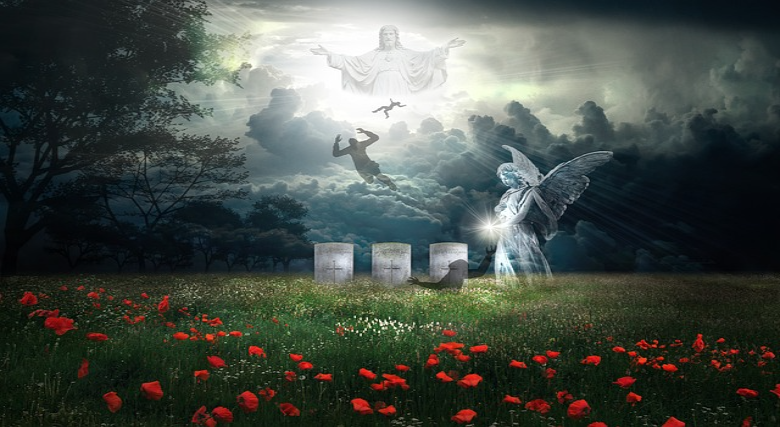
Art By Alan Dobson.
As Catholics, we are to walk in the spirit, not the flesh (Galatians 5:16-26). This concept reflects the inherent duality of the human person, which comprises both a physical body and a spiritual soul. In this essay, I will explore spiritual theology, a branch of theology that emphasizes living in the spirit rather than living in the flesh.
Spiritual Theology
Theology qua theology is the science of studying God. Spiritual theology may be defined as that aspect of theology that, proceeding from the truths of divine revelation and the religious experience of individual persons, establishes the nature of the supernatural life.
Spiritual theology, therefore, examines the stages of the Holy Spirit’s work within the depths of the human being. In a sense, spiritual theology may be said to differ from theology in three respects: light, object, and angle.
The light used in theology is the general light of faith. However, the light used in spiritual theology goes from the first stages of the supernatural action of the Holy Spirit to its fullness.
The object considered in theology is revelation, or, more accurately, the contents of revelation. In comparison, the object in spiritual theology is the transformations that occur in the soul and spirit under the different modes of action of the Holy Spirit. Finally, the angle or understanding of the spiritual journey, along with the necessary discernment that accompanies it, are among the most critical and challenging aspects of spiritual theology.
It is, therefore, necessary to formulate directives for the individual’s growth and development, while simultaneously explaining the process by which souls advance from the beginning of their spiritual life to complete perfection. How can this be accomplished?
According to spiritual theology, in order to attain “perfection” in the Christian life, one must practice vocal prayer, contemplative prayer, and meditation. Additionally, one must avoid sin and be dedicated to serving God. From the Catholic perspective, this involves sacraments such as confession and the Eucharist.
Ultimately, this process of perfection entails three stages and draws heavily from the work of Saint John of the Cross and Saint Teresa of Avila.
The Dark Night Of The Soul
In his seminal poem, Saint John of the Cross outlines three stages that a soul experiences as it seeks to draw closer to union with God. It is worth noting that these three stages are not always or necessarily linear.
The first stage of development involves cleansing the soul of any obstacles that impede its spiritual growth. For this reason, it is referred to as the purgative way. At this level, the individual is tasked with rejecting all vices, attachments, and worldly desires that prevent the soul from ascending to God. This stage can be likened to purging a log of any moisture to prepare it for burning. As indicated above, this stage also involves actively seeking to know God through prayer and meditation.
The second stage is called the illuminative way. The name of this stage is somewhat ironic, considering that it is here that the soul experiences a more profound purification, often involving a “dark night” experience where the soul feels a sense of dryness and a withdrawal of God’s presence. Nevertheless, it is at this stage that one becomes increasingly enlightened and aware of spiritual matters and virtues. The individual progresses in contemplation, gaining a clearer understanding of God’s will. The mind becomes more focused on God, and the soul begins to develop a more profound relationship with the Divine.
Although it is considered a passive purification, it is at this point that God leads the soul through trials and temptations to strengthen it in virtue and prepare it for a deeper union. Despite the tribulations that one endures, it is here that God’s grace increasingly enlightens the soul, allowing the soul to grow in contemplation.
The third and final stage is a spiritual marriage, referred to as the unitive way. In this last step, the soul completes its transformation and is united with God. Here, the individual begins to experience a deep and abiding love and peace as the soul experiences a profound union with God. A selfless love for God and others characterizes this stage. Moreover, the soul experiences a more constant awareness of God’s presence and a habitual disposition of conformity to God’s will.
In all of this, one sees a sense of mysticism in spiritual theology.
Spiritual Theology And The Mystic
Without question, there are elements of spiritual theology and mysticism that overlap. To distinguish between the two disciplines, it is beneficial to examine them under three aspects: scope, approach, and emphasis.
For the most part, spiritual theology is a broader subject that encompasses the entire process of spiritual growth and development within a theological framework. Mysticism is more specific, focusing on the direct, experiential encounter with the Divine.
Different, too, are the approaches each takes.
Spiritual theology involves study, reflection, and the application of various doctrines and practices that nurture the spiritual life. Mysticism accentuates personal experience, intuition, and practices designed to transcend ordinary consciousness, thereby achieving a direct connection with the Divine.
Finally, spiritual theology and mysticism differ in their focus. Spiritual theology may emphasize understanding the nature of God and how one relates to Him, while mysticism often focuses on the transformative potential of the direct experience with God.
Conclusion
If general theology is the science and study of God, then spiritual theology may be defined as the science of mastering the spiritual life.
Like all living things, human beings are composed of body and soul. Modern society tends to heavily emphasize the body or material aspects of life to the exclusion of the spiritual. To some extent, spiritual theology seeks to rectify this imbalance.
General Christian
Education and Religion
History and Religion
Previous Post
July 20, 2025
Catholicism Within the Christian Tradition
Next Post

August 3, 2025 The Three Occupations Of God
Recent Comments
"Why would it matter if atheism is wrong? The fact that Catholic and Protestant scholars ..."
Beyond the Absence of Belief: The ..."
"Kaiser Member Service Proponents often compare atheism to not collecting stamps—it is the lack of ..."
Beyond the Absence of Belief: The ..."
""these dual denials (objective truth and objective meaning)"This is not accurate. Post-modern thought does not ..."
Defending the Faith in a Post-Truth ..."
"The theologians still haven't received the memo. Your opposition are no longer atheists, but they ..."
Defending the Faith in a Post-Truth ..."
Browse Our Archives
Select a Category Abortion Atheism Catholicism. Catholicism. God. Theophany. Christmas Eschatology Faith and Works. God. Holy Spirit Intelligent Design Jesus Christ Justice Law Politics Protestantism Religion Sabbath Salvation. Soteriology. The Bible Theology Uncategorized
Select a Month October 2026 September 2026 August 2026 July 2026 June 2026 May 2026 April 2026 March 2026 February 2026 January 2026 December 2025 November 2025 October 2025 September 2025 August 2025 July 2025 June 2025 May 2025 April 2025 March 2025 February 2025 January 2025 December 2024 November 2024 October 2024 September 2024 August 2024 July 2024 June 2024 May 2024 April 2024 March 2024 February 2024 January 2024 December 2023 November 2023 October 2023 September 2023 August 2023 July 2023 June 2023 May 2023 April 2023 March 2023 February 2023 January 2023 December 2022 November 2022 October 2022 September 2022 August 2022 July 2022 June 2022 May 2022 April 2022 March 2022 February 2022 January 2022 December 2021
Follow Us!
TAKE THE
Religious Wisdom Quiz
In what city did the disciples first preach to Gentiles and were first called Christians?
Select your answer to see how you score.
Jerusalem Corinth Antioch Ephesus
Related posts from Summa Catholic
Creation, Preservation, and Teleology in Catholic Theology

The Anatomy of Divine Revelation in Catholic Thought

Beyond the Absence of Belief: The Implications of...

Can Catholic Apologetics Survive a Postmodern World?
TRENDING AT PATHEOS Catholic

Creation, Preservation, and Teleology in Catholic Theology
As I write this, it is very early Monday morning. Like millions...

The Parable Of The Sower And The Word...
One of Christ’s most famous parables is that of the sower who...

Rejecting Doom: Christian Hope And Human Action
Christianity is a religion of hope. We are to have hope and...

Why I Choose the Eucharist Over the Sermon
Choose the Eucharist, Not the Sermon What are we supposed to get...

5 Design Elements Found in Spiritually Rooted Homes
Putting Spirituality Into Home Decor Our homes are more than our living...

Credo: A Story of God Told with the...
About 10 years ago, I began to imagine a personal "Credo" that...
view all Catholic blogs
What Are Your Thoughts?leave a comment
Ad-Free & Subscriber Log-In Subscription Support
- About Us
- 2026 Calendar
- Videos
- Podcasts
- Library of World Religions
- Faith In Media Tracker
- Advertise With Us
- Write for Us
- Privacy Policy
- Terms of Service
- Do Not Sell My Data
- Contact Us
- Radiant Digital
- Manage Newsletter Subscriptions
- Unsubscribe From Notifications
- Sitemap
Copyright 2008-2026, Patheos. All rights reserved.
Subscription Support Ad-Free & Subscriber Log-In
Follow Patheos