
BuddhistCatholicContemplativeEvangelicalGeneral ChristianHinduJewishLatter-day SaintMuslimNew VisionsProgressive Christian
Beliefs
- Buddhist
- Catholic
- Contemplative
- Evangelical
- General Christian
- Hindu
- Jewish
- Latter-day Saint
- More Voices
- Muslim
- New Visions
- Pagan
- Progressive Christian
Topics
- Religion News
- Food and Religion
- Sports and Religion
- Religious Art
- Religious Music and Entertainment
- Religious Events
- History and Religion
- Style and Religion
- Politics and Religion
- Women in Religion
- Recreation Outdoors and Religion
- Business Finance and Religion
- Careers Workplace and Religion
- Education and Religion
- Family Parenting and Religion
- Health Fitness and Religion
- Home and Religion
- Relationships and Religion
- Technology and Religion
- Travel and Religion
Columnists
- Buddhist Columnists
- Business Finance and Religion Columnists
- Careers Workplace and Religion Columnists
- Catholic Columnists
- Contemplative Columnists
- Education and Religion Columnists
- Evangelists Columnists
- Family Parenting and Religion Columnists
- General Christian Columnists
- Health Fitness and Religion Columnists
- Hindu Columnists
- History and Religion Columnists
- Home and Religion Columnists
- Jewish Columnists
- More Voices Columnists
- Latter Day Columnists
- Muslim Columnists
- New Visions Columnists
- Nonreligious Columnists
- Pagan Columnists
- Politics and Religion Columnists
- Progressive Columnists
- Recreation Outdoors and Religion Columnists
- Relationships and Religion Columnists
- Religion News Columnists
- Religious Art Columnists
- Religious Events Columnists
- Religious Music and Entertainment Columnists
- Sports and Religion Columnists
- Style and Religion Columnists
- Technology and Religion Columnists
- Travel and Religion Columnists
- Women in Religion Columnists
Resource Library
- 2026 Calendar
- Library of World Religions
- The 100 Most Holy Places on Earth
- Patheos Answers
- Podcasts
- Videos
- Faith Leaders Database
- Anglican Episcopalian
- Bahai
- Baptist
- Buddhism
- Christianity
- Confucianism
- Eastern Orthodoxy
- Hinduism
- Holiness and Pentecostal
- ISKCON
- Islam
- Judaism
- Lutheran
- Methodist
- The Church of Jesus Christ of Latter-day Saints
- New Age
- Paganism
- Presbytarian and Reformed
- Protestantism
- Religion Behind the Scenes
- Roman Catholic
- Scientology
- Shia Islam
- Sikhism
- Sufism
- Sunni Islam
- Taoism
- Zen
- See all religions
Research Tools
 Ad-Free & Subscriber Log-In Subscription Support
Ad-Free & Subscriber Log-In Subscription Support
Follow Patheos 

- Trending:
- Forgiveness
- |
- Marriage
- |
- Consciousness
- |
- Death Penalty
- |
- Election
- |
- Halloween

- Home
- Catholic
- History and Religion
- The Evolution Of Papal Authority
The Evolution Of Papal Authority
Last updated on: June 1, 2025 at 11:34 am by David Schloss
The Evolution Of Papal Authority 2025-06-01T11:34:52-04:00 David Schloss
Patheos Explore the world's faith through different perspectives on religion and spirituality! Patheos has the views of the prevalent religions and spiritualities of the world.
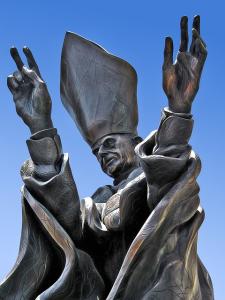
Art By Sergio Cerrato.
In light of the election of a new Pope, I thought it timely to examine one of the more controversial and misunderstood aspects of Catholicism: the existence and role of the Pope.
Specifically, I want to examine the evolution of papal authority and its impact on the Catholic Church throughout history.
Why A Pope?
A succinct answer for why Catholicism has a Pope is that God decreed the papacy.
Two Bible verses can support the belief that God created the papacy. In Matthew’s Gospel, Jesus ordains Peter as the first Pope of the Catholic Church. “And so I say to you, you are Peter, and upon this rock, I will build my Church, and the gates of the netherworld shall not prevail against it. I will give you the keys to the kingdom of heaven. Whatever you bind on earth shall be bound in heaven; and whatever you loose on earth shall be loosed in heaven.” (Matthew 16:18-19).
This verse is self-explanatory, with the possible exception of the second part. To bind and loose refers to the apostolic power to forgive sins. Said differently, whoever the apostles excluded from communion was to be excluded from communion with God; whoever the apostles allowed into communion with them, God also allowed communion with. Reconciliation with the Church is inseparable from reconciliation with God. (Catechism of the Catholic Church, Paragraph 1445).
The second significant passage related to the papacy occurs in John’s Gospel. “Simon, son of John [i.e., Peter], do you love me more than these?” He said to him, “Yes, Lord, you know that I love you.” He said to him, “Feed my lambs.” He then said to him a second time, “Simon, son of John, do you love me?” He said to him, “Yes, Lord, you know that I love you.” He said to him, “Tend my sheep.” He said to him the third time, “Simon, son of John, do you love me?” Peter was distressed that he had said to him a third time, “Do you love me?” and he said to him, “Lord, you know everything; you know that I love you.” Jesus said to him, “Feed my sheep.
In sticking with the metaphors frequently used by Christ, “sheep” refers to those who follow Jesus. Peter, as the first Pope, is being given the responsibility of caring for Christ’s followers (which is what the word Christian means).
The responsibility of caring for those “sheep” would become immense as Catholicism became the world’s largest religion and an influential power in both the spiritual and secular realms.
A Growing Force
In a sense, the Catholic Church is a kind of Jacob’s Ladder, partly in this world and partly in the next one. The Church in this world, referred to as the Church militant, would grow to become arguably the greatest force for good the world has seen.
To some extent, the growth of the papacy was tied to the emergence of the Roman Empire. As Rome became an increasingly important center of the faith, it gave the bishop of Rome (the Pope) more power over the entire Church, thereby ushering in the era of papal supremacy. The influence and power of the Pope grew even more so when Catholicism became the official religion of the Roman Empire in 380.
In the years following the fall of the Western Roman Empire, the Pope served as a source of authority and continuity. The Pope’s influence on Western Europe reached its pinnacle when Pope Leo III crowned Charlemagne as Roman Emperor in 800. This event established the precedent that no man would be emperor without being crowned by a Pope.
During the Middle Ages, Popes and monarchs wrestled for power. Through events such as the Investiture Controversy and the Crusades, the papacy increased its power in relation to the secular rulers of Europe.
In 1302, the papacy reached its peak in terms of claims to power with the issuing of Unam Sanctam (One Holy) by Pope Boniface VIII. Unam Sanctam declared that the Pope held supreme authority over both spiritual and temporal matters.
Nevertheless, various events would conspire to weaken the power of the Pope. Beginning in the fourteenth century, the Pope began residing in France instead of Rome. The move from Rome had the effect of diminishing the prestige of the papal office. Furthering the decline of papal power was the Great Western Schism, which saw as many as three men claiming to be the legitimate Pope.
In 1517, the Protestant Reformation challenged papal authority, with the likes of Martin Luther rejecting the Pope’s supremacy. As a response to the Reformation, the Council of Trent clarified Catholic doctrine and re-emphasized the role of the papacy in preserving unity and orthodoxy.
In 1870, the First Vatican Council declared a doctrine that would be a source of much controversy and confusion: papal infallibility.
A Perfect Pope?
Few, if any, of the Church’s doctrines are as controversial or misunderstood as papal infallibility.
The Church does not assert that the Pope is God or a perfect human being. Rather, beginning at the First Vatican Council, Catholicism declared that the Pope was infallible when, under certain conditions, he taught that a teaching was of divine and apostolic origin and, thus, an essential element in the deposit of faith. The particular and unique set of circumstances that render the Pope incapable of error is called ex-cathedra teachings.
Ex-cathedra is a Latin term translated as “from the chair.” The chair, in this case, is the chair of Peter. The term is commonly applied to the particular and explicit exercise of papal infallibility. For the teaching to be considered infallible, the Pope must speak on matters related only to faith and morality.
Conclusion
Ultimately, the Catholic Church simply takes Christ at His word. In giving Peter the “keys to Heaven,” He bequeathed to Peter and Peter’s successors the tremendous responsibility of leading God’s Church on earth. While controversial, it is not difficult to understand why Catholics believe that the Pope is God’s representative on earth.
History and Religion
Education and Religion
Previous Post

May 25, 2025
Do We Need A Conscience?
Next Post
June 8, 2025 Did Jesus Possess The Beatific Vision?
Recent Comments
"Why would it matter if atheism is wrong? The fact that Catholic and Protestant scholars ..."
Beyond the Absence of Belief: The ..."
"Kaiser Member Service Proponents often compare atheism to not collecting stamps—it is the lack of ..."
Beyond the Absence of Belief: The ..."
""these dual denials (objective truth and objective meaning)"This is not accurate. Post-modern thought does not ..."
Defending the Faith in a Post-Truth ..."
"The theologians still haven't received the memo. Your opposition are no longer atheists, but they ..."
Defending the Faith in a Post-Truth ..."
Browse Our Archives
Select a Category Abortion Atheism Catholicism. Catholicism. God. Theophany. Christmas Eschatology Faith and Works. God. Holy Spirit Intelligent Design Jesus Christ Justice Law Politics Protestantism Religion Sabbath Salvation. Soteriology. The Bible Theology Uncategorized
Select a Month October 2026 September 2026 August 2026 July 2026 June 2026 May 2026 April 2026 March 2026 February 2026 January 2026 December 2025 November 2025 October 2025 September 2025 August 2025 July 2025 June 2025 May 2025 April 2025 March 2025 February 2025 January 2025 December 2024 November 2024 October 2024 September 2024 August 2024 July 2024 June 2024 May 2024 April 2024 March 2024 February 2024 January 2024 December 2023 November 2023 October 2023 September 2023 August 2023 July 2023 June 2023 May 2023 April 2023 March 2023 February 2023 January 2023 December 2022 November 2022 October 2022 September 2022 August 2022 July 2022 June 2022 May 2022 April 2022 March 2022 February 2022 January 2022 December 2021
Follow Us!
TAKE THE
Religious Wisdom Quiz
Who said, "Come, follow me, and I will make you fishers of men"?
Select your answer to see how you score.
Peter Jesus Paul John the Baptist
Related posts from Summa Catholic

The Anatomy of Divine Revelation in Catholic Thought

Beyond the Absence of Belief: The Implications of...

Can Catholic Apologetics Survive a Postmodern World?

From Samaria to Sanctity: Analyzing The Woman At...
TRENDING AT PATHEOS Catholic

Rejecting Doom: Christian Hope And Human Action
Christianity is a religion of hope. We are to have hope and...

It’s What Comes From Within Which Matters
One of the most difficult things for us to understand is why...

Why I Choose the Eucharist Over the Sermon
Choose the Eucharist, Not the Sermon What are we supposed to get...

5 Design Elements Found in Spiritually Rooted Homes
Putting Spirituality Into Home Decor Our homes are more than our living...

Credo: A Story of God Told with the...
About 10 years ago, I began to imagine a personal "Credo" that...

The Anatomy of Divine Revelation in Catholic Thought
The claim that God has made Himself known to human beings is...
view all Catholic blogs
What Are Your Thoughts?leave a comment
Ad-Free & Subscriber Log-In Subscription Support
- About Us
- 2026 Calendar
- Videos
- Podcasts
- Library of World Religions
- Faith In Media Tracker
- Advertise With Us
- Write for Us
- Privacy Policy
- Terms of Service
- Do Not Sell My Data
- Contact Us
- Radiant Digital
- Manage Newsletter Subscriptions
- Unsubscribe From Notifications
- Sitemap
Copyright 2008-2026, Patheos. All rights reserved.
Subscription Support Ad-Free & Subscriber Log-In
Follow Patheos