
BuddhistCatholicContemplativeEvangelicalGeneral ChristianHinduJewishLatter-day SaintMuslimNew VisionsProgressive Christian
Beliefs
- Buddhist
- Catholic
- Contemplative
- Evangelical
- General Christian
- Hindu
- Jewish
- Latter-day Saint
- More Voices
- Muslim
- New Visions
- Pagan
- Progressive Christian
Topics
- Religion News
- Food and Religion
- Sports and Religion
- Religious Art
- Religious Music and Entertainment
- Religious Events
- History and Religion
- Style and Religion
- Politics and Religion
- Women in Religion
- Recreation Outdoors and Religion
- Business Finance and Religion
- Careers Workplace and Religion
- Education and Religion
- Family Parenting and Religion
- Health Fitness and Religion
- Home and Religion
- Relationships and Religion
- Technology and Religion
- Travel and Religion
Columnists
- Buddhist Columnists
- Business Finance and Religion Columnists
- Careers Workplace and Religion Columnists
- Catholic Columnists
- Contemplative Columnists
- Education and Religion Columnists
- Evangelists Columnists
- Family Parenting and Religion Columnists
- General Christian Columnists
- Health Fitness and Religion Columnists
- Hindu Columnists
- History and Religion Columnists
- Home and Religion Columnists
- Jewish Columnists
- More Voices Columnists
- Latter Day Columnists
- Muslim Columnists
- New Visions Columnists
- Nonreligious Columnists
- Pagan Columnists
- Politics and Religion Columnists
- Progressive Columnists
- Recreation Outdoors and Religion Columnists
- Relationships and Religion Columnists
- Religion News Columnists
- Religious Art Columnists
- Religious Events Columnists
- Religious Music and Entertainment Columnists
- Sports and Religion Columnists
- Style and Religion Columnists
- Technology and Religion Columnists
- Travel and Religion Columnists
- Women in Religion Columnists
Resource Library
- 2026 Calendar
- Library of World Religions
- The 100 Most Holy Places on Earth
- Patheos Answers
- Podcasts
- Videos
- Faith Leaders Database
- Anglican Episcopalian
- Bahai
- Baptist
- Buddhism
- Christianity
- Confucianism
- Eastern Orthodoxy
- Hinduism
- Holiness and Pentecostal
- ISKCON
- Islam
- Judaism
- Lutheran
- Methodist
- The Church of Jesus Christ of Latter-day Saints
- New Age
- Paganism
- Presbytarian and Reformed
- Protestantism
- Religion Behind the Scenes
- Roman Catholic
- Scientology
- Shia Islam
- Sikhism
- Sufism
- Sunni Islam
- Taoism
- Zen
- See all religions
Research Tools
 Ad-Free & Subscriber Log-In Subscription Support
Ad-Free & Subscriber Log-In Subscription Support
Follow Patheos 

- Trending:
- Forgiveness
- |
- Marriage
- |
- Consciousness
- |
- Death Penalty
- |
- Election
- |
- Halloween

- Home
- Catholic
- History and Religion
- Can Morality Exist Without God?
Can Morality Exist Without God?
Last updated on: July 3, 2025 at 11:56 am by David Schloss
Can Morality Exist Without God? 2025-07-03T11:56:20-04:00 David Schloss
Patheos Explore the world's faith through different perspectives on religion and spirituality! Patheos has the views of the prevalent religions and spiritualities of the world.
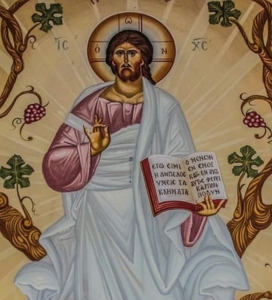
Morality may be defined as a code(s) of conduct accepted by a society or group. | Image by Dimitris Vetsikas from Pixabay.
Apart From Me
Christ’s use of parables and analogies plays a significant role in His teaching and preaching style. Their use is, for the most part, an effort to impart knowledge of a transcendent God to finite humans.
One such analogy occurs in John’s Gospel: “Remain in me, as I remain in you. Just as a branch cannot bear fruit on its own unless it remains on the vine, so neither can you unless you remain in me. I am the vine; you are the branches. Whoever remains in me and I in him will bear much fruit because, apart from me, you can do nothing. If you remain in me and my words remain in you, ask for whatever you want, and it will be done for you.”
As is often the case, there is much to digest from Christ’s words. However, for the purpose of this paper, I want to examine two aspects. First, whether morality can exist independently of God and, second, what are the value, if any, of so-called good works?
Reason And Morality
In keeping with the time and intended audience, Christ uses language associated with farming and horticulture (i.e., branch, fruit, and vine). As is His custom, Christ’s analogies have much greater importance than a plain language reading would imply. The text itself focuses on the importance of being united to Christ. From a Catholic perspective, being united to Christ has profound spiritual implications and is best achieved by participating in the sacraments entrusted to the Church by Christ, particularly the Eucharist.
However, for this essay, I want to utilize Christ’s words as a point of departure to inquire whether morality can exist if one is not united with Christ. Said differently, can morality exist if one does not abide in God?
Morality may be defined as a code(s) of conduct accepted by a society or group. In turn, morality can be categorized as descriptive or normative. Descriptive morality simply describes the current moral condition. Normative morality, on the other hand, refers to morality as a standard of how things should be. That is to say that it is a code of conduct that, given specified conditions, would be endorsed by all rational people. Nevertheless, the two aspects complement one another.
Universal Precepts
We cannot complain or praise our current moral state without contrasting it with an idealized state. Unless there is a standard that prohibits murder, we cannot say objectively that murder is wrong. This leads to the question, what is the source or creator of such a moral standard?
There are two fundamental possibilities. The first possibility argues that God (or some other transcendent source) is the cause of morality. In this context, morality is based on objective and universal precepts that are independent of human constructs and are, therefore, absolute.
The second possibility is that morality has a psychological source. In this sense, morality is a product of the human mind, predicated on empathy, feelings, and opinions, or it is the product of evolutionary psychology. A psychological source of morality is, of necessity, subjective. That is to say that the individual determines what is moral. An evolutionary source undermines free will, rendering it impossible to speak intelligibly of moral responsibility. After all, if one has no free will, one cannot be held responsible for one’s actions.
Subjective Morality
Catholicism is antithetical to subjectivism for several reasons; I want to mention two briefly. First, subjective morality at the societal level can lead to tyranny. Since there is no objective standard to judge morality, right and wrong become whatever those in power declare them to be. This is essentially the “might makes right” nightmare depicted in George Orwell’s “1984” and warned about by C.S. Lewis in “Abolition of Man.”
The second problem with subjective morality is more fundamental. Subjective morality is self-refuting. To claim that morality is subjective is to make an objective truth claim that there is no objective truth.
The above argument is philosophical in nature. It seems necessary, therefore, to ask whether God must be the source of objective morality.
Catholicism, of course, asserts that morality must be grounded in God. Since morality involves the rightness or wrongness of one’s actions, it follows that morality presupposes consciousness, and consciousness presupposes a mind. Since such a mind must be independent of human beings in order to be objective, the source of morality must be a transcendent mind, which is one way of saying God.
From what has been said, it appears that God has established a moral framework for human beings to follow. This framework, known as natural law, is the mind of God that is knowable to human beings through reason alone.
If that is the case, then it seems logical that we will be judged in relation to whether we have been moral. This leads us to the question of “works.”
Good Works
A common criticism of Catholicism is that it teaches a “works-based” soteriology. A works-based soteriology claims that one’s salvation is based at least in part on one’s actions. This is not a new criticism, of course. Ironically, the Catholic Church condemned works-based salvation when it confronted the teachings of the British monk Pelagius.
Pelagius thought that “good works” (moral acts) had a significant influence on one’s salvation. Pelagianism, as the heresy became known, was rejected by the Church at the Second Council of Orange (A.D. 529).
The Council was emphatic when it taught that “If anyone asserts that by his natural strength, he [sinful man] is able to think as is required or choose anything good pertaining to his eternal salvation, or to assent to the saving message of the Gospel without the illumination and inspiration of the Holy Spirit…he is deceived by a heretical spirit…does not understand… ‘Apart from me, you can do nothing.’ (John 15.5).”
It is the position of the Church – and Christ’s words in John’s Gospel echo here – that acting morally and any subsequent “good works” are a result of God’s grace alone. Apart from this grace, that is, apart from Christ, we cannot produce the good fruit of morality.
It is this causal relationship between grace and works that makes morality possible. For this reason, Jesus said to his disciples: “Not everyone who says to me, ‘Lord, Lord,’ will enter the Kingdom of Heaven, but only the one who does the will of my Father in Heaven.” (Matthew 7:21-22).
Conclusion
There are various ways to interpret John 15:4-7. For this essay, I have sought to focus on the necessity of an objective moral benchmark and the relationship between grace and works.
Catholics are called to “produce good fruit,” that is, act in accordance with the will of God and, in so doing, help bring forth the Kingdom of God.
History and Religion
Education and Religion
Previous Post

June 22, 2025
How Old Is The World?
Next Post
July 6, 2025 Why Did Jesus Have to Die? Understanding the Cross
Recent Comments
"Why would it matter if atheism is wrong? The fact that Catholic and Protestant scholars ..."
Beyond the Absence of Belief: The ..."
"Kaiser Member Service Proponents often compare atheism to not collecting stamps—it is the lack of ..."
Beyond the Absence of Belief: The ..."
""these dual denials (objective truth and objective meaning)"This is not accurate. Post-modern thought does not ..."
Defending the Faith in a Post-Truth ..."
"The theologians still haven't received the memo. Your opposition are no longer atheists, but they ..."
Defending the Faith in a Post-Truth ..."
Browse Our Archives
Select a Category Abortion Atheism Catholicism. Catholicism. God. Theophany. Christmas Eschatology Faith and Works. God. Holy Spirit Intelligent Design Jesus Christ Justice Law Politics Protestantism Religion Sabbath Salvation. Soteriology. The Bible Theology Uncategorized
Select a Month October 2026 September 2026 August 2026 July 2026 June 2026 May 2026 April 2026 March 2026 February 2026 January 2026 December 2025 November 2025 October 2025 September 2025 August 2025 July 2025 June 2025 May 2025 April 2025 March 2025 February 2025 January 2025 December 2024 November 2024 October 2024 September 2024 August 2024 July 2024 June 2024 May 2024 April 2024 March 2024 February 2024 January 2024 December 2023 November 2023 October 2023 September 2023 August 2023 July 2023 June 2023 May 2023 April 2023 March 2023 February 2023 January 2023 December 2022 November 2022 October 2022 September 2022 August 2022 July 2022 June 2022 May 2022 April 2022 March 2022 February 2022 January 2022 December 2021
Follow Us!
TAKE THE
Religious Wisdom Quiz
What foreign power destroyed Jerusalem, ending the kingdom of Judah?
Select your answer to see how you score.
Babylon Assyria Egypt Persia
Related posts from Summa Catholic

The Anatomy of Divine Revelation in Catholic Thought

Beyond the Absence of Belief: The Implications of...

Can Catholic Apologetics Survive a Postmodern World?

From Samaria to Sanctity: Analyzing The Woman At...
TRENDING AT PATHEOS Catholic

Rejecting Doom: Christian Hope And Human Action
Christianity is a religion of hope. We are to have hope and...

It’s What Comes From Within Which Matters
One of the most difficult things for us to understand is why...

Why I Choose the Eucharist Over the Sermon
Choose the Eucharist, Not the Sermon What are we supposed to get...

5 Design Elements Found in Spiritually Rooted Homes
Putting Spirituality Into Home Decor Our homes are more than our living...

Credo: A Story of God Told with the...
About 10 years ago, I began to imagine a personal "Credo" that...

The Anatomy of Divine Revelation in Catholic Thought
The claim that God has made Himself known to human beings is...
view all Catholic blogs
What Are Your Thoughts?leave a comment
Ad-Free & Subscriber Log-In Subscription Support
- About Us
- 2026 Calendar
- Videos
- Podcasts
- Library of World Religions
- Faith In Media Tracker
- Advertise With Us
- Write for Us
- Privacy Policy
- Terms of Service
- Do Not Sell My Data
- Contact Us
- Radiant Digital
- Manage Newsletter Subscriptions
- Unsubscribe From Notifications
- Sitemap
Copyright 2008-2026, Patheos. All rights reserved.
Subscription Support Ad-Free & Subscriber Log-In
Follow Patheos