
BuddhistCatholicContemplativeEvangelicalGeneral ChristianHinduJewishLatter-day SaintMuslimNew VisionsProgressive Christian
Beliefs
- Buddhist
- Catholic
- Contemplative
- Evangelical
- General Christian
- Hindu
- Jewish
- Latter-day Saint
- More Voices
- Muslim
- New Visions
- Pagan
- Progressive Christian
Topics
- Religion News
- Food and Religion
- Sports and Religion
- Religious Art
- Religious Music and Entertainment
- Religious Events
- History and Religion
- Style and Religion
- Politics and Religion
- Women in Religion
- Recreation Outdoors and Religion
- Business Finance and Religion
- Careers Workplace and Religion
- Education and Religion
- Family Parenting and Religion
- Health Fitness and Religion
- Home and Religion
- Relationships and Religion
- Technology and Religion
- Travel and Religion
Columnists
- Buddhist Columnists
- Business Finance and Religion Columnists
- Careers Workplace and Religion Columnists
- Catholic Columnists
- Contemplative Columnists
- Education and Religion Columnists
- Evangelists Columnists
- Family Parenting and Religion Columnists
- General Christian Columnists
- Health Fitness and Religion Columnists
- Hindu Columnists
- History and Religion Columnists
- Home and Religion Columnists
- Jewish Columnists
- More Voices Columnists
- Latter Day Columnists
- Muslim Columnists
- New Visions Columnists
- Nonreligious Columnists
- Pagan Columnists
- Politics and Religion Columnists
- Progressive Columnists
- Recreation Outdoors and Religion Columnists
- Relationships and Religion Columnists
- Religion News Columnists
- Religious Art Columnists
- Religious Events Columnists
- Religious Music and Entertainment Columnists
- Sports and Religion Columnists
- Style and Religion Columnists
- Technology and Religion Columnists
- Travel and Religion Columnists
- Women in Religion Columnists
Resource Library
- 2026 Calendar
- Library of World Religions
- The 100 Most Holy Places on Earth
- Patheos Answers
- Podcasts
- Videos
- Faith Leaders Database
- Anglican Episcopalian
- Bahai
- Baptist
- Buddhism
- Christianity
- Confucianism
- Eastern Orthodoxy
- Hinduism
- Holiness and Pentecostal
- ISKCON
- Islam
- Judaism
- Lutheran
- Methodist
- The Church of Jesus Christ of Latter-day Saints
- New Age
- Paganism
- Presbytarian and Reformed
- Protestantism
- Religion Behind the Scenes
- Roman Catholic
- Scientology
- Shia Islam
- Sikhism
- Sufism
- Sunni Islam
- Taoism
- Zen
- See all religions
Research Tools
 Ad-Free & Subscriber Log-In Subscription Support
Ad-Free & Subscriber Log-In Subscription Support
Follow Patheos 

- Trending:
- Forgiveness
- |
- Marriage
- |
- Consciousness
- |
- Death Penalty
- |
- Election
- |
- Halloween

- Home
- Catholic
- Education and Religion
- Why do Catholics Believe In The Biblical God?
Why do Catholics Believe In The Biblical God?
Last updated on: May 18, 2025 at 2:14 pm by David Schloss
Why do Catholics Believe In The Biblical God? 2025-05-18T14:14:56-04:00 David Schloss
Patheos Explore the world's faith through different perspectives on religion and spirituality! Patheos has the views of the prevalent religions and spiritualities of the world.
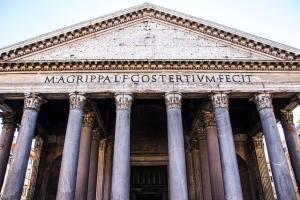
Art By G-tech.
“I contend we are both atheists; I just believe in one fewer god than you do. When you understand why you dismiss all the other possible gods, you will understand why I dismiss yours.” – Stephen F. Roberts.
The above quote by writer Stephen Roberts is intended to imply that atheists and Christians have both rejected the thousands of gods recorded throughout history; only atheism adds the God of the Bible to the list of rejected gods.
This is a reasonable argument and one I address below. Mr. Roberts’ statement also indirectly raises another question. Is it possible for polytheism to be true? Is it possible for there to be more than one God?
Gods Of The Ancient World
For a significant portion of human history, the answer is yes, there are multiple gods. Indeed, the great ancient civilizations such as Mesopotamia, Egypt, Greece, and Rome worshipped a pantheon of gods.
A comment about language. I will refer to the God of the Bible and the monotheistic faiths using a capital “G.” For the various pagan deities, I will use a lowercase “g.” This is in keeping with the grammatical construction of capitalizing proper nouns.
Despite the worship and sacrifices associated with these various gods, the great majority of the polytheistic faiths of the ancient world admitted a hierarchical pantheon. That is to say that there was a “King of the gods,” a being who was considered the supreme deity. Even today, among those belief systems generally defined as polytheistic (often incorporating aspects of pantheism), there is usually a supreme deity. An example is Brahman in Hinduism. Regardless, belief and worship of many gods were exceedingly common in the ancient world.
God Of The Bible
The God depicted in the Bible stands in direct contrast to the gods of the polytheistic civilizations of the time. Where the pagan gods were myths that symbolized various forces of nature, the God of the Bible stands over and above all of creation. It is no defense either to argue that the biblical authors were unfamiliar with the polytheistic pagan civilizations that were prevalent at the time. An example of this is the story of Elijah and Baal. In 1 Kings 18, we read of the prophet Elijah taunting the followers of the pagan deity Baal.
Within the Judeo-Christian tradition, the concept of a single God is given voice in the Shema. “Hear, O Israel: The Lord our God is one Lord.” The Shema is referenced by Christ in Mark’s Gospel. Moreover, in the person of Jesus of Nazareth, the biblical God is also a historical figure. The same cannot be said of the polytheistic gods.
Nevertheless, the question persists. Is it at least possible that more than one God can exist?
A Problem Of Belief And History
The religious and historical nature of Catholicism and the God of the Bible cannot be matched. Whatever one thinks of the Bible’s metaphysical, moral, or religious claims, the people depicted are based on historical evidence.
As mentioned above, no evidence of Hercules or Zeus being historical figures has been found, nor does anyone think it exists. In contrast, there is ample evidence of Jesus as a historical person. It is the difference between myth and history.
There is also the issue of belief or faith. Ancient people did not believe in Shu, Nut, Hercules, Baal, Wearisomu, Enki, Utu, Diana, and the like in the same way that people believe in Christ. The belief in the pantheon of gods was akin to a social construct and not a devotion to God. (See Gods in Ancient Greece and Rome by Matt Dillon).
Owing to this, the numerous Roman emperors could easily deify themselves. It strains credulity to think that the Romans suddenly believed Caesar was a god.
A Philosophical Explanation
I think we are now in a better position to address the statement by Stephen F. Roberts. Specifically, why do Catholics accept the God of the Bible while rejecting the thousands of other gods that various cultures and civilizations have worshiped?
Addressing this question entails defining what the Catholic Church means by the term God. While it is, in principle, impossible to define (place limits upon) that which is infinite, it may be said that God is the absolutely and infinitely perfect spirit who is the Creator of all else. Of course, this definition is not an essential definition since human beings cannot comprehend the essence of God. Rather, the definition is primarily predicated on attributes attributable to God.
The First Vatican Council provides the quintessential statement on the topic. “The holy, Catholic, apostolic Church believes and professes that there is one true, living God, the Creator and Lord of heaven and earth. He is almighty, eternal, beyond measure, incomprehensible, and infinite in intellect, will, and in every perfection. Since He is one unique spiritual substance, entirely simple and unchangeable, He must be declared really and essentially distinct from the world, perfectly happy in Himself and by his very nature, and inexpressibly exalted over all things that exist or can be conceived other than Himself” (Denzinger 3001).
Drawing on theology and philosophy provides further clarification. God is a being whose essence is to exist, and as such, God necessarily exists as a non-contingent being. God’s existence is not dependent on anything or anyone else. In other words, God cannot not exist. God, as a necessary being, stands in direct contrast to the various pagan deities whose existence represented various forces of nature or artificial constructs and, were thereby, contingent.
More Than One?
I want to conclude by augmenting the religious arguments for monotheism with two philosophical arguments.
The first argument is based on the nature of individual substances and the law of identity. Every substance is a particular thing. This allows us, for example, to speak of this chair and not that chair.
Thomas Aquinas argues: “What makes Socrates this particular man is only communicable to one. Therefore, if Socrates were a man what makes him to be this particular man, as there cannot be many Socrates, so there could not in that way be many men. Now, this belongs to God alone, for God Himself is His own nature. Therefore, in the very same way, God is God, and He is this God. Impossible is it, therefore, that many Gods should exist.” (Aquinas, Saint Thomas. The “Summa Theologica” of Saint Thomas Aquinas. 1917).
Second, since God’s essence is to exist, God is non-contingent. It follows, therefore, that He must possess every perfection of being. If many gods existed, they would necessarily differ from each other. A perfection of being would belong to one god and not another. This would mean that the many gods would possess at least one privation of being, which cannot be predicated of a being whose essence contains every perfection.
Conclusion
Proper faith must mean having good reasons to believe something to be true. I hope that this article shows that Catholics have very good reasons for accepting the God of the Bible while simultaneously rejecting the multitude of pagan deities.
Education and Religion
History and Religion
Previous Post
May 11, 2025
Reconciling the Old and New Testaments: One Bible, One God
Next Post

May 25, 2025 Do We Need A Conscience?
Recent Comments
"Why would it matter if atheism is wrong? The fact that Catholic and Protestant scholars ..."
Beyond the Absence of Belief: The ..."
"Kaiser Member Service Proponents often compare atheism to not collecting stamps—it is the lack of ..."
Beyond the Absence of Belief: The ..."
""these dual denials (objective truth and objective meaning)"This is not accurate. Post-modern thought does not ..."
Defending the Faith in a Post-Truth ..."
"The theologians still haven't received the memo. Your opposition are no longer atheists, but they ..."
Defending the Faith in a Post-Truth ..."
Browse Our Archives
Select a Category Abortion Atheism Catholicism. Catholicism. God. Theophany. Christmas Eschatology Faith and Works. God. Holy Spirit Intelligent Design Jesus Christ Justice Law Politics Protestantism Religion Sabbath Salvation. Soteriology. The Bible Theology Uncategorized
Select a Month October 2026 September 2026 August 2026 July 2026 June 2026 May 2026 April 2026 March 2026 February 2026 January 2026 December 2025 November 2025 October 2025 September 2025 August 2025 July 2025 June 2025 May 2025 April 2025 March 2025 February 2025 January 2025 December 2024 November 2024 October 2024 September 2024 August 2024 July 2024 June 2024 May 2024 April 2024 March 2024 February 2024 January 2024 December 2023 November 2023 October 2023 September 2023 August 2023 July 2023 June 2023 May 2023 April 2023 March 2023 February 2023 January 2023 December 2022 November 2022 October 2022 September 2022 August 2022 July 2022 June 2022 May 2022 April 2022 March 2022 February 2022 January 2022 December 2021
Follow Us!
TAKE THE
Religious Wisdom Quiz
Who did an angel tell to name his son John?
Select your answer to see how you score.
Zechariah Joseph Simeon Nathan
Related posts from Summa Catholic

The Anatomy of Divine Revelation in Catholic Thought

Beyond the Absence of Belief: The Implications of...

Can Catholic Apologetics Survive a Postmodern World?

From Samaria to Sanctity: Analyzing The Woman At...
TRENDING AT PATHEOS Catholic

Rejecting Doom: Christian Hope And Human Action
Christianity is a religion of hope. We are to have hope and...

It’s What Comes From Within Which Matters
One of the most difficult things for us to understand is why...

Why I Choose the Eucharist Over the Sermon
Choose the Eucharist, Not the Sermon What are we supposed to get...

5 Design Elements Found in Spiritually Rooted Homes
Putting Spirituality Into Home Decor Our homes are more than our living...

Credo: A Story of God Told with the...
About 10 years ago, I began to imagine a personal "Credo" that...

The Anatomy of Divine Revelation in Catholic Thought
The claim that God has made Himself known to human beings is...
view all Catholic blogs
What Are Your Thoughts?leave a comment
Ad-Free & Subscriber Log-In Subscription Support
- About Us
- 2026 Calendar
- Videos
- Podcasts
- Library of World Religions
- Faith In Media Tracker
- Advertise With Us
- Write for Us
- Privacy Policy
- Terms of Service
- Do Not Sell My Data
- Contact Us
- Radiant Digital
- Manage Newsletter Subscriptions
- Unsubscribe From Notifications
- Sitemap
Copyright 2008-2026, Patheos. All rights reserved.
Subscription Support Ad-Free & Subscriber Log-In
Follow Patheos