
BuddhistCatholicContemplativeEvangelicalGeneral ChristianHinduJewishLatter-day SaintMuslimNew VisionsProgressive Christian
Beliefs
- Buddhist
- Catholic
- Contemplative
- Evangelical
- General Christian
- Hindu
- Jewish
- Latter-day Saint
- More Voices
- Muslim
- New Visions
- Pagan
- Progressive Christian
Topics
- Religion News
- Food and Religion
- Sports and Religion
- Religious Art
- Religious Music and Entertainment
- Religious Events
- History and Religion
- Style and Religion
- Politics and Religion
- Women in Religion
- Recreation Outdoors and Religion
- Business Finance and Religion
- Careers Workplace and Religion
- Education and Religion
- Family Parenting and Religion
- Health Fitness and Religion
- Home and Religion
- Relationships and Religion
- Technology and Religion
- Travel and Religion
Columnists
- Buddhist Columnists
- Business Finance and Religion Columnists
- Careers Workplace and Religion Columnists
- Catholic Columnists
- Contemplative Columnists
- Education and Religion Columnists
- Evangelists Columnists
- Family Parenting and Religion Columnists
- General Christian Columnists
- Health Fitness and Religion Columnists
- Hindu Columnists
- History and Religion Columnists
- Home and Religion Columnists
- Jewish Columnists
- More Voices Columnists
- Latter Day Columnists
- Muslim Columnists
- New Visions Columnists
- Nonreligious Columnists
- Pagan Columnists
- Politics and Religion Columnists
- Progressive Columnists
- Recreation Outdoors and Religion Columnists
- Relationships and Religion Columnists
- Religion News Columnists
- Religious Art Columnists
- Religious Events Columnists
- Religious Music and Entertainment Columnists
- Sports and Religion Columnists
- Style and Religion Columnists
- Technology and Religion Columnists
- Travel and Religion Columnists
- Women in Religion Columnists
Resource Library
- 2026 Calendar
- Library of World Religions
- The 100 Most Holy Places on Earth
- Patheos Answers
- Podcasts
- Videos
- Faith Leaders Database
- Anglican Episcopalian
- Bahai
- Baptist
- Buddhism
- Christianity
- Confucianism
- Eastern Orthodoxy
- Hinduism
- Holiness and Pentecostal
- ISKCON
- Islam
- Judaism
- Lutheran
- Methodist
- The Church of Jesus Christ of Latter-day Saints
- New Age
- Paganism
- Presbytarian and Reformed
- Protestantism
- Religion Behind the Scenes
- Roman Catholic
- Scientology
- Shia Islam
- Sikhism
- Sufism
- Sunni Islam
- Taoism
- Zen
- See all religions
Research Tools
 Ad-Free & Subscriber Log-In Subscription Support
Ad-Free & Subscriber Log-In Subscription Support
Follow Patheos 

- Trending:
- Forgiveness
- |
- Marriage
- |
- Consciousness
- |
- Death Penalty
- |
- Election
- |
- Halloween

- Home
- Catholic
- Education and Religion
- Bridging The Chasm Between God And Human
Bridging The Chasm Between God And Human
Last updated on: March 30, 2025 at 11:08 am by David Schloss
Bridging The Chasm Between God And Human 2025-03-30T11:08:42-04:00 David Schloss
Patheos Explore the world's faith through different perspectives on religion and spirituality! Patheos has the views of the prevalent religions and spiritualities of the world.
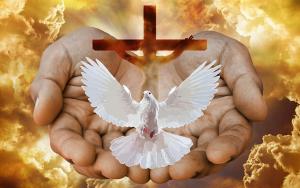
Art By Andrea Don
Saint Athanasius famously claimed that the “Son of God became man so that we might become God” (See Alexandria, Saint Athanasius Patriarch, and Penelope Lawson. On the Incarnation. St Vladimir’s Seminary Press, 1998). This statement invokes the question of the relationship between God and human beings. It is a question that Trinitarian anthropology seeks to answer.
Trinitarian Anthropology: A Definition Of Terms
At first glance, the terms Trinitarian and anthropology appear to be incongruent. After all, Trinitarian refers to the nature of God and the doctrine of the Trinity, while anthropology is the study of what a human being is.
However, the relationship and interactions between God and humans are fundamental to the Catholic and biblical worldview—Trinitarian anthropology endeavors to explicate this relationship between God and man, Creator and creation.
As such, Trinitarian anthropology is a theological approach that explores the nature of humanity by drawing parallels between the triune God (Father, Son, and Holy Spirit) and the human person, emphasizing relationality and the image of God in humankind. Trinitarian theology addresses both the nature of God (theology) and the nature of humanity created in the image of God (anthropology).
Applying the Trinitarian mystery to the human person and the development of Trinitarian anthropology from the time of Christ to the present is of significant importance to Catholicism.
The Historical Development Of Trinitarian Anthropology
Trinitarian anthropology and Catholic theology make one critical presupposition. That is, God, while transcendent, is knowable. Stated differently, the God of the Bible is a personal God.
Utilizing that presupposition as a point of departure, the early Catholic Church desired to understand the relationship between God the Father, Jesus, and the Holy Spirit, laying the groundwork for Trinitarian doctrine. Moreover, the Church sought to apply its understanding of the Holy Trinity to human relationships. While this could only be accomplished analogously, this effort supplied the foundation for Trinitarian anthropology.
For Thomas Aquinas, Trinitarian anthropology meant emphasizing the relational aspects of the Trinity and its implications for human relationships.
In a similar vein, contemporary theologians such as Henri de Lubac and Michele Schumacher have emphasized the relationality and community inherent in the Trinity, suggesting that humans are created for relationships with God and others. (See Schumacher, Michele M. A Trinitarian Anthropology. Catholic University of America Press. 2014).
Imago Dei In Trinitarian Anthropology
The concept of humans being created in the image of God (Genesis 1:27) is central to Trinitarian anthropology, suggesting that the human person mirrors the triune nature of God.
The imago Dei signifies that humans possess a unique dignity and likeness to the divine. The resemblance is not physical, of course. Instead, to be made in the image of God is to reflect certain qualities attributed to God. These qualities include intellect, free will, and the capacity for love and relationship.
Saint Augustine examined the mystery of the Trinity by seeking traces of it within the human personality, arguing that humans reflect the divine image and likeness. For Augustine, a reflection of the Holy Trinity is seen in the human capacity of memory, reason, and will, which he suggested correspond to the Father (memory), Son (reason), and Holy Spirit (will). (See Hippo, Saint Augustine, On the Trinity /St. Augustine ; Translated by Stephen McKenna. 1963).
Thomas Aquinas also saw the human capacity for intellect, love, and communion as a reflection of God. For Aquinas, God the Father represents the intellect, the Son represents love, and the Holy Spirit represents communion. (See Aquinas, Saint Thomas. The “Summa Theologica” of St. Thomas Aquinas. 1917).
Relational Natures Of God And Man
It is widely accepted that human beings are social creatures. From a Trinitarian anthropological perspective, this communal nature echoes the divine nature. As God is a family of persons (sharing one nature), so too humans are to be understood as inherently social and relational beings, reflecting the relational nature of God.
This relationality is most perfectly mirrored in the human family. For this reason, the Catechism states, “The Christian family is a communion of persons, a sign and image of the communion of the Father and the Son in the Holy Spirit” (Catechism of the Catholic Church, Paragraph 2205).
Indeed, by examining a human family, one can gain insight into the Holy Trinity. A nuclear family composed of a father, mother, and child are distinct in their personhood yet share the same human nature. Analogously, God as Father, Son, and Holy Spirit are three persons sharing the same divine nature.
Morality And Social Teaching
To some extent, Catholic social teaching is predicated on the imago Dei. Because human beings are made in God’s image, they possess inherent dignity. Moreover, if human beings are made in the image of God, and if God is the ground of objective morality, then it becomes clear that Trinitarian anthropology must also involve itself with morality and ethics.
This teaching has several implications. There is an emphasis on creating a society where all people have an opportunity to thrive. This is brought about through the principles of subsidiarity and solidarity. Particular strain is placed on caring for the poor and vulnerable (Matthew 25:35-40).
Conclusion
The core principle underlying Trinitarian anthropology is the idea that humans are fundamentally relational beings, mirroring the relationships within the Trinity. This means our existence and identity are deeply connected to our relationships with God, with each other, and even with the created world.
Education and Religion
History and Religion
Previous Post

March 23, 2025
Scrolls to Scripture: Dead Sea Scrolls and Catholic Theology
Next Post
April 6, 2025 Examining The Christological Views Of Augustine And Aquinas
Recent Comments
"Why would it matter if atheism is wrong? The fact that Catholic and Protestant scholars ..."
Beyond the Absence of Belief: The ..."
"Kaiser Member Service Proponents often compare atheism to not collecting stamps—it is the lack of ..."
Beyond the Absence of Belief: The ..."
""these dual denials (objective truth and objective meaning)"This is not accurate. Post-modern thought does not ..."
Defending the Faith in a Post-Truth ..."
"The theologians still haven't received the memo. Your opposition are no longer atheists, but they ..."
Defending the Faith in a Post-Truth ..."
Browse Our Archives
Select a Category Abortion Atheism Catholicism. Catholicism. God. Theophany. Christmas Eschatology Faith and Works. God. Holy Spirit Intelligent Design Jesus Christ Justice Law Politics Protestantism Religion Sabbath Salvation. Soteriology. The Bible Theology Uncategorized
Select a Month October 2026 September 2026 August 2026 July 2026 June 2026 May 2026 April 2026 March 2026 February 2026 January 2026 December 2025 November 2025 October 2025 September 2025 August 2025 July 2025 June 2025 May 2025 April 2025 March 2025 February 2025 January 2025 December 2024 November 2024 October 2024 September 2024 August 2024 July 2024 June 2024 May 2024 April 2024 March 2024 February 2024 January 2024 December 2023 November 2023 October 2023 September 2023 August 2023 July 2023 June 2023 May 2023 April 2023 March 2023 February 2023 January 2023 December 2022 November 2022 October 2022 September 2022 August 2022 July 2022 June 2022 May 2022 April 2022 March 2022 February 2022 January 2022 December 2021
Follow Us!
TAKE THE
Religious Wisdom Quiz
What Christian group follows the "Three Self Principle" in church governance?
Select your answer to see how you score.
Seventh-day Adventists Orthodox Christians Quakers Chinese Protestant Churches
Related posts from Summa Catholic

The Anatomy of Divine Revelation in Catholic Thought

Beyond the Absence of Belief: The Implications of...

Reclaiming Objective Faith in an Individualistic World

Why Didn’t God Just Destroy Satan? A Theological...
TRENDING AT PATHEOS Catholic

Rejecting Doom: Christian Hope And Human Action
Christianity is a religion of hope. We are to have hope and...

It’s What Comes From Within Which Matters
One of the most difficult things for us to understand is why...

Why I Choose the Eucharist Over the Sermon
Choose the Eucharist, Not the Sermon What are we supposed to get...

5 Design Elements Found in Spiritually Rooted Homes
Putting Spirituality Into Home Decor Our homes are more than our living...

Credo: A Story of God Told with the...
About 10 years ago, I began to imagine a personal "Credo" that...

The Anatomy of Divine Revelation in Catholic Thought
The claim that God has made Himself known to human beings is...
view all Catholic blogs
What Are Your Thoughts?leave a comment
Ad-Free & Subscriber Log-In Subscription Support
- About Us
- 2026 Calendar
- Videos
- Podcasts
- Library of World Religions
- Faith In Media Tracker
- Advertise With Us
- Write for Us
- Privacy Policy
- Terms of Service
- Do Not Sell My Data
- Contact Us
- Radiant Digital
- Manage Newsletter Subscriptions
- Unsubscribe From Notifications
- Sitemap
Copyright 2008-2026, Patheos. All rights reserved.
Subscription Support Ad-Free & Subscriber Log-In
Follow Patheos