
BuddhistCatholicContemplativeEvangelicalGeneral ChristianHinduJewishLatter-day SaintMuslimNew VisionsProgressive Christian
Beliefs
- Buddhist
- Catholic
- Contemplative
- Evangelical
- General Christian
- Hindu
- Jewish
- Latter-day Saint
- More Voices
- Muslim
- New Visions
- Pagan
- Progressive Christian
Topics
- Religion News
- Food and Religion
- Sports and Religion
- Religious Art
- Religious Music and Entertainment
- Religious Events
- History and Religion
- Style and Religion
- Politics and Religion
- Women in Religion
- Recreation Outdoors and Religion
- Business Finance and Religion
- Careers Workplace and Religion
- Education and Religion
- Family Parenting and Religion
- Health Fitness and Religion
- Home and Religion
- Relationships and Religion
- Technology and Religion
- Travel and Religion
Columnists
- Buddhist Columnists
- Business Finance and Religion Columnists
- Careers Workplace and Religion Columnists
- Catholic Columnists
- Contemplative Columnists
- Education and Religion Columnists
- Evangelists Columnists
- Family Parenting and Religion Columnists
- General Christian Columnists
- Health Fitness and Religion Columnists
- Hindu Columnists
- History and Religion Columnists
- Home and Religion Columnists
- Jewish Columnists
- More Voices Columnists
- Latter Day Columnists
- Muslim Columnists
- New Visions Columnists
- Nonreligious Columnists
- Pagan Columnists
- Politics and Religion Columnists
- Progressive Columnists
- Recreation Outdoors and Religion Columnists
- Relationships and Religion Columnists
- Religion News Columnists
- Religious Art Columnists
- Religious Events Columnists
- Religious Music and Entertainment Columnists
- Sports and Religion Columnists
- Style and Religion Columnists
- Technology and Religion Columnists
- Travel and Religion Columnists
- Women in Religion Columnists
Resource Library
- 2026 Calendar
- Library of World Religions
- The 100 Most Holy Places on Earth
- Patheos Answers
- Podcasts
- Videos
- Faith Leaders Database
- Anglican Episcopalian
- Bahai
- Baptist
- Buddhism
- Christianity
- Confucianism
- Eastern Orthodoxy
- Hinduism
- Holiness and Pentecostal
- ISKCON
- Islam
- Judaism
- Lutheran
- Methodist
- The Church of Jesus Christ of Latter-day Saints
- New Age
- Paganism
- Presbytarian and Reformed
- Protestantism
- Religion Behind the Scenes
- Roman Catholic
- Scientology
- Shia Islam
- Sikhism
- Sufism
- Sunni Islam
- Taoism
- Zen
- See all religions
Research Tools
 Ad-Free & Subscriber Log-In Subscription Support
Ad-Free & Subscriber Log-In Subscription Support
Follow Patheos 

- Trending:
- Forgiveness
- |
- Marriage
- |
- Consciousness
- |
- Death Penalty
- |
- Election
- |
- Halloween

- Home
- Catholic
- History and Religion
- The End And The Beginning
The End And The Beginning
Last updated on: October 20, 2024 at 12:10 pm by David Schloss
The End And The Beginning 2024-10-20T12:10:01-04:00 David Schloss
Patheos Explore the world's faith through different perspectives on religion and spirituality! Patheos has the views of the prevalent religions and spiritualities of the world.
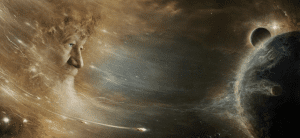
Art By Андрей Сидоренко.
Nothing ends that does not begin, and nothing begins without an ordained end. Applied to the Bible, the Book of Genesis must be understood in the light of the Book of Revelation.
It is easy to pursue the study of the Bible and theology as a good in itself, but it must be noted that these things cannot, or at least ought not, be divorced from the human condition. In turn, a biblical perspective (or a rejection of it) affects anthropology.
For example, from a deterministic perspective, humanity is often seen as a mere accident resulting from the fortuitous bounce of primordial biology and evolution. It follows from this that human beings have no innate value. Of course, Catholicism firmly rejects such a view, instead seeing creation as the result of God’s will and humans having infinite value.
This essay will examine three aspects of “Catholic anthropology”: protology, teleology, and eschatology.
Protology
Protology is generally defined as the study of origins or beginnings. Nevertheless, when we consider the Bible or Catholic protology in general, we must do so from a metaphysical and religious perspective, not a scientific one.
From a Catholic perspective, protology includes not only the creation narratives in Genesis but also God’s purpose for creation. In turn, purpose can be viewed from the perspective of God’s reasoning for creating as well as the goal or end of human beings.
Genesis, the first book of the Bible, provides an account of the origin of all created things and acts as an introduction to God’s later revelation to Israel. It summarizes the early stages of mankind’s history from creation to the death of Joseph, the patriarch.
For the most part, Genesis concerns itself with the history of the world and of man, the history of civilization and culture, tracing the early outlines of God’s plan of salvation and the role Israel is to play in it. Again, the biblical focus is on theological anthropology. It is intended to convey a kind of sacred history, delineating God’s interactions with humanity.
Additionally, Genesis emphasizes the origin of creation while hinting at more profound questions, such as the meaning of suffering and the reality of death.
A question naturally arises at this point. Why did God create?
Teleology
Teleology is a philosophical term used to argue that there is purpose or finality in the world. It follows from this principle that nothing ever happens merely by chance and that no complete account of the universe is possible without final reference to an all-wise God.
To speak of a purpose in a biblical sense requires that two fundamental concepts be recognized. First, God has neither a beginning nor an end, yet is the cause and terminus of all things. Using philosophical (or at least Aristotelian language), God is both the efficient and final cause of creation.
To state that God has neither a beginning nor an end is simply reaffirming the biblical teaching that God is eternal. One can infer as much since God is the cause of creation and, therefore, exists outside of time. This inference is supported by the biblical text itself, for example, Psalm 90:2, “Before the mountains were born, the earth and the world brought forth, from eternity to eternity you are God.”
The second concept is essentially the principle of sufficient reason. For everything that exists, there must be a reason why it exists. If it is true that God has created the universe, there must be a reason why He has done so. Very often, the reason for a thing’s existence is easily discernable because they are artifacts; that is, they are things created by human beings. A house exists to provide shelter, a chair so that one may sit, and so on.
We can not, however, know with certainty the reason for things we have not ourselves created. This uncertainty includes the universe and humanity. However, since God has no need for anything that He creates, Catholicism adduces that creation is out of an abundance of God’s goodness.
Eschatology
If protology is the study of beginnings, then eschatology provides the counterbalance by studying the end of things. Specifically, eschatology is the doctrine of the four last things: death, judgment, heaven, and hell. These four things can concern the individual or the universal.
At the level of the individual, eschatology involves the disposition of the soul at the time of death (particular judgment) and the final state of that soul (heaven and hell).
At the general or universal level, eschatology examines
events like the resurrection and the Second Coming of Christ, including the general judgment, in which all men will participate.
Conclusion
A thing is created with the thing’s end already in the mind of the one who creates. The architect has in his mind the plans he wants to create based on the purpose of the building. In a sense, therefore, the end or final cause dictates the beginning.
So it is with God’s creation. All things tend toward their end or purpose, as Thomas Aquinas observed. Saint Augustine articulated this principle beautifully with regard to human beings when he wrote, “You have made us for yourself, O Lord, and our hearts are restless until they rest in you.”
If we frame the issue theologically, it can be said that eschatology can not be divorced from protology. That is to say that the objective of all redemptive history is to return to the Garden of Eden, that primal condition of creation from which mankind fell, and then go beyond it to a more heightened state, which the first creation did not reach. This heightened state is nothing less than communion with God.
General Christian
History and Religion
Education and Religion
Previous Post
October 13, 2024
The Mysteries of the Q Source
Next Post

October 27, 2024 Jacob's Ladder And The Spiritual Life
Recent Comments
"Why would it matter if atheism is wrong? The fact that Catholic and Protestant scholars ..."
Beyond the Absence of Belief: The ..."
"Kaiser Member Service Proponents often compare atheism to not collecting stamps—it is the lack of ..."
Beyond the Absence of Belief: The ..."
""these dual denials (objective truth and objective meaning)"This is not accurate. Post-modern thought does not ..."
Defending the Faith in a Post-Truth ..."
"The theologians still haven't received the memo. Your opposition are no longer atheists, but they ..."
Defending the Faith in a Post-Truth ..."
Browse Our Archives
Select a Category Abortion Atheism Catholicism. Catholicism. God. Theophany. Christmas Eschatology Faith and Works. God. Holy Spirit Intelligent Design Jesus Christ Justice Law Politics Protestantism Religion Sabbath Salvation. Soteriology. The Bible Theology Uncategorized
Select a Month October 2026 September 2026 August 2026 July 2026 June 2026 May 2026 April 2026 March 2026 February 2026 January 2026 December 2025 November 2025 October 2025 September 2025 August 2025 July 2025 June 2025 May 2025 April 2025 March 2025 February 2025 January 2025 December 2024 November 2024 October 2024 September 2024 August 2024 July 2024 June 2024 May 2024 April 2024 March 2024 February 2024 January 2024 December 2023 November 2023 October 2023 September 2023 August 2023 July 2023 June 2023 May 2023 April 2023 March 2023 February 2023 January 2023 December 2022 November 2022 October 2022 September 2022 August 2022 July 2022 June 2022 May 2022 April 2022 March 2022 February 2022 January 2022 December 2021
Follow Us!
TAKE THE
Religious Wisdom Quiz
What was the name of the field bought with Judas' betrayal money?
Select your answer to see how you score.
Aceldama Field of Blood Potter's Field Golgotha
Related posts from Summa Catholic

The Anatomy of Divine Revelation in Catholic Thought

Beyond the Absence of Belief: The Implications of...

Can Catholic Apologetics Survive a Postmodern World?

From Samaria to Sanctity: Analyzing The Woman At...
TRENDING AT PATHEOS Catholic

The Parable Of The Sower And The Word...
One of Christ’s most famous parables is that of the sower who...

Rejecting Doom: Christian Hope And Human Action
Christianity is a religion of hope. We are to have hope and...

Why I Choose the Eucharist Over the Sermon
Choose the Eucharist, Not the Sermon What are we supposed to get...

5 Design Elements Found in Spiritually Rooted Homes
Putting Spirituality Into Home Decor Our homes are more than our living...

Credo: A Story of God Told with the...
About 10 years ago, I began to imagine a personal "Credo" that...

The Anatomy of Divine Revelation in Catholic Thought
The claim that God has made Himself known to human beings is...
view all Catholic blogs
What Are Your Thoughts?leave a comment
Ad-Free & Subscriber Log-In Subscription Support
- About Us
- 2026 Calendar
- Videos
- Podcasts
- Library of World Religions
- Faith In Media Tracker
- Advertise With Us
- Write for Us
- Privacy Policy
- Terms of Service
- Do Not Sell My Data
- Contact Us
- Radiant Digital
- Manage Newsletter Subscriptions
- Unsubscribe From Notifications
- Sitemap
Copyright 2008-2026, Patheos. All rights reserved.
Subscription Support Ad-Free & Subscriber Log-In
Follow Patheos