
BuddhistCatholicContemplativeEvangelicalGeneral ChristianHinduJewishLatter-day SaintMuslimNew VisionsProgressive Christian
Beliefs
- Buddhist
- Catholic
- Contemplative
- Evangelical
- General Christian
- Hindu
- Jewish
- Latter-day Saint
- More Voices
- Muslim
- New Visions
- Pagan
- Progressive Christian
Topics
- Religion News
- Food and Religion
- Sports and Religion
- Religious Art
- Religious Music and Entertainment
- Religious Events
- History and Religion
- Style and Religion
- Politics and Religion
- Women in Religion
- Recreation Outdoors and Religion
- Business Finance and Religion
- Careers Workplace and Religion
- Education and Religion
- Family Parenting and Religion
- Health Fitness and Religion
- Home and Religion
- Relationships and Religion
- Technology and Religion
- Travel and Religion
Columnists
- Buddhist Columnists
- Business Finance and Religion Columnists
- Careers Workplace and Religion Columnists
- Catholic Columnists
- Contemplative Columnists
- Education and Religion Columnists
- Evangelists Columnists
- Family Parenting and Religion Columnists
- General Christian Columnists
- Health Fitness and Religion Columnists
- Hindu Columnists
- History and Religion Columnists
- Home and Religion Columnists
- Jewish Columnists
- More Voices Columnists
- Latter Day Columnists
- Muslim Columnists
- New Visions Columnists
- Nonreligious Columnists
- Pagan Columnists
- Politics and Religion Columnists
- Progressive Columnists
- Recreation Outdoors and Religion Columnists
- Relationships and Religion Columnists
- Religion News Columnists
- Religious Art Columnists
- Religious Events Columnists
- Religious Music and Entertainment Columnists
- Sports and Religion Columnists
- Style and Religion Columnists
- Technology and Religion Columnists
- Travel and Religion Columnists
- Women in Religion Columnists
Resource Library
- 2026 Calendar
- Library of World Religions
- The 100 Most Holy Places on Earth
- Patheos Answers
- Podcasts
- Videos
- Faith Leaders Database
- Anglican Episcopalian
- Bahai
- Baptist
- Buddhism
- Christianity
- Confucianism
- Eastern Orthodoxy
- Hinduism
- Holiness and Pentecostal
- ISKCON
- Islam
- Judaism
- Lutheran
- Methodist
- The Church of Jesus Christ of Latter-day Saints
- New Age
- Paganism
- Presbytarian and Reformed
- Protestantism
- Religion Behind the Scenes
- Roman Catholic
- Scientology
- Shia Islam
- Sikhism
- Sufism
- Sunni Islam
- Taoism
- Zen
- See all religions
Research Tools
 Ad-Free & Subscriber Log-In Subscription Support
Ad-Free & Subscriber Log-In Subscription Support
Follow Patheos 

- Trending:
- Forgiveness
- |
- Marriage
- |
- Consciousness
- |
- Death Penalty
- |
- Election
- |
- Halloween

- Home
- Catholic
- History and Religion
- Do All Religions Lead to God? Examining Pope Francis’ Claim
Do All Religions Lead to God? Examining Pope Francis’ Claim
Last updated on: March 4, 2025 at 1:27 pm by David Schloss
Do All Religions Lead to God? Examining Pope Francis’ Claim 2025-03-04T13:27:19-05:00 David Schloss
Patheos Explore the world's faith through different perspectives on religion and spirituality! Patheos has the views of the prevalent religions and spiritualities of the world.
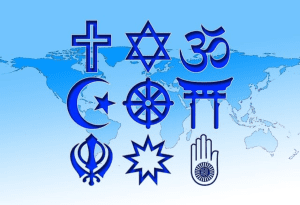
Art By Gerd Altmann.
Pope Francis is well acquainted with controversy. Most recently, he raised some eyebrows with his comment on comparative religions. Speaking in Singapore, Pope Francis remarked, “They [the various religions] are like different languages in order to arrive at God, but God is God for all.”
Putting aside Pope Francis’s effort to ingratiate himself with a religiously mixed audience, I want to examine the issue of religious “equality.” In this paper, I will explore whether all religions are essentially equal regarding their truth claims and, more specifically, whether all religions lead to God.
I will begin by defining – in general terms – what religion is and what is meant by God. I will conclude by addressing whether the Pope is correct in stating that all religions “arrive at God.”
What Is Religion?
The number of religions worldwide varies from approximately four to ten thousand, depending on one’s source. Complicating matters is the fact that there is no fixed definition of what constitutes a religion.
For example, is Buddhism a religion despite not worshipping a deity? What about secularism or atheism? Are they religions after a fashion?
We can stipulate that religion must be systematic, ritualistic, and comprise worship and prayer (or supplication or meditation). Limiting ourselves to the biblical faiths, we can further define religion as the moral virtue by which a person is disposed to render to God the worship he deserves. Religion is also a composite of all the virtues that arise from a human being’s relationship to God as the author of his or her being. Religion thus corresponds to the practice of piety toward God as Creator of the universe.
Having provided a brief synopsis of religion, I turn to whether they are all equally true.
Do All Religions Lead To God?
When we ask whether all religions are true, we ask whether they lead to God. Owing to space restraints, I will limit the question to the three biblical faiths: Judaism, Islam, and Christianity.
To ascertain whether these three traditions “arrive at God,” we must state criteria for making judgments. That is, we must have an objective standard with which to judge. For this, we must define our object, to wit, God.
This task immediately presents difficulties. First, the God depicted in the Bible is eternal (Psalm 90:2; Deuteronomy 32:40). To define something means to limit the subject, and that which is eternal has no limits. Fortunately, philosophy can be helpful here.
From the standpoint of philosophy, God is the eternal first cause of existence itself—what Aristotle called “the unmoved mover.” For Aristotle, as for Thomas Aquinas, movement was synonymous with change.
All creation is contingent; it relies on another for its change or cause. Moreover, there cannot be an infinite regress of change or cause. Therefore, God is the cause of this “movement” or change who itself is not moved or changed.
Concisely, we may define God as “A spirit, infinite, eternal, and unchangeable, in his being, wisdom, power, holiness, justice, goodness, and truth.” (Westminster Shorter Catechism).
The second part of Pope Francis’s statement must be admitted as accurate. If such an all-powerful and eternal God exists, He must be the cause of all and, therefore, the God of all.
The second criterion or standard for this project entails determining which, if any, of the teachings and practices of the three faith traditions are congruent with the teachings and practices of the God of the Bible. Again, one encounters difficulties.
The Same God?
Since the Bible is common to the three faiths, it seems a logical point of departure. Unfortunately, where Christianity accepts the New Testament, Islam views it as having been corrupted, and Judaism denies that Jesus is God. Still, there are numerous similarities.
All three faiths are monotheistic, accepting the existence of only one God. Further, they have a common “father” in that they trace their traditions to Abraham.
Of course, there are significant differences among the three religions. These differences center on the nature of God and the Messiah. Judaism believes God is utterly transcendent and omnipotent while also believing in a personal God who is concerned about people’s lives. Similarly, Christianity also believes that God is a personal being intimately involved in his creation. Uniquely, Christianity understands God as a trinity of persons, all of whom share the one divine nature. In Islam, God is also seen as absolutely transcendent. However, Islam rejects the concept of a personal God.
These differences extend to views on the Messiah. In Judaism, the Messiah is still to come and is expected to bring peace and justice to the world. In Christianity, Jesus is considered the Son of God and the Messiah, who fulfilled prophecy and brought salvation to humanity through his death and resurrection. Islam accepts Jesus as a Messiah but rejects the belief that He is the son of God.
Concepts And Languages
In returning to Pope Francis’s analogy of religions and language, I want to comment on the relationship between concepts and terms. A concept (or idea) exists only in the mind(s) of those who hold it. Terms are the signs we use to manifest those concepts. Think of God. You now have a concept of God in your mind. Deus in Latin, Dieu in French, and Gott in German are all terms in different languages to denote the same concept of God.
Conclusion
While Pope Francis’s remarks may have caused some consternation among the Catholic faithful, his comments do not deviate dramatically from the Catechism.
Of the non-Catholic faiths, we may say that “Those who, through no fault of their own, do not know the Gospel of Christ or his Church, but who nevertheless seek God with a sincere heart and, moved by grace, try in their actions do his will as they know it through the dictates of their conscience – those too may achieve eternal salvation.” (Catechism of the Catholic Church, paragraph 847).
Ultimately, any effort to create equality in the truth claims of the world’s religions stops with Jesus Christ (whether one recognizes this fact or not). Only in and through Christ can one hope of attaining eternal life (see John 14:6).
History and Religion
Education and Religion
Previous Post
September 22, 2024
Mary: A Journey Through Her Life
Next Post
October 6, 2024 Catholic Church And The Development Of Western Law
Recent Comments
"Why would it matter if atheism is wrong? The fact that Catholic and Protestant scholars ..."
Beyond the Absence of Belief: The ..."
"Kaiser Member Service Proponents often compare atheism to not collecting stamps—it is the lack of ..."
Beyond the Absence of Belief: The ..."
""these dual denials (objective truth and objective meaning)"This is not accurate. Post-modern thought does not ..."
Defending the Faith in a Post-Truth ..."
"The theologians still haven't received the memo. Your opposition are no longer atheists, but they ..."
Defending the Faith in a Post-Truth ..."
Browse Our Archives
Select a Category Abortion Atheism Catholicism. Catholicism. God. Theophany. Christmas Eschatology Faith and Works. God. Holy Spirit Intelligent Design Jesus Christ Justice Law Politics Protestantism Religion Sabbath Salvation. Soteriology. The Bible Theology Uncategorized
Select a Month October 2026 September 2026 August 2026 July 2026 June 2026 May 2026 April 2026 March 2026 February 2026 January 2026 December 2025 November 2025 October 2025 September 2025 August 2025 July 2025 June 2025 May 2025 April 2025 March 2025 February 2025 January 2025 December 2024 November 2024 October 2024 September 2024 August 2024 July 2024 June 2024 May 2024 April 2024 March 2024 February 2024 January 2024 December 2023 November 2023 October 2023 September 2023 August 2023 July 2023 June 2023 May 2023 April 2023 March 2023 February 2023 January 2023 December 2022 November 2022 October 2022 September 2022 August 2022 July 2022 June 2022 May 2022 April 2022 March 2022 February 2022 January 2022 December 2021
Follow Us!
TAKE THE
Religious Wisdom Quiz
Which Christian season is marked by purple, penance, and preparation before Easter?
Select your answer to see how you score.
Epiphany Advent Feast of All Saints Lent
Related posts from Summa Catholic

The Anatomy of Divine Revelation in Catholic Thought

Beyond the Absence of Belief: The Implications of...

Can Catholic Apologetics Survive a Postmodern World?

From Samaria to Sanctity: Analyzing The Woman At...
TRENDING AT PATHEOS Catholic

Rejecting Doom: Christian Hope And Human Action
Christianity is a religion of hope. We are to have hope and...

It’s What Comes From Within Which Matters
One of the most difficult things for us to understand is why...

Why I Choose the Eucharist Over the Sermon
Choose the Eucharist, Not the Sermon What are we supposed to get...

5 Design Elements Found in Spiritually Rooted Homes
Putting Spirituality Into Home Decor Our homes are more than our living...

Credo: A Story of God Told with the...
About 10 years ago, I began to imagine a personal "Credo" that...

The Anatomy of Divine Revelation in Catholic Thought
The claim that God has made Himself known to human beings is...
view all Catholic blogs
What Are Your Thoughts?leave a comment
Ad-Free & Subscriber Log-In Subscription Support
- About Us
- 2026 Calendar
- Videos
- Podcasts
- Library of World Religions
- Faith In Media Tracker
- Advertise With Us
- Write for Us
- Privacy Policy
- Terms of Service
- Do Not Sell My Data
- Contact Us
- Radiant Digital
- Manage Newsletter Subscriptions
- Unsubscribe From Notifications
- Sitemap
Copyright 2008-2026, Patheos. All rights reserved.
Subscription Support Ad-Free & Subscriber Log-In
Follow Patheos