
BuddhistCatholicContemplativeEvangelicalGeneral ChristianHinduJewishLatter-day SaintMuslimNew VisionsProgressive Christian
Beliefs
- Buddhist
- Catholic
- Contemplative
- Evangelical
- General Christian
- Hindu
- Jewish
- Latter-day Saint
- More Voices
- Muslim
- New Visions
- Pagan
- Progressive Christian
Topics
- Religion News
- Food and Religion
- Sports and Religion
- Religious Art
- Religious Music and Entertainment
- Religious Events
- History and Religion
- Style and Religion
- Politics and Religion
- Women in Religion
- Recreation Outdoors and Religion
- Business Finance and Religion
- Careers Workplace and Religion
- Education and Religion
- Family Parenting and Religion
- Health Fitness and Religion
- Home and Religion
- Relationships and Religion
- Technology and Religion
- Travel and Religion
Columnists
- Buddhist Columnists
- Business Finance and Religion Columnists
- Careers Workplace and Religion Columnists
- Catholic Columnists
- Contemplative Columnists
- Education and Religion Columnists
- Evangelists Columnists
- Family Parenting and Religion Columnists
- General Christian Columnists
- Health Fitness and Religion Columnists
- Hindu Columnists
- History and Religion Columnists
- Home and Religion Columnists
- Jewish Columnists
- More Voices Columnists
- Latter Day Columnists
- Muslim Columnists
- New Visions Columnists
- Nonreligious Columnists
- Pagan Columnists
- Politics and Religion Columnists
- Progressive Columnists
- Recreation Outdoors and Religion Columnists
- Relationships and Religion Columnists
- Religion News Columnists
- Religious Art Columnists
- Religious Events Columnists
- Religious Music and Entertainment Columnists
- Sports and Religion Columnists
- Style and Religion Columnists
- Technology and Religion Columnists
- Travel and Religion Columnists
- Women in Religion Columnists
Resource Library
- 2026 Calendar
- Library of World Religions
- The 100 Most Holy Places on Earth
- Patheos Answers
- Podcasts
- Videos
- Faith Leaders Database
- Anglican Episcopalian
- Bahai
- Baptist
- Buddhism
- Christianity
- Confucianism
- Eastern Orthodoxy
- Hinduism
- Holiness and Pentecostal
- ISKCON
- Islam
- Judaism
- Lutheran
- Methodist
- The Church of Jesus Christ of Latter-day Saints
- New Age
- Paganism
- Presbytarian and Reformed
- Protestantism
- Religion Behind the Scenes
- Roman Catholic
- Scientology
- Shia Islam
- Sikhism
- Sufism
- Sunni Islam
- Taoism
- Zen
- See all religions
Research Tools
 Ad-Free & Subscriber Log-In Subscription Support
Ad-Free & Subscriber Log-In Subscription Support
Follow Patheos 

- Trending:
- Forgiveness
- |
- Marriage
- |
- Consciousness
- |
- Death Penalty
- |
- Election
- |
- Halloween

- Home
- Catholic
- Education and Religion
- Was The Crucifixion an Act of Child Abuse?
Was The Crucifixion an Act of Child Abuse?
Last updated on: August 15, 2024 at 10:19 am by David Schloss
Was The Crucifixion an Act of Child Abuse? 2024-08-15T10:19:27-04:00 David Schloss
Patheos Explore the world's faith through different perspectives on religion and spirituality! Patheos has the views of the prevalent religions and spiritualities of the world.
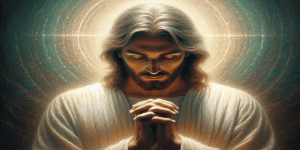
Art by David Yonatan González Aburto.
Imagine a father sending his son to a far-off place, knowing that the son would be tortured and killed. Making matters even worse, this was done to satisfy justice for a crime the son did not commit. Does such a scenario constitute child abuse? Obviously, other factors would have to be evaluated, such as the age of the son and the circumstances surrounding the event. Nevertheless, such an event does seem to be questionable at best.
What exactly does the above story have to do with the Crucifixion? For many critics, the belief that God the Father sent His only Son to be crucified constitutes a kind of cosmic child abuse. In this essay, I will examine this claim and argue that the solution is a proper understanding of trinitarian theory.
There are several explanations for how Christ’s death on the Cross effected our salvation. The charge that the Crucifixion is divine child abuse generally occurs in reference to the penal theory of atonement. The penal theory argues that sin has incurred God’s wrath. Divine justice must be satisfied for God’s wrath to abate. Said differently, God’s justice must be executed for God’s mercy to take place. Since fallen man cannot provide adequate propitiation, God sent His Son into the world (the Incarnation) to take upon Himself the penalty due to humanity.
The penal theory builds on the various atonement sacrifices of the Old Testament. The book of Leviticus details how the Israelites would seek atonement by “transferring” their sins onto an animal who would then receive the punishment due (death). Within the Old Testament, this practice reaches its pinnacle in the binding of Isaac.
The story of Abraham and Isaac most closely resembles the interplay of how God sends the Son to be a propitiation for sin. Since it is this aspect that draws the charge of child abuse, it is beneficial to study the story of Abraham and Isaac.
In the twenty-second chapter of Genesis, we read how God tested Abraham. God tells Abraham to take his son Isaac to the land of Moriah and offer him as a sacrifice. As they approach the mountain designated by God, Isaac, unaware of his fate, asks his father where the lamb they will use for the sacrifice is. Abraham tells him that God will provide. Once they arrive at the chosen place, Abraham builds an altar, arranges the wood, and binds Isaac. He then places Isaac on the altar. “Then Abraham reached out and took the knife to slaughter his son. But the angel of the Lord called to him from heaven, ‘Abraham, Abraham!’ ‘Here I am,’ he answered. ‘Do not lay your hand on the boy,’ said the angel. ‘Do not do the least thing to him. For now, I know that you fear God since you did not withhold from me your son, your only one.”
All of this lays the foundation for the Incarnation and Passion of Christ. How, then, can Catholicism answer the charge that the Passion of Christ constitutes a kind of child abuse? The answer lies in understanding the doctrine of the Holy Trinity. The doctrine of the Holy Trinity is at the heart of Christianity’s understanding of God. Succinctly stated, the doctrine of the Holy Trinity teaches that although God is one, three persons, the Father, the Son, and the Holy Spirit, exist in God. This is knowable to human beings only through divine revelation.
What is extremely important to the topic at hand is that “the divine Persons are also inseparable in what they do. But within the single divine operation, each shows forth what is proper to him in the Trinity, especially in the divine missions of the Son’s Incarnation and the gift of the Holy Spirit.” (Catechism of the Catholic Church, paragraph 267). This inseparability is born of the belief that the three divine persons share one divine essence. Moreover, each person of the Trinity shares the same divine will. Therefore, when we discuss the Incarnation, life, Crucifixion, and Resurrection of Christ, we must admit that all three persons of the Trinity are at work. That is to say, the death of Jesus on the Cross is God acting together, with one will, for one purpose – to deliver humanity from the curse of sin.
A proper understanding of the Trinity solves the claim of cosmic child abuse because Jesus’ will cannot be divorced from the will of God the Father or the will of the Holy Spirit. That is to say that the Son is not acting against His will but only in unison with the will of the Holy Trinity. Scripture supports this argument.
“I and the Father are one,” Jesus tells us. (John 10:30). Clearly, Christ is not saying He and the Father are the same person; rather, Christ is claiming He shares the divine nature with the Father.
In another passage from John’s Gospel, Christ leaves no room for ambiguity regarding the agency of the Crucifixion and Resurrection. “No one takes it [Christ’s life] from me, but I lay it down on my own. I have the power to lay it down and the power to take it up again.” As is often the case, Christ speaks in the person of God, with the power over life and death.
Finally, assigning the violence visited upon Christ to God the Father is illogical. While it is true that Christ submitted to the Crucifixion, the source of His suffering and death lies solely with all sinners. Rather than perverting the Incarnation and Passion of Christ by viewing it as a form of child abuse, we should understand it as the one God seeking to save His creation from the devasting effects of sin. Said differently, “God so loved the world that he gave his only Son so that everyone who believes in him might not perish but might have eternal life.” (John 3:16).
Education and Religion
History and Religion
Previous Post
June 23, 2024
God Or Science?
Next Post
July 7, 2024 A Beginner's Guide to Classical Apologetics
Recent Comments
"Why would it matter if atheism is wrong? The fact that Catholic and Protestant scholars ..."
Beyond the Absence of Belief: The ..."
"Kaiser Member Service Proponents often compare atheism to not collecting stamps—it is the lack of ..."
Beyond the Absence of Belief: The ..."
""these dual denials (objective truth and objective meaning)"This is not accurate. Post-modern thought does not ..."
Defending the Faith in a Post-Truth ..."
"The theologians still haven't received the memo. Your opposition are no longer atheists, but they ..."
Defending the Faith in a Post-Truth ..."
Browse Our Archives
Select a Category Abortion Atheism Catholicism. Catholicism. God. Theophany. Christmas Eschatology Faith and Works. God. Holy Spirit Intelligent Design Jesus Christ Justice Law Politics Protestantism Religion Sabbath Salvation. Soteriology. The Bible Theology Uncategorized
Select a Month October 2026 September 2026 August 2026 July 2026 June 2026 May 2026 April 2026 March 2026 February 2026 January 2026 December 2025 November 2025 October 2025 September 2025 August 2025 July 2025 June 2025 May 2025 April 2025 March 2025 February 2025 January 2025 December 2024 November 2024 October 2024 September 2024 August 2024 July 2024 June 2024 May 2024 April 2024 March 2024 February 2024 January 2024 December 2023 November 2023 October 2023 September 2023 August 2023 July 2023 June 2023 May 2023 April 2023 March 2023 February 2023 January 2023 December 2022 November 2022 October 2022 September 2022 August 2022 July 2022 June 2022 May 2022 April 2022 March 2022 February 2022 January 2022 December 2021
Follow Us!
TAKE THE
Religious Wisdom Quiz
Who wrote the book of Genesis?
Select your answer to see how you score.
Paul Eve Moses Adam
Related posts from Summa Catholic
Creation, Preservation, and Teleology in Catholic Theology

The Anatomy of Divine Revelation in Catholic Thought

Beyond the Absence of Belief: The Implications of...

Can Catholic Apologetics Survive a Postmodern World?
TRENDING AT PATHEOS Catholic

Creation, Preservation, and Teleology in Catholic Theology
As I write this, it is very early Monday morning. Like millions...

The Parable Of The Sower And The Word...
One of Christ’s most famous parables is that of the sower who...

Rejecting Doom: Christian Hope And Human Action
Christianity is a religion of hope. We are to have hope and...

Why I Choose the Eucharist Over the Sermon
Choose the Eucharist, Not the Sermon What are we supposed to get...

5 Design Elements Found in Spiritually Rooted Homes
Putting Spirituality Into Home Decor Our homes are more than our living...

Credo: A Story of God Told with the...
About 10 years ago, I began to imagine a personal "Credo" that...
view all Catholic blogs
What Are Your Thoughts?leave a comment
Ad-Free & Subscriber Log-In Subscription Support
- About Us
- 2026 Calendar
- Videos
- Podcasts
- Library of World Religions
- Faith In Media Tracker
- Advertise With Us
- Write for Us
- Privacy Policy
- Terms of Service
- Do Not Sell My Data
- Contact Us
- Radiant Digital
- Manage Newsletter Subscriptions
- Unsubscribe From Notifications
- Sitemap
Copyright 2008-2026, Patheos. All rights reserved.
Subscription Support Ad-Free & Subscriber Log-In
Follow Patheos