
BuddhistCatholicContemplativeEvangelicalGeneral ChristianHinduJewishLatter-day SaintMuslimNew VisionsProgressive Christian
Beliefs
- Buddhist
- Catholic
- Contemplative
- Evangelical
- General Christian
- Hindu
- Jewish
- Latter-day Saint
- More Voices
- Muslim
- New Visions
- Pagan
- Progressive Christian
Topics
- Religion News
- Food and Religion
- Sports and Religion
- Religious Art
- Religious Music and Entertainment
- Religious Events
- History and Religion
- Style and Religion
- Politics and Religion
- Women in Religion
- Recreation Outdoors and Religion
- Business Finance and Religion
- Careers Workplace and Religion
- Education and Religion
- Family Parenting and Religion
- Health Fitness and Religion
- Home and Religion
- Relationships and Religion
- Technology and Religion
- Travel and Religion
Columnists
- Buddhist Columnists
- Business Finance and Religion Columnists
- Careers Workplace and Religion Columnists
- Catholic Columnists
- Contemplative Columnists
- Education and Religion Columnists
- Evangelists Columnists
- Family Parenting and Religion Columnists
- General Christian Columnists
- Health Fitness and Religion Columnists
- Hindu Columnists
- History and Religion Columnists
- Home and Religion Columnists
- Jewish Columnists
- More Voices Columnists
- Latter Day Columnists
- Muslim Columnists
- New Visions Columnists
- Nonreligious Columnists
- Pagan Columnists
- Politics and Religion Columnists
- Progressive Columnists
- Recreation Outdoors and Religion Columnists
- Relationships and Religion Columnists
- Religion News Columnists
- Religious Art Columnists
- Religious Events Columnists
- Religious Music and Entertainment Columnists
- Sports and Religion Columnists
- Style and Religion Columnists
- Technology and Religion Columnists
- Travel and Religion Columnists
- Women in Religion Columnists
Resource Library
- 2026 Calendar
- Library of World Religions
- The 100 Most Holy Places on Earth
- Patheos Answers
- Podcasts
- Videos
- Faith Leaders Database
- Anglican Episcopalian
- Bahai
- Baptist
- Buddhism
- Christianity
- Confucianism
- Eastern Orthodoxy
- Hinduism
- Holiness and Pentecostal
- ISKCON
- Islam
- Judaism
- Lutheran
- Methodist
- The Church of Jesus Christ of Latter-day Saints
- New Age
- Paganism
- Presbytarian and Reformed
- Protestantism
- Religion Behind the Scenes
- Roman Catholic
- Scientology
- Shia Islam
- Sikhism
- Sufism
- Sunni Islam
- Taoism
- Zen
- See all religions
Research Tools
 Ad-Free & Subscriber Log-In Subscription Support
Ad-Free & Subscriber Log-In Subscription Support
Follow Patheos 

- Trending:
- Forgiveness
- |
- Marriage
- |
- Consciousness
- |
- Death Penalty
- |
- Election
- |
- Halloween

- Home
- Catholic
- Education and Religion
- Catholicism And Culture
Catholicism And Culture
Last updated on: August 15, 2024 at 10:19 am by David Schloss
Catholicism And Culture 2024-08-15T10:19:33-04:00 David Schloss
Patheos Explore the world's faith through different perspectives on religion and spirituality! Patheos has the views of the prevalent religions and spiritualities of the world.
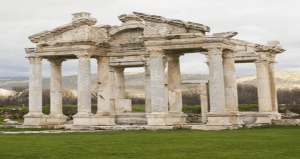
Art By Engin Akyurt.
Regardless of one’s religious or secular beliefs, it must be admitted that human beings are social animals and seek to live in societies. Said differently, any discussion on society begins with the presupposition that humans are naturally social.
Accepting the social nature of human beings, the question becomes what constitutes the ideal or best society for humans to live in. In this paper, I will suggest that any healthy civilization must be based on Catholic principles.
Most will agree that the current state of our civilization is far from ideal. Indeed, one could argue that we are witnessing the collapse of Western society. Now, more than ever, our civilization is in need of being saved, and Catholicism has saved civilization before. To see how, we must travel back to approximately the end of the Roman Empire, around the year 476.
In the years following the collapse of the Roman Empire, the world fell into what some have called the Dark Ages. It was a time marked by economic and cultural decline, if not collapse. Perhaps most ominous was the potential loss of intellectual treasure built up over the preceding years. Indeed, many of the ancient texts on science, literature, and religion would not be available today if not for the Catholic Church.
Monasteries served as centers of learning and had extensive libraries. Monks diligently copied and preserved many of the great works produced to that time, and scribes meticulously transcribed and illuminated texts by hand, ensuring their preservation for future generations. This process allowed for the replication of essential works.
The Catholic Church supported and patronaged individuals, encouraging them to pursue their studies. Many scholars, such as Thomas Aquinas and Roger Bacon, were sponsored by the Church, allowing them to contribute to advancing knowledge in various fields.
Moreover, much of what we consider the modern university system is indebted to Catholicism. It was the Church that established universities and schools throughout Europe. These institutions provided education to both clergy and laypeople, ensuring the transmission of knowledge across generations. Prominent universities, such as the University of Paris and the University of Bologna, became centers of intellectual activity. Therefore, it is not, I think, an understatement to say that what today we consider Western Civilization exists because of the work of the Catholic Church.
Using the above as a point of departure, one must ask whether contemporary society is once again in need of rescue. While it is difficult to compare the current state of Western Civilization with its condition at the end of the Roman Empire, it is possible to identify aspects of our society that would benefit from an infusion of Catholicism.
It is impossible in the space available to go into depth regarding the component parts of society and how they may be benefited by Catholic thought. Therefore, I will limit myself to four topics: religion, government, justice, and art.
Of course, Catholics believe that theirs is the true faith. However, living in pluralistic societies that predominate Western cultures, it is necessary to adopt a policy of religious freedom that allows for the practice of other faiths. Religious freedom means individuals, families, communities, and institutions are allowed to live out religious convictions.
The Catholic faith is not entirely a private matter, however. Indeed, I suggest that an infusion of Catholic principles would greatly benefit the government at various levels. I am in no way arguing for a theocracy, only that certain aspects of Catholic thought, such as the recognition of natural law and the dignity of all life, be given a greater voice in the public forum.
Similarly, Catholicism ought to inform the culture’s understanding of justice. From a philosophical and Catholic perspective, justice is a moral quality or habit that perfects the will and inclines it to render to each and to all what belongs to them. Two principles, subsidiarity and solidarity, provide the foundation for justice from the Catholic perspective.
Subsidiarity refers to the teaching according to which a community of a higher order is prohibited from interfering in the internal life of a community of a lower order, depriving the latter of its functions, but rather should support it in case of need. Said differently, matters that can adequately be handled by local jurisdictions should be free from interference from the state or federal authorities.
Balancing subsidiarity is the principle of solidarity. Solidarity is the teaching that whatever our national, racial, ethnic, economic, and ideological differences, humans are all made in the image of God. The claim that human beings are made in the image of God provides a point of departure for developing policies and practices that promote peace and justice.
The last topic I will discuss is art. The nature of art makes defining it difficult. Making matters more complicated, modernity has so expanded any definition of art that the discipline can encompass almost anything.
Historically, art was considered memetic; that is, art sought to imitate objective reality. Modernity, however, tends to deny the existence of a reality independent of the individual. Think, for example, Immanuel Kant’s theory that mind creates reality. From a Catholic perspective, art should reveal something about the nature of objective reality. It should allow us to see God’s creation in a multitude of ways.
Finally, art is, or at least should be, an expression of beauty. We frequently hear that beauty is in the eye of the beholder. It seems to me that the question is who is doing the beholding. If it is understood strictly from the perspective of the individual, then beauty is subjective. However, if beauty is that which is pleasing to God, then we have an objective standard by which we can judge art.
The above exposition in no way exhausts Catholic teachings or society’s needs. Rather, I have endeavored to provide a brief sketch of ways in which Catholic thought can improve Western civilization.
Education and Religion
History and Religion
Previous Post
May 26, 2024
Catholic Moral Theology
Next Post

June 9, 2024 A Biblical Survey Of The Afterlife
Recent Comments
"Why would it matter if atheism is wrong? The fact that Catholic and Protestant scholars ..."
Beyond the Absence of Belief: The ..."
"Kaiser Member Service Proponents often compare atheism to not collecting stamps—it is the lack of ..."
Beyond the Absence of Belief: The ..."
""these dual denials (objective truth and objective meaning)"This is not accurate. Post-modern thought does not ..."
Defending the Faith in a Post-Truth ..."
"The theologians still haven't received the memo. Your opposition are no longer atheists, but they ..."
Defending the Faith in a Post-Truth ..."
Browse Our Archives
Select a Category Abortion Atheism Catholicism. Catholicism. God. Theophany. Christmas Eschatology Faith and Works. God. Holy Spirit Intelligent Design Jesus Christ Justice Law Politics Protestantism Religion Sabbath Salvation. Soteriology. The Bible Theology Uncategorized
Select a Month October 2026 September 2026 August 2026 July 2026 June 2026 May 2026 April 2026 March 2026 February 2026 January 2026 December 2025 November 2025 October 2025 September 2025 August 2025 July 2025 June 2025 May 2025 April 2025 March 2025 February 2025 January 2025 December 2024 November 2024 October 2024 September 2024 August 2024 July 2024 June 2024 May 2024 April 2024 March 2024 February 2024 January 2024 December 2023 November 2023 October 2023 September 2023 August 2023 July 2023 June 2023 May 2023 April 2023 March 2023 February 2023 January 2023 December 2022 November 2022 October 2022 September 2022 August 2022 July 2022 June 2022 May 2022 April 2022 March 2022 February 2022 January 2022 December 2021
Follow Us!
TAKE THE
Religious Wisdom Quiz
What did the Israelites eat in the wilderness?
Select your answer to see how you score.
Fish Bread Manna Corn
Related posts from Summa Catholic

The Anatomy of Divine Revelation in Catholic Thought

Beyond the Absence of Belief: The Implications of...

Can Catholic Apologetics Survive a Postmodern World?

From Samaria to Sanctity: Analyzing The Woman At...
TRENDING AT PATHEOS Catholic

Rejecting Doom: Christian Hope And Human Action
Christianity is a religion of hope. We are to have hope and...

It’s What Comes From Within Which Matters
One of the most difficult things for us to understand is why...

Why I Choose the Eucharist Over the Sermon
Choose the Eucharist, Not the Sermon What are we supposed to get...

5 Design Elements Found in Spiritually Rooted Homes
Putting Spirituality Into Home Decor Our homes are more than our living...

Credo: A Story of God Told with the...
About 10 years ago, I began to imagine a personal "Credo" that...

The Anatomy of Divine Revelation in Catholic Thought
The claim that God has made Himself known to human beings is...
view all Catholic blogs
What Are Your Thoughts?leave a comment
Ad-Free & Subscriber Log-In Subscription Support
- About Us
- 2026 Calendar
- Videos
- Podcasts
- Library of World Religions
- Faith In Media Tracker
- Advertise With Us
- Write for Us
- Privacy Policy
- Terms of Service
- Do Not Sell My Data
- Contact Us
- Radiant Digital
- Manage Newsletter Subscriptions
- Unsubscribe From Notifications
- Sitemap
Copyright 2008-2026, Patheos. All rights reserved.
Subscription Support Ad-Free & Subscriber Log-In
Follow Patheos