
BuddhistCatholicContemplativeEvangelicalGeneral ChristianHinduJewishLatter-day SaintMuslimNew VisionsProgressive Christian
Beliefs
- Buddhist
- Catholic
- Contemplative
- Evangelical
- General Christian
- Hindu
- Jewish
- Latter-day Saint
- More Voices
- Muslim
- New Visions
- Pagan
- Progressive Christian
Topics
- Religion News
- Food and Religion
- Sports and Religion
- Religious Art
- Religious Music and Entertainment
- Religious Events
- History and Religion
- Style and Religion
- Politics and Religion
- Women in Religion
- Recreation Outdoors and Religion
- Business Finance and Religion
- Careers Workplace and Religion
- Education and Religion
- Family Parenting and Religion
- Health Fitness and Religion
- Home and Religion
- Relationships and Religion
- Technology and Religion
- Travel and Religion
Columnists
- Buddhist Columnists
- Business Finance and Religion Columnists
- Careers Workplace and Religion Columnists
- Catholic Columnists
- Contemplative Columnists
- Education and Religion Columnists
- Evangelists Columnists
- Family Parenting and Religion Columnists
- General Christian Columnists
- Health Fitness and Religion Columnists
- Hindu Columnists
- History and Religion Columnists
- Home and Religion Columnists
- Jewish Columnists
- More Voices Columnists
- Latter Day Columnists
- Muslim Columnists
- New Visions Columnists
- Nonreligious Columnists
- Pagan Columnists
- Politics and Religion Columnists
- Progressive Columnists
- Recreation Outdoors and Religion Columnists
- Relationships and Religion Columnists
- Religion News Columnists
- Religious Art Columnists
- Religious Events Columnists
- Religious Music and Entertainment Columnists
- Sports and Religion Columnists
- Style and Religion Columnists
- Technology and Religion Columnists
- Travel and Religion Columnists
- Women in Religion Columnists
Resource Library
- 2026 Calendar
- Library of World Religions
- The 100 Most Holy Places on Earth
- Patheos Answers
- Podcasts
- Videos
- Faith Leaders Database
- Anglican Episcopalian
- Bahai
- Baptist
- Buddhism
- Christianity
- Confucianism
- Eastern Orthodoxy
- Hinduism
- Holiness and Pentecostal
- ISKCON
- Islam
- Judaism
- Lutheran
- Methodist
- The Church of Jesus Christ of Latter-day Saints
- New Age
- Paganism
- Presbytarian and Reformed
- Protestantism
- Religion Behind the Scenes
- Roman Catholic
- Scientology
- Shia Islam
- Sikhism
- Sufism
- Sunni Islam
- Taoism
- Zen
- See all religions
Research Tools
 Ad-Free & Subscriber Log-In Subscription Support
Ad-Free & Subscriber Log-In Subscription Support
Follow Patheos 

- Trending:
- Forgiveness
- |
- Marriage
- |
- Consciousness
- |
- Death Penalty
- |
- Election
- |
- Halloween

- Home
- Catholic
- Education and Religion
- The Temple Veil
The Temple Veil
Last updated on: August 15, 2024 at 10:19 am by David Schloss
The Temple Veil 2024-08-15T10:19:36-04:00 David Schloss
Patheos Explore the world's faith through different perspectives on religion and spirituality! Patheos has the views of the prevalent religions and spiritualities of the world.
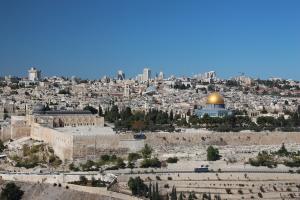
Art By Christine Schmidt.
The Bible depicts several remarkable and miraculous events at the moment of Christ’s death. One such event is the tearing of the Temple veil.
In this paper, I will discuss the importance of the Temple to Judaism and the nascent Catholic movement. I will then examine how the Bible describes the tearing of the veil. Finally, I will place the event within a larger eschatological framework.
It is impossible to have a comprehensive understanding of Catholicism without a basic understanding of the Judaism of the Old Testament. It is equally impossible to understand the significance of the tearing of the veil without understanding the significance of the Temple in Jerusalem.
At approximately thirty-seven acres, the Temple would have been the center of Jewish life in Jesus’ time. The Temple’s religious significance cannot be understated. For thousands of years, it was the site of the ritual sacrifices prescribed by the Torah. Most importantly, the Temple housed the Holy of Holies.
The Holy of Holies refers to the Temple’s most sacred area. At the time of its construction, this inner sanctuary would have contained the Ark of the Covenant. Because it was believed that God resided within the Holy of Holies, access was limited to the Israelite high priest, and even then, only once a year. On the Day of Atonement, the high priest entered the sanctuary to burn incense and sprinkle sacrificial animal blood. By this act, the high priest atoned for his own sins and those of the priesthood.
Separating the inner sanctuary from the rest of the Temple was the veil. To properly get a sense of what tearing the veil would have entailed, it should be observed that the veil was approximately sixty feet tall and four inches thick. The material used for the veil was likely fine linen. Suffice it to say that tearing it would have been a significant feat.
Before proceeding to the Crucifixion and the veil tearing, it is theologically significant to realize that Christ becomes the new Temple, the new Holy of Holies. When questioned by whose authority He was acting, Christ cryptically responded, “Destroy this Temple, and in three days, I will raise it up.” Those who heard this were incredulous, pointing out that it had taken forty-six years to build the Temple. Only after Christ had risen on the third day did His apostles realize that He was referring to Himself as the Temple. (See John 2:18-22). Viewing Christ as the new Temple will allow us to place the tearing of the veil in a more illuminating light.
The tearing of the veil is portrayed in all three of the synoptic gospels. At the moment of Christ’s death, “Jesus cried out again in a loud voice and gave up his spirit. And behold, the veil of the sanctuary was torn in two from top to bottom.” (Matthew 27:50-51).
I want to touch upon three significant aspects of the tearing of the Temple veil. First, the Temple veil represented both a symbolic and physical separation of God and man. As indicated above, only the high priest was allowed access to the Holy of Hollies, and even then, only once a year. With the tearing of the Temple veil, that which separated human beings from God was removed. This means that we now have direct access to God in the person of Christ, and we have this access at any time. The concept of accessibility to God leads to the second point.
The tearing of the Temple veil can be seen to symbolize the destruction of the Temple and, with it, the ushering in of the New Covenant with its attendant worship. Moreover, the Old Covenant worship was predicated on believing God resided in the Temple. However, with the advent of the New Covenant ushered in by Christ, the God who made the world and all that is in it, the Lord of heaven and earth, is no longer “limited” to dwelling in the Temple (see Acts 17:24).
Finally, the tearing of the Temple veil means that Christ is the new Temple. Pope Benedict put it this way, “With his Resurrection, the new Temple will begin: the living body of Jesus Christ, which will now stand in the sight of God and be the place of all worship. Into this body, he incorporates men.” This incorporation is into the mystical body of Christ, which is the Catholic Church.
Without question, the destruction of the Temple in Jerusalem has significant eschatological implications in Judaism. However, understanding Christ as the new Temple also has eschatological significance for Catholicism. To see why this is the case requires evoking language from Mark’s Gospel and the Book of Revelation.
The Markean text is too lengthy to be quoted in its entirety. The gist of the relevant parts of Mark, chapter thirteen relates to the destruction of the Temple in Jerusalem, “Do you see these great buildings? There will not be one stone left upon another that will not be thrown down” and the end times, “When you hear of wars and reports of wars do not be alarmed; such things must happen, but it will not yet be the end. Nation will rise against nation and kingdom against kingdom. There will be earthquakes from place to place, and there will be famines.”
The second bit of Scripture that suggests that Christ is the new Temple is Revelation 21:22. In this verse, John is describing a vision of the “New Jerusalem” that will be established after the Second Coming. “I saw no temple in the city, for its temple is the Lord God Almighty and the Lamb [i.e., Christ].”
In tearing the veil, Christ dispenses with the Temple worship of the Old Covenant and ushers in the New Covenant. Christ is now the living Temple, and the Church is His mystical body.
In this essay, I have endeavored to describe the importance of the Temple in Jerusalem and the theological significance of the tearing of the Temple veil at the moment of Christ’s death.
Education and Religion
History and Religion
Previous Post

May 12, 2024
The Two Faces Of Sin
Next Post
May 26, 2024 Catholic Moral Theology
Recent Comments
"Why would it matter if atheism is wrong? The fact that Catholic and Protestant scholars ..."
Beyond the Absence of Belief: The ..."
"Kaiser Member Service Proponents often compare atheism to not collecting stamps—it is the lack of ..."
Beyond the Absence of Belief: The ..."
""these dual denials (objective truth and objective meaning)"This is not accurate. Post-modern thought does not ..."
Defending the Faith in a Post-Truth ..."
"The theologians still haven't received the memo. Your opposition are no longer atheists, but they ..."
Defending the Faith in a Post-Truth ..."
Browse Our Archives
Select a Category Abortion Atheism Catholicism. Catholicism. God. Theophany. Christmas Eschatology Faith and Works. God. Holy Spirit Intelligent Design Jesus Christ Justice Law Politics Protestantism Religion Sabbath Salvation. Soteriology. The Bible Theology Uncategorized
Select a Month October 2026 September 2026 August 2026 July 2026 June 2026 May 2026 April 2026 March 2026 February 2026 January 2026 December 2025 November 2025 October 2025 September 2025 August 2025 July 2025 June 2025 May 2025 April 2025 March 2025 February 2025 January 2025 December 2024 November 2024 October 2024 September 2024 August 2024 July 2024 June 2024 May 2024 April 2024 March 2024 February 2024 January 2024 December 2023 November 2023 October 2023 September 2023 August 2023 July 2023 June 2023 May 2023 April 2023 March 2023 February 2023 January 2023 December 2022 November 2022 October 2022 September 2022 August 2022 July 2022 June 2022 May 2022 April 2022 March 2022 February 2022 January 2022 December 2021
Follow Us!
TAKE THE
Religious Wisdom Quiz
Where in the Bible can we find the phrase "a time to be born and a time to die"?
Select your answer to see how you score.
Ecclesiastes Matthew Job Genesis
Related posts from Summa Catholic

The Anatomy of Divine Revelation in Catholic Thought

Beyond the Absence of Belief: The Implications of...

Can Catholic Apologetics Survive a Postmodern World?

From Samaria to Sanctity: Analyzing The Woman At...
TRENDING AT PATHEOS Catholic

Rejecting Doom: Christian Hope And Human Action
Christianity is a religion of hope. We are to have hope and...

It’s What Comes From Within Which Matters
One of the most difficult things for us to understand is why...

Why I Choose the Eucharist Over the Sermon
Choose the Eucharist, Not the Sermon What are we supposed to get...

5 Design Elements Found in Spiritually Rooted Homes
Putting Spirituality Into Home Decor Our homes are more than our living...

Credo: A Story of God Told with the...
About 10 years ago, I began to imagine a personal "Credo" that...

The Anatomy of Divine Revelation in Catholic Thought
The claim that God has made Himself known to human beings is...
view all Catholic blogs
What Are Your Thoughts?leave a comment
Ad-Free & Subscriber Log-In Subscription Support
- About Us
- 2026 Calendar
- Videos
- Podcasts
- Library of World Religions
- Faith In Media Tracker
- Advertise With Us
- Write for Us
- Privacy Policy
- Terms of Service
- Do Not Sell My Data
- Contact Us
- Radiant Digital
- Manage Newsletter Subscriptions
- Unsubscribe From Notifications
- Sitemap
Copyright 2008-2026, Patheos. All rights reserved.
Subscription Support Ad-Free & Subscriber Log-In
Follow Patheos