
BuddhistCatholicContemplativeEvangelicalGeneral ChristianHinduJewishLatter-day SaintMuslimNew VisionsProgressive Christian
Beliefs
- Buddhist
- Catholic
- Contemplative
- Evangelical
- General Christian
- Hindu
- Jewish
- Latter-day Saint
- More Voices
- Muslim
- New Visions
- Pagan
- Progressive Christian
Topics
- Religion News
- Food and Religion
- Sports and Religion
- Religious Art
- Religious Music and Entertainment
- Religious Events
- History and Religion
- Style and Religion
- Politics and Religion
- Women in Religion
- Recreation Outdoors and Religion
- Business Finance and Religion
- Careers Workplace and Religion
- Education and Religion
- Family Parenting and Religion
- Health Fitness and Religion
- Home and Religion
- Relationships and Religion
- Technology and Religion
- Travel and Religion
Columnists
- Buddhist Columnists
- Business Finance and Religion Columnists
- Careers Workplace and Religion Columnists
- Catholic Columnists
- Contemplative Columnists
- Education and Religion Columnists
- Evangelists Columnists
- Family Parenting and Religion Columnists
- General Christian Columnists
- Health Fitness and Religion Columnists
- Hindu Columnists
- History and Religion Columnists
- Home and Religion Columnists
- Jewish Columnists
- More Voices Columnists
- Latter Day Columnists
- Muslim Columnists
- New Visions Columnists
- Nonreligious Columnists
- Pagan Columnists
- Politics and Religion Columnists
- Progressive Columnists
- Recreation Outdoors and Religion Columnists
- Relationships and Religion Columnists
- Religion News Columnists
- Religious Art Columnists
- Religious Events Columnists
- Religious Music and Entertainment Columnists
- Sports and Religion Columnists
- Style and Religion Columnists
- Technology and Religion Columnists
- Travel and Religion Columnists
- Women in Religion Columnists
Resource Library
- 2026 Calendar
- Library of World Religions
- The 100 Most Holy Places on Earth
- Patheos Answers
- Podcasts
- Videos
- Faith Leaders Database
- Anglican Episcopalian
- Bahai
- Baptist
- Buddhism
- Christianity
- Confucianism
- Eastern Orthodoxy
- Hinduism
- Holiness and Pentecostal
- ISKCON
- Islam
- Judaism
- Lutheran
- Methodist
- The Church of Jesus Christ of Latter-day Saints
- New Age
- Paganism
- Presbytarian and Reformed
- Protestantism
- Religion Behind the Scenes
- Roman Catholic
- Scientology
- Shia Islam
- Sikhism
- Sufism
- Sunni Islam
- Taoism
- Zen
- See all religions
Research Tools
 Ad-Free & Subscriber Log-In Subscription Support
Ad-Free & Subscriber Log-In Subscription Support
Follow Patheos 

- Trending:
- Forgiveness
- |
- Marriage
- |
- Consciousness
- |
- Death Penalty
- |
- Election
- |
- Halloween

- Home
- Catholic
- Education and Religion
- Catholic Moral Theology
Catholic Moral Theology
Last updated on: August 15, 2024 at 10:19 am by David Schloss
Catholic Moral Theology 2024-08-15T10:19:34-04:00 David Schloss
Patheos Explore the world's faith through different perspectives on religion and spirituality! Patheos has the views of the prevalent religions and spiritualities of the world.
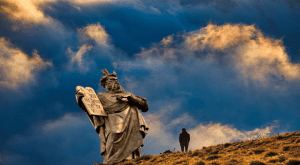
Art By Enlightening Images.
Immanuel Kant thought religion’s sole value lay in its capacity to provide a moral framework. While Catholicism must reject such a reductionist view, it cannot be denied that morality certainly plays a significant role in biblical religion.
In this paper, I will examine the various aspects of Catholic moral theology. First, however, I will address what moral theology means.
Moral theology refers to the study of human actions directed by reason and faith toward the attainment of a supernatural destiny. This concept is clarified when it is compared to ethics. Moral theology generally differs from ethics in that it is predicated on Divine grace and revelation, which illuminates the intellect. On the other hand, ethics is limited to knowledge of right and wrong as understood by reason alone. Where moral theology is concerned with the ultimate state of the soul, ethics is concerned with conduct among people.
Owing to this, a code of ethics can be divorced from objective morality. An example can be derived from the legal profession. An attorney may act morally by informing the police about his client’s actions. However, such conduct would violate the ethical practice of lawyers.
Moreover, moral theology is predicated on the belief that human beings are not just social animals that must “get along” but creatures made in the very image of God. To paraphrase Saint Augustine, we are created by God for God.
Before proceeding to the four components of moral theology, I want to briefly touch on the three elements that make up a moral (or immoral) act. These elements can be defined as the objective act (what we do), the subjective intention (why we do the act), and the circumstances in which we perform the act (where, when, how, with whom, the consequences, etc.).
For an individual act to be morally good, the object, or what we are doing, must be objectively good. Apart from the intention or reason for doing some acts, some actions are always wrong because they go against a fundamental or basic human good that should never be compromised. Murder and rape are examples of acts that are always wrong. Such acts are referred to as intrinsically evil acts; that is, they are wrong in themselves, apart from the reason they are done or the circumstances surrounding them.
I now turn to Catholic moral theology’s four components: freedom, truth, law, and conscience.
The existence of a moral agent presupposes freedom. That is to say, freedom is a necessary condition for any moral act. To understand why, we must clearly understand what freedom means.
Within the human context, freedom can take various forms. A fundamental definition of freedom is the capacity of an agent to act or not act free from external constraints. This is freedom from coercion, which is the capacity to carry out what one has decided upon without impediments from outside agents. Examples of this are freedom of expression and freedom of organization.
Freedom of choice or psychological freedom connotes the absence of the internal need to choose one thing or another. This refers to the freedom to decide autonomously without being bound by an interior determinism. Finally, moral freedom refers to the capacity to affirm and love the good, which is the object of one’s free will, without being enslaved by disordered passions or sin.
“What is truth?” Pontius Pilate famously asks in John’s Gospel. The modern phraseology of “my truth” echoes Pilate’s skepticism**.** The issue of truth necessarily provides the foundation for morality. Moreover, morality must be predicated upon the existence of an objective standard if it is to have any meaning. If there is no objective truth, there can be no judgment about right and wrong that rises above the tyranny of the masses.
The answer to Pilate’s question, “What is truth?” is the conforming of the mind to reality. In moral theology, truth means the mind corresponding to natural law, which is a manifestation of the mind of God.
The natural law is innate in beings endowed with reason and inclines them toward their right action and end. It consists in the light of reason that enables man to discern good from evil. It is called “natural” because it consists of the light of reason that each person has by nature.
Natural law segways directly into conscience. For Cardinal John Henry Newman, conscience represented the aboriginal vicar of Christ in the soul. (Newman, John Henry. A Letter Addressed to His Grace the Duke of Norfolk. 1875).
A properly formed conscience makes clear our moral obligation in the light of the natural law. In this sense, the conscience signals to the individual the good he is to do and the evil he is to avoid. The phrase “properly formed” is worthy of explanation. Because we have fallen natures, we can be subjectively wrong about something objectively true. I can think subjectively that the earth is flat while it is objectively a sphere. For this reason, Catholicism insists that individuals follow the authoritative teaching of the Church in conjunction with the teachings of the Holy Spirit to form their conscience.
In conclusion, I want to address why all of this matters. Two reasons are readily apparent. First, an objective morality provides the touchstone for human laws. Without an objective standard, human laws are simply the dictates of those in power. An example of this can be drawn from Nazism. The holocaust took place under the color of German law. Yet any rational person would admit the holocaust was an affront to natural law and objective morality. For this reason, it is possible to speak of man-made laws (positive laws) as being just and unjust. The criteria for determining whether a law is just or not is whether the man-made law is congruent with natural law.
The second reason is teleological. Human beings, by nature, seek happiness. The ultimate happiness, the summon bonum of human existence, is communion with God. This communion with God requires holiness, and holiness is predicated upon adhering to moral principles. If we wish to be happy, we must be virtuous.
In this essay, I have sought to provide the framework for understanding Catholic moral theology. I have examined the three elements that make an act moral or immoral. Finally, I have delineated the four components of Catholic moral theology.
Education and Religion
History and Religion
Previous Post

May 19, 2024
The Temple Veil
Next Post
June 2, 2024 Catholicism And Culture
Recent Comments
"Why would it matter if atheism is wrong? The fact that Catholic and Protestant scholars ..."
Beyond the Absence of Belief: The ..."
"Kaiser Member Service Proponents often compare atheism to not collecting stamps—it is the lack of ..."
Beyond the Absence of Belief: The ..."
""these dual denials (objective truth and objective meaning)"This is not accurate. Post-modern thought does not ..."
Defending the Faith in a Post-Truth ..."
"The theologians still haven't received the memo. Your opposition are no longer atheists, but they ..."
Defending the Faith in a Post-Truth ..."
Browse Our Archives
Select a Category Abortion Atheism Catholicism. Catholicism. God. Theophany. Christmas Eschatology Faith and Works. God. Holy Spirit Intelligent Design Jesus Christ Justice Law Politics Protestantism Religion Sabbath Salvation. Soteriology. The Bible Theology Uncategorized
Select a Month October 2026 September 2026 August 2026 July 2026 June 2026 May 2026 April 2026 March 2026 February 2026 January 2026 December 2025 November 2025 October 2025 September 2025 August 2025 July 2025 June 2025 May 2025 April 2025 March 2025 February 2025 January 2025 December 2024 November 2024 October 2024 September 2024 August 2024 July 2024 June 2024 May 2024 April 2024 March 2024 February 2024 January 2024 December 2023 November 2023 October 2023 September 2023 August 2023 July 2023 June 2023 May 2023 April 2023 March 2023 February 2023 January 2023 December 2022 November 2022 October 2022 September 2022 August 2022 July 2022 June 2022 May 2022 April 2022 March 2022 February 2022 January 2022 December 2021
Follow Us!
TAKE THE
Religious Wisdom Quiz
I was breathing out murderous threats, but a blinding light changed everything. I became the greatest missionary the church has known. Who am I?
Select your answer to see how you score.
Saul Stephen Peter Barnabas
Related posts from Summa Catholic

The Anatomy of Divine Revelation in Catholic Thought

Beyond the Absence of Belief: The Implications of...

Can Catholic Apologetics Survive a Postmodern World?

From Samaria to Sanctity: Analyzing The Woman At...
TRENDING AT PATHEOS Catholic

Rejecting Doom: Christian Hope And Human Action
Christianity is a religion of hope. We are to have hope and...

It’s What Comes From Within Which Matters
One of the most difficult things for us to understand is why...

Why I Choose the Eucharist Over the Sermon
Choose the Eucharist, Not the Sermon What are we supposed to get...

5 Design Elements Found in Spiritually Rooted Homes
Putting Spirituality Into Home Decor Our homes are more than our living...

Credo: A Story of God Told with the...
About 10 years ago, I began to imagine a personal "Credo" that...

The Anatomy of Divine Revelation in Catholic Thought
The claim that God has made Himself known to human beings is...
view all Catholic blogs
What Are Your Thoughts?leave a comment
Ad-Free & Subscriber Log-In Subscription Support
- About Us
- 2026 Calendar
- Videos
- Podcasts
- Library of World Religions
- Faith In Media Tracker
- Advertise With Us
- Write for Us
- Privacy Policy
- Terms of Service
- Do Not Sell My Data
- Contact Us
- Radiant Digital
- Manage Newsletter Subscriptions
- Unsubscribe From Notifications
- Sitemap
Copyright 2008-2026, Patheos. All rights reserved.
Subscription Support Ad-Free & Subscriber Log-In
Follow Patheos