
BuddhistCatholicContemplativeEvangelicalGeneral ChristianHinduJewishLatter-day SaintMuslimNew VisionsProgressive Christian
Beliefs
- Buddhist
- Catholic
- Contemplative
- Evangelical
- General Christian
- Hindu
- Jewish
- Latter-day Saint
- More Voices
- Muslim
- New Visions
- Pagan
- Progressive Christian
Topics
- Religion News
- Food and Religion
- Sports and Religion
- Religious Art
- Religious Music and Entertainment
- Religious Events
- History and Religion
- Style and Religion
- Politics and Religion
- Women in Religion
- Recreation Outdoors and Religion
- Business Finance and Religion
- Careers Workplace and Religion
- Education and Religion
- Family Parenting and Religion
- Health Fitness and Religion
- Home and Religion
- Relationships and Religion
- Technology and Religion
- Travel and Religion
Columnists
- Buddhist Columnists
- Business Finance and Religion Columnists
- Careers Workplace and Religion Columnists
- Catholic Columnists
- Contemplative Columnists
- Education and Religion Columnists
- Evangelists Columnists
- Family Parenting and Religion Columnists
- General Christian Columnists
- Health Fitness and Religion Columnists
- Hindu Columnists
- History and Religion Columnists
- Home and Religion Columnists
- Jewish Columnists
- More Voices Columnists
- Latter Day Columnists
- Muslim Columnists
- New Visions Columnists
- Nonreligious Columnists
- Pagan Columnists
- Politics and Religion Columnists
- Progressive Columnists
- Recreation Outdoors and Religion Columnists
- Relationships and Religion Columnists
- Religion News Columnists
- Religious Art Columnists
- Religious Events Columnists
- Religious Music and Entertainment Columnists
- Sports and Religion Columnists
- Style and Religion Columnists
- Technology and Religion Columnists
- Travel and Religion Columnists
- Women in Religion Columnists
Resource Library
- 2026 Calendar
- Library of World Religions
- The 100 Most Holy Places on Earth
- Patheos Answers
- Podcasts
- Videos
- Faith Leaders Database
- Anglican Episcopalian
- Bahai
- Baptist
- Buddhism
- Christianity
- Confucianism
- Eastern Orthodoxy
- Hinduism
- Holiness and Pentecostal
- ISKCON
- Islam
- Judaism
- Lutheran
- Methodist
- The Church of Jesus Christ of Latter-day Saints
- New Age
- Paganism
- Presbytarian and Reformed
- Protestantism
- Religion Behind the Scenes
- Roman Catholic
- Scientology
- Shia Islam
- Sikhism
- Sufism
- Sunni Islam
- Taoism
- Zen
- See all religions
Research Tools
 Ad-Free & Subscriber Log-In Subscription Support
Follow Patheos 

- Trending:
- Advent
- |
- Forgiveness
- |
- Thanksgiving
- |
- Election
- |
- Seasonal Holidays
- |
- Marriage

- Home
- Catholic
- Education and Religion
- Thoughts On Intelligent Design
Thoughts On Intelligent Design
Last updated on: August 15, 2024 at 10:19 am by David Schloss
Thoughts On Intelligent Design 2024-08-15T10:19:44-04:00 David Schloss
Patheos Explore the world's faith through different perspectives on religion and spirituality! Patheos has the views of the prevalent religions and spiritualities of the world.
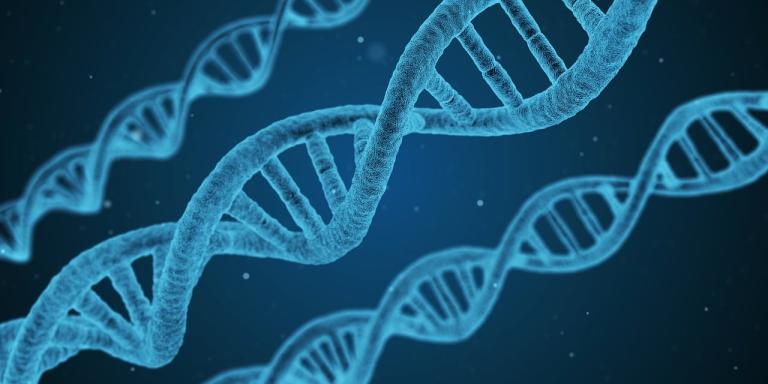
Art by Arek Socha.
We live in a secular, reductionist, and cynical time that views anything related to the transcendent with suspicion, if not with contempt. However, for most of human history, the belief that the universe was designed and created was widely accepted. While most belief systems emphasize the existence of a God or gods, a relatively recent theory offers a different perspective.
In this essay, I will examine intelligent design, explain what it is, how it came to be, and explore whether it is compatible with Catholicism.
What is considered intelligent design is a reasonably recent formulation designed (pardon the pun) to refute the theory of evolution advanced by Charles Darwin. Despite this, aspects of intelligent design philosophy can be found in the teleological arguments of Socrates and Plato.
The modern concept of intelligent design, however, builds on the arguments of the English clergyman William Paley. Paley’s analogical argument posits that the universe appears to be the product of a very complex design. He writes, “If I stumbled on a stone and asked how it came to be there, it would be difficult to show that the answer, it has lain there forever. Yet this is not true if the stone were to be a watch.” (Paley, William. Natural Theology, Or, Evidences of the Existence and Attributes of the Deity, 1811). Paley infers from the intricate design of the universe to a universe creator/designer. Said another way, if there is a design, there must be a designer, who Paley argues is God. However, modern intelligent design advocates do not necessarily reach that conclusion. That is, they stop short of arguing that the “designer” must be a God. It is a conclusion that I will return to below.
Widely considered, intelligent design refers to a scientific (some may say pseudo-scientific) approach to obtaining evidence of design in the universe. Specifically, intelligent design posits that an intelligent cause best explains certain features of the universe and living things.
Intelligent design proponents study various natural structures to determine whether they are the product of chance, natural law, or intelligent design. Such research is conducted by observing the types of information produced when intelligent agents act. Scientists then seek to find objects with the same informational properties that we commonly know come from intelligence. For example, supporters of intelligent design observed that the functional parts and systems of living organisms are “irreducibly complex” because none of their parts can be removed without causing the whole system to cease functioning. From this, an inference is drawn that such a system could not have come about through random mutation and natural selection, as the standard evolutionary account maintains; instead, living organisms must have been created all at once by an intelligent designer. (See Behe, Michael J. Darwin’s Black Box. Simon and Schuster, 1996).
Intelligent design has applied scientific methods to detect design in irreducibly complex biological structures, such as the universe’s life-sustaining physical architecture and the fossil record’s geologically rapid origin of biological diversity during the Cambrian explosion.
Nevertheless, it is an understatement to claim that intelligent design is not without its detractors. First, critics claim that intelligent design theorists misunderstand biological mutation, thereby shedding doubt on the theory’s argument of the “irreducible complexity” of organisms. Perhaps most damning, from a scientific perspective, is the theory’s lack of verifiability. Because intelligent design does not supply the information necessary to characterize the “designer,” critics argue that it is untestable and, therefore, unscientific.
Having sought to provide a basic outline of intelligent design, I now turn to whether it is compatible with the Catholic faith. Specifically, we must ask whether Catholics can practice the faith while also adhering to the intelligent design philosophy.
To argue that belief in the Catholic faith and belief in intelligent design are incompatible, one must show that they are in contradiction, or at least contrary to each other. This does not appear to be the case, as there do not appear to be any such overt conflicts. Indeed, it is possible to argue that intelligent design aligns with various arguments in Catholic philosophy.
As indicated above, the theory shares many similarities with the arguments of Socrates, Plato, and, more recently, Saint Thomas Aquinas. The word teleology refers to the purpose or goal of a particular thing. Aquinas observes that inanimate objects in nature “act” toward a particular end. For example, an acorn’s end is to become a tree, and it “moves” toward that end. However, a thing lacking intelligence cannot act toward an end unless directed by an intelligent being. Aquinas concludes that such an intelligent being is God. As stated earlier, intelligent design does not necessarily come to that conclusion. Another example of this concept comes from DNA. DNA contains information-harboring molecules, which “instruct” cells on their operation. As the intelligent design advocate Dr. Stephen Meyer points out, information is a product of a mind. (See Meyer, Stephen C. Darwin’s Doubt. Harper Collins, 2013).
Thus far, it seems that Catholicism and intelligent design are compatible. That is true to the extent that intelligent design opposes macroevolution and deterministic philosophy. However, from a Catholic vantage point, it is insufficient.
If Catholics have any issue against intelligent design, it is the theory’s unwillingness to conclude that the “designer” is the God of the Bible. While this is wholly defensible from a scientific perspective, it is inadequate to the needs of faith and leaves matters such as prayer, salvation, and eschatology in ruins. As such, intelligent design is not an improvement over the classical teleological arguments in Catholic philosophy
In conclusion, intelligent design appears to place the classical teleological arguments from philosophy in a scientific framework. From a Catholic perspective, intelligent design can be a useful argument against advocates of a purely materialistic and deterministic philosophy. Does intelligent design get one to believe in a personal God? No, but that is not its intention, either. That is the work of the faithful.
Education and Religion
History and Religion
Previous Post
March 31, 2024
Salvation, Suffering, And Death
Next Post
April 14, 2024 The Atonement Theories
Recent Comments
"While Unitarianism remains a small minority of believers, its influence on Christianity must not be ..."
A Catholic Critique of Biblical Unitarianism
"Science has proven that Homosapiens have walked this Earth for over 200,000 years. Did God ..."
A Catholic Critique of Biblical Unitarianism
"The universe, the planet we inhabit, and life itself need not exist.This is a claim. ..."
Creation, Preservation, and Teleology in Catholic ..."
"If you have sufficient evidence to support a belief you don't need faith. Despite what ..."
Is Faith Really Blind? What Skeptics ..."
Browse Our Archives
Select a Category Abortion Atheism Catholicism. Catholicism. God. Theophany. Christmas Eschatology Faith and Works. God. Holy Spirit Intelligent Design Jesus Christ Justice Law Politics Protestantism Religion Sabbath Salvation. Soteriology. The Bible Theology Uncategorized
Select a Month November 2026 October 2026 September 2026 August 2026 July 2026 June 2026 May 2026 April 2026 March 2026 February 2026 January 2026 December 2025 November 2025 October 2025 September 2025 August 2025 July 2025 June 2025 May 2025 April 2025 March 2025 February 2025 January 2025 December 2024 November 2024 October 2024 September 2024 August 2024 July 2024 June 2024 May 2024 April 2024 March 2024 February 2024 January 2024 December 2023 November 2023 October 2023 September 2023 August 2023 July 2023 June 2023 May 2023 April 2023 March 2023 February 2023 January 2023 December 2022 November 2022 October 2022 September 2022 August 2022 July 2022 June 2022 May 2022 April 2022 March 2022 February 2022 January 2022 December 2021
Follow Us!
TAKE THE
Religious Wisdom Quiz
Nahum describes the Lord as riding in the whirlwind and storms. What does he say are the clouds?
Select your answer to see how you score.
His chariot The dust of his feet His glory His covering
Related posts from Summa Catholic

If Baptism Washes Away Sin, Why Do Catholics...
Is Catholicism The Fulfillment Of The Old Testament?
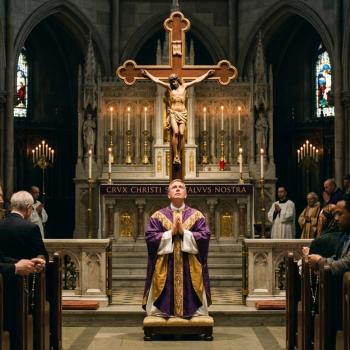
Why Is Catholicism Centered on an Instrument of...

Is Faith Really Blind? What Skeptics Get Wrong
TRENDING AT PATHEOS Catholic

The Kingdom Of God In Ordinary Life And...
The kingdom of God is all around us; it is in us...

How Discretion Guides Us Away From Extremes
Prudence is an important virtue for all of us. While we should...

If Baptism Washes Away Sin, Why Do Catholics...
The seven sacraments stand as the foundation of Catholic ecclesial life. The...

The Power of Setting a Good Example
Remember last August when the Chicago White Sox hosted a "Pope Hat...

A Catholic Critique of Biblical Unitarianism
If the statistics are to be believed, Unitarianism is rising worldwide. Although...

How Grandma Tourism Helps Grandparents Live Their Vocation
Grandma, The New Travel Influencer What started as a nostalgia-inspired social media...
view all Catholic blogs
What Are Your Thoughts?leave a comment
Ad-Free & Subscriber Log-In Subscription Support
- About Us
- 2026 Calendar
- Videos
- Podcasts
- Library of World Religions
- Faith In Media Tracker
- Advertise With Us
- Write for Us
- Privacy Policy
- Terms of Service
- Do Not Sell My Data
- Contact Us
- Radiant Digital
- Manage Newsletter Subscriptions
- Unsubscribe From Notifications
- Sitemap
Copyright 2008-2026, Patheos, part of the Radiant Digital network of media brands. All rights reserved.
Subscription Support Ad-Free & Subscriber Log-In
Follow Patheos