
BuddhistCatholicContemplativeEvangelicalGeneral ChristianHinduJewishLatter-day SaintMuslimNew VisionsProgressive Christian
Beliefs
- Buddhist
- Catholic
- Contemplative
- Evangelical
- General Christian
- Hindu
- Jewish
- Latter-day Saint
- More Voices
- Muslim
- New Visions
- Pagan
- Progressive Christian
Topics
- Religion News
- Food and Religion
- Sports and Religion
- Religious Art
- Religious Music and Entertainment
- Religious Events
- History and Religion
- Style and Religion
- Politics and Religion
- Women in Religion
- Recreation Outdoors and Religion
- Business Finance and Religion
- Careers Workplace and Religion
- Education and Religion
- Family Parenting and Religion
- Health Fitness and Religion
- Home and Religion
- Relationships and Religion
- Technology and Religion
- Travel and Religion
Columnists
- Buddhist Columnists
- Business Finance and Religion Columnists
- Careers Workplace and Religion Columnists
- Catholic Columnists
- Contemplative Columnists
- Education and Religion Columnists
- Evangelists Columnists
- Family Parenting and Religion Columnists
- General Christian Columnists
- Health Fitness and Religion Columnists
- Hindu Columnists
- History and Religion Columnists
- Home and Religion Columnists
- Jewish Columnists
- More Voices Columnists
- Latter Day Columnists
- Muslim Columnists
- New Visions Columnists
- Nonreligious Columnists
- Pagan Columnists
- Politics and Religion Columnists
- Progressive Columnists
- Recreation Outdoors and Religion Columnists
- Relationships and Religion Columnists
- Religion News Columnists
- Religious Art Columnists
- Religious Events Columnists
- Religious Music and Entertainment Columnists
- Sports and Religion Columnists
- Style and Religion Columnists
- Technology and Religion Columnists
- Travel and Religion Columnists
- Women in Religion Columnists
Resource Library
- 2026 Calendar
- Library of World Religions
- The 100 Most Holy Places on Earth
- Patheos Answers
- Podcasts
- Videos
- Faith Leaders Database
- Anglican Episcopalian
- Bahai
- Baptist
- Buddhism
- Christianity
- Confucianism
- Eastern Orthodoxy
- Hinduism
- Holiness and Pentecostal
- ISKCON
- Islam
- Judaism
- Lutheran
- Methodist
- The Church of Jesus Christ of Latter-day Saints
- New Age
- Paganism
- Presbytarian and Reformed
- Protestantism
- Religion Behind the Scenes
- Roman Catholic
- Scientology
- Shia Islam
- Sikhism
- Sufism
- Sunni Islam
- Taoism
- Zen
- See all religions
Research Tools
 Ad-Free & Subscriber Log-In Subscription Support
Ad-Free & Subscriber Log-In Subscription Support
Follow Patheos 

- Trending:
- Forgiveness
- |
- Marriage
- |
- Consciousness
- |
- Death Penalty
- |
- Election
- |
- Halloween

- Home
- Catholic
- Education and Religion
- Thoughts on Ashes, Lent, and The Number Forty
Thoughts on Ashes, Lent, and The Number Forty
Last updated on: February 18, 2024 at 10:40 am by David Schloss
Thoughts on Ashes, Lent, and The Number Forty 2024-02-18T10:40:25-05:00 David Schloss
Patheos Explore the world's faith through different perspectives on religion and spirituality! Patheos has the views of the prevalent religions and spiritualities of the world.
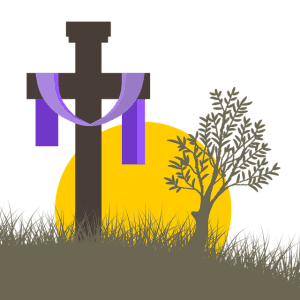
Art by Almeida.
“Remember man, thou art dust, and unto dust thou shalt return.”
It is the season when the faithful are reminded that they are sinners who will die. While that may not be the most uplifting of concepts, the call to repentance and the reminder of our mortality has a long and meaningful history in the Catholic tradition.
In this essay, I will examine three subjects that are vital to the Catholic teachings on repentance and mortality: ashes, Lent, and the significance of the number forty.
Ashes have multiple meanings and uses in the biblical tradition. First, ashes or dust are symbolic of the life cycle. While likely intended to be metaphorical or symbolic, the creation narratives tell how God made human beings out of dust. (See Genesis 2:7). Upon death, the body “Returns to the earth as it once was, and the life breath [i.e., the soul] returns to God who gave it.” (Ecclesiastes 12:6-7).
In this sense, ashes are a reminder of the brevity of life and of one’s impending death (memento mori). There are two primary reasons why being reminded of one’s death is beneficial. First, it imbues life with a sense of urgency. Knowing one’s limited time should spur us to live as fully as God intended. Second, since God will judge the soul at the time of death, memento mori crystalizes the importance of living in accord with the will of God.
Additionally, ashes are used to signify repentance. Such use of ashes is seen throughout Scripture. In Jeremiah 25:34, God commands the Israelites to “wallow in ashes.” Other examples include King David using ashes in response to committing adultery (2 Samuel 12:13-16) and Job covering himself in ashes as a sign of repentance (Job 42:6). The long tradition of the use of ashes as a sign of sorrow and repentance is continued with Lent, which commences on Ash Wednesday.
The word Lent is an Old English term for Spring. Traditionally, it has been associated with a period of contemplation and reflection on those things that hinder spiritual growth. This is often accomplished by prayer and fasting so the faithful can be better prepared for the feast of the Resurrection (Easter). Furthermore, through prayer and fasting, Catholics are disposed to a more fruitful reception of the graces Christ merited by His passion and death.
In a sense, the Lenten season is meant to draw us into Christ’s temptation in the desert. Indeed, Lent is based on the depiction of Christ’s forty days in the desert. “Jesus was led by the Spirit into the desert to be tempted by the devil. He fasted for forty days and forty nights.” (Matthew 4:1-11). The number forty may possess its own significance, a topic I will address below.
The importance of Lent is ingrained in the Church’s liturgical practice. Pope Paul VI put it this way, “The time of Lent preserves its penitential character. The days of penitence to be observed under obligation throughout the Church are all Fridays and Ash Wednesday, that is to say, the first days of Great Lent, according to the diversity of rites. Their substantial observance binds gravely” (Paenitemini, III, norm II).
In the Catholic Church, Lent commences on Ash Wednesday, forty days before Easter. Ash Wednesday, so named for the tradition of placing ashes on the forehead of penitents, can occur on any day from February 4 to March 11, depending on the date of Easter.
The Lenten season emphasizes three pillars of the spiritual life: prayer, fasting, and almsgiving. While oversimplifying the matter, prayer is a conversation with God, a lifting up of the heart and mind to the Divine. Moreover, prayer is the efficient cause of both fasting and almsgiving.
The Bible depicts numerous instances of fasting, often within the context of repentance. However, fasting is also a weapon used to subdue the flesh. Owing to the effect of original sin, the body rebels against the soul. The instincts and passions (sex, food, et al.) war against the rational nature of the soul. The purpose of fasting is to “tame” these uncontrolled instincts and passions and to bring them, once more, into submission to the soul. Initially, the fasting period in preparation for Easter did not exceed two or three days. However, forty days were already customary by the time of the Council of Nicaea in 325 AD.
Almsgiving – giving money or material goods to the poor – is an act of charity. Time has somewhat changed the connotation of charity, but the Latin translation is caritas, meaning “love.” In this context, when we give to those in need, we imitate God, who is love.
The final element of the Lenten season that I will examine is the spiritual meaning and significance of the number forty. Examples of the use of forty appear throughout the Bible. The rain that caused the Great Flood lasted forty days and nights, the Israelites wandered in the desert for forty years, Jesus fasted for forty days, and, of course, Lent lasts forty days. What, if any, importance should we infer from the use of forty in Scripture?
There is no one theory as to why the number forty is so prevalent in the Bible. The most likely reason is that forty is used as an indefinite pronoun intended to suggest a few, some, or many. It may be used to connote a few days, some months, or many years. Another possibility is that forty is intended to signify a period of spiritual testing or assessment. This appears to be the view in Judaism. Similarly, Saint Augustine saw the “perfection of the Law” in the number forty. Unfortunately, there is no definitive answer regarding the significance of the number forty in Scripture.
Lent is a journey that begins with a reminder of our mortality and the need for repentance. However, this journey, begun in ashes, begun in sorrow, ends with the victory of the Resurrection, ends with the joy of the Risen Christ.
Education and Religion
History and Religion
Previous Post

February 11, 2024
Tropes, Schemes, And Scripture
Next Post

February 25, 2024 The Perennial Logos
Browse Our Archives
Select a Category Abortion Atheism Catholicism. Catholicism. God. Theophany. Christmas Eschatology Faith and Works. God. Holy Spirit Intelligent Design Jesus Christ Justice Law Politics Protestantism Religion Sabbath Salvation. Soteriology. The Bible Theology Uncategorized
Select a Month October 2026 September 2026 August 2026 July 2026 June 2026 May 2026 April 2026 March 2026 February 2026 January 2026 December 2025 November 2025 October 2025 September 2025 August 2025 July 2025 June 2025 May 2025 April 2025 March 2025 February 2025 January 2025 December 2024 November 2024 October 2024 September 2024 August 2024 July 2024 June 2024 May 2024 April 2024 March 2024 February 2024 January 2024 December 2023 November 2023 October 2023 September 2023 August 2023 July 2023 June 2023 May 2023 April 2023 March 2023 February 2023 January 2023 December 2022 November 2022 October 2022 September 2022 August 2022 July 2022 June 2022 May 2022 April 2022 March 2022 February 2022 January 2022 December 2021
Follow Us!
TAKE THE
Religious Wisdom Quiz
Who saw the vision of the valley of dry bones?
Select your answer to see how you score.
Daniel Isaiah Ezekiel Jeremiah
Related posts from Summa Catholic

The Anatomy of Divine Revelation in Catholic Thought

Beyond the Absence of Belief: The Implications of...

Can Catholic Apologetics Survive a Postmodern World?

From Samaria to Sanctity: Analyzing The Woman At...
TRENDING AT PATHEOS Catholic

Rejecting Doom: Christian Hope And Human Action
Christianity is a religion of hope. We are to have hope and...

It’s What Comes From Within Which Matters
One of the most difficult things for us to understand is why...

Why I Choose the Eucharist Over the Sermon
Choose the Eucharist, Not the Sermon What are we supposed to get...

5 Design Elements Found in Spiritually Rooted Homes
Putting Spirituality Into Home Decor Our homes are more than our living...

Credo: A Story of God Told with the...
About 10 years ago, I began to imagine a personal "Credo" that...

The Anatomy of Divine Revelation in Catholic Thought
The claim that God has made Himself known to human beings is...
view all Catholic blogs
Ad-Free & Subscriber Log-In Subscription Support
- About Us
- 2026 Calendar
- Videos
- Podcasts
- Library of World Religions
- Faith In Media Tracker
- Advertise With Us
- Write for Us
- Privacy Policy
- Terms of Service
- Do Not Sell My Data
- Contact Us
- Radiant Digital
- Manage Newsletter Subscriptions
- Unsubscribe From Notifications
- Sitemap
Copyright 2008-2026, Patheos. All rights reserved.
Subscription Support Ad-Free & Subscriber Log-In
Follow Patheos