
BuddhistCatholicContemplativeEvangelicalGeneral ChristianHinduJewishLatter-day SaintMuslimNew VisionsProgressive Christian
Beliefs
- Buddhist
- Catholic
- Contemplative
- Evangelical
- General Christian
- Hindu
- Jewish
- Latter-day Saint
- More Voices
- Muslim
- New Visions
- Pagan
- Progressive Christian
Topics
- Religion News
- Food and Religion
- Sports and Religion
- Religious Art
- Religious Music and Entertainment
- Religious Events
- History and Religion
- Style and Religion
- Politics and Religion
- Women in Religion
- Recreation Outdoors and Religion
- Business Finance and Religion
- Careers Workplace and Religion
- Education and Religion
- Family Parenting and Religion
- Health Fitness and Religion
- Home and Religion
- Relationships and Religion
- Technology and Religion
- Travel and Religion
Columnists
- Buddhist Columnists
- Business Finance and Religion Columnists
- Careers Workplace and Religion Columnists
- Catholic Columnists
- Contemplative Columnists
- Education and Religion Columnists
- Evangelists Columnists
- Family Parenting and Religion Columnists
- General Christian Columnists
- Health Fitness and Religion Columnists
- Hindu Columnists
- History and Religion Columnists
- Home and Religion Columnists
- Jewish Columnists
- More Voices Columnists
- Latter Day Columnists
- Muslim Columnists
- New Visions Columnists
- Nonreligious Columnists
- Pagan Columnists
- Politics and Religion Columnists
- Progressive Columnists
- Recreation Outdoors and Religion Columnists
- Relationships and Religion Columnists
- Religion News Columnists
- Religious Art Columnists
- Religious Events Columnists
- Religious Music and Entertainment Columnists
- Sports and Religion Columnists
- Style and Religion Columnists
- Technology and Religion Columnists
- Travel and Religion Columnists
- Women in Religion Columnists
Resource Library
- 2026 Calendar
- Library of World Religions
- The 100 Most Holy Places on Earth
- Patheos Answers
- Podcasts
- Videos
- Faith Leaders Database
- Anglican Episcopalian
- Bahai
- Baptist
- Buddhism
- Christianity
- Confucianism
- Eastern Orthodoxy
- Hinduism
- Holiness and Pentecostal
- ISKCON
- Islam
- Judaism
- Lutheran
- Methodist
- The Church of Jesus Christ of Latter-day Saints
- New Age
- Paganism
- Presbytarian and Reformed
- Protestantism
- Religion Behind the Scenes
- Roman Catholic
- Scientology
- Shia Islam
- Sikhism
- Sufism
- Sunni Islam
- Taoism
- Zen
- See all religions
Research Tools
 Ad-Free & Subscriber Log-In Subscription Support
Ad-Free & Subscriber Log-In Subscription Support
Follow Patheos 

- Trending:
- Forgiveness
- |
- Marriage
- |
- Consciousness
- |
- Death Penalty
- |
- Election
- |
- Halloween

- Home
- Catholic
- History and Religion
- The Devil And Free Will
The Devil And Free Will
Last updated on: January 14, 2024 at 9:20 am by David Schloss
The Devil And Free Will 2024-01-14T09:20:43-05:00 David Schloss
Patheos Explore the world's faith through different perspectives on religion and spirituality! Patheos has the views of the prevalent religions and spiritualities of the world.
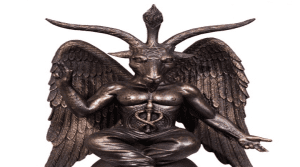
Art by Michael Aigner.
Perhaps the most famous work of the English artist John Martin is Satan Expelled from Heaven. As the title of the work suggests, Martin depicts Satan and his followers being evicted from Heaven as punishment for their rebellion against God.
While the reality of angels and demons is widely accepted in Christianity, I would like to examine Satan within the context of free will. I will begin by exploring what Catholicism claims about angels, whether these creatures possess free will, and, if they do, the nature of that will. Finally, I will address why God would create angels capable of warring against Him.
In drawing on Scripture, Catholicism adheres to an ontological dualism. That is to say that Catholicism asserts that there exist two types of substances or things in the universe: spiritual and material.
Angels, like God, are composed of a purely spiritual substance. On the other hand, humans are composite creatures made up of a spiritual soul and a material body. Demons share the same traits as angels in that they are pure spirits.
Since God creates all things by virtue of His intellect, a thing is more like God the more that its nature is intellectual. Moreover, since angels possess the beatific vision, which is the greatest good for a created being, angels can be said to exist at a “higher plane” than human beings. The difference between angels and demons is that where angels serve God, demons now serve Satan. Since Satan and his followers have been “hurled down,” they are considered fallen angels. (See Revelation 12:7–10).
Now, angels and demons are pure spirits possessed of a rational nature, and to be rational includes the power of free will. Since angels and demons are rational creatures, they must be said to possess the capacity to act without compulsion from within or coercion from without. It is the faculty of an intelligent being to act or not act, to act this way or another way. Indeed, it is only owing to the free will capacity of angels that they can rebel against the will of God and, so doing, become demons.
As in human beings, the capacity of angels to act of their own accord leads to the problem of free will and an omniscient God. The problem can be formulated in this way. Can certain creatures like humans and angels be said to have free will if an omniscient God knows what the creature will do?
The history of philosophy and theology is replete with efforts to address this problem. A Catholic solution to the problem of free will is predicated on a correct understanding of eternity and how God views history. God is eternal. That is to say that God does not exist in time; in fact, God is the author of time, much as He is the author of all creation.
The effect of God’s existence in eternity is that God “sees” all of history simultaneously. This fact provides the solution to the apparent contradiction between God’s omniscience and human free will. Since God “sees” from eternity, He is considered omniscient. Since every human action occurs in time, human free will remains intact.
At first glance, this solution appears only to address the problem of human free will. However, it is possible to apply the same principles to angels. To do so, we must first recognize that angels are not eternal, only immortal. This is an important distinction. The fact that angels are not eternal means they are creatures (created beings). As creatures, they have natures created by God, natures that include the capacity for free will. However, as beings within God’s created order, their free will is not beyond the knowledge of God.
All of this leads to the vexing question: why would God create angels with free will, a free will capable of rebelling against Him?
It must first be observed that in the absence of free will, there can not be any concept of morality, ethics, or even salvation. Both morality and ethics exist on the foundation of judgment. The judgment must be “free” if it is to have any meaning. The lack of free will in an angel or person would mean they could not act in any manner God had not already predetermined. Such a creature would be an automaton and in no way a free agent.
However, perhaps the Divine nature is the most fundamental reason God created creatures capable of acting against Him. Scripture informs us that God is love (1 John 4:16). Within the context of theology, love is not an emotion. Instead, love entails willing the good of another. Now, something can only be willed if a choice exists. Said differently, one must choose to will the good of another; one must choose to love.
Moreover, if we recognize the contingent nature of the universe, we see that God has created out of His nature, which is love. Everything created is contingent on God for its creation and continued existence.
If it is true that God has created out of love, and if it is also true that it is the nature of love to seek reciprocity, then we can infer that God desires the love of His creation. Finally, if love is a choice, it is dependent on free will to be actualized.
Therefore, it may be argued that God created particular creatures with the capacity to know something of their Creator and the free will to choose to return the love of God. The fact that the Devil (and frequently human beings) have misused free will does not diminish the inherent goodness of free will. Said differently, “abusus non tollit usum.” (The abuse of something does not preclude its good).
While it is precarious to claim to know the mind of God, it seems evident that God deemed the existence of creatures possessing free will (such as the Devil) worth the risk of those creatures using free will for evil.
History and Religion
Previous Post
January 7, 2024
The Abandonment Of God
Next Post
January 21, 2024 What Is Open Theism?
Browse Our Archives
Select a Category Abortion Atheism Catholicism. Catholicism. God. Theophany. Christmas Eschatology Faith and Works. God. Holy Spirit Intelligent Design Jesus Christ Justice Law Politics Protestantism Religion Sabbath Salvation. Soteriology. The Bible Theology Uncategorized
Select a Month October 2026 September 2026 August 2026 July 2026 June 2026 May 2026 April 2026 March 2026 February 2026 January 2026 December 2025 November 2025 October 2025 September 2025 August 2025 July 2025 June 2025 May 2025 April 2025 March 2025 February 2025 January 2025 December 2024 November 2024 October 2024 September 2024 August 2024 July 2024 June 2024 May 2024 April 2024 March 2024 February 2024 January 2024 December 2023 November 2023 October 2023 September 2023 August 2023 July 2023 June 2023 May 2023 April 2023 March 2023 February 2023 January 2023 December 2022 November 2022 October 2022 September 2022 August 2022 July 2022 June 2022 May 2022 April 2022 March 2022 February 2022 January 2022 December 2021
Follow Us!
TAKE THE
Religious Wisdom Quiz
Who said, "The Lord said to my Lord, ‘Sit at my right hand’"?
Select your answer to see how you score.
Moses Solomon David Isaiah
Related posts from Summa Catholic

The Anatomy of Divine Revelation in Catholic Thought

Beyond the Absence of Belief: The Implications of...

Can Catholic Apologetics Survive a Postmodern World?

From Samaria to Sanctity: Analyzing The Woman At...
TRENDING AT PATHEOS Catholic

Rejecting Doom: Christian Hope And Human Action
Christianity is a religion of hope. We are to have hope and...

It’s What Comes From Within Which Matters
One of the most difficult things for us to understand is why...

Why I Choose the Eucharist Over the Sermon
Choose the Eucharist, Not the Sermon What are we supposed to get...

5 Design Elements Found in Spiritually Rooted Homes
Putting Spirituality Into Home Decor Our homes are more than our living...

Credo: A Story of God Told with the...
About 10 years ago, I began to imagine a personal "Credo" that...

The Anatomy of Divine Revelation in Catholic Thought
The claim that God has made Himself known to human beings is...
view all Catholic blogs
Ad-Free & Subscriber Log-In Subscription Support
- About Us
- 2026 Calendar
- Videos
- Podcasts
- Library of World Religions
- Faith In Media Tracker
- Advertise With Us
- Write for Us
- Privacy Policy
- Terms of Service
- Do Not Sell My Data
- Contact Us
- Radiant Digital
- Manage Newsletter Subscriptions
- Unsubscribe From Notifications
- Sitemap
Copyright 2008-2026, Patheos. All rights reserved.
Subscription Support Ad-Free & Subscriber Log-In
Follow Patheos