
BuddhistCatholicContemplativeEvangelicalGeneral ChristianHinduJewishLatter-day SaintMuslimNew VisionsProgressive Christian
Beliefs
- Buddhist
- Catholic
- Contemplative
- Evangelical
- General Christian
- Hindu
- Jewish
- Latter-day Saint
- More Voices
- Muslim
- New Visions
- Pagan
- Progressive Christian
Topics
- Religion News
- Food and Religion
- Sports and Religion
- Religious Art
- Religious Music and Entertainment
- Religious Events
- History and Religion
- Style and Religion
- Politics and Religion
- Women in Religion
- Recreation Outdoors and Religion
- Business Finance and Religion
- Careers Workplace and Religion
- Education and Religion
- Family Parenting and Religion
- Health Fitness and Religion
- Home and Religion
- Relationships and Religion
- Technology and Religion
- Travel and Religion
Columnists
- Buddhist Columnists
- Business Finance and Religion Columnists
- Careers Workplace and Religion Columnists
- Catholic Columnists
- Contemplative Columnists
- Education and Religion Columnists
- Evangelists Columnists
- Family Parenting and Religion Columnists
- General Christian Columnists
- Health Fitness and Religion Columnists
- Hindu Columnists
- History and Religion Columnists
- Home and Religion Columnists
- Jewish Columnists
- More Voices Columnists
- Latter Day Columnists
- Muslim Columnists
- New Visions Columnists
- Nonreligious Columnists
- Pagan Columnists
- Politics and Religion Columnists
- Progressive Columnists
- Recreation Outdoors and Religion Columnists
- Relationships and Religion Columnists
- Religion News Columnists
- Religious Art Columnists
- Religious Events Columnists
- Religious Music and Entertainment Columnists
- Sports and Religion Columnists
- Style and Religion Columnists
- Technology and Religion Columnists
- Travel and Religion Columnists
- Women in Religion Columnists
Resource Library
- 2026 Calendar
- Library of World Religions
- The 100 Most Holy Places on Earth
- Patheos Answers
- Podcasts
- Videos
- Faith Leaders Database
- Anglican Episcopalian
- Bahai
- Baptist
- Buddhism
- Christianity
- Confucianism
- Eastern Orthodoxy
- Hinduism
- Holiness and Pentecostal
- ISKCON
- Islam
- Judaism
- Lutheran
- Methodist
- The Church of Jesus Christ of Latter-day Saints
- New Age
- Paganism
- Presbytarian and Reformed
- Protestantism
- Religion Behind the Scenes
- Roman Catholic
- Scientology
- Shia Islam
- Sikhism
- Sufism
- Sunni Islam
- Taoism
- Zen
- See all religions
Research Tools
 Ad-Free & Subscriber Log-In Subscription Support
Ad-Free & Subscriber Log-In Subscription Support
Follow Patheos 

- Trending:
- Forgiveness
- |
- Marriage
- |
- Consciousness
- |
- Death Penalty
- |
- Election
- |
- Halloween

- Home
- Catholic
- History and Religion
- Why Two Judgments?
Why Two Judgments?
Last updated on: December 10, 2023 at 9:25 am by David Schloss
Why Two Judgments? 2023-12-10T09:25:11-05:00 David Schloss
Patheos Explore the world's faith through different perspectives on religion and spirituality! Patheos has the views of the prevalent religions and spiritualities of the world.

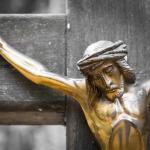
Art by Edward Lich.
For most people, the idea of being judged, whether by our boss, strangers, or even God, can be disconcerting. For Catholics, the belief that we will be judged not once but twice by God can be particularly anxiety-inducing.
In this paper, I will examine a subset of Catholic theology called eschatology. Generally translated from Greek as a discourse on last things, eschatology is concerned with death, judgment, heaven, and hell.
Specifically, I will focus on what the Bible teaches about what Catholicism calls the particular and the general judgment. Perhaps, however, it is prudent to ask why God judges at all.
By virtue of our nature, human beings are moral creatures. For most of human history, this meant the recognition of an objective moral standard by which one’s conduct could be measured. By definition, an objective standard for determining right and wrong must be entirely independent of human beings. This objective standard of morality is knowable by natural law, which is “Nothing else than the rational creature’s participation in the eternal law” (Thomas Aquinas, Summa Theologica, 1a 2ae, quest. 91, art. 2). The eternal law is synonymous with the mind of God. Natural law is knowable to the human intellect through a properly formed conscience.
If it is true that humans possess an innate sense of right and wrong and if it is also true that an objective moral order exists, then it logically follows that there must be a judgment to determine if one has adhered to the moral standard set forth by God. Yet, Catholicism asserts that even this is not enough, that simply being “good” is not a sufficient condition for salvation. However, such an assertion involves soteriology and is beyond the scope of this essay.
In a sense, the above is an a posteriori argument and not predicated upon a religious belief. Instead, it is an acknowledgment of the innate human capacity to understand right and wrong and the need for an objective criteria.
Having sought to show why there needs to be a judgment, I turn to the question of why Catholicism asserts that God judges us twice.
The particular judgment is the belief that immediately upon death, the soul is judged by God. The Catholic doctrine teaches that immediately after death, the eternal destiny of each soul is decided by the just judgment of God*.* Souls who die in a state of grace and are perfectly pure are admitted directly into heaven, while those souls who die in a state of grace but require purification are cleansed in Purgatory. Those souls who have failed to repent and die in a state of mortal sin are exiled to the eternal punishment of hell.
Scripture articulates this belief, “Just as it is appointed that human beings die once, and after this, the judgment.” (Hebrews 9:27). As indicated above, the criteria for the particular judgment is how well the individual cooperated with grace by living in accordance with natural law over one’s lifetime.
If what has thus far been stated is true, it seems superfluous that there be a second judgment, called the general judgment.
Nevertheless, the belief in the general judgment has been part of the Church’s teachings since its inception. It is an article of faith in all the ancient creeds: “He shall come to judge the living and the dead” (Apostles’ Creed). He shall come again with glory to judge both the living and the dead” (Nicene Creed). “From thence he shall come to judge the living and the dead, at whose coming all men must rise with their bodies and are to render an account of their deeds” (Athanasian Creed).
Perhaps nothing instantiates the end time quite like the general judgment. Where the particular judgment is personal and occurs at the time of the individual’s death, the general judgment will occur at the Second Coming. It will be a social judgment because it will manifest God’s justice in condemning sinners and his mercy in those who are saved. It will also be a total judgment by revealing people’s moral conduct and all the accumulated blessings or injuries resulting from each person’s good or evil deeds. Additionally, the providence of God, which, on earth, often permits the good to suffer and the wicked to prosper, may, in the end, be revealed to all.
The concept of a general judgment is not limited to Christianity, and belief in it appears in the Old Testament as well as the New Testament.
While Jewish eschatology is not fixed on the particulars of a general judgment, evidence of it appears in various texts. “The day of the Lord,” proclaimed by the Old Testament prophets, suggests a final judgment of mankind.
From the Catholic perspective, the general judgment cannot be understood separately from the general resurrection and the end of the world. The general resurrection is the belief in the reunion of the soul of each human being with his own body on the last day.
In Matthew’s Gospel (Matthew 25:31-46), we are given a description of the manner in which the general judgment will be conducted. At the time of the Second Coming, all people will be assembled before Christ. Those deemed to have done the will of God will enter into the Kingdom of God. Those who have failed to conform themselves to the will of God will be damned.
In this essay, I have sought to provide a basic explanation of judgment within the biblical context.
While the belief in judgment is not in vogue in our present time, it is essential for an objective moral order. So, then, the question is not if God will judge us but when and what that judgment will be. That is the work of our lifetime.
History and Religion
Home and Religion
Previous Post
December 3, 2023
Does God Suffer?
Next Post

December 17, 2023 As We Pray, So We Believe, So We Live
Recent Comments
"Why would it matter if atheism is wrong? The fact that Catholic and Protestant scholars ..."
Beyond the Absence of Belief: The ..."
"Kaiser Member Service Proponents often compare atheism to not collecting stamps—it is the lack of ..."
Beyond the Absence of Belief: The ..."
""these dual denials (objective truth and objective meaning)"This is not accurate. Post-modern thought does not ..."
Defending the Faith in a Post-Truth ..."
"The theologians still haven't received the memo. Your opposition are no longer atheists, but they ..."
Defending the Faith in a Post-Truth ..."
Browse Our Archives
Select a Category Abortion Atheism Catholicism. Catholicism. God. Theophany. Christmas Eschatology Faith and Works. God. Holy Spirit Intelligent Design Jesus Christ Justice Law Politics Protestantism Religion Sabbath Salvation. Soteriology. The Bible Theology Uncategorized
Select a Month October 2026 September 2026 August 2026 July 2026 June 2026 May 2026 April 2026 March 2026 February 2026 January 2026 December 2025 November 2025 October 2025 September 2025 August 2025 July 2025 June 2025 May 2025 April 2025 March 2025 February 2025 January 2025 December 2024 November 2024 October 2024 September 2024 August 2024 July 2024 June 2024 May 2024 April 2024 March 2024 February 2024 January 2024 December 2023 November 2023 October 2023 September 2023 August 2023 July 2023 June 2023 May 2023 April 2023 March 2023 February 2023 January 2023 December 2022 November 2022 October 2022 September 2022 August 2022 July 2022 June 2022 May 2022 April 2022 March 2022 February 2022 January 2022 December 2021
Follow Us!
TAKE THE
Religious Wisdom Quiz
What food did God provide for Israel in the wilderness every morning?
Select your answer to see how you score.
Olives Manna Barley Quail
Related posts from Summa Catholic

The Anatomy of Divine Revelation in Catholic Thought

Beyond the Absence of Belief: The Implications of...

Can Catholic Apologetics Survive a Postmodern World?

From Samaria to Sanctity: Analyzing The Woman At...
TRENDING AT PATHEOS Catholic

Rejecting Doom: Christian Hope And Human Action
Christianity is a religion of hope. We are to have hope and...

It’s What Comes From Within Which Matters
One of the most difficult things for us to understand is why...

Why I Choose the Eucharist Over the Sermon
Choose the Eucharist, Not the Sermon What are we supposed to get...

5 Design Elements Found in Spiritually Rooted Homes
Putting Spirituality Into Home Decor Our homes are more than our living...

Credo: A Story of God Told with the...
About 10 years ago, I began to imagine a personal "Credo" that...

The Anatomy of Divine Revelation in Catholic Thought
The claim that God has made Himself known to human beings is...
view all Catholic blogs
What Are Your Thoughts?leave a comment
Ad-Free & Subscriber Log-In Subscription Support
- About Us
- 2026 Calendar
- Videos
- Podcasts
- Library of World Religions
- Faith In Media Tracker
- Advertise With Us
- Write for Us
- Privacy Policy
- Terms of Service
- Do Not Sell My Data
- Contact Us
- Radiant Digital
- Manage Newsletter Subscriptions
- Unsubscribe From Notifications
- Sitemap
Copyright 2008-2026, Patheos. All rights reserved.
Subscription Support Ad-Free & Subscriber Log-In
Follow Patheos