
BuddhistCatholicContemplativeEvangelicalGeneral ChristianHinduJewishLatter-day SaintMuslimNew VisionsProgressive Christian
Beliefs
- Buddhist
- Catholic
- Contemplative
- Evangelical
- General Christian
- Hindu
- Jewish
- Latter-day Saint
- More Voices
- Muslim
- New Visions
- Pagan
- Progressive Christian
Topics
- Religion News
- Food and Religion
- Sports and Religion
- Religious Art
- Religious Music and Entertainment
- Religious Events
- History and Religion
- Style and Religion
- Politics and Religion
- Women in Religion
- Recreation Outdoors and Religion
- Business Finance and Religion
- Careers Workplace and Religion
- Education and Religion
- Family Parenting and Religion
- Health Fitness and Religion
- Home and Religion
- Relationships and Religion
- Technology and Religion
- Travel and Religion
Columnists
- Buddhist Columnists
- Business Finance and Religion Columnists
- Careers Workplace and Religion Columnists
- Catholic Columnists
- Contemplative Columnists
- Education and Religion Columnists
- Evangelists Columnists
- Family Parenting and Religion Columnists
- General Christian Columnists
- Health Fitness and Religion Columnists
- Hindu Columnists
- History and Religion Columnists
- Home and Religion Columnists
- Jewish Columnists
- More Voices Columnists
- Latter Day Columnists
- Muslim Columnists
- New Visions Columnists
- Nonreligious Columnists
- Pagan Columnists
- Politics and Religion Columnists
- Progressive Columnists
- Recreation Outdoors and Religion Columnists
- Relationships and Religion Columnists
- Religion News Columnists
- Religious Art Columnists
- Religious Events Columnists
- Religious Music and Entertainment Columnists
- Sports and Religion Columnists
- Style and Religion Columnists
- Technology and Religion Columnists
- Travel and Religion Columnists
- Women in Religion Columnists
Resource Library
- 2026 Calendar
- Library of World Religions
- The 100 Most Holy Places on Earth
- Patheos Answers
- Podcasts
- Videos
- Faith Leaders Database
- Anglican Episcopalian
- Bahai
- Baptist
- Buddhism
- Christianity
- Confucianism
- Eastern Orthodoxy
- Hinduism
- Holiness and Pentecostal
- ISKCON
- Islam
- Judaism
- Lutheran
- Methodist
- The Church of Jesus Christ of Latter-day Saints
- New Age
- Paganism
- Presbytarian and Reformed
- Protestantism
- Religion Behind the Scenes
- Roman Catholic
- Scientology
- Shia Islam
- Sikhism
- Sufism
- Sunni Islam
- Taoism
- Zen
- See all religions
Research Tools
 Ad-Free & Subscriber Log-In Subscription Support
Ad-Free & Subscriber Log-In Subscription Support
Follow Patheos 

- Trending:
- Forgiveness
- |
- Marriage
- |
- Consciousness
- |
- Death Penalty
- |
- Election
- |
- Halloween

- Home
- Catholic
- Education and Religion
- Religious Orders Within Catholicism
Religious Orders Within Catholicism
Last updated on: October 15, 2023 at 12:07 pm by David Schloss
Religious Orders Within Catholicism 2023-10-15T12:07:26-04:00 David Schloss
Patheos Explore the world's faith through different perspectives on religion and spirituality! Patheos has the views of the prevalent religions and spiritualities of the world.
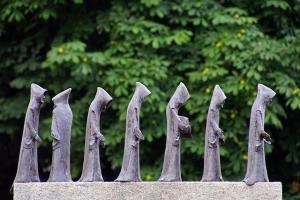
Image by Mario Rottonara.
Within the Catholic Church, there are some two-thousand-five hundred religious orders. The existence of these religious orders dates back to the early Church and can now be found throughout the globe.
In this paper, I will give a basic overview of the orders with Catholicism and how these orders are created. First, however, I will endeavor to explain what exactly a Catholic religious order is.
Within the Catholic Church, a religious order is generally defined as an organization of persons, either men or women, who abide by a specific rule(s) that is unique to that order. In addition to the particular Rule(s), the order will profess the three evangelical vows of poverty, chastity, and obedience. Lastly, the members of the order are to be obedient to a superior.
Members of religious orders were called “regulars,” an English translation of the Latin “regula” (Rule), owing to the fact that members adhered to a particular rule. The various religious orders within the Catholic Church and their different ways of life reflect their founders’ specific recommendations and methods. Religious orders generally follow one of the four great religious rules: the Rule of St. Basil, the Rule of Saint Benedict, the Rule of Saint Augustine, and the Rule of Saint Francis.
To speak of a religious rule, one must keep in mind that these are not single commands that each member has to follow. Rather, a rule will be comprehensive, including when members are to eat, when they are to pray, and when they are to work. Additionally, each order will have aspects that they emphasize.
The Rule of Saint Basil emphasizes poverty, obedience, renunciation, and self-abnegation. The Rule of Saint Benedict is a seventy-three-chapter document that treats the duties of the abbot (the superior in the monastery), how God is to be worshipped, how monks are to be disciplined, and various other regulations involving the administration of the monastery. The Rule of Saint Augustine contains eight chapters dictating such matters as the purpose and basis of communal life, prayer, moderation and self-denial, safeguarding chastity, and fraternal correction, the care of community goods and treatment of the sick, asking pardon and forgiving offenses, and governance and obedience. Finally, the Rule of Saint Francis is composed of twelve rules. These rules cover how its members are to live (they are to own no property), how much each member is to pray (the Lord’s Prayer is recited twenty-four times at morning prayer), and when they are to fast (forty days prior to Christmas).
It is possible to identify four categories of religious order within Catholicism. They are Mendicant orders, Monastic orders, Clerks Regulars, and Canons Regulars.
The Mendicant (translated as those who beg) order is usually composed of friars or nuns. From the Latin frater through French frère, Friars is translated as “brother.” Friars are ordained priests who are committed to a particular religious order.
Monastic orders are usually composed of monks or nuns (cloistered) who live and work in a monastery. Monks are members of a community of men, leading a more or less contemplative life apart from the world. In addition to adhering to the vows of poverty, chastity, and obedience, monks must abide by the Rule unique to their particular religious order.
Canons Regulars are those orders founded by canons and canonesses regular who recite the divine office and generally are in charge of a parish.
Finally, Clerks Regulars are orders founded by priests who are also religious men with vows and have a very active apostolic life.
Having thus far explored what is meant by a Catholic religious order, the multifarious rules that govern the various orders, as well as having touched upon the four categories into which the orders are generally placed, I turn to discuss how a religious order is created.
In a real sense, the development of religious orders evolves from apostolic succession. In the first two centuries following the Ascension of Christ, the Church saw the growth of something resembling religious orders. The orders of this time were disciples of Jesus Christ who sought to devote themselves more fully to the new Christian faith. For example, we find in the writings of Saint Paul references to widows and virgins who helped build up the early Church. These women were the first forms of religious life—what would later become religious orders—within the Church.
In the decades and centuries that followed, the various orders grew. By the third century, we read about the “desert fathers,” hermits who spent their days in prayer in the desert, sometimes gathering a following of others around them.
In recent years, the Catholic Church has taken a much more proactive role in creating and developing religious orders. Evidence of this is found in Pope Francis issuing a decree requiring bishops to obtain written permission from the Vatican to start an “association of the faithful,” which is the initial step in creating a religious order. The decree, issued in 2022, states that “Before the diocesan bishop erects — by decree — a public association of the faithful with a view to becoming an institute of consecrated life or society of apostolic life of diocesan right, he must obtain a written license from the Dicastery for Institutes of Consecrated Life and Societies of Apostolic Life.”
While the Catholic Church is one, it is not monolithic. As evidence of the diversity that composes the mystical body of Christ is the several religious orders that, in different ways, work toward bringing forth the Kingdom of God.
Education and Religion
History and Religion
Previous Post
October 8, 2023
Be At Peace
Next Post
October 22, 2023 Why Was Jesus Baptized?
Recent Comments
"Why would it matter if atheism is wrong? The fact that Catholic and Protestant scholars ..."
Beyond the Absence of Belief: The ..."
"Kaiser Member Service Proponents often compare atheism to not collecting stamps—it is the lack of ..."
Beyond the Absence of Belief: The ..."
""these dual denials (objective truth and objective meaning)"This is not accurate. Post-modern thought does not ..."
Defending the Faith in a Post-Truth ..."
"The theologians still haven't received the memo. Your opposition are no longer atheists, but they ..."
Defending the Faith in a Post-Truth ..."
Browse Our Archives
Select a Category Abortion Atheism Catholicism. Catholicism. God. Theophany. Christmas Eschatology Faith and Works. God. Holy Spirit Intelligent Design Jesus Christ Justice Law Politics Protestantism Religion Sabbath Salvation. Soteriology. The Bible Theology Uncategorized
Select a Month October 2026 September 2026 August 2026 July 2026 June 2026 May 2026 April 2026 March 2026 February 2026 January 2026 December 2025 November 2025 October 2025 September 2025 August 2025 July 2025 June 2025 May 2025 April 2025 March 2025 February 2025 January 2025 December 2024 November 2024 October 2024 September 2024 August 2024 July 2024 June 2024 May 2024 April 2024 March 2024 February 2024 January 2024 December 2023 November 2023 October 2023 September 2023 August 2023 July 2023 June 2023 May 2023 April 2023 March 2023 February 2023 January 2023 December 2022 November 2022 October 2022 September 2022 August 2022 July 2022 June 2022 May 2022 April 2022 March 2022 February 2022 January 2022 December 2021
Follow Us!
TAKE THE
Religious Wisdom Quiz
In the Parable of the Sower, what does the seed represent?
Select your answer to see how you score.
Money The Word of God Judgment The Law
Related posts from Summa Catholic

The Anatomy of Divine Revelation in Catholic Thought

Beyond the Absence of Belief: The Implications of...

Can Catholic Apologetics Survive a Postmodern World?

From Samaria to Sanctity: Analyzing The Woman At...
TRENDING AT PATHEOS Catholic

The Parable Of The Sower And The Word...
One of Christ’s most famous parables is that of the sower who...

Rejecting Doom: Christian Hope And Human Action
Christianity is a religion of hope. We are to have hope and...

Why I Choose the Eucharist Over the Sermon
Choose the Eucharist, Not the Sermon What are we supposed to get...

5 Design Elements Found in Spiritually Rooted Homes
Putting Spirituality Into Home Decor Our homes are more than our living...

Credo: A Story of God Told with the...
About 10 years ago, I began to imagine a personal "Credo" that...

The Anatomy of Divine Revelation in Catholic Thought
The claim that God has made Himself known to human beings is...
view all Catholic blogs
What Are Your Thoughts?leave a comment
Ad-Free & Subscriber Log-In Subscription Support
- About Us
- 2026 Calendar
- Videos
- Podcasts
- Library of World Religions
- Faith In Media Tracker
- Advertise With Us
- Write for Us
- Privacy Policy
- Terms of Service
- Do Not Sell My Data
- Contact Us
- Radiant Digital
- Manage Newsletter Subscriptions
- Unsubscribe From Notifications
- Sitemap
Copyright 2008-2026, Patheos. All rights reserved.
Subscription Support Ad-Free & Subscriber Log-In
Follow Patheos