
BuddhistCatholicContemplativeEvangelicalGeneral ChristianHinduJewishLatter-day SaintMuslimNew VisionsProgressive Christian
Beliefs
- Buddhist
- Catholic
- Contemplative
- Evangelical
- General Christian
- Hindu
- Jewish
- Latter-day Saint
- More Voices
- Muslim
- New Visions
- Pagan
- Progressive Christian
Topics
- Religion News
- Food and Religion
- Sports and Religion
- Religious Art
- Religious Music and Entertainment
- Religious Events
- History and Religion
- Style and Religion
- Politics and Religion
- Women in Religion
- Recreation Outdoors and Religion
- Business Finance and Religion
- Careers Workplace and Religion
- Education and Religion
- Family Parenting and Religion
- Health Fitness and Religion
- Home and Religion
- Relationships and Religion
- Technology and Religion
- Travel and Religion
Columnists
- Buddhist Columnists
- Business Finance and Religion Columnists
- Careers Workplace and Religion Columnists
- Catholic Columnists
- Contemplative Columnists
- Education and Religion Columnists
- Evangelists Columnists
- Family Parenting and Religion Columnists
- General Christian Columnists
- Health Fitness and Religion Columnists
- Hindu Columnists
- History and Religion Columnists
- Home and Religion Columnists
- Jewish Columnists
- More Voices Columnists
- Latter Day Columnists
- Muslim Columnists
- New Visions Columnists
- Nonreligious Columnists
- Pagan Columnists
- Politics and Religion Columnists
- Progressive Columnists
- Recreation Outdoors and Religion Columnists
- Relationships and Religion Columnists
- Religion News Columnists
- Religious Art Columnists
- Religious Events Columnists
- Religious Music and Entertainment Columnists
- Sports and Religion Columnists
- Style and Religion Columnists
- Technology and Religion Columnists
- Travel and Religion Columnists
- Women in Religion Columnists
Resource Library
- 2026 Calendar
- Library of World Religions
- The 100 Most Holy Places on Earth
- Patheos Answers
- Podcasts
- Videos
- Faith Leaders Database
- Anglican Episcopalian
- Bahai
- Baptist
- Buddhism
- Christianity
- Confucianism
- Eastern Orthodoxy
- Hinduism
- Holiness and Pentecostal
- ISKCON
- Islam
- Judaism
- Lutheran
- Methodist
- The Church of Jesus Christ of Latter-day Saints
- New Age
- Paganism
- Presbytarian and Reformed
- Protestantism
- Religion Behind the Scenes
- Roman Catholic
- Scientology
- Shia Islam
- Sikhism
- Sufism
- Sunni Islam
- Taoism
- Zen
- See all religions
Research Tools
 Ad-Free & Subscriber Log-In Subscription Support
Ad-Free & Subscriber Log-In Subscription Support
Follow Patheos 

- Trending:
- Forgiveness
- |
- Marriage
- |
- Consciousness
- |
- Death Penalty
- |
- Election
- |
- Halloween

- Home
- Catholic
- Education and Religion
- Fear Of God
Fear Of God
Last updated on: October 1, 2023 at 11:17 am by David Schloss
Fear Of God 2023-10-01T11:17:47-04:00 David Schloss
Patheos Explore the world's faith through different perspectives on religion and spirituality! Patheos has the views of the prevalent religions and spiritualities of the world.

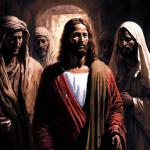
Art by OpenClipart-Vectors.
It is estimated that the word fear appears over five hundred times in the Bible. While many of the uses of the word are intended as encouragement against being afraid, the Bible also has much to say about fear in relation to God and the transcendent.
In this paper, I will examine the relationship between fear and God. I will begin by discussing the two primary uses of the word fear in a biblical context and conclude by suggesting that fear speaks to the relation between God and His creation.
The word fear can have several connotations; two are significant within the context of the Bible. The first way to understand fear is the most common, a strong, unpleasant emotion that one feels in anticipation of danger or evil. While it may seem strange to associate this type of fear with God, that element is apparent in Scripture. As evidence of this, the Hebrew word often used when describing encounters with God or with angels is pa-had, meaning “dread or panic.” It is, therefore, not surprising that angels often preface their conversations with humans with some version of “Do not be afraid.” But afraid all who encountered God were. Abram (Abraham) fell prostate when first encountering the Divine (Genesis 17:3). We are told that Moses was so afraid to look at God that he hid his face (Exodus 3:6), and Joshua is said to have fallen to the ground in worship when faced with an angel of the Lord (Joshua 5:13-14).
If God is love and the source of goodness, how do we explain these reactions? It should be observed that the fear of God is not primarily a fear of something but of someone. Said differently, such fear of God is predicated upon God’s complete strangeness and otherness. God is not a part of any genus; indeed, He exists outside of creation itself. God alludes to this chasm between Creator and creation when He tells Isaiah, “For my thoughts are not your thoughts, nor are your ways my way. For as the heavens are higher than the earth, so are my ways higher than your ways, my thoughts higher than your thoughts.” (Isaiah 55:8-9). All of this feeds into the very natural tendency to fear the unknown.
Nor has the strangeness of God been lost on theologians and philosophers who have coined the term “wholly other” to refer to God. The Swiss theologian Karl Barth thought God beyond our comprehension, hidden from us, alien to our sensibilities, yet knowable in Christ, and the writer Graham Greene notes the strangeness of God’s mercy.
While the transcendent otherness lends itself to the traditional use and understanding of fear, it is not the only way fear is used in Scripture. The Hebrew word yirah is also used and is frequently translated as fear. However, yirah has a different connotation and is used to indicate awe, reverence, respect, and even worship. While considered archaic in English, this type of fear can be translated as awful and was used to connote that which is deserving of great respect and inspiring or majestic. The concept of God as eliciting a sense of awe is seen clearly in Psalm 66:3. “For he’s the awe-inspiring God, great and glorious in power!”. This view of God is certainly more in line with what one would expect when faced with the transcendent power of God.
Does fear of God, whether it be dread or reverence, serve a purpose? King Solomon certainly seems to suggest that it does. In Proverbs 9:10, he writes, “That the fear of the Lord is the beginning of wisdom.” I think there are several ways to understand the assertion that fear of God leads to wisdom.
First, to fear God, whether under the aspect of awe or dread, is to have at least some knowledge of God. Knowledge is a form of wisdom, and wisdom involves understanding causes. Therefore, since God is both the cause and the end (i.e., purpose) of creation, such fear can lead to wisdom.
The second way in which fear of God is illuminating is by making evident a hierarchical system within the universe. This is made clear by the fact that one does not fear that which is equal to or inferior to oneself. This hierarchical view plays a significant role in Catholic theology. Catholicism asserts that God created the universe in a hierarchical order over which He is the supreme authority. This is seen in what philosophy calls the “ladder of being,” a term derived from the work of Plato. A physical representation of the hierarchy of being can be found in the Tree of Porphyry.
Correspondingly, God established His one true Church in the person of Jesus Christ, over which He appointed Peter as Pope, which makes possible apostolic succession. In turn, Popes have an immediate and unmediated jurisdiction over every office in the Church. Significantly, the Pope speaks with the authority of Christ on matters of doctrine and morality.
Furthermore, fear of God properly orders human beings vis-a-vis God and clarifies that God, and not human beings, is the creator of human nature. Since that which is the cause of a thing is greater than the thing caused, it follows, therefore, that human beings are not the “measure of all things,” as Protagoras claimed.
Finally, since fear of God correctly orders God and His creation, it allows for a framework by which objective morality can be understood. For it must be that fear of God includes fear of God’s judgment. Human beings can no more arrogate morality than they can create themselves.
In a time that stresses individualism and egoism, fear of God is an alien concept. Yet, if human beings are to fulfill their nature, they must properly order themselves to God. That is precisely what fear of God does.
Education and Religion
History and Religion
Previous Post
September 24, 2023
Free Will And The Content Of Faith
Next Post

October 8, 2023 Be At Peace
Recent Comments
"Why would it matter if atheism is wrong? The fact that Catholic and Protestant scholars ..."
Beyond the Absence of Belief: The ..."
"Kaiser Member Service Proponents often compare atheism to not collecting stamps—it is the lack of ..."
Beyond the Absence of Belief: The ..."
""these dual denials (objective truth and objective meaning)"This is not accurate. Post-modern thought does not ..."
Defending the Faith in a Post-Truth ..."
"The theologians still haven't received the memo. Your opposition are no longer atheists, but they ..."
Defending the Faith in a Post-Truth ..."
Browse Our Archives
Select a Category Abortion Atheism Catholicism. Catholicism. God. Theophany. Christmas Eschatology Faith and Works. God. Holy Spirit Intelligent Design Jesus Christ Justice Law Politics Protestantism Religion Sabbath Salvation. Soteriology. The Bible Theology Uncategorized
Select a Month October 2026 September 2026 August 2026 July 2026 June 2026 May 2026 April 2026 March 2026 February 2026 January 2026 December 2025 November 2025 October 2025 September 2025 August 2025 July 2025 June 2025 May 2025 April 2025 March 2025 February 2025 January 2025 December 2024 November 2024 October 2024 September 2024 August 2024 July 2024 June 2024 May 2024 April 2024 March 2024 February 2024 January 2024 December 2023 November 2023 October 2023 September 2023 August 2023 July 2023 June 2023 May 2023 April 2023 March 2023 February 2023 January 2023 December 2022 November 2022 October 2022 September 2022 August 2022 July 2022 June 2022 May 2022 April 2022 March 2022 February 2022 January 2022 December 2021
Follow Us!
TAKE THE
Religious Wisdom Quiz
What is the main theme of the Ten Commandments?
Select your answer to see how you score.
How to live in Jewish society How to earn your way to Heaven How to be successful How to live and treat others
Related posts from Summa Catholic

The Anatomy of Divine Revelation in Catholic Thought

Beyond the Absence of Belief: The Implications of...

Can Catholic Apologetics Survive a Postmodern World?

From Samaria to Sanctity: Analyzing The Woman At...
TRENDING AT PATHEOS Catholic

Rejecting Doom: Christian Hope And Human Action
Christianity is a religion of hope. We are to have hope and...

It’s What Comes From Within Which Matters
One of the most difficult things for us to understand is why...

Why I Choose the Eucharist Over the Sermon
Choose the Eucharist, Not the Sermon What are we supposed to get...

5 Design Elements Found in Spiritually Rooted Homes
Putting Spirituality Into Home Decor Our homes are more than our living...

Credo: A Story of God Told with the...
About 10 years ago, I began to imagine a personal "Credo" that...

The Anatomy of Divine Revelation in Catholic Thought
The claim that God has made Himself known to human beings is...
view all Catholic blogs
What Are Your Thoughts?leave a comment
Ad-Free & Subscriber Log-In Subscription Support
- About Us
- 2026 Calendar
- Videos
- Podcasts
- Library of World Religions
- Faith In Media Tracker
- Advertise With Us
- Write for Us
- Privacy Policy
- Terms of Service
- Do Not Sell My Data
- Contact Us
- Radiant Digital
- Manage Newsletter Subscriptions
- Unsubscribe From Notifications
- Sitemap
Copyright 2008-2026, Patheos. All rights reserved.
Subscription Support Ad-Free & Subscriber Log-In
Follow Patheos