
BuddhistCatholicContemplativeEvangelicalGeneral ChristianHinduJewishLatter-day SaintMuslimNew VisionsProgressive Christian
Beliefs
- Buddhist
- Catholic
- Contemplative
- Evangelical
- General Christian
- Hindu
- Jewish
- Latter-day Saint
- More Voices
- Muslim
- New Visions
- Pagan
- Progressive Christian
Topics
- Religion News
- Food and Religion
- Sports and Religion
- Religious Art
- Religious Music and Entertainment
- Religious Events
- History and Religion
- Style and Religion
- Politics and Religion
- Women in Religion
- Recreation Outdoors and Religion
- Business Finance and Religion
- Careers Workplace and Religion
- Education and Religion
- Family Parenting and Religion
- Health Fitness and Religion
- Home and Religion
- Relationships and Religion
- Technology and Religion
- Travel and Religion
Columnists
- Buddhist Columnists
- Business Finance and Religion Columnists
- Careers Workplace and Religion Columnists
- Catholic Columnists
- Contemplative Columnists
- Education and Religion Columnists
- Evangelists Columnists
- Family Parenting and Religion Columnists
- General Christian Columnists
- Health Fitness and Religion Columnists
- Hindu Columnists
- History and Religion Columnists
- Home and Religion Columnists
- Jewish Columnists
- More Voices Columnists
- Latter Day Columnists
- Muslim Columnists
- New Visions Columnists
- Nonreligious Columnists
- Pagan Columnists
- Politics and Religion Columnists
- Progressive Columnists
- Recreation Outdoors and Religion Columnists
- Relationships and Religion Columnists
- Religion News Columnists
- Religious Art Columnists
- Religious Events Columnists
- Religious Music and Entertainment Columnists
- Sports and Religion Columnists
- Style and Religion Columnists
- Technology and Religion Columnists
- Travel and Religion Columnists
- Women in Religion Columnists
Resource Library
- 2026 Calendar
- Library of World Religions
- The 100 Most Holy Places on Earth
- Patheos Answers
- Podcasts
- Videos
- Faith Leaders Database
- Anglican Episcopalian
- Bahai
- Baptist
- Buddhism
- Christianity
- Confucianism
- Eastern Orthodoxy
- Hinduism
- Holiness and Pentecostal
- ISKCON
- Islam
- Judaism
- Lutheran
- Methodist
- The Church of Jesus Christ of Latter-day Saints
- New Age
- Paganism
- Presbytarian and Reformed
- Protestantism
- Religion Behind the Scenes
- Roman Catholic
- Scientology
- Shia Islam
- Sikhism
- Sufism
- Sunni Islam
- Taoism
- Zen
- See all religions
Research Tools
 Ad-Free & Subscriber Log-In Subscription Support
Ad-Free & Subscriber Log-In Subscription Support
Follow Patheos 

- Trending:
- Forgiveness
- |
- Marriage
- |
- Consciousness
- |
- Death Penalty
- |
- Election
- |
- Halloween

- Home
- Catholic
- Education and Religion
- The Seeds Of The Church
The Seeds Of The Church
Last updated on: September 17, 2023 at 9:41 am by David Schloss
The Seeds Of The Church 2023-09-17T09:41:27-04:00 David Schloss
Patheos Explore the world's faith through different perspectives on religion and spirituality! Patheos has the views of the prevalent religions and spiritualities of the world.
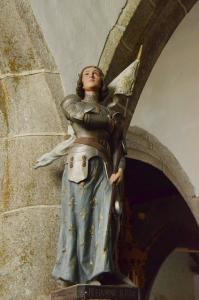
Art by Eveline de Bruin.
“The blood of martyrs is the seed of the Church,” Tertullian famously remarked. Tertullian recognized that the more the world sheds the blood of Christians, the more the Church grows. While it may seem counterintuitive, the willingness of Christians to die for what they believe in often inspires others to become followers of Christ.
In this paper, I will examine what constitutes martyrdom in the Catholic Church by examining some examples from the Bible. Finally, I will seek to place martyrdom into a larger theological context.
Christ reminds us that the greatest love involves at least the willingness to give one’s life for another (see John 15:13). While this concept of charity provides a basis for understanding what constitutes martyrdom, the etymology is relatively innocuous. The Greek word martus connotes that a martyr testifies to a fact of which he has personal knowledge. To be sure, Christians are called to bear witness to Jesus Christ in their words and actions. Not all are asked to shed their blood, however. Those who do are called martyrs.
It should be noted that the concept of martyrdom predates Christianity. Its roots can be traced to the Maccabean revolt over a hundred and fifty years before the birth of Christ. In response to religious persecution by the Seleucid Empire, many Jews engaged in an uprising against the Seleucid king, Antiochus IV. Among the notable martyrs of the revolt was Eleazar, who chose to die rather than violate the Mosaic law. (See 2 Maccabees 6). Another notable example of martyrdom is depicted in 2 Maccabees 7. In it, we read of a mother and her seven sons who are tortured and killed for refusing to violate the Jewish dietary restrictions. Thousands more were made martyrs during the Jewish war with the Roman Empire.
Samson is a unique example of the martyr archetype. Captured by the Philistines, Samson causes a large house to collapse, killing as many as three thousand Philistines, as well as himself. (See Judges 16:23-31). Owing to how Samson died, his death can be viewed both as a suicide as well as the act of a martyr acting in defense of his faith. In the Book of Samuel, King Saul and his sons, especially Jonathan, are depicted as martyrs because they sacrificed their lives rather than being captured by the Philistines.
While the Old Testament is not without its martyrs, it is within the Christian tradition that one finds a great emphasis on those who gave their lives for their faith. Why does Catholicism hold martyrdom in such high esteem? The reason lies in understanding that the actions of martyrs allow them to participate in the salvific work of Christ. If it is true that love allows one to share in the divine life of God, then to be martyred is to be placed next to Jesus at Calvary and to share in the passion that has made our redemption possible.
One can attribute various reasons for the many Christian martyrs in the early Church. Certainly, the nascent Catholic Church’s teaching that Jesus is the Messiah led to friction within the Jewish tradition, out of which Christianity came. This friction led to events like those surrounding the first Christian martyr, Saint Stephen. Falsely accused of blasphemy, Stephen was stoned to death for his ardent faith in Jesus Christ.
However, the main culprit in shedding Christian blood was the Roman Empire. It appears that the underlying cause of conflict between the Catholic Church and the Roman Empire was the Catholic insistence on monotheism. Because of the Christian belief in only one God, Christians refused to make offerings to Roman gods or participate in Roman religious festivals. Rome viewed this refusal as a sign of disloyalty to the Empire. All of this would lead to numerous persecutions of Christians and the death of thousands of the faithful.
All of these events shaped the early Church’s theology of martyrdom. Within the context of the Catholic Church, martyrdom entails the supreme commitment to one’s faith as well as to the truth of the Christian doctrine, even if such a witness means one’s death. (See Catechism of the Catholic Church, Paragraph 2473). Pope Benedict provided the essential definition of martyrdom, “The martyrs of the past and those of our time gave and give life freely and consciously in a supreme act of love, witnessing to their faithfulness to Christ, to the gospel, and to the Church.” (Letter Of His Holiness Benedict XVI To The Participants Of The Plenary Session Of The Congregation Fof The Causes Of Saints).
Still, the Church’s understanding of martyrs would evolve over time, culminating in martyrs being beatified. Additionally, martyrs were viewed as powerful intercessors between God and human beings. Martyrs were honored by having their “heavenly birthdays” (i.e., the anniversaries of their deaths) celebrated annually. The celebration service was held at the deceased’s grave with prayer and oblations.
Eventually, the veneration of martyrs would include relics or physical remains of the martyr. This veneration would affect how Churches were to be built. The Seventh Ecumenical Council (in Nicea in 787) decreed that relics must be placed in the altar of a new church before the Church could be consecrated.
Ultimately, the Christian martyr exemplifies the truth of God and the Catholic religion. Unfortunately, the truth of God and Catholicism often are in conflict with the “truths” of this world. Owing to this, the faithful are often disliked or even hated. This is made clear by Christ’s own words, “If you [the believer] belonged to the world, the world would love its own; but because you do not belong to the world, and I have chosen you out of the world, the world hates you.” (John 15:19).
In closing, I shall like to quote Saint Ignatius of Antioch, who, I think, beautifully articulates what it means to be a Christian martyr. “Now is the moment I am beginning to be a disciple. May nothing seen or unseen begrudge me making my way to Jesus Christ. Come fire, cross, battling with wild beasts, wrenching of bones, mangling of limbs, crushing of my whole body, cruel tortures of the devil—only let me get to Jesus Christ!”
Education and Religion
History and Religion
Previous Post
September 10, 2023
The Transfiguration; Significance and Meaning
Next Post
September 24, 2023 Free Will And The Content Of Faith
Recent Comments
"Why would it matter if atheism is wrong? The fact that Catholic and Protestant scholars ..."
Beyond the Absence of Belief: The ..."
"Kaiser Member Service Proponents often compare atheism to not collecting stamps—it is the lack of ..."
Beyond the Absence of Belief: The ..."
""these dual denials (objective truth and objective meaning)"This is not accurate. Post-modern thought does not ..."
Defending the Faith in a Post-Truth ..."
"The theologians still haven't received the memo. Your opposition are no longer atheists, but they ..."
Defending the Faith in a Post-Truth ..."
Browse Our Archives
Select a Category Abortion Atheism Catholicism. Catholicism. God. Theophany. Christmas Eschatology Faith and Works. God. Holy Spirit Intelligent Design Jesus Christ Justice Law Politics Protestantism Religion Sabbath Salvation. Soteriology. The Bible Theology Uncategorized
Select a Month October 2026 September 2026 August 2026 July 2026 June 2026 May 2026 April 2026 March 2026 February 2026 January 2026 December 2025 November 2025 October 2025 September 2025 August 2025 July 2025 June 2025 May 2025 April 2025 March 2025 February 2025 January 2025 December 2024 November 2024 October 2024 September 2024 August 2024 July 2024 June 2024 May 2024 April 2024 March 2024 February 2024 January 2024 December 2023 November 2023 October 2023 September 2023 August 2023 July 2023 June 2023 May 2023 April 2023 March 2023 February 2023 January 2023 December 2022 November 2022 October 2022 September 2022 August 2022 July 2022 June 2022 May 2022 April 2022 March 2022 February 2022 January 2022 December 2021
Follow Us!
TAKE THE
Religious Wisdom Quiz
Which tribe first accepted David as king after Saul's death?
Select your answer to see how you score.
Dan Ephraim Judah Benjamin
Related posts from Summa Catholic

The Anatomy of Divine Revelation in Catholic Thought

Beyond the Absence of Belief: The Implications of...

Can Catholic Apologetics Survive a Postmodern World?

From Samaria to Sanctity: Analyzing The Woman At...
TRENDING AT PATHEOS Catholic

The Parable Of The Sower And The Word...
One of Christ’s most famous parables is that of the sower who...

Rejecting Doom: Christian Hope And Human Action
Christianity is a religion of hope. We are to have hope and...

Why I Choose the Eucharist Over the Sermon
Choose the Eucharist, Not the Sermon What are we supposed to get...

5 Design Elements Found in Spiritually Rooted Homes
Putting Spirituality Into Home Decor Our homes are more than our living...

Credo: A Story of God Told with the...
About 10 years ago, I began to imagine a personal "Credo" that...

The Anatomy of Divine Revelation in Catholic Thought
The claim that God has made Himself known to human beings is...
view all Catholic blogs
What Are Your Thoughts?leave a comment
Ad-Free & Subscriber Log-In Subscription Support
- About Us
- 2026 Calendar
- Videos
- Podcasts
- Library of World Religions
- Faith In Media Tracker
- Advertise With Us
- Write for Us
- Privacy Policy
- Terms of Service
- Do Not Sell My Data
- Contact Us
- Radiant Digital
- Manage Newsletter Subscriptions
- Unsubscribe From Notifications
- Sitemap
Copyright 2008-2026, Patheos. All rights reserved.
Subscription Support Ad-Free & Subscriber Log-In
Follow Patheos