
BuddhistCatholicContemplativeEvangelicalGeneral ChristianHinduJewishLatter-day SaintMuslimNew VisionsProgressive Christian
Beliefs
- Buddhist
- Catholic
- Contemplative
- Evangelical
- General Christian
- Hindu
- Jewish
- Latter-day Saint
- More Voices
- Muslim
- New Visions
- Pagan
- Progressive Christian
Topics
- Religion News
- Food and Religion
- Sports and Religion
- Religious Art
- Religious Music and Entertainment
- Religious Events
- History and Religion
- Style and Religion
- Politics and Religion
- Women in Religion
- Recreation Outdoors and Religion
- Business Finance and Religion
- Careers Workplace and Religion
- Education and Religion
- Family Parenting and Religion
- Health Fitness and Religion
- Home and Religion
- Relationships and Religion
- Technology and Religion
- Travel and Religion
Columnists
- Buddhist Columnists
- Business Finance and Religion Columnists
- Careers Workplace and Religion Columnists
- Catholic Columnists
- Contemplative Columnists
- Education and Religion Columnists
- Evangelists Columnists
- Family Parenting and Religion Columnists
- General Christian Columnists
- Health Fitness and Religion Columnists
- Hindu Columnists
- History and Religion Columnists
- Home and Religion Columnists
- Jewish Columnists
- More Voices Columnists
- Latter Day Columnists
- Muslim Columnists
- New Visions Columnists
- Nonreligious Columnists
- Pagan Columnists
- Politics and Religion Columnists
- Progressive Columnists
- Recreation Outdoors and Religion Columnists
- Relationships and Religion Columnists
- Religion News Columnists
- Religious Art Columnists
- Religious Events Columnists
- Religious Music and Entertainment Columnists
- Sports and Religion Columnists
- Style and Religion Columnists
- Technology and Religion Columnists
- Travel and Religion Columnists
- Women in Religion Columnists
Resource Library
- 2026 Calendar
- Library of World Religions
- The 100 Most Holy Places on Earth
- Patheos Answers
- Podcasts
- Videos
- Faith Leaders Database
- Anglican Episcopalian
- Bahai
- Baptist
- Buddhism
- Christianity
- Confucianism
- Eastern Orthodoxy
- Hinduism
- Holiness and Pentecostal
- ISKCON
- Islam
- Judaism
- Lutheran
- Methodist
- The Church of Jesus Christ of Latter-day Saints
- New Age
- Paganism
- Presbytarian and Reformed
- Protestantism
- Religion Behind the Scenes
- Roman Catholic
- Scientology
- Shia Islam
- Sikhism
- Sufism
- Sunni Islam
- Taoism
- Zen
- See all religions
Research Tools
 Ad-Free & Subscriber Log-In Subscription Support
Ad-Free & Subscriber Log-In Subscription Support
Follow Patheos 

- Trending:
- Forgiveness
- |
- Marriage
- |
- Consciousness
- |
- Death Penalty
- |
- Election
- |
- Halloween

- Home
- Catholic
- History and Religion
- The Problem Of Impassibility
The Problem Of Impassibility
Last updated on: April 23, 2023 at 10:11 am by David Schloss
The Problem Of Impassibility 2023-04-23T10:11:49-04:00 David Schloss
Patheos Explore the world's faith through different perspectives on religion and spirituality! Patheos has the views of the prevalent religions and spiritualities of the world.
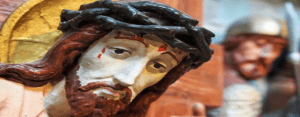
The Gospels tell us that Jesus suffered greatly in His earthly life, and Jesus Himself prophesizes about His suffering as we read in the Gospel of Luke. “The Son of Man [Jesus] must suffer greatly and be rejected by the elders, the chief priests, and the scribes, and be killed and on the third day be raised.”
Yet the fact that Jesus suffered presents a dilemma. The dilemma rests on three propositions: that Jesus is God, that God is impassible, and that Jesus suffered. From these three propositions, the difficulty comes into focus. If Jesus is God as He claims and as Catholicism affirms, and if God is impassible, how can Jesus, as God, have experienced suffering?
In order to address this difficulty, I will examine what theology means by impassibility. I will then discuss some of the evidence on which the belief that Jesus is God rests. Finally, I will suggest that the hypostatic union provides an answer to the problem of impassibility.
Impassibility
In attempting to comprehend God’s nature, Catholic theology has identified certain traits or attributes associated with the Divine. Among these attributes is that of impassibility.
Succinctly put, Divine impassibility refers to the belief that it is impossible for God to experience suffering or death. The basis for impassibility lies in God’s immutability: God does not change.
To explain Divine immutability requires recognizing that God is, as Saint Anselm put it, “A being than which no greater can be conceived.” Said differently, God possesses every perfection of being. Since change presupposes some imperfection (otherwise, change would not be necessary), a being having every possible perfection cannot be subject to change. Furthermore, change is relative to time, and God exists outside of time (that is what eternity is). Therefore, it is manifest that an eternal and perfect God is changeless.
Yet suffering is a state of pain that all living things naturally seek to avoid. What one seeks to avoid cannot be innate to one’s nature but rather a deviation from the idealized state of being. And what is a deviation from a thing’s idealized state of being, but a change, which, as was said above, cannot be attributed to God? Therefore, it must be concluded that God cannot change and, subsequently, is immune from suffering.
Is Jesus God?
Owing to the various ways that people approach it, the Bible can be understood very differently. Still, within the subject of Divine impassibility, it is not necessary to prove the existence of God, only whether Jesus is God and whether He suffered. As such, the Bible provides the data required to examine these two questions.
To provide enough evidence to be (I hope) persuasive, I will cite two examples showing that others thought Jesus is God, followed by two instances where Jesus Himself states that He is God.
The first example is the sublime prologue to John’s Gospel. “In the beginning was the Word, and the Word was with God, and the Word was God.” As John writes, this “Word” becomes a human being, “And the Word became flesh and made his dwelling among us.” John’s prologue might very well be the essential description of who Jesus Christ is.
The term “Word” to refer to Jesus is the result of translating the text from Greek into English. “Word” comes from the Greek term “Logos.” Logos is the reason and creative principle by which God orders the universe. Additionally, using the term Logos to refer to Christ allows for a distinction between Jesus and the other members of the Trinity while still maintaining that Jesus is God.
If I replace the term “Word” with Christ, the prologue to John’s Gospel becomes “In the beginning was the Christ, and the Christ was with God, and the Christ was God.” Therefore, in the Incarnation, we have the remarkable event whereby God took to Himself a human nature (John 1:14).
The second example whereby someone acknowledges that Jesus is God appears in the sixteenth chapter of Matthew’s Gospel. In response to Jesus asking the apostles, “Who do you say that I am?” Peter answers, “You are the Messiah, the Son of the living God.”
So much for what others thought Jesus to be. What does Jesus think Himself to be? Two examples should suffice.
At the close of Mark’s Gospel is the depiction of Jesus being questioned by the Sanhedrin (A Jewish council). At one point, Jesus is asked, “Are you the Messiah, the son of the Blessed One?” Jesus answers in the affirmative, “I am, and you will see the Son of Man [Jesus] seated at the right hand of the Power and coming with the clouds of heaven.” Because Jesus’ response equates Himself with God, He is accused of blasphemy. (See Mark 14:61-64).
The Gospel of John portrays the second example indicating that Jesus claimed He is God. In a discussion with the Jewish authorities, Jesus states unequivocally,” I and the Father are one.” (John 10:30). In this verse, it is impossible to conclude that Jesus is not claiming equality with God.
Thus far, I have endeavored to explain Divine impassibility and show that Jesus is God. This brings me to the problem at hand. How can an impassible Jesus suffer?
A Solution To The Problem Of A Suffering God
The mystery of how an impassible Jesus suffered lies in the doctrine of the hypostatic union.
Hypostatic comes from hypostasis, a Greek word translated as one substance. Within Catholic theology, the hypostatic union refers to the existence of two natures, one Divine and one human, that exist in the person of Jesus. In the Incarnation, God takes for Himself a human nature while retaining His Divine nature.
Because Jesus possessed a human nature, He experienced everything common to humanity: birth, hunger, thirst, joy, sorrow, laughter, pain, isolation, rejection, and death. Simultaneously, Jesus’ experienced none of those things in His Divine nature, owing to the impassibility of the Divine nature. Therefore, it is no contradiction to state that Jesus is the impassible God and that Jesus suffered.
Conclusion
“Jesus wept” is the shortest verse in the Bible and yet speaks to a great mystery, how can an impassible God experience sorrow and suffering?
Without question, evil and suffering are perennial thorns in the side of religion. And it seems that these thorns extend even to the Incarnate Lord. While I shall not claim to have exhausted the issue, in this article, I have sought to explain the problem of impassibility and suggested that its solution lies in the hypostatic union; of a God that became man and made His dwelling among us.
History and Religion
Religious Events
Previous Post
April 16, 2023
Catholic Social Teaching
Next Post
April 30, 2023 Have We Lost What Is Sacred?
Recent Comments
"Why would it matter if atheism is wrong? The fact that Catholic and Protestant scholars ..."
Beyond the Absence of Belief: The ..."
"Kaiser Member Service Proponents often compare atheism to not collecting stamps—it is the lack of ..."
Beyond the Absence of Belief: The ..."
""these dual denials (objective truth and objective meaning)"This is not accurate. Post-modern thought does not ..."
Defending the Faith in a Post-Truth ..."
"The theologians still haven't received the memo. Your opposition are no longer atheists, but they ..."
Defending the Faith in a Post-Truth ..."
Browse Our Archives
Select a Category Abortion Atheism Catholicism. Catholicism. God. Theophany. Christmas Eschatology Faith and Works. God. Holy Spirit Intelligent Design Jesus Christ Justice Law Politics Protestantism Religion Sabbath Salvation. Soteriology. The Bible Theology Uncategorized
Select a Month October 2026 September 2026 August 2026 July 2026 June 2026 May 2026 April 2026 March 2026 February 2026 January 2026 December 2025 November 2025 October 2025 September 2025 August 2025 July 2025 June 2025 May 2025 April 2025 March 2025 February 2025 January 2025 December 2024 November 2024 October 2024 September 2024 August 2024 July 2024 June 2024 May 2024 April 2024 March 2024 February 2024 January 2024 December 2023 November 2023 October 2023 September 2023 August 2023 July 2023 June 2023 May 2023 April 2023 March 2023 February 2023 January 2023 December 2022 November 2022 October 2022 September 2022 August 2022 July 2022 June 2022 May 2022 April 2022 March 2022 February 2022 January 2022 December 2021
Follow Us!
TAKE THE
Religious Wisdom Quiz
Who was the wife of Abraham?
Select your answer to see how you score.
Rebecca Leah Rachel Sarah
Related posts from Summa Catholic
Creation, Preservation, and Teleology in Catholic Theology

The Anatomy of Divine Revelation in Catholic Thought

Beyond the Absence of Belief: The Implications of...

Can Catholic Apologetics Survive a Postmodern World?
TRENDING AT PATHEOS Catholic

Creation, Preservation, and Teleology in Catholic Theology
As I write this, it is very early Monday morning. Like millions...

The Parable Of The Sower And The Word...
One of Christ’s most famous parables is that of the sower who...

Rejecting Doom: Christian Hope And Human Action
Christianity is a religion of hope. We are to have hope and...

Why I Choose the Eucharist Over the Sermon
Choose the Eucharist, Not the Sermon What are we supposed to get...

5 Design Elements Found in Spiritually Rooted Homes
Putting Spirituality Into Home Decor Our homes are more than our living...

Credo: A Story of God Told with the...
About 10 years ago, I began to imagine a personal "Credo" that...
view all Catholic blogs
What Are Your Thoughts?leave a comment
Ad-Free & Subscriber Log-In Subscription Support
- About Us
- 2026 Calendar
- Videos
- Podcasts
- Library of World Religions
- Faith In Media Tracker
- Advertise With Us
- Write for Us
- Privacy Policy
- Terms of Service
- Do Not Sell My Data
- Contact Us
- Radiant Digital
- Manage Newsletter Subscriptions
- Unsubscribe From Notifications
- Sitemap
Copyright 2008-2026, Patheos. All rights reserved.
Subscription Support Ad-Free & Subscriber Log-In
Follow Patheos