
BuddhistCatholicContemplativeEvangelicalGeneral ChristianHinduJewishLatter-day SaintMuslimNew VisionsProgressive Christian
Beliefs
- Buddhist
- Catholic
- Contemplative
- Evangelical
- General Christian
- Hindu
- Jewish
- Latter-day Saint
- More Voices
- Muslim
- New Visions
- Pagan
- Progressive Christian
Topics
- Religion News
- Food and Religion
- Sports and Religion
- Religious Art
- Religious Music and Entertainment
- Religious Events
- History and Religion
- Style and Religion
- Politics and Religion
- Women in Religion
- Recreation Outdoors and Religion
- Business Finance and Religion
- Careers Workplace and Religion
- Education and Religion
- Family Parenting and Religion
- Health Fitness and Religion
- Home and Religion
- Relationships and Religion
- Technology and Religion
- Travel and Religion
Columnists
- Buddhist Columnists
- Business Finance and Religion Columnists
- Careers Workplace and Religion Columnists
- Catholic Columnists
- Contemplative Columnists
- Education and Religion Columnists
- Evangelists Columnists
- Family Parenting and Religion Columnists
- General Christian Columnists
- Health Fitness and Religion Columnists
- Hindu Columnists
- History and Religion Columnists
- Home and Religion Columnists
- Jewish Columnists
- More Voices Columnists
- Latter Day Columnists
- Muslim Columnists
- New Visions Columnists
- Nonreligious Columnists
- Pagan Columnists
- Politics and Religion Columnists
- Progressive Columnists
- Recreation Outdoors and Religion Columnists
- Relationships and Religion Columnists
- Religion News Columnists
- Religious Art Columnists
- Religious Events Columnists
- Religious Music and Entertainment Columnists
- Sports and Religion Columnists
- Style and Religion Columnists
- Technology and Religion Columnists
- Travel and Religion Columnists
- Women in Religion Columnists
Resource Library
- 2026 Calendar
- Library of World Religions
- The 100 Most Holy Places on Earth
- Patheos Answers
- Podcasts
- Videos
- Faith Leaders Database
- Anglican Episcopalian
- Bahai
- Baptist
- Buddhism
- Christianity
- Confucianism
- Eastern Orthodoxy
- Hinduism
- Holiness and Pentecostal
- ISKCON
- Islam
- Judaism
- Lutheran
- Methodist
- The Church of Jesus Christ of Latter-day Saints
- New Age
- Paganism
- Presbytarian and Reformed
- Protestantism
- Religion Behind the Scenes
- Roman Catholic
- Scientology
- Shia Islam
- Sikhism
- Sufism
- Sunni Islam
- Taoism
- Zen
- See all religions
Research Tools
 Ad-Free & Subscriber Log-In Subscription Support
Ad-Free & Subscriber Log-In Subscription Support
Follow Patheos 

- Trending:
- Forgiveness
- |
- Marriage
- |
- Consciousness
- |
- Death Penalty
- |
- Election
- |
- Halloween

- Home
- Catholic
- Family, Parenting and Religion
- Have We Lost What Is Sacred?
Have We Lost What Is Sacred?
Last updated on: April 30, 2023 at 10:34 am by David Schloss
Have We Lost What Is Sacred? 2023-04-30T10:34:39-04:00 David Schloss
Patheos Explore the world's faith through different perspectives on religion and spirituality! Patheos has the views of the prevalent religions and spiritualities of the world.
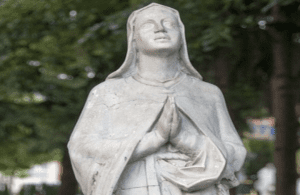
“Ain’t there nothing sacred no more, lord, ain’t there nothing sacred no more?” – David Allan Coe
A Church is broken into, and the Tabernacle is stolen. A person curses God. These are examples of sacrilege and blasphemy. In a secular and postmodern world, these terms will likely be considered old-fashioned or even ignorant. Yet these examples raise an important question. Has human history reached a place where there is no room for the transcendent? And if that is the case, are there consequences for a society that holds nothing sacred?
In this paper, I shall suggest that mankind’s loss of a sense of the sacred has had a deleterious effect on human history and on the human soul. I will first discuss the meaning of sacrilege and blasphemy from a biblical and Catholic perspective. I will conclude by suggesting that a return to respecting that which is sacred is essential to human flourishing.
Sacrilege
Passing from Latin to French, sacrilege has been defined as stealing what has been consecrated to God.
While generally referring to the destruction of property, sacrilege can also involve deliberate acts against persons or objects that have been consecrated to God precisely because they have been so consecrated. Examples include violence against members of the clergy or members of a religious order, damaging or destroying anything belonging to the Church, and deliberately treating the Eucharist with irreverence. It is, therefore, no surprise that the Catholic Church considers sacrilege a sin against the virtue of religion. Nor should it be surprising that the Bible strongly denounces sacrilege.
“You shall not invoke the name of the Lord, your God, in vain. For the Lord will not leave unpunished anyone who invokes his name in vain.” Thus saith the second commandment, which provides the biblical foundation for condemning sacrilege. (See Exodus 20:7).
Examples of sacrilege in the Old Testament include Aaron’s sons’ unauthorized actions while maintaining the Temple (see Leviticus 10:1-2) and the destruction of Soloman’s Temple by the Babylonians (See Jeremiah 52:12-13).
Arguably the most famous depiction of sacrilege in the New Testament involves the cleansing of the Temple. The Temple was the center of Jewish religious life, yet at the time of Jesus, it had become a place of commerce. Saint Matthew writes, “And Jesus entered the Temple and drove out all who sold and bought in the Temple, and he overturned the tables of the money-changers and the seats of those who sold pigeons. He said to them, “It is written, ‘My house shall be called a house of prayer,’ but you make it a den of robbers.” (See Matthew 21:12-17).
It is not uncommon to consider sacrilege as a synonym for blasphemy. However, there are substantial differences.
Blasphemy
Of Latin and Greek etymology, blasphemy is defined as insulting or speaking contemptuously of another. If sacrilege is a physical action against God or people or places consecrated to God, then blasphemy is speaking against God contemptuously, scornfully, or violently.
As such, blasphemy may include offenses committed by thought, word, or action. Disdainful ridicule of the saints and contempt of sacred objects or persons consecrated to God is also blasphemous because God is indirectly attacked.
The sin of blasphemy can take different forms, from cursing the name of God (see Leviticus 24:10-16) to rejecting God’s mercy (that is, blasphemy against the Holy Spirit, see Matthew 12:31).
In the ancient world of the Bible, blasphemy was considered a grave violation of charity toward God. As such, it was often punishable by death. Still, as with all sins, for a person to sin gravely in this manner, he must use blasphemous expressions and realize the contemptuous meaning of what he says or does.
All of this leads to an interesting theological question. Accepting that God is non-contingent (He requires nothing extrinsic to His nature) and that God is impassible (He cannot suffer in His Divine nature), then why are sacrilege and blasphemy so strongly condemned by the Bible and by Catholic tradition? After all, God cannot suffer from anything done by His creation.
The Effect Of Losing What Is Sacred
Like all sins, those of sacrilege and blasphemy damage – and in some cases, sever entirely – our relationship with God.
I will mention two reasons that the sins of sacrilege and blasphemy are so severe. The first is that these sins turn human beings away from the ultimate truth of God. The consequence of turning away from the truth of God destroys the virtue of humility, without which repentance is impossible. Without repentance, salvation is impossible.
The second reason sacrilege and blasphemy are such serious offenses is that they not only damage our relationship with God but also lead to a disordering of our human nature. It is helpful to examine human nature in light of one of Aristotle’s four causes to see why this is the case.
Aristotle identified four ways of explaining a particular thing. They are the efficient cause, the formal cause, the material cause, and the final cause. Only the final cause is of relevance to this argument.
The final cause is the purpose for which a thing is made. For example, a chair is made for the purpose of allowing someone to sit down. As Saint Augustine observed, human beings are made for God. God is our final cause. When we commit blasphemy or sacrilege, we damage or even destroy the charity in our hearts necessary for communion with God. The result is that we frustrate the reason for which we are made. And like a chair that no one can sit on, our destiny and reason for being are unrealized.
More and more, there is less and less of a sense of sacredness in society. If human beings are indeed made for God, what are the consequences of losing what is sacred?
In this paper, I have endeavored to explain and provide examples of sacrilege and blasphemy. Additionally, I have suggested that not only do the sins of sacrilege and blasphemy damage our relationship with God, but by profaning God, we cause innumerable damage to our nature.
Family, Parenting and Religion
History and Religion
Previous Post

April 23, 2023
The Problem Of Impassibility
Next Post
May 7, 2023 The Seven Last Words
Recent Comments
"Why would it matter if atheism is wrong? The fact that Catholic and Protestant scholars ..."
Beyond the Absence of Belief: The ..."
"Kaiser Member Service Proponents often compare atheism to not collecting stamps—it is the lack of ..."
Beyond the Absence of Belief: The ..."
""these dual denials (objective truth and objective meaning)"This is not accurate. Post-modern thought does not ..."
Defending the Faith in a Post-Truth ..."
"The theologians still haven't received the memo. Your opposition are no longer atheists, but they ..."
Defending the Faith in a Post-Truth ..."
Browse Our Archives
Select a Category Abortion Atheism Catholicism. Catholicism. God. Theophany. Christmas Eschatology Faith and Works. God. Holy Spirit Intelligent Design Jesus Christ Justice Law Politics Protestantism Religion Sabbath Salvation. Soteriology. The Bible Theology Uncategorized
Select a Month October 2026 September 2026 August 2026 July 2026 June 2026 May 2026 April 2026 March 2026 February 2026 January 2026 December 2025 November 2025 October 2025 September 2025 August 2025 July 2025 June 2025 May 2025 April 2025 March 2025 February 2025 January 2025 December 2024 November 2024 October 2024 September 2024 August 2024 July 2024 June 2024 May 2024 April 2024 March 2024 February 2024 January 2024 December 2023 November 2023 October 2023 September 2023 August 2023 July 2023 June 2023 May 2023 April 2023 March 2023 February 2023 January 2023 December 2022 November 2022 October 2022 September 2022 August 2022 July 2022 June 2022 May 2022 April 2022 March 2022 February 2022 January 2022 December 2021
Follow Us!
TAKE THE
Religious Wisdom Quiz
You are robbing me in tithes and offerings. Bring the whole tithe into the storehouse and test me in this. What will I do?
Select your answer to see how you score.
Forgive you Return it tenfold Open the floodgates of heaven Care for the poor
Related posts from Summa Catholic

The Anatomy of Divine Revelation in Catholic Thought

Beyond the Absence of Belief: The Implications of...

Can Catholic Apologetics Survive a Postmodern World?

From Samaria to Sanctity: Analyzing The Woman At...
TRENDING AT PATHEOS Catholic

The Parable Of The Sower And The Word...
One of Christ’s most famous parables is that of the sower who...

Rejecting Doom: Christian Hope And Human Action
Christianity is a religion of hope. We are to have hope and...

Why I Choose the Eucharist Over the Sermon
Choose the Eucharist, Not the Sermon What are we supposed to get...

5 Design Elements Found in Spiritually Rooted Homes
Putting Spirituality Into Home Decor Our homes are more than our living...

Credo: A Story of God Told with the...
About 10 years ago, I began to imagine a personal "Credo" that...

The Anatomy of Divine Revelation in Catholic Thought
The claim that God has made Himself known to human beings is...
view all Catholic blogs
What Are Your Thoughts?leave a comment
Ad-Free & Subscriber Log-In Subscription Support
- About Us
- 2026 Calendar
- Videos
- Podcasts
- Library of World Religions
- Faith In Media Tracker
- Advertise With Us
- Write for Us
- Privacy Policy
- Terms of Service
- Do Not Sell My Data
- Contact Us
- Radiant Digital
- Manage Newsletter Subscriptions
- Unsubscribe From Notifications
- Sitemap
Copyright 2008-2026, Patheos. All rights reserved.
Subscription Support Ad-Free & Subscriber Log-In
Follow Patheos